

 Tech & Tools Desk
19 Sentenced in Russia Over Fatal Moscow Concert Attack
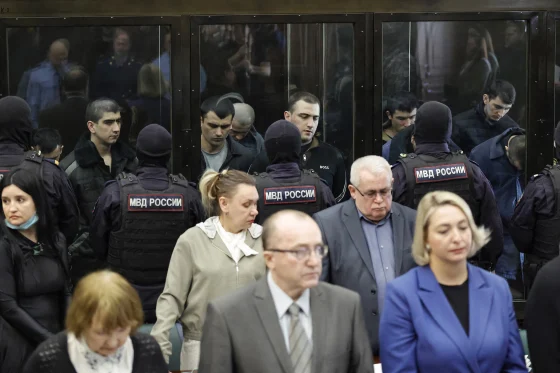
Nineteen individuals have been sentenced over a deadly attack at a concert hall near Moscow, which killed more than 100 people and is Russia’s deadliest mass shooting in 20 years.
A Russian military court handed life sentences to four gunmen and 11 accomplices, while four others received prison terms ranging from 19 to 22 years, according to state media.
The attack occurred on 22 March 2024 at Crocus City Concert Hall on the outskirts of Moscow. Gunmen opened fire and set the venue ablaze, killing 149 people and injuring over 500.
An affiliate of the Islamic State claimed responsibility and released video footage of the attack. Russian authorities have repeatedly alleged Ukrainian involvement, which Kyiv has strongly denied.
About 6,000 people were attending a rock concert in Krasnogorsk when the attackers stormed the hall, firing indiscriminately. They then set fires that caused the roof to collapse. Many victims died from gunshot wounds, while others succumbed to smoke inhalation.
The four gunmen convicted of carrying out the shooting are reportedly citizens of Tajikistan, according to Russia’s Tass news agency. It remains unclear how the defendants pleaded or whether they will appeal their sentences.
The trial was held behind closed doors, and there are reports suggesting some confessions may have been made under duress. Observers noted that when the men first appeared in court two years ago, they showed signs of having been beaten, with one brought in on a wheelchair.
The group responsible, IS-K, is an ISIS offshoot that seeks to establish a caliphate across parts of Central and South Asia, including Afghanistan, Pakistan, Turkmenistan, Tajikistan, Uzbekistan, and Iran.
Graphic video footage verified by independent sources shows attackers firing on the concertgoers.
Russian officials continue to assert a Ukrainian connection to the attack, though no evidence has been presented, and Ukrainian authorities strongly deny involvement. President Volodymyr Zelensky previously described Russia’s claims as “absolutely predictable.”