

 Tech & Tools Desk
Built-Up Zones Limit Sections of the Coastal Highway Rail Route
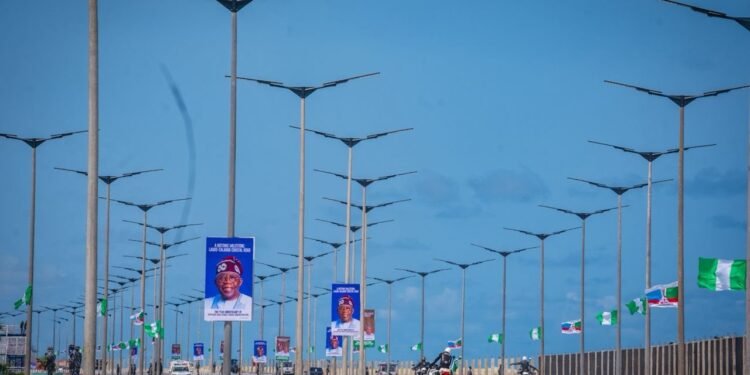
The Federal Government has addressed public concerns over the seeming absence of railway tracks along some sections of the Lagos–Calabar Coastal Highway, explaining that the rail line remains a core part of the project but cannot be accommodated in certain built-up areas due to limited land space.
The explanation comes amid public discussions triggered by recent videos of the project, which is estimated at about N4bn per kilometre. The footage showed stretches of the 700-kilometre highway where no rail track was visible within the median, particularly around the Lekki Deep Seaport axis in Lagos.
Construction of the Lagos–Calabar Coastal Highway began in 2024 and is one of the Federal Government’s major infrastructure initiatives designed to enhance connectivity, trade, and tourism along Nigeria’s southern coastline.
Earlier, the Minister of Works, David Umahi, had stated that the highway’s design includes a railway line running through the median to support multi-modal transportation. He noted that rail infrastructure forms part of the coastal highway and other legacy projects, adding that construction of the rail component for the section would commence in 2025.
However, videos shared by urban development commentators on social media raised questions about apparent inconsistencies in the road’s layout. Observations showed that from Chainage Zero at Eko Atlantic to Chainage Nine around the Jakande area—covering Victoria Island and parts of the Lekki corridor—as well as Section Two and areas under construction from the Calabar end, the highway appears to lack a central rail corridor, with parallel carriageways and no wide median.
Responding to these concerns, the Federal Controller of Works in Lagos State, Olufemi Dare, explained that the absence of rail space in some sections was intentional and based on physical and environmental constraints.
According to Dare, the railway component is fully embedded in the project design but could not be implemented along the initial stretch of the Lagos alignment because of dense development and limited available land.
He explained that from Chainage Zero at Eko Atlantic to Chainage Nine around Jakande, there is insufficient land to accommodate both the road and a rail line. The corridor passing through Victoria Island and parts of Lekki is heavily developed, leaving room only for the highway itself.
As a result, the first nine kilometres of the route do not include space for railway tracks, despite the rail component being part of the overall design. Dare emphasised that the constraint is strictly due to land availability and not an omission from the project plan.
He added that from Chainage Nine onward, adequate space has been provided for the railway line, which will run through the median for the remainder of the highway. A railway station is also planned around that area.
According to him, a 20-metre-wide gap has been deliberately created between the carriageways beyond Jakande to allow for the installation of rail infrastructure, where land availability is no longer a challenge.
Dare stressed that the Lagos alignment’s first nine kilometres are the only section without rail provision, noting that from Chainage Nine to the end of the highway, the design includes railway tracks running through the centre.
Commenting on similar observations at the Calabar end of the project, Dare said he could not provide details, as his oversight is limited to the Lagos section.
The Lagos–Calabar Coastal Highway is designed to pass through several states along Nigeria’s Atlantic coast, linking Lagos to Cross River State. While the project has generated optimism over its economic and regional development potential, it has also attracted scrutiny regarding cost, environmental impact, and engineering design.
The route starts from Victoria Island near Eko Atlantic City and runs through the Lekki Coastal Road, Lekki Free Trade Zone, and Dangote Refinery, extending through Ogun, Ondo, Delta, and Edo states before terminating in Calabar, Cross River State.
The highway’s design features 10 lanes, with rail lines positioned within the central corridor of the main carriageways, and includes 11-inch-thick concrete pavement reinforced with 20-millimetre steel.
The entire project is expected to be completed within eight years, with multiple sections constructed simultaneously once approvals and procurement processes are finalised. Completed portions will be opened in phases and subjected to tolling, supporting infrastructure expansion and regional economic growth.
In December 2025, the Federal Government temporarily opened the 47.47-kilometre Section One, Phase One of the highway and announced that $1.26bn in funding had been secured for the execution of Section Two of the project’s first phase.