

 Tech & Tools Desk
CBN Takes Reform Agenda to Global Investors
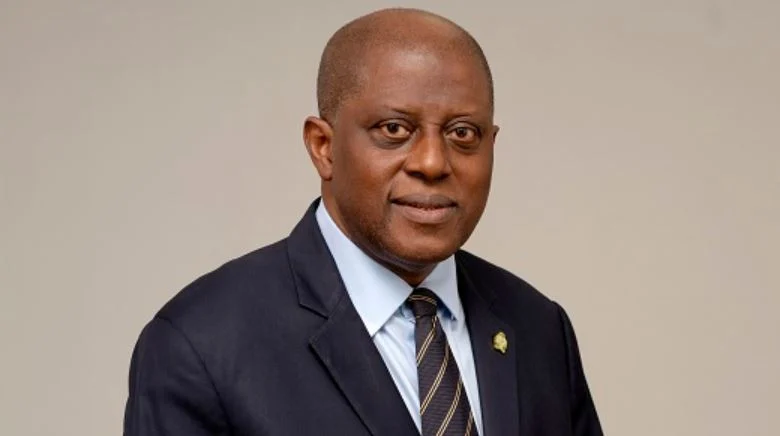
The Central Bank of Nigeria (CBN) is advancing its reform agenda on the global stage as part of efforts to attract sustained capital inflows and reposition the economy for stability and long-term growth. Under the leadership of Governor Olayemi Cardoso, the apex bank is implementing deliberate policies aimed at restoring discipline, strengthening investor confidence, and creating sustainable opportunities for both domestic and international investors.
At a recent engagement in Washington, D.C., Cardoso reassured global investors of Nigeria’s renewed commitment to macroeconomic stability, transparent markets, and predictable policy direction. He noted that improved investor confidence would translate into stronger capital inflows, enhanced exchange rate stability, and increased foreign reserves key pillars for sustainable economic growth.
Speaking at the US–Nigeria Executive Business Roundtable, Cardoso emphasised that successful capital attraction is driven by long-term planning, clarity of purpose, and transparent engagement. He presented a reform-oriented narrative of Nigeria’s economy anchored on rules-based management, institutional credibility, and a readiness to take difficult but necessary policy decisions. The forum, convened by the US Chamber of Commerce’s US-Africa Business Centre, brought together senior US corporate executives, institutional investors, and policy stakeholders at a critical point in Nigeria’s economic reset.
The meeting was designed to deepen commercial ties between both countries and attract long-term capital into Nigeria. Cardoso stressed that sustainable growth depends on credibility, reaffirming the country’s commitment to macroeconomic stability and predictable policy frameworks. He explained that ongoing reforms are structured to rebuild confidence and provide clarity for investors operating in a volatile global environment.
According to the CBN governor, authorities are focused on building a stable macroeconomic foundation capable of supporting private sector–led growth. He highlighted foreign exchange market reforms aimed at improving transparency and price discovery, alongside the adoption of orthodox monetary policy to anchor expectations and manage risks.
Cardoso also pointed to the modernisation of Nigeria’s payment systems as a key component of the country’s investment appeal, noting that efficient, secure, and inclusive payment infrastructure is essential for business expansion, innovation, and financial inclusion.
Discussions at the roundtable centred on Nigeria’s macroeconomic stabilisation efforts, regulatory clarity, and opportunities to scale bankable projects across priority sectors such as infrastructure, energy, financial services, agriculture, and technology. Investor concerns around policy consistency and the broader investment climate were also addressed.
Reacting to the engagement, President of the US-Africa Business Centre at the US Chamber of Commerce, Kendra Gaither, said investors are increasingly drawn to markets that demonstrate discipline and credibility. She noted that clarity, credible reforms, and seriousness of purpose are central to Nigeria’s emerging investment narrative.
Reform momentum
The CBN has embarked on wide-ranging reforms aimed at attracting foreign capital, achieving price stability, and stabilising the exchange rate. In 2023, the government, working with the apex bank, liberalised the foreign exchange market, discontinued central bank financing of fiscal deficits, and reformed fuel subsidies. These measures were complemented by efforts to strengthen revenue mobilisation and curb inflationary pressures.
Since the implementation of these reforms, Nigeria’s external reserves have increased, access to foreign exchange through official channels has improved, and the country has returned to international capital markets, accompanied by credit rating upgrades. A new domestic, privately owned refinery has also begun repositioning Nigeria further up the value chain within a deregulated downstream market.
Currency reforms, including exchange rate unification and the clearance of more than $7bn in FX backlogs, have improved Nigeria’s investment outlook and reduced the need for heavy market intervention. Multilateral institutions have described these measures as bold steps toward long-term economic sustainability.
Nigeria’s sovereign risk spread has declined to its lowest level since January 2020, reflecting renewed confidence following the economic disruptions of recent years.
As part of efforts to manage inflation and strengthen policy coordination, the CBN recently convened the Monetary Policy Forum 2025, bringing together fiscal authorities, lawmakers, private sector leaders, development partners, and academics. The forum focused on managing the disinflation process, improving policy communication, and enhancing collaboration.
Cardoso reiterated that the bank’s priorities include sustaining price stability, transitioning to an inflation-targeting framework, and restoring purchasing power. He also reaffirmed the CBN’s disciplined and forward-looking approach to monetary policy.
The apex bank has further moved to strengthen the financial system by introducing new minimum capital requirements for banks, effective March 2026. The measure is aimed at enhancing resilience and positioning the banking sector to support Nigeria’s long-term growth ambitions.
While acknowledging recent progress, Cardoso cautioned that macroeconomic stability requires sustained vigilance and proactive policy management, noting that the shift from unorthodox to orthodox monetary policy remains central to restoring confidence and reinforcing credibility.