

 Tech & Tools Desk
Dangote Ships 1.3bn Litres of Petrol Abroad Amid Ongoing Fuel Imports
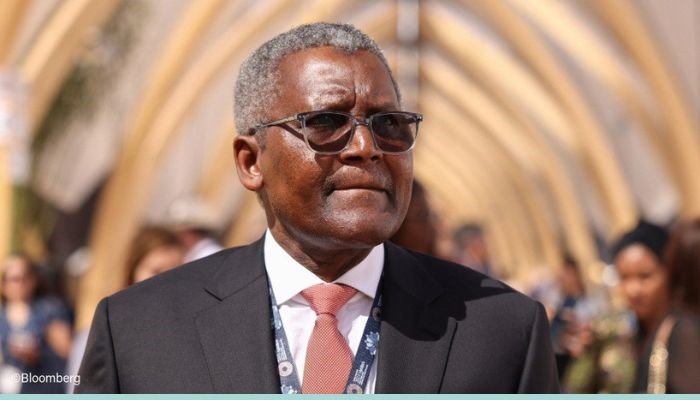
The Dangote Petroleum Refinery has commenced the export of Premium Motor Spirit (PMS), supplying around 1.35 billion litres of petrol to international markets over the past 50 days.
This was revealed by the President of Dangote Group, Aliko Dangote, during a regional conference on refined fuel markets in West Africa. He noted that from early June to mid-July 2025, the refinery exported close to one million tonnes of petrol, equivalent to approximately 1.35 billion litres.
“Today, Nigeria has become a net exporter of refined petroleum products. Within just 50 days, we’ve exported nearly one million tonnes of PMS,” Dangote stated.
Despite the refinery’s recent export success, Nigeria continues to rely heavily on fuel imports. Industry regulators reported that Nigeria and neighboring West African countries still import roughly 69 percent of their petrol needs from foreign suppliers.
Data from 2025 shows that around 2.05 million metric tonnes of petrol are traded monthly across the region, with the majority still sourced externally. Within just over a week, more than 231 million litres of PMS were imported into Nigeria through various seaports including Apapa, Tincan, and Calabar. This volume translates to roughly 172,917 metric tonnes.
The refinery’s growing dominance in the domestic fuel market has raised concerns over possible monopolistic practices. However, Dangote dismissed these claims, urging critics to focus on nation-building rather than casting aspersions. He stressed the importance of investing in local industries rather than diverting resources abroad.
On a broader scale, President Bola Tinubu emphasized the need for Africa to move beyond being a passive player in global energy markets. He called for the continent to establish its own benchmarks and trading systems that reflect local realities.
“Africa must stop accepting prices dictated from abroad. We need credible, transparent systems that protect our economies and reflect our production strength,” the president said.
He also outlined Nigeria’s ongoing efforts to collaborate with regional partners in creating a unified energy market, one that strengthens domestic production, improves energy access, and boosts cross-border trade.
The Nigerian petroleum regulatory authority is working to develop regional fuel pricing benchmarks in partnership with international industry experts. These benchmarks would cover petrol, diesel, aviation fuel, and cooking gas, and are intended to improve transparency, attract investment, and ensure fair pricing across the supply chain.
“We’re building a market based on transparency and data accuracy, one that truly reflects the value of fuel across West Africa,” the regulator’s chief executive affirmed.