

 Tech & Tools Desk
Disagreement Emerges Between Senate, Reps Over MTEF Crude Benchmark
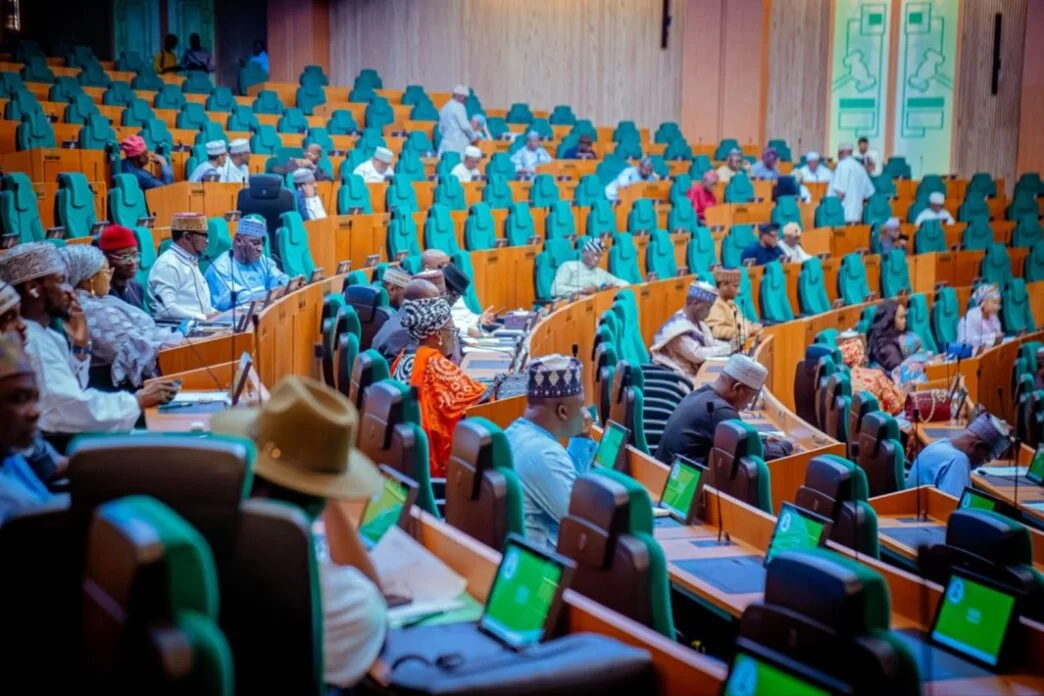
The House of Representatives on Thursday approved the 2026–2028 Medium Term Expenditure Framework (MTEF) and Fiscal Strategy Paper (FSP), adopting a crude oil benchmark of $64.85 per barrel for the 2026 fiscal year—higher than the $60 benchmark earlier approved by the Senate.
Lawmakers also endorsed a total proposed federal expenditure of N54.46 trillion for 2026, made up of N31.83 trillion in Federal Government retained revenue and N20.38 trillion in new borrowings, covering both domestic and external loans.
The approval followed the adoption of a report by the joint Committees on Finance and National Planning during plenary, after the House resolved into the Committee of Supply chaired by Deputy Speaker Benjamin Kalu.
Under the approved framework, key fiscal parameters were retained, including debt servicing estimated at N15.52 trillion; pensions, gratuities, and retirees’ benefits amounting to N1.376 trillion; and a fiscal deficit of N22.63 trillion. Other approved figures include capital expenditure (excluding transfers) of N20.13 trillion; statutory transfers of N3.152 trillion; and a sinking fund projected at N388.54 billion.
The House also sustained total recurrent (non-debt) expenditure of N15.27 trillion, alongside special intervention allocations of N200 billion for recurrent spending and N14 billion for capital projects.
With the passage of the MTEF and FSP, all legislative requirements have now been completed, paving the way for President Bola Tinubu to present the 2026 budget estimates to a joint session of the National Assembly on Friday.
Earlier, Speaker Tajudeen Abbas read a letter from the President confirming his readiness to personally present the budget in accordance with the 1999 Constitution (as amended). The letter stated that Tinubu, “in his capacity as President and Commander-in-Chief of the Armed Forces of the Federal Republic of Nigeria, will present the proposed 2026 budget estimates at 2 p.m. on Friday.”
Ahead of the report’s consideration, Deputy Speaker Kalu disclosed that the joint committees made 10 recommendations, all of which were unanimously adopted by the House.
In their report, the committees recommended sustaining projected crude oil benchmark prices of $64.85, $64.30, and $65.50 per barrel for 2026, 2027, and 2028, respectively. They also endorsed domestic crude oil production projections of 1.84 million barrels per day (mbpd) for 2026, 1.88 mbpd for 2027, and 1.92 mbpd for 2028.
On exchange rate assumptions, the committees proposed maintaining projected rates of N1,512, N1,432, and N1,383 for 2026, 2027, and 2028, respectively, in line with the Central Bank of Nigeria’s policy to stabilise the naira and strengthen coordination between fiscal and monetary policies.
Inflation projections of 16.5 per cent, 13 per cent, and 9 per cent for 2026, 2027, and 2028 were also sustained, reflecting efforts by monetary authorities to curb inflationary pressures. Economic growth projections were set at 4.68 per cent for 2026, 5.96 per cent for 2027, and 7.9 per cent for 2028.
The report further recommended implementing a National Scanning Policy under the National Single Window of the Nigeria Revenue Services, noting that the initiative would enhance revenue assurance, improve trade facilitation, reduce leakages, and strengthen transparency and national security.
Following the approval, Speaker Abbas announced that the House would reconvene on Tuesday, December 23, 2025, to consider the report of the House Committee on Appropriations on the repeal and re-enactment of the N43.56 trillion 2024 budget.
Meanwhile, President Tinubu has transmitted the 2025 statutory budget proposal of the Niger Delta Development Commission (NDDC) to the National Assembly, just 13 days before the end of the year.
In an accompanying letter, the President said the proposal was prepared in line with Section 121 of the 1999 Constitution and aligns with the Federal Government’s fiscal and development priorities under the Renewed Hope Agenda. He added that the budget reflects the 2024–2026 Economic Recovery Growth Plan and key assumptions of the 2025 Appropriation Act.
According to Tinubu, the NDDC will prioritise youth employment and empowerment, energy and power supply, education, industrial and enterprise development, health security, and agricultural productivity to lift more Nigerians out of poverty.