

 Tech & Tools Desk
Don Urges Independent National Electoral Commission to Adopt AI for Electronic Transmission of Poll Results
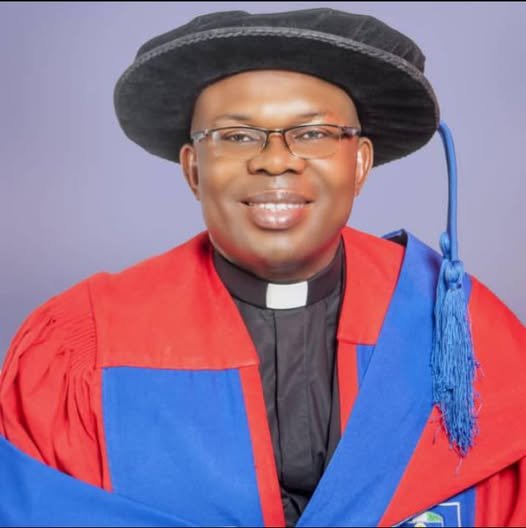
A Catholic priest and university scholar, Innocent Uwah, has called on the Independent National Electoral Commission (INEC) to leverage artificial intelligence to improve the electronic transmission of election results ahead of the 2027 general elections.
Uwah, the Acting Vice-Chancellor of Nigerian British University (NBU), said the effective deployment of AI-driven technologies would enhance operational capacity, strengthen credibility, and address recurring challenges associated with transmitting poll results electronically.
He made the call while speaking with journalists during the institution’s third matriculation ceremony on Saturday. According to him, AI has already been successfully integrated into sectors such as education and medicine, and there is no justification for excluding it from Nigeria’s electoral system.
“The Nigerian British University is committed to advancing knowledge, and we emphasise AI as a strategic tool for national development. As a technology-driven institution, we aim to become a leading hub for artificial intelligence research,” he said.
Uwah argued that AI-enabled automation would make the electoral process more transparent and dependable. “If Nigeria fully embraces AI in its electoral operations, results declared at the end of voting will be clearer and less prone to disputes. AI has transformed medicine, education, and research. It can do the same for politics,” he stated.
He appealed to the INEC chairman to adopt modern technologies capable of delivering more reliable election outcomes. “We are in the digital age. Once these technological innovations are embraced, election results will be more dependable and public confidence will improve. We cannot continue to cite lack of capacity to transmit results electronically in the 21st century,” he added.
Drawing a comparison with the banking sector, Uwah noted that financial institutions rely on advanced technology to securely transmit funds and questioned why similar systems could not be applied to electoral processes.
Speaking on the university’s growth, the acting vice-chancellor revealed that the institution currently runs five faculties and two schools, with 257 students matriculating this academic session.
Licensed in May 2022, the university commenced operations in February 2023 with three faculties Management and Social Sciences, Law, and Computing and Information Technology offering 16 programmes. Two additional faculties were approved in June 2024 by the university Senate and the National Universities Commission.
He urged the newly admitted students to remain focused and disciplined, advising them to work hard, avoid negative peer influence, and strive for excellence throughout their academic journey.