

 admin
adminGoogle Unveils ‘Willow’ Quantum Chip That Could Revolutionize Computing Power
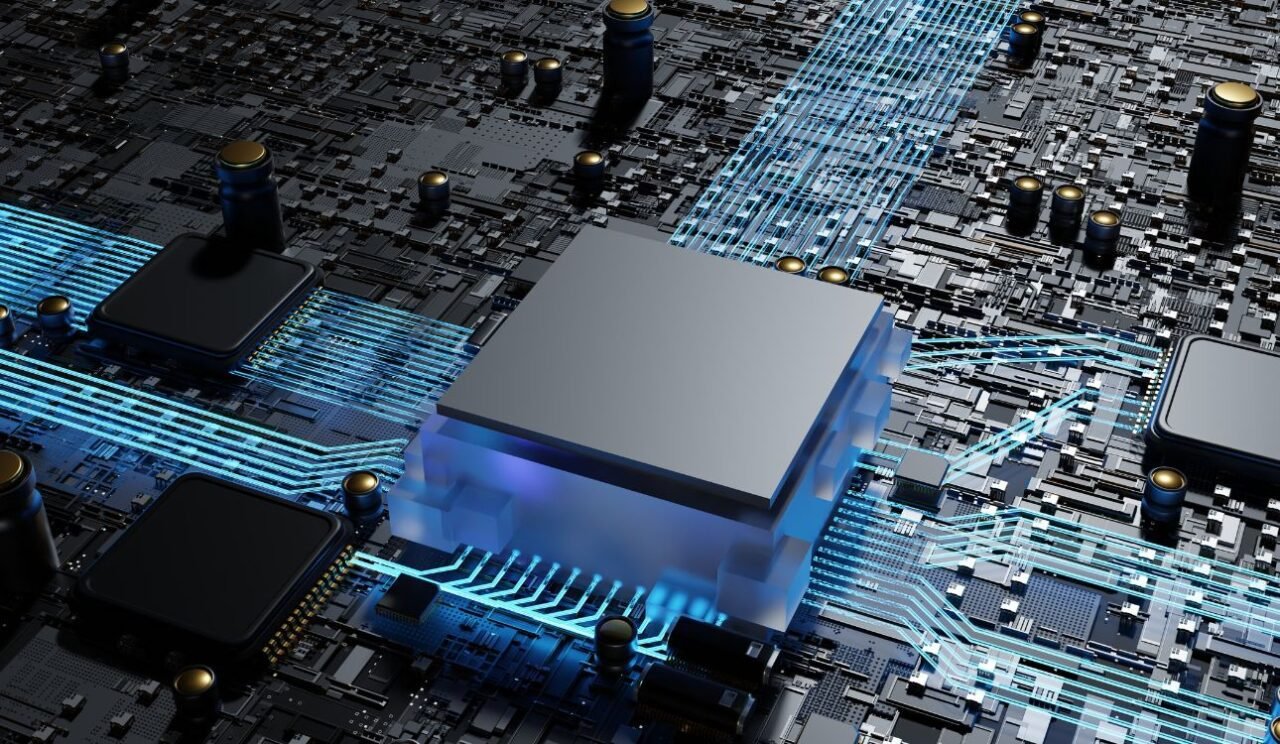
Google has introduced a groundbreaking quantum chip called “Willow”, claiming it can solve complex problems in just five minutes, problems that would take the world’s fastest supercomputers 10 septillion years to crack.
This innovation marks a major leap in the rapidly advancing field of quantum computing, a technology that utilizes the strange properties of subatomic particles to perform calculations at speeds far beyond those of today’s traditional computers. Tech giants like Microsoft and IBM are also racing to achieve quantum supremacy, but Google’s “Willow” chip stands out as a potential game-changer.
According to Google, Willow incorporates significant “breakthroughs” that “pave the way to a large-scale, useful quantum computer.” The company envisions a future where quantum computers tackle real-world challenges in medicine, battery technology, and artificial intelligence, problems that are currently unsolvable using conventional machines.
How Does Quantum Computing Work?
Unlike regular computers that use bits (0s and 1s) to process information, quantum computers rely on qubits, which can exist in multiple states at once due to a phenomenon called superposition. This enables them to perform multiple calculations simultaneously, drastically speeding up problem-solving.
The power of quantum computing could revolutionize several industries. For instance, it may accelerate the development of new drugs by simulating complex molecular interactions or improve the design of nuclear fusion reactors. Car battery technology could also see vast improvements, with quantum simulations helping to create more efficient energy storage systems.
A Long Road to Commercial Use
Despite the hype, experts caution that Willow is still an experimental device. A commercially viable quantum computer capable of addressing a broad range of real- world problems is likely years away and will require billions of dollars in further investment.
Speaking on the project, Hartmut Neven, head of Google’s Quantum AI lab, described himself as the “chief optimist” of the initiative. He believes Willow will play a role in practical applications, but for now, he declined to reveal specific use cases. According to Neven, commercially relevant quantum computing is unlikely to appear before the end of the decade.
One of the first practical applications may be in the simulation of quantum systems, which could benefit fields like drug discovery, battery design, and nuclear fusion research.
The Promise and Peril of Quantum Computing
While the possibilities of quantum computing are exciting, they also raise concerns. For example, quantum computers could eventually be used to break encryption that protects online communications and financial transactions. Companies like Apple have already started “quantum-proofing” their security systems, with encryption for iMessage being updated to withstand potential threats from future quantum machines.
What’s Next for Willow?
Google sees Willow as a significant step toward its long-term goal of building a large-scale, commercial quantum computer. For now, the focus is on refining the technology and exploring experimental applications. But with the potential to transform medicine, energy, and artificial intelligence, Willow is undoubtedly one of the most anticipated advances in quantum computing.
By pushing the boundaries of what’s possible, Google is positioning itself as a leader in this high-stakes race, with Willow potentially reshaping entire industries in the future.