

 Lifestyle & Wellness Desk
IMF, World Bank Meetings Clouded by Trump’s Fresh Tariff Warnings
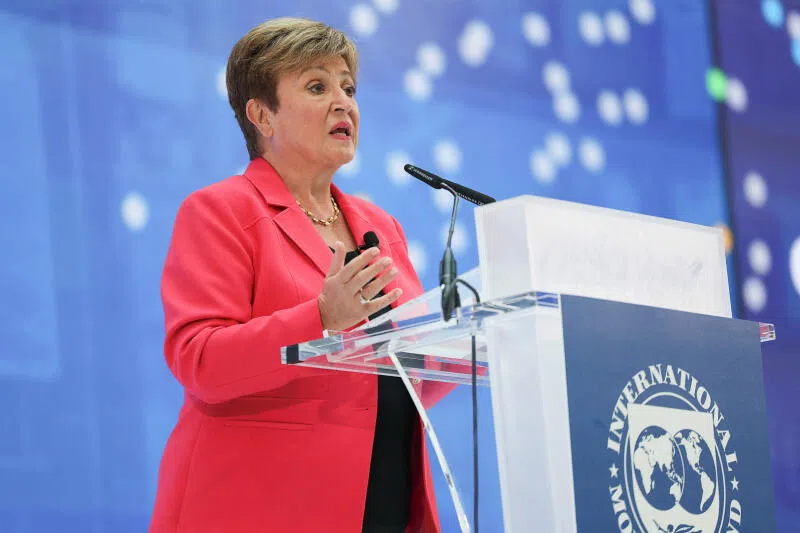
Finance ministers and central bank governors meeting in Washington this week were initially expected to focus on the global economy’s resilience following recent economic shocks.
However, the agenda has shifted sharply after U.S. President Donald Trump threatened to impose 100 per cent tariffs on Chinese imports, reigniting trade tensions between the world’s two largest economies.
The announcement unsettled financial markets and renewed fears of a wider trade war just as delegates from more than 190 countries gather for the annual meetings of the International Monetary Fund (IMF) and the World Bank. The discussions, which attract over 10,000 participants each year, are now expected to be dominated by concerns about the potential fallout from the escalating U.S.–China dispute.
Trump’s threat came in response to China’s recent expansion of export controls on rare earth minerals. The new tariffs and export restrictions, slated to take effect on November 1, could unravel the fragile truce between Washington and Beijing that had helped stabilise global growth forecasts earlier this year.
U.S. Treasury Secretary Scott Bessent sought to ease tensions on Monday, saying he remained confident that President Trump and Chinese President Xi Jinping would meet later this month in South Korea.
“The 100 per cent tariff does not have to happen,” Bessent said in an interview with Fox Business Network. “The relationship, despite last week’s announcement, remains constructive. Communication channels are open, and staff-level talks will continue during the IMF and World Bank meetings.”
His comments helped calm markets after a turbulent end to the previous week. The Nasdaq Composite Index rebounded by more than two per cent in early Monday trading, recovering from a steep sell-off triggered by Trump’s initial remarks.
Investor anxiety had been rising amid fears that heightened trade barriers could derail global supply chains and undermine gains driven by artificial intelligence-related investments.
Meanwhile, IMF Managing Director Kristalina Georgieva acknowledged that while the global economy had shown “remarkable resilience” in the face of recent shocks, growth remained uneven and vulnerable to renewed trade frictions, tight monetary conditions, and slowing employment in advanced economies.
“The outlook is fragile, with downside risks dominating the forecast,” Georgieva cautioned.
The IMF is expected to release its latest World Economic Outlook this week, projecting global GDP growth of about 3 per cent for 2025 — only marginally below the pace recorded in 2024.