

 Tech & Tools Desk
India and EU Unveil Historic Trade Agreement
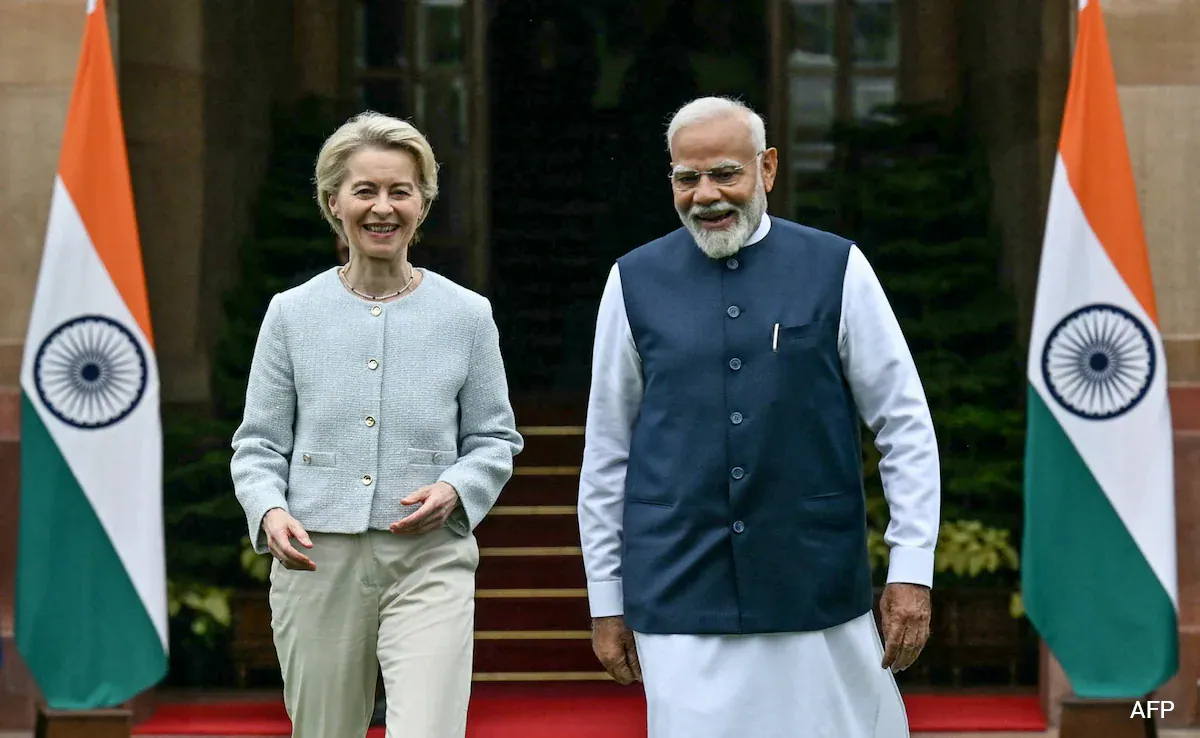
The European Union and India have announced a landmark trade agreement after nearly two decades of intermittent talks, aiming to strengthen economic ties amid global trade tensions.
European Commission President Ursula von der Leyen described it as “the mother of all deals” after meeting Indian Prime Minister Narendra Modi in Delhi, who called the agreement “historic.” The deal will allow free trade of goods between the EU’s 27 member states and India, together representing nearly 25% of global GDP and a market of around two billion people.
The agreement is expected to significantly reduce tariffs and increase market access for both sides. Von der Leyen and European Council President António Costa, who are in Delhi for a bilateral summit with Modi, said the deal will eliminate tariffs on most exports of chemicals, machinery, electrical equipment, aircraft, and spacecraft through phased reductions. Duties on motor vehicles, currently up to 110%, will be reduced to 10% under a quota of 250,000 vehicles.
The pact will lower costs for European products entering India, including cars, machinery, and agricultural food items, while sensitive agricultural sectors such as dairy and sugar remain excluded. It is also expected to boost investment flows, improve access to European markets, and deepen supply-chain integration.
“This is a historic agreement,” Modi said, adding that it will make access to European markets easier for Indian farmers and small businesses, while supporting growth in manufacturing, services, and innovation partnerships.
The deal comes as both India and the EU navigate economic and geopolitical pressures globally. Von der Leyen highlighted that the free trade zone of two billion people will benefit both sides and strengthen their strategic partnership. Costa added that the agreement sends a clear message that India and the EU prefer trade cooperation over protectionist measures.
Von der Leyen and Costa attended India’s Republic Day celebrations over the weekend and met Modi in Delhi, where the leaders’ cordial relations were evident. The formal signing is expected later this year after approval by the European Parliament and European Council.
In addition to trade, India and the EU are advancing talks on security, defence cooperation, and climate action. India’s Defence Minister Rajnath Singh met with European Commission Vice-President Kaja Kallas to discuss joint opportunities in defence supply chains, cybersecurity, maritime security, and developing future-ready capabilities.
Modi noted that the partnership represents 25% of global GDP and one-third of global trade. The EU is India’s largest trading partner in goods, with bilateral trade reaching $136 billion in 2024-25, nearly doubling over the past decade.
Negotiations for the trade deal began in 2007 but stalled in 2013 over market access and regulatory issues, resuming formally in July 2022. Key sticking points included India’s automobile and agricultural markets and carbon-linked tariffs, which analysts will examine closely in the final agreement.
The deal also comes as both India and the EU seek alternative markets for exporters, following recent trade agreements India signed with the UK, Oman, and New Zealand, and the EU’s recent deal with South American trade bloc Mercosur after 25 years of negotiation.