
 Zara Lianne
At Least 10 Killed as Nepalis Protest Social Media Restrictions
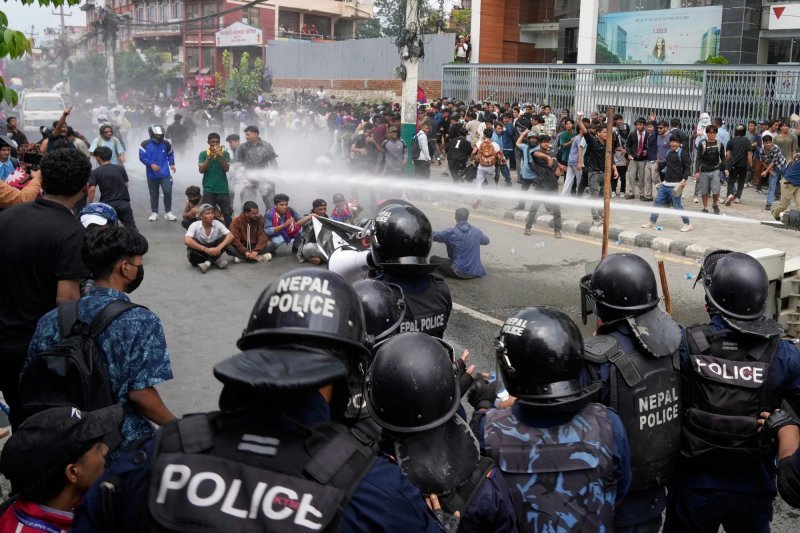
At least 10 protesters were killed on Monday after police in Nepal used rubber bullets, tear gas, and water cannon to disperse crowds in Kathmandu demanding an end to the government’s social media ban and stronger action against corruption.
Since Friday, major platforms including Facebook, YouTube, and X have been inaccessible in Nepal after authorities blocked 26 unregistered sites, sparking public outrage.
“So far, 10 protesters have died and 87 others are injured,” Kathmandu Valley police spokesman Shekhar Khanal told AFP, adding that demonstrations were ongoing. Many of the wounded were taken to Civil Hospital, where officials said even medical staff struggled to work as tear gas seeped into the premises.
Waving national flags, students and young demonstrators began their march with the national anthem before chanting against corruption and the online restrictions. The protest escalated as crowds pushed through barbed wire near parliament, leading to clashes with security forces. Some protesters reportedly climbed into the parliament compound.
Authorities have since imposed a curfew in key parts of the capital, including the parliament building, the president’s residence, and the prime minister’s office. Protests were also reported in other districts across the country.
For many Nepalis, popular platforms like Instagram are essential for entertainment, communication, and business. “The social media ban triggered us, but that is not the only reason we are here,” said 24-year-old student Yujan Rajbhandari. “We are protesting against institutionalised corruption.”
Another student, 20-year-old Ikshama Tumrok, denounced what she called the government’s “authoritarian attitude.” She added: “We want change. Others have endured this, but it has to end with our generation.”
The ban has fueled anger online, with viral TikTok clips contrasting the hardships faced by ordinary Nepalis with the lavish lifestyles of politicians’ children.
Critics say the government fears a larger anti-corruption movement. “There have been movements abroad against corruption, and they are afraid the same might happen here,” said protester Bhumika Bharati.
The cabinet last month ordered tech companies to register locally, appoint compliance officers, and create grievance-handling offices — a directive following a Supreme Court ruling from September last year.
In a statement Sunday, the government insisted it respected freedom of expression and was committed to protecting it, while citing the need for regulation.
Nepal has previously restricted access to online platforms. It banned Telegram in July over fraud concerns and lifted a nine-month suspension of TikTok in August last year after the company agreed to comply with national regulations.