

 James Obasi
Beans Export Ban Costs Nigeria N544bn Every Year, Experts Say
By Wale Akinselure
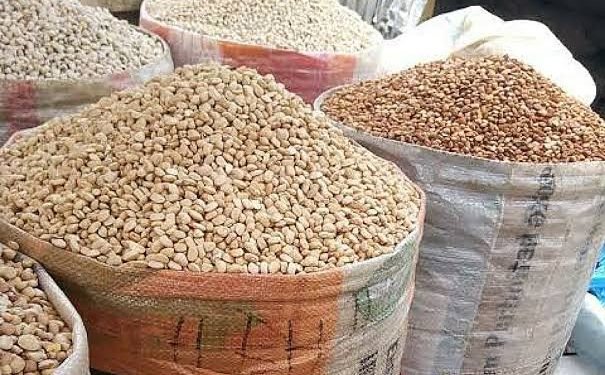
Agricultural stakeholders have raised concerns that Nigeria continues to lose an estimated N543.75 billion ($362.5 million) in foreign exchange each year due to the ongoing ban on bean exports.
The warning came during the two-day National Summit on Agroecology and Public-Private Partnerships on Agroecology, which concluded in Lagos on Tuesday.
The European Union first imposed the ban in 2015, citing dangerously high levels of pesticide residues in Nigerian dried beans, which exceeded acceptable safety limits.
The summit, organised by ActionAid Nigeria under its Strategic Partnerships for Agroecology and Climate Justice in West Africa, in collaboration with the Federal Ministry of Agriculture and Food Security, attracted over 300 participants both physically and virtually.
In a communiqué read by Muhammed Rili, National Chairman of the Agricultural Development Projects Programme Managers’ Forum, the stakeholders emphasised that the export restriction has negatively affected Nigeria’s revenue, employment, and global market relevance.
“Nigeria loses about N543.75 billion annually due to the beans export ban over the last eight years. Agroecology can help the country produce safe, high-quality agricultural produce for the global market. Every rejection of Nigerian produce is a direct loss to the economy and an increase in unemployment,” the communiqué stated.
Rili was accompanied by Agricultural Development Programme managers, including Aderonke Toju of Lagos and Macaulay Koffi of Bayelsa, alongside Zainab Arah of the Small-Scale Women Farmers Organisation in Nigeria.
The stakeholders highlighted that Nigeria’s food system is under severe pressure, facing climate shocks, rising production costs, land degradation, and growing vulnerabilities among women and youth farmers. They called for the adoption of agroecology—farming practices that promote ecological balance, biodiversity, and reduced chemical inputs—as a sustainable path to food security.
“Nigeria’s food system faces intersecting crises that disproportionately affect smallholder farmers. Agroecology offers a scalable solution to rebuild soil health, strengthen livelihoods, and reduce dependence on synthetic chemicals,” the communiqué added.
The summit further noted that agroecology offers multiple benefits, including climate resilience and reduced emissions, which should be quantified and incorporated into national development and climate policies.
“Agroecology is not just an environmental necessity; it is an economic lifeline that Nigeria must prioritise,” the communiqué stated.
The participants also expressed concern over health risks linked to pesticide use, citing global data showing that developing countries, including Nigeria, account for 99% of pesticide-related deaths despite using only 25% of the world’s pesticides. According to summit findings, 75% of smallholder women farmers surveyed in 2022 reported health issues such as respiratory distress, headaches, vomiting, and rashes from highly hazardous pesticides.
Stakeholders urged the government to adopt a national food safety strategy that phases out toxic chemical pesticides, targeting a 50% reduction by 2030, 25% by 2040, and a maximum of 5% by 2050.
Criticism was also directed at the 2025 federal budget, with participants noting that allocations for agroecology, biodiversity, and climate resilience were placed under the Office of the Secretary to the Government of the Federation rather than the agriculture and environment ministries, limiting effective coordination.
Despite some increases in federal and state budgets for agroecology between 2020 and 2024, stakeholders said actual implementation remained weak, slowing the adoption of sustainable farming practices. They further noted that while Nigeria’s population continues to grow, agricultural land remains unchanged, highlighting the need for improved land-use technology and nutrient recycling.
The summit recommended immediate reforms, including land tenure improvements, access to farmland for women and youth, increased funding for agroecology, establishment of community seed banks, and stronger extension services. Participants also emphasised the use of organic fertilisers and agroecological practices to improve farmer incomes and resilience in the face of climate change.
Other recommendations included better pesticide legislation, increased agricultural research funding, support for organic fertilisers, and public-private partnerships to guarantee market access for agroecologically produced food.
The event drew representatives from the House Committee on Agricultural Production and Services, the Federal Ministry of Agriculture and Food Security, ActionAid Nigeria, Small-Scale Women Farmers Organisation, Young Farmers in Nigeria, the All Farmers Association of Nigeria, Nigerian Agribusiness groups, and Agricultural Development Programme managers from all 36 states and the FCT.