Author: James Obasi

James Obasi20 March 2026
zz-25-1280x673.webp

3min6950
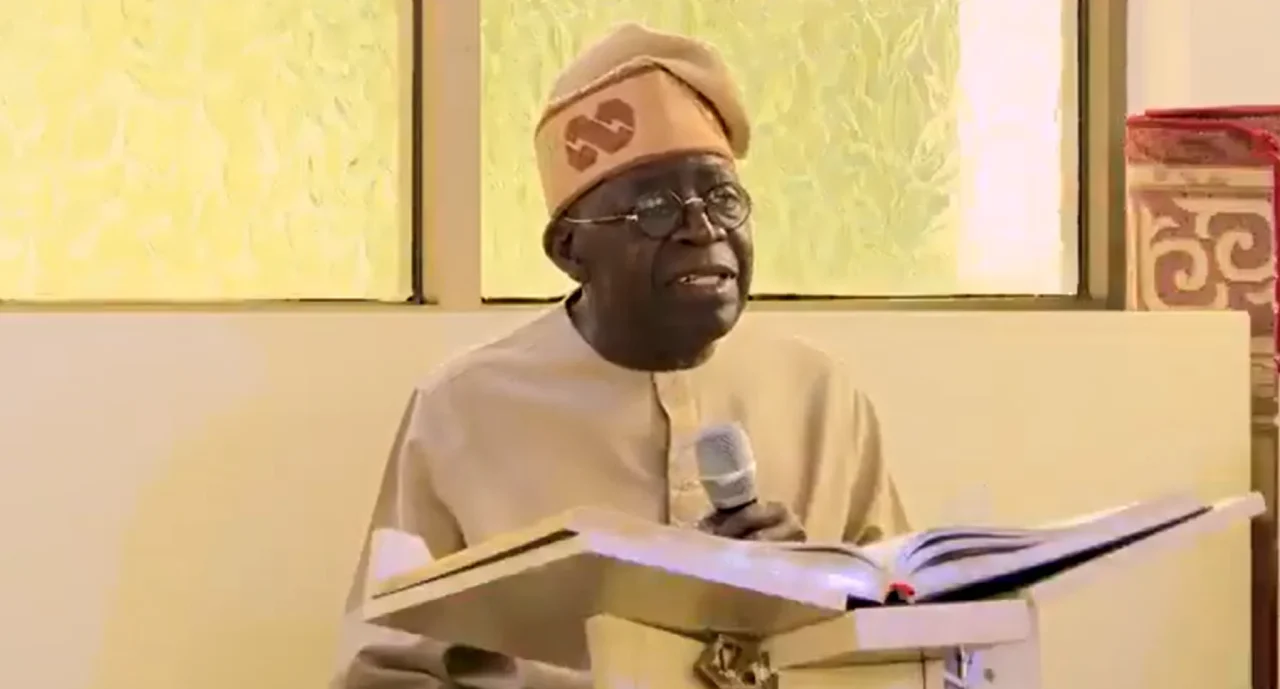
President Bola Tinubu and First Lady Oluremi Tinubu have arrived back in Nigeria following a two-day state visit to the United Kingdom. The presidential aircraft landed on Friday, where the couple was received by senior government officials, including Senate President Godswill Akpabio. A video shared on X by the President’s Special Adviser on Media and Public Communication, Sunday Dare, captured the arrival. Dare described the visit as highly successful, noting the excitement that greeted the President’s return. The trip, which took place between March 18 and 19, 2026, marked the first state visit by a Nigerian leader to the UK in 37 years, the last being in 1989. Tinubu and the First Lady had departed Abuja earlier in the week and arrived at London Stansted Airport. As part of the visit, King Charles III and Queen Camilla hosted the Nigerian delegation at Windsor Castle, where they were accorded full ceremonial honours, including a guard of honour and a carriage procession. The President also attended a state banquet hosted by the British monarch. During the banquet, Tinubu reflected on his time in the UK during Nigeria’s military rule, highlighting the support he received, while reaffirming the enduring relationship between both countries. King Charles, in his remarks, described Nigeria and the UK as partners with strong cultural, economic, and interpersonal ties. Tinubu also held high-level talks with UK Prime Minister Keir Starmer, with discussions centred on deepening bilateral cooperation. Among the outcomes of the visit was the signing of a £746 million financing deal involving UK Export Finance, the Nigerian Ports Authority, and the Federal Ministry of Finance. Additionally, both countries agreed on measures to facilitate the return of failed Nigerian asylum seekers, visa overstayers, and convicted offenders, as part of efforts to strengthen migration management and bilateral collaboration.

James Obasi12 March 2026
zz-16.webp

4min2640
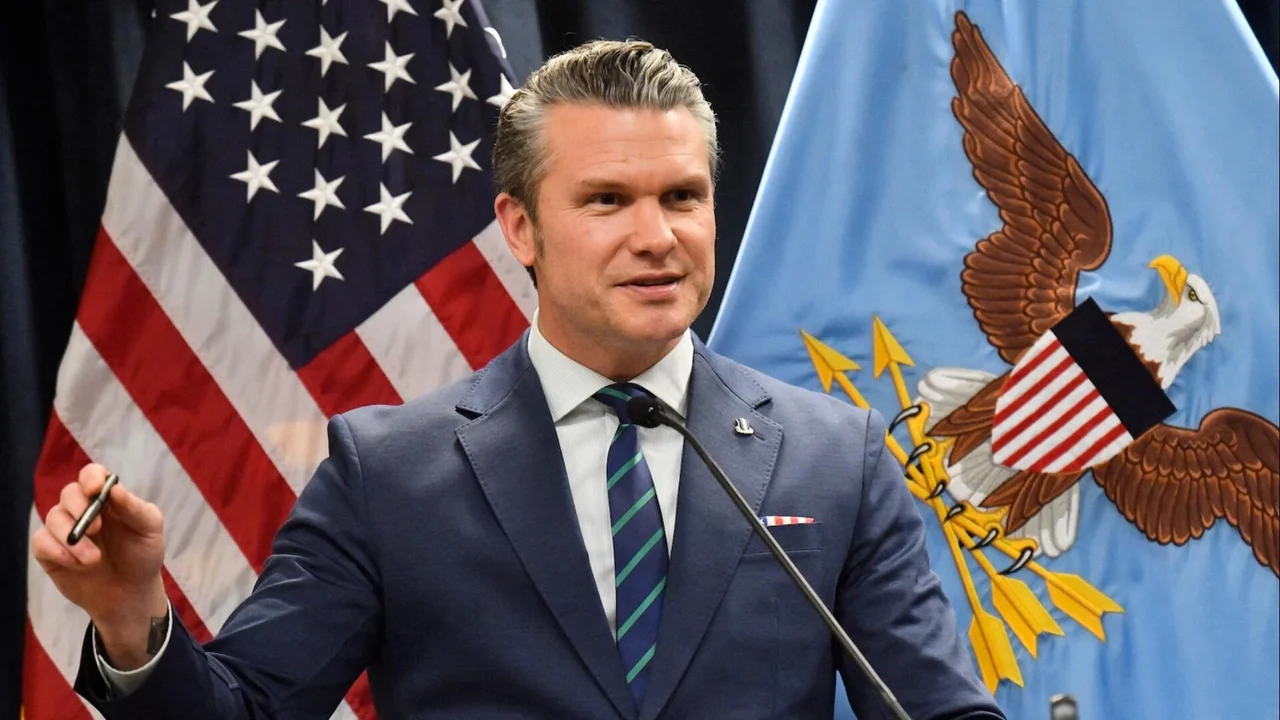
US Senate Democrats have written to Defence Secretary Pete Hegseth seeking answers over a strike on a primary school in Iran that Iranian officials say killed 168 people, including roughly 110 children. Reports indicate that US military investigators believe American forces may have unintentionally hit the school at the start of a joint US-Israeli operation, though no final conclusion has been reached. The Pentagon said it will respond directly to the senators, as it does with all congressional correspondence. The letter, signed by nearly all Senate Democrats, raises detailed questions about the incident in Minab, including whether the US carried out the strike and whether outdated or faulty target analysis could have contributed to the school being hit. It also references Hegseth’s recent comments about avoiding “stupid rules of engagement,” asking if proper procedures to prevent potential war crimes were followed. If US involvement is confirmed, the strike would represent one of the deadliest cases of civilian casualties in decades of American military action in the Middle East. Senator Gary Peters, a member of the Armed Services Committee and one of the letter’s signatories, described the incident as “a horrific tragedy” and called for a thorough investigation. The episode underscores growing partisan divides over the war, with no Republican senators signing the letter. Only one Democrat, John Fetterman, did not sign; he has supported the military action but endorsed an investigation into the school strike. According to reports from US media outlets, a preliminary assessment suggests the US was “likely” responsible, though the school was not intentionally targeted. Faulty or outdated intelligence may have led to the area being incorrectly identified as a military site. Former President Donald Trump, without citing evidence, has suggested Iran might have carried out the attack. Asked recently about the matter, he said he did not know enough but was willing to accept the findings of the ongoing military investigation. Expert analysis of video footage shows a Tomahawk missile exclusively used by the US striking a nearby Islamic Revolutionary Guard Corps (IRGC) base. Analysts say the presence of the Tomahawk, combined with multiple strikes, points to US involvement. Iran has blamed both the US and Israel, while Israel maintains it was unaware of any operations in the area. Since the US-Israeli operation began on February 28, civilian sites including hospitals and historic landmarks have suffered significant damage, with reports of growing civilian casualties. In response, Iran has launched attacks on Israel and US-allied states in the Gulf, including strikes on non-military targets such as energy facilities. Meanwhile, former CIA Director and US Central Command leader General David Petraeus said the US “tragically, were probably the ones” responsible, noting that Tomahawk missiles were the only type used in the exercise and that old intelligence may have mistakenly identified the school as part of an Iranian naval compound.

James Obasi26 February 2026
zz-23.jpg

6min5270
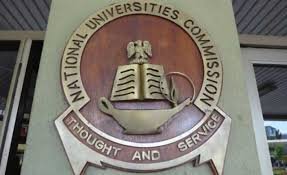
The National Universities Commission has introduced new guidelines to regulate the conferment and use of honorary doctorate degrees in Nigeria, citing growing concerns over their indiscriminate award and misuse across the Nigerian University System. In a public notice shared on its official X page on Thursday, the Commission said the guidelines were approved under its statutory powers as provided by the Education (National Minimum Standards and Establishment of Institutions) Act, CAP E3, Laws of the Federation of Nigeria, 2004. According to the notice, the Commission observed a troubling rise in the unchecked conferment and improper use of honorary doctorate degrees, prompting the approval of comprehensive rules to guide their award and usage nationwide. The NUC explained that the new framework is intended to standardise the conferment process, uphold academic integrity, and protect the credibility and international standing of Nigeria’s university system. All universities and degree-awarding institutions were directed to comply strictly with the provisions, with a warning that regulatory sanctions would be applied to institutions or individuals found in breach. The Commission further clarified that honorary doctorate degrees whether awarded locally or internationally—are purely honorary and should not be treated as equivalent to earned academic doctorates. It described them as non-earned distinctions conferred honoris causa to recognise exceptional merit, outstanding public service, scholarly or creative achievements, or other significant contributions aligned with the values of the awarding institution. Executive Secretary of the NUC, Prof. Abdullahi Yusufu Ribadu, said the guidelines were developed in line with established academic traditions in Nigeria, including resolutions of the Association of Vice-Chancellors of Nigerian Universities as outlined in the Keffi Declaration of 2012, as well as inputs submitted by universities in December 2025. He noted that the framework aims to provide clear policy direction, strengthen institutional practices, and promote transparency and accountability in the award and use of honorary doctorate degrees. The Commission said the guidelines followed an investigation that uncovered widespread abuse of honorary doctorate titles. The probe, which covered 61 institutions and professional bodies, reportedly identified 32 entities operating as honorary degree mills, including unaccredited foreign universities, unlicensed local institutions, and professional bodies without degree-awarding authority. Some were also found to be issuing fake professorial titles. The NUC warned that recipients of honorary doctorates must not use the title “Dr,” which is reserved for holders of earned PhDs or medical degrees, and must not use such honours to practise as academics, supervise research, or manage academic units. NUC-Approved Guidelines on Honorary Doctorate Degrees Institutional eligibility: Only approved public or private universities may award honorary doctorates in Nigeria. Maturity requirement: Only universities that have produced their first set of PhD graduates are eligible. Purpose of the award: To recognise exceptional and sustained contributions that reflect institutional values and promote diversity. Criteria: Selection criteria must be clear, transparent, and inclusive, with balanced representation across gender, nationality, discipline, and other considerations. Procedures must be published on the institution’s official website. Recipient eligibility: Self-nominated candidates and serving elected or appointed public officials are not eligible. Confidentiality: The nomination process must remain confidential until approved by the University Senate and Governing Council. Nomination process: All nominations must be handled by the appropriate statutory committee. Approval: Senate and Governing Council approval is mandatory. Number of awards: No more than three honorary doctorates may be awarded at any convocation. Nomenclature: All awards must carry the designation Honoris Causa, e.g., Doctor of Science (Honoris Causa), D.Sc. (h.c.). Conferment: Awards must be conferred in person, except in exceptional cases where virtual, in-absentia, or posthumous conferment may apply. No fees: Awards must be granted without any fee or expectation of payment. Usage: Recipients may use the approved honorary designation but must not use the title “Dr” or deploy the award for academic, professional, or administrative authority. Additional provisions include mandatory orientation for recipients on proper usage, regular publication of recipients’ names on institutional websites to promote transparency, and the establishment of revocation mechanisms where a recipient is found guilty of fraud or conduct inconsistent with institutional values. The Commission reaffirmed that the guidelines align with the Keffi Declaration of 2012 and stressed that strict compliance is mandatory, warning again that sanctions will apply to any institution that violates the approved framework.

James Obasi25 February 2026
zz-22.jpg

3min5310
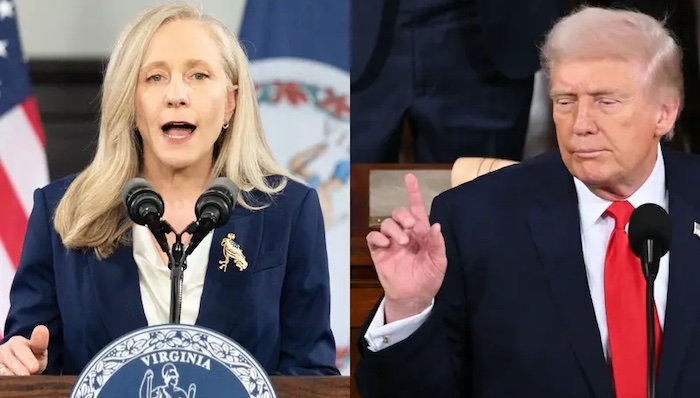
Virginia Governor Abigail Spanberger delivered the Democratic Party’s response Tuesday night following President Donald Trump’s State of the Union address, raising direct questions about the economic and social wellbeing of Americans. Trump addressed a joint session of United States Congress, highlighting policy priorities including immigration enforcement, federal spending cuts, maintaining tariffs recently struck down by the Supreme Court of the United States, and recent military actions abroad. Spanberger delivered the official Democratic rebuttal from Colonial Williamsburg in Virginia, a historic living museum, drawing a parallel between the state’s early resistance to British rule and the contemporary political moment. During her response, Spanberger asked pointed questions of Americans about life under Trump’s second term. “Is the president working to make life more affordable for you and your family? We all know the answer is no,” she said, emphasising the continuing struggles faced by many households. The Governor, who flipped a Republican-held seat last year, stressed that costs remain high for families and argued that Trump’s policies have not improved affordability. Her remarks form part of a broader Democratic strategy leading into the midterm elections, highlighting economic challenges for voters. Spanberger further criticised Trump for prioritising personal and elite interests over those of ordinary Americans. “The scale of this President’s corruption is unprecedented. The cover-up of the Epstein files, crypto scams, cozying up to billionaires it’s clear he is working for himself, not the American people,” she said. She also called for comprehensive immigration reform, rejecting what she described as punitive enforcement measures. “Tonight, the President told us that we are safer because unaccountable, poorly trained ICE agents are arresting mothers and detaining children. Our broken immigration system needs fixing, not terrorizing communities,” she said. Concluding her address, Spanberger reaffirmed her commitment to Virginians: “I am honoured to serve as the 75th Governor of Virginia. It is with a profound sense of duty to all Virginians that I assume the Governorship and pledge to work tirelessly on behalf of our Commonwealth.” Meanwhile, Senate Democratic leaders echoed the critique. Chuck Schumer described Trump’s record-length State of the Union as “delusional,” saying it failed to reflect the struggles of ordinary Americans. “The president’s rhetoric and the country’s reality are worlds apart. He painted a picture of America that hardly any working American would recognize,” Schumer said.

James Obasi25 February 2026
zz-24-1280x689.webp

4min8460
The Chairman of the Forum of State Commissioners of Finance, Akintunde Oyebode, has said that President Bola Tinubu’s Executive Order 9 on the direct remittance of oil and gas revenues would add an estimated ₦1.5 trillion to the Federation Account, stressing that the real concern lies in enforcing constitutional provisions and addressing revenue leakages arising from the Petroleum Industry Act framework. Oyebode, who also serves as Ekiti State Commissioner for Finance, made the remarks during an interview on Arise News on Tuesday. He explained that the expected inflow from management fees, frontier exploration fees and gas flaring penalties was modest when viewed against the size of the Federation Account. “In monetary terms, this is not a significant increase. We estimate that about ₦1.5 trillion will be added to the Federation Account,” he said, noting that with annual inflows exceeding ₦30 trillion, the impact would be in single digits. He emphasised, however, that the objective of the order was not revenue expansion but constitutional compliance. Executive Order 9, signed in February 2026, requires that oil and gas revenues due to the Federation be paid directly into the Federation Account. It limits deductions by agencies and mandates that statutory revenues be remitted in full before any expenditure or appropriation. The directive has sparked debate within the petroleum sector and opposition from labour unions, including the Petroleum and Natural Gas Senior Staff Association of Nigeria, which warned that the order could negatively affect the industry and investor confidence, urging the President to reconsider it. Responding to suggestions that states would benefit financially from the new remittance structure, Oyebode rejected the idea of a windfall, insisting the issue was about proper custody and distribution of federation revenues as required by the Constitution. The Presidency has similarly maintained that EO9 is an enforcement of existing constitutional provisions, not an act of executive lawmaking. Addressing concerns over possible executive overreach and its implications for lenders and investors, Oyebode declined to offer a legal opinion but said any disputes should be resolved through judicial interpretation. “If there are legal concerns, the appropriate step is for the parties involved to seek clarification from the courts,” he said. He added that investor reaction would depend on how the policy is implemented, noting that an implementation committee had been set up and urging stakeholders to await its guidelines. According to him, valid contracts and repayment obligations would not be affected. Oyebode also argued that investment conditions in the oil and gas sector had improved, citing about $10 billion in new investments and several major project approvals as evidence of renewed momentum. Beyond EO9, the discussion touched on broader concerns about state finances. Oyebode dismissed claims that the Federal Government was “giving” money to states, stating that funds in the Federation Account belong to the federation and are shared according to constitutional provisions. He said many states had reduced their domestic debt by between 15 and 20 per cent over the past two years, explaining that increases in the naira value of foreign debt were largely due to exchange-rate movements. On borrowing practices, he said states typically follow approved borrowing plans and that loans, particularly from multilateral institutions, are mainly used to fund infrastructure and development projects in areas such as water, agriculture and environmental programmes. He also highlighted transparency reforms under the World Bank-supported State Fiscal Transparency, Accountability and Sustainability programme, noting that states now publish budgets, procurement data, budget performance reports and audited financial statements, while encouraging civil society and analysts to scrutinise public finances and hold governments accountable.

James Obasi24 February 2026
zz-23.webp

3min11430
The United States House Committees on Appropriations and Foreign Affairs on Monday formally submitted a report to the White House outlining their findings and recommendations on addressing the alleged persecution of Christians in Nigeria. The investigation was initiated after President Donald Trump redesignated Nigeria as a Country of Particular Concern (CPC) and tasked Congressman Riley Moore and House Appropriations Chairman Tom Cole to lead a comprehensive inquiry into the alleged persecution of Christian communities and broader security challenges in the country. Moore confirmed the report’s submission via his X account, @RepRileyMoore, on Monday evening. He previously led a bipartisan congressional delegation on a fact-finding mission to Nigeria, visiting Internally Displaced Persons (IDP) camps in Benue State, speaking with victims of terrorism, and meeting government officials, including those led by the National Security Adviser, Nuhu Ribadu. The report was compiled based on expert witness interviews, hearings, roundtables, two on-the-ground congressional assessments in Nigeria, and close coordination with the Trump administration. Moore stated that the investigation provided a clear understanding of the threats facing Christians in Nigeria. He urged the Nigerian government to use this opportunity to strengthen relations with the United States, emphasizing that cooperation between the two nations is essential to tackling security challenges and ending violence against Christians. The report includes recommendations to establish a bilateral US–Nigeria security agreement to protect vulnerable Christian communities and dismantle jihadist networks. It also calls for withholding certain US funds until the Nigerian government demonstrates concrete action to prevent religious violence. Other measures outlined include implementing sanctions and visa restrictions against individuals and groups involved in persecution, providing technical assistance to curb violence by armed Fulani militias, advocating the repeal of Sharia and blasphemy laws, and coordinating with international partners such as France, Hungary, and the United Kingdom. Moore said, “Today, Congressman Riley M. Moore, together with members of the House Committees on Appropriations and Foreign Affairs, formally presented a comprehensive report to the White House outlining actionable steps to end the persecution of Christians in Nigeria and address growing extremist violence in the region.” He added, “This report reflects months of investigation, including a bipartisan fact-finding trip to Nigeria, hearings with expert witnesses, consultations with religious leaders, visits to IDP camps, and engagement with senior Nigerian officials.” Moore also expressed gratitude to President Trump for redesignating Nigeria as a CPC and to his congressional colleagues Chairman Cole, Vice Chair Mario Diaz-Balart, Foreign Affairs Committee Chairman Brian Mast, and Congressman Chris Smith for their leadership in producing the report. He noted, “During our trip to Nigeria, I witnessed firsthand the severe challenges Christians face and the instability the Nigerian government must address.”

James Obasi24 February 2026
zz-15.jpg

1min6910
A helicopter operated by the Iranian Army Air Force crashed into a fruit market on Tuesday in Isfahan Province, killing four people, according to state media. The official news agency IRNA reported that the victims were the pilot, co-pilot, and two fruit sellers on the ground, adding that the crash was caused by a technical fault. The incident occurred in Khomeynishahr. Iran, which has faced challenges maintaining its ageing aircraft fleet amid sanctions, has recorded several aviation accidents in recent years. In a separate incident on Thursday, a fighter jet went down during a late-night training exercise in Hamedan Province, killing one of the two pilots onboard, state television said.

James Obasi23 February 2026
zz-14-1280x720.jpg

3min7760
The Lagos State Government on Sunday praised the state chapter of the Joint Health Sector Unions (JOHESU) for suspending its three-month strike, describing the decision as a display of goodwill and a shared commitment to protecting public healthcare services. The Commissioner for Establishments and Training, Afolabi Ayantayo, commended JOHESU for engaging in constructive dialogue to address outstanding issues. The state JOHESU chairman, Adelaja Gbadamosi, confirmed the suspension of the strike in a telephone interview, noting that it followed interventions by the Lagos State House of Assembly and government officials during a meeting on Friday. “We were assured by the Speaker of the House that all our demands will be addressed, and they requested that we suspend the strike. By Monday, we are expected to have a Memorandum of Understanding and an agreement. Based on this, we suspended the strike,” he said. Ayantayo stated that the meeting concluded with an agreement to continue discussions while the union convenes its congress to formally communicate the resolutions and restore normal operations across public healthcare facilities in Lagos State. He reaffirmed the government’s commitment to meeting the union’s demands for improved welfare benefits in line with regulations and agreed timelines, emphasizing its dedication to equitable treatment, better working conditions, and sustainable welfare programmes for health sector workers. The commissioner highlighted the critical role of allied health professionals in strengthening healthcare delivery and assured that the government would maintain open and transparent engagement with stakeholders to ensure the effective implementation of all agreements reached. Ayantayo also acknowledged the timely and constructive role of the Lagos State House of Assembly in facilitating dialogue and fostering understanding, which contributed significantly to resolving the impasse. The state government extended its appreciation to residents for their patience during the strike and reaffirmed its commitment to ensuring uninterrupted access to quality healthcare services. The strike, which disrupted health sector operations, was initiated by JOHESU to press legitimate demands aimed at enhancing the healthcare system and ensuring fairness for all professionals within it.

James Obasi23 February 2026
zz-19.webp

9min5080
Fresh questions, anxiety, and uncertainty have intensified within key oil and gas institutions following President Bola Tinubu’s executive directive mandating the immediate transfer of oil and gas revenues into the Federation Account for distribution among the three tiers of government. The order, which effectively ends the retention of certain internally generated revenues by sector agencies, has unsettled officials at the Nigerian Upstream Petroleum Regulatory Commission, the Nigerian National Petroleum Company Limited, and the leadership of the Midstream and Downstream Gas Infrastructure Fund. Industry operators and experts say the core concern lies in the absence of a clearly defined alternative funding framework for the NUPRC after oil and gas royalties were redirected to the Federation Account. They argue that relying on traditional budgetary allocations approved by the National Assembly would undermine the regulator’s independence and operational efficiency. Stakeholders warned that subjecting the commission to annual budget approvals and capital releases through the Ministry of Finance could expose it to bureaucratic delays, political interference, and funding uncertainty, potentially weakening its oversight, monitoring, and enforcement responsibilities in the upstream sector. There are also unresolved questions about how the government plans to sustain and improve Nigeria’s Reserve Replacement Ratio, especially as funding arrangements for frontier exploration activities remain unclear. Concerns have further emerged regarding the future roles and operational scope of Frontier Exploration Services and the Midstream and Downstream Gas Infrastructure Fund, particularly as Nigeria targets crude oil production of about three million barrels per day by 2030 and seeks to attract over $12bn in annual investments. Senior officials at the NUPRC, who spoke anonymously due to restrictions on public commentary, maintained that the Petroleum Industry Act intentionally established a statutory funding structure to insulate the commission from such constraints and ensure swift decision-making in a highly technical sector. They referenced provisions of the Act that empower the commission to recruit staff and set competitive remuneration aligned with industry standards, enabling it to attract and retain highly skilled professionals. According to them, the new directive could compromise the commission’s ability to maintain salary parity with international oil companies. Officials noted that the commission paid approximately N88bn in staff salaries and allowances in 2024 and generated about N322.8bn in 2025 from its four per cent cost-of-collection mechanism, which serves as a primary source of operational funding. One senior official questioned whether an executive directive could override provisions of an Act passed by the National Assembly, stressing that the cost-of-collection framework is a statutory funding mechanism rather than a discretionary privilege. He warned that without a clear alternative funding source, the commission’s ability to finance salaries, inspections, monitoring activities, logistics, and staff welfare could be severely affected. Returning the regulator to conventional envelope budgeting, he added, would expose it to delays that could undermine efficiency. Another senior source cautioned that funding instability could have broader implications beyond administrative challenges. He warned that weakening regulatory capacity in a sector already exposed to oil theft and pipeline vandalism could create security risks and operational vulnerabilities. He also expressed concern over the suspension of frontier exploration funding, questioning how the government intends to expand reserves and de-risk frontier basins under the new framework. While acknowledging that the government would ultimately need to fund the regulator, he said uncertainty remains over how this would be achieved and how frontier exploration would be sustained going forward. Concerns at NNPC Similar unease has been reported within the NNPC, particularly regarding the long-term reform agenda and ongoing discussions about a possible stock exchange listing. Officials raised questions about how the revenue reallocation would apply to royalties, fees, and production-based payments, which vary by crude type, production level, and contract structure. Senior executives warned that the directive could disrupt production sharing contract operations, affect staff deployment, and send negative signals to investors, especially in deepwater projects. One official said between 400 and 500 personnel are dedicated daily to managing and overseeing PSC operations across 39 sites, including production monitoring, cost verification, and compliance. He warned that changes to the current framework could undermine oversight mechanisms critical to cost efficiency and transparency. The official argued that the Petroleum Industry Act was designed to attract deepwater investment and that sudden policy shifts risk creating the impression that laws can be altered without legislative debate. He also clarified that royalties and taxes under PSCs are paid in kind rather than cash, with crude oil lifted and sold before proceeds are remitted to the Federation Account—a process already in place since the PIA took effect. He cautioned that altering this arrangement could create operational confusion, especially since NNPC acts as the government’s concessionaire in commercial agreements. The official also raised concerns about crude-backed loans, noting that some production volumes are already pledged for debt servicing, and questioned how repayment obligations would be met under the new directive. According to him, policy uncertainty could weaken investor confidence, particularly as Nigeria pursues multiple deepwater developments. He called for broad stakeholder engagement to clarify the intent and mechanics of the directive and explore alternative revenue-enhancing strategies without destabilising the sector. Another senior NNPC official adopted a more optimistic stance, saying the company remains stable and capable of adapting to the revised fiscal framework. He said investment priorities and capital allocation were already under review to align with policy changes, while assuring that production, gas processing, and ongoing projects would continue without disruption. Mixed reactions from stakeholders Beyond regulatory agencies, the Midstream and Downstream Gas Infrastructure Fund is also expected to be affected, with internal reviews underway to assess how the directive impacts its revenue and remittance structure. Meanwhile, petroleum marketers welcomed the executive order, describing it as a decisive step toward fiscal discipline, transparency, and accountability. They argued that centralised remittance would strengthen public oversight, improve fiscal stability, and reposition NNPC as a more commercially driven entity. Labour unions, however, expressed concern. The Nigeria Union of Petroleum and Natural Gas Workers called for an urgent stakeholders’ meeting, citing anxiety among workers over job security, welfare, and the implementation of the


James Obasi22 February 2026
aa-18.jpg

4min3680
US President Donald Trump has announced plans to raise his proposed global tariffs to 15%, intensifying his trade stance after the Supreme Court struck down his previous import taxes. On Friday, Trump said he would replace the scrapped tariffs with a 10% levy on all goods entering the United States. However, a day later, he declared on Truth Social that the rate would be increased to 15% the maximum permitted under Section 122 of the Trade Act of 1974, a provision that has never previously been used. The law allows the tariffs to remain in place for up to five months before congressional approval is required. While the original 10% levy was scheduled to take effect on Tuesday, 24 February, it remains unclear whether the revised 15% rate will begin on the same date. Trump said the decision followed what he described as a “ridiculous, poorly written, and extraordinarily anti-American” Supreme Court ruling. In a 6-3 judgment, the court found that he had exceeded his authority when he introduced sweeping global tariffs last year under the 1977 International Emergency Economic Powers Act (IEEPA). The US has already collected at least $130bn (£96.4bn) in tariffs under IEEPA, according to recent government data. Trump, whose trade policy is central to his economic agenda, has argued that tariffs will encourage domestic manufacturing and reduce the US trade deficit. However, official figures released this week show the trade deficit widening by 2.1% compared with 2024, reaching approximately $1.2 trillion (£890bn). The proposed 15% tariff would apply broadly to most imported goods, although certain products including critical minerals, metals and pharmaceuticals are expected to be exempt. Separate tariffs on steel, aluminium, lumber and automotive parts introduced under other trade laws remain unaffected by the court’s decision. The move has created uncertainty for countries such as the UK and Australia, which had previously agreed to a 10% tariff arrangement with the US. A White House official indicated that countries with trade agreements could still be subject to the new global rate under Section 122, though sector-specific arrangements may remain intact. Reactions have been mixed. Some US manufacturers expressed disappointment over the court’s ruling, while others, including farming representatives, welcomed it as a blow to the president’s trade policy. Business groups have warned that the shift could complicate global trade and weaken economic growth. There are also growing calls for clarity on whether companies will receive refunds for tariffs deemed unlawful by the Supreme Court a matter the court did not address directly. Trump has suggested that any refunds would likely face lengthy legal battles. Meanwhile, lawmakers and business associations are pressing the administration for details on how it intends to handle potential reimbursements. The development marks a significant escalation in Trump’s trade strategy and sets the stage for further legal and political battles over US tariff policy.