
Category: Refined Living

Cover-it.jpg

6min5890
The fragmented landscape of African vocational education is undergoing a strategic recalibration. In a move that signals a shift toward regional integration, Nigeria’s National Business and Technical Examinations Board (NABTEB) and the Uganda Vocational and Technical Assessment Board (UVTAB) have launched a partnership to harmonise skills certification systems. This collaboration, formalised during a high-level benchmarking visit in Benin City, Nigeria, aims to synchronise assessment methodologies, examination designs, and quality assurance protocols between the two Commonwealth nations. This development is more than a bilateral exchange; it is a deliberate attempt to build a standardised Technical and Vocational Education and Training (TVET) framework that transcends national borders. By aligning certifications, Nigeria and Uganda are laying the groundwork for a more mobile, transparent, and employable African workforce, capable of meeting the rigorous demands of both the continental and international labour markets. Why This Matters School Leaders and Educators For TVET administrators and instructional designers, this development marks the end of isolated national standards. The shift toward a harmonised framework requires educators to align their curricula with cross-border benchmarks. This collaboration provides a template for institutional peer learning, allowing school leaders to adopt “best-of-breed” methodologies for digital assessment and competency-based training. Entrepreneurs and Business Leaders The primary barrier to scaling operations in Africa is often the “skills gap.” A harmonised system reduces the friction of cross-border hiring; a certification from Uganda becomes immediately legible and trustworthy to a hiring manager in Nigeria. This transparency is critical for multinational firms and startups looking to tap into a wider, verified talent pool across the East-West African corridor. Professionals For the skilled professional, this represents the potential for increased regional mobility. Harmonisation ensures that a vocational diploma is a “portable” asset. As the African Continental Free Trade Area (AfCFTA) gains momentum, the ability for technicians, artisans, and digital professionals to move between markets without undergoing costly equivalency evaluations will be a significant competitive advantage. Africa in the Global Context The Nigeria-Uganda partnership mirrors global movements like the European Qualifications Framework (EQF) and the ASEAN Qualifications Reference Framework. Historically, African vocational certifications have lacked “global legibility,” often requiring secondary verification when graduates move to markets in the UK, US, Canada, or Germany. By harmonizing systems internally, Africa is moving toward a unified “Skills Passport.” This signals to global investors that the continent is maturing into a reliable hub for human capital. As Western economies face aging populations and acute labor shortages in technical sectors—such as renewable energy, digital construction, and advanced manufacturing—a standardized African TVET system positions the continent as a primary source of high-quality, verified talent for the global stage. Implications and Emerging Signals The Transition to Competency-Based Assessment: This move suggests a departure from theory-heavy testing toward industry-driven, competency-based models that prioritise what a graduate can do over what they know. Digitalisation of Credentials: Uganda’s focus on a “digital assessment system” in line with its Vision 2040 signals a broader continental shift toward EdTech and potentially blockchain-verified certifications. The “South-South” Benchmark: We are seeing an increase in African nations looking to regional peers rather than Western institutions for educational reform models, reflecting a growing sense of continental autonomy. Investment De-risking: Standardised certification acts as a de-risking mechanism for Foreign Direct Investment (FDI). Investors are more likely to commit capital where the workforce’s skills are verified by a transparent, multinational framework. Key Takeaways Align with AfCFTA Trends: Skills harmonisation is the “software” that enables free trade. Stakeholders should watch for these bilateral ties to eventually merge into a broader African Union-backed framework. Shift to Competency-Based Training (CBT): Educational institutions should pivot their curriculum toward CBT models, which are becoming the new standard for cross-border recognition. Prepare for Digital Verification: Business leaders and HR professionals should prepare for the rise of digital credentials, which allow for instant, tamper-proof verification of skills across borders. Review Regional Hiring Strategies: With certification becoming standardised, companies should expand their recruitment lens to consider regional talent, leveraging the increased legitimacy of foreign diplomas. This reflects a broader shift toward regional integration as a prerequisite for global relevance, where Africa’s leading economies recognise that a unified “language of skills” is essential to compete in the 2026 global economy.


Cover.jpg

6min3300
While literacy achievement is often discussed through the lens of phonics, fluency, and cognitive processing, a growing body of research suggests that the “emotional architecture” of the classroom is equally critical. New insights from literacy advocates emphasize that “belonging” is not merely a social goal but a rigorous academic strategy. When students feel safe and validated, they are more willing to take the cognitive risks necessary to master complex reading and writing tasks. By the time a student in Canada reaches high school, they have spent approximately 8,000 hours in the classroom. If that space feels culturally or emotionally alien, literacy outcomes suffer. Conversely, when the environment validates a student’s home language and identity, learning becomes “sticky”—embedding knowledge through authentic human connection rather than rote memorization. Why This Matters School Leaders and Educators For administrators and teachers, the shift toward a “belonging-first” framework requires moving beyond standard curriculum delivery. In Canada—where classrooms are increasingly diverse and inclusive of Indigenous perspectives and immigrant voices—the intentional “legitimization” of home cultures is a pedagogical necessity. Educators are tasked with building “cultural bridges,” such as connecting regional dialects or youth slang to academic vocabulary, ensuring that a student’s lived experience is treated as an asset rather than a barrier. Households and Individuals Parents often view literacy as a set of technical skills to be practiced at home. However, evidence suggests that a child’s emotional comfort is the primary engine of their reading progress. When a “home-away-from-home” environment is created—prioritizing comfortable seating and diverse book collections—children are more likely to engage in deep reading. For families, the takeaway is clear: confidence and curiosity are the prerequisites for competence. Academics and Students The “Validation, Affirmation, Building, and Bridging” (VABB) framework serves as a strategic roadmap for reversing negative stereotypes in marginalized communities. Academics are increasingly focusing on how “coherence” in curriculum—linking social studies, vocabulary, and project-based learning—strengthens neural pathways. For the student, a sense of belonging reduces the “affective filter” (anxiety), allowing the brain to process linguistic information more efficiently. Implications and Emerging Signals The move toward belonging-fueled literacy reflects a broader transition in global education toward “Whole-Child” instructional models. Environmental Design as Pedagogy: Classroom aesthetics are shifting away from industrial lighting and rigid seating. In provinces across Canada, there is a trend toward “resimercial” design (blending residential warmth with commercial durability) to reduce student stress and improve focus. Curriculum Representation as a Functional Requirement: Representation is no longer just a diversity initiative; it is an instructional tool. Future curriculum audits will likely prioritize “identity-reflecting texts” as a core requirement for driving literacy growth in underperforming demographics. Strategic Intentionality Over Hope: As literacy advocates suggest, “hope is not a strategy.” We are seeing a shift where school districts codify “belonging” into their strategic plans, measuring it through student engagement data and long-term academic growth. Key Takeaways Audit the Physical Environment: School leaders should evaluate classrooms for “warmth” and sensory comfort. Small changes—using lamps instead of harsh overheads or creating cozy reading nooks—lower the barriers to student engagement. Implement the VABB Framework: Focus on Validating backgrounds, Affirming identities, Building on existing assets, and Bridging to academic skills. This transforms cultural background into a tool for learning. Prioritize Curricular Coherence: Ensure that core and supplemental programs are aligned. When students see themes like “community” repeated across literacy and social studies, vocabulary acquisition becomes more durable. Diversify “Classroom Libraries”: Ensure students encounter “mirrors” (stories that reflect them) and “windows” (stories that show others). Affirmation is the most direct route to building a child’s reading confidence. Move Beyond Technical Instruction: While phonics and fluency are essential, they must be housed in a supportive environment. Without a sense of belonging, even high-quality technical instruction may fail to produce long-term success. This reflects a broader shift toward an integrated view of education, where the emotional safety of the learner is recognized as the foundational substrate for all academic achievement.

Untitled.jpg

6min6770
In a period defined by the aggressive removal of personal technology from schools, a countertrend is emerging: the mandated installation of surveillance cameras. Legislators in Florida, Iowa, Maryland, South Carolina, and Tennessee have introduced bills this year to place video monitoring in “self-contained” special education classrooms. These proposals aim to protect students who may be non-verbal or have significant disabilities from improper physical restraints, seclusion, or abuse. While the movement is driven by a desire for accountability and the protection of vulnerable learners, it has ignited a complex debate over privacy, professional trust, and the root causes of classroom safety issues. As more states—including Louisiana and West Virginia—move from optional to mandatory surveillance, the education sector faces a pivotal moment in balancing student safety with the ethical implications of constant monitoring. Why This Matters School Leaders and Educators For administrators, the introduction of cameras represents a dual-edged sword. While footage provides a clear “eyewitness” to resolve disputes and protect staff from false accusations, it also introduces significant logistical burdens. Leaders must navigate the complexities of the Family Educational Rights and Privacy Act (FERPA) and manage the storage and review of sensitive data. For educators, the presence of cameras can feel like a vote of no confidence, potentially impacting morale in a field already suffering from acute labor shortages. Households and Individuals For parents of children with special needs, cameras are often viewed as an essential safeguard. Because many students in these settings cannot communicate what happens during the school day, video provides a voice for the voiceless. It offers peace of mind that any incident involving physical restraint or “seclusion rooms” will be documented, ensuring that “no one can say someone got it wrong.” Students and Academics The primary concern for advocates is the “othering” of students with disabilities. Monitoring only special education classrooms suggests that these environments are inherently more dangerous or less trustworthy than general education settings. There is also the unresolved question of how constant surveillance affects the psychological development and behavioral outcomes of students who are already navigating complex sensory and emotional challenges. Implications and Emerging Signals The push for surveillance reflects a broader shift in educational governance—moving away from trust-based professional autonomy toward data-driven accountability. Technology as a Proxy for Training: Experts suggest that the reliance on cameras may be a “red herring” that allows districts to “check a box” on safety without addressing the underlying need for intensive de-escalation training and better staffing ratios. The Privacy-Accountability Paradox: As cameras become cheaper and more ubiquitous, the threshold for “invasive” technology is lowering. We are seeing a trend where parental rights to transparency are increasingly prioritized over the traditional privacy expectations of the workplace. Legal and Regulatory Standardization: With most states referencing FERPA, we may see a push for updated federal guidelines that specifically address video data in special education, as current 1974 standards did not anticipate the “technology age” of 2026. Workforce Impact: While some argue cameras deter teachers, the deeper signal is a “leaky bucket” pipeline. If cameras are perceived as a tool for “survival” rather than support, they may exacerbate the teacher shortage in the 45 states currently reporting deficits in special education. Key Takeaways Expect Increased Legislative Momentum: Following the lead of Texas and Louisiana, expect more states to move from “parental request” models to mandatory “all-room” surveillance in self-contained units. Prioritize Professional Development: Cameras record incidents but do not prevent them. School leaders should view surveillance as a secondary tool to comprehensive de-escalation and behavioral support training. Audit Privacy Protocols: Districts must establish rigorous protocols for who can view footage and under what circumstances, ensuring compliance with FERPA to avoid litigation. Focus on Culture Over Hardware: Long-term safety is a product of school culture, trust, and community. Surveillance should not be used as a substitute for the “hard work” of cultivating inclusive environments. Monitor Data Gaps: There is currently a lack of empirical evidence proving that cameras reduce the intensity of incidents. Stakeholders should demand better data collection to determine if these investments actually improve student outcomes. This reflects a broader shift toward the “securitization” of the classroom, where digital oversight is increasingly viewed as the only objective arbiter of truth in public institutions.

UK-Sex-Education-Cover.jpg

5min3760
A new legislative push in the United Kingdom is seeking to redefine sexual education as a “lifelong” necessity rather than a classroom-only requirement. Samantha Niblett, the Labour MP for South Derbyshire, has launched the “Yes Sex Please, We’re British!” campaign, securing a House of Commons debate scheduled for early autumn 2026. The initiative, supported by prominent sex educator Cindy Gallop, argues that the current “default” education—often derived from online pornography—is inadequate for fostering healthy relationships. By integrating comprehensive education into the public health system, the campaign aims to address critical life stages, including childbirth, menopause, and erectile dysfunction, while simultaneously countering the rise of “toxic manosphere” ideologies. Why This Matters School Leaders and Educators For educators, this shift suggests that the responsibility for relationship and sex education (RSE) may soon extend beyond the K-12 curriculum. There is a growing recognition that school-based programs are often undermined by the “toxicity” found in online spaces. If education becomes lifelong, schools may find themselves as the foundational starting point for a broader societal framework, requiring curriculum updates that prioritise consent and digital literacy as defences against harmful online content. Households and Individuals For families, this initiative aims to normalise discussions around sex, removing the traditional “shame, embarrassment, and guilt” that often prevents victims of abuse from speaking out. By framing sex education through the lens of childbirth, stress, and ageing (menopause), it shifts the narrative from a purely teenage concern to a vital component of long-term domestic health and wellness. Professionals and Business Leaders The campaign highlights a significant gap in corporate wellness and occupational health. Issues such as menopause and reproductive health are already entering the discourse on workplace productivity and employee retention in the UK. A move toward lifelong education signals that businesses may eventually be expected to integrate these “life stage” discussions into their health and inclusion policies to support a diverse workforce. Implications and Emerging Signals The call for lifelong education reflects a strategic pivot in how Western governments approach social safety and the digital economy. The De-Stigmatisation of Public Health: We are seeing a move toward treating sexual health with the same transparency as mental or physical health. This reduces the barriers for individuals to seek medical or psychological help for conditions like erectile dysfunction or postpartum changes. Combatting Digital Radicalisation: The explicit mention of the “manosphere” suggests that governments now view sex education as a national security and social cohesion tool. Education is being positioned as a “proactive block” to harmful online algorithms. Shift from Protection to Empowerment: Traditional education focused on “what not to do.” The emerging trend, signaled by this campaign, focuses on “what is beautiful and normal,” moving toward a model of empowerment and healthy intimacy. Key Takeaways Expect Policy Integration: Watch for sexual health education to be integrated more deeply into national health services (such as the NHS) and potentially into social care frameworks. Broaden the Scope: Stakeholders should prepare for “sex education” to include broader health topics like menopause and stress management, moving away from a narrow focus on reproduction. Focus on Digital Literacy: For those in education and parenting, the “default” of pornographic education must be countered early with robust discussions on the difference between digital performance and real-world consent. Normalisation as Safety: Understanding that “talking about good sex” is a prerequisite for “talking about bad sex” provides a new framework for abuse prevention strategies. This reflects a broader shift toward holistic public health, where the government assumes a more active role in guiding social behaviour to mitigate the long-term costs of abuse and domestic violence.

Kenya-Cover.jpg

6min4400
The 2026 Global Education Monitoring report by UNESCO has unveiled a stark divergence in the East African educational landscape. While the region has made historic strides in school enrollment, a massive “retention gap” remains. Kenya, however, has emerged as a regional outlier, successfully transitioning nearly its entire primary-aged population to completion—a feat that contrasts sharply with the struggles of its neighbors. With Sub-Saharan Africa now home to half of the world’s 273 million out-of-school children, the “Kenyan Model” offers a critical case study in how steady investment and policy consistency can stabilize an education system in an era of global volatility. Why This Matters School Leaders and Educators The data shifts the focus from access to progression. In Kenya, primary completion rates have hit a near-universal 99% for boys and 100% for girls, whereas in Uganda, completion hovers at just over 50%. For educators, this highlights that getting a child into a seat is only the first step; the real challenge is building the infrastructure and social support systems that prevent mid-cycle dropouts. Entrepreneurs and Business Leaders Kenya’s success is partly attributed to a diversified “education marketplace,” including a robust private sector and the rapid expansion of distance learning platforms. For investors and EdTech entrepreneurs, this signals a maturing market where the demand is shifting from basic literacy tools to sophisticated platforms that support secondary transition and vocational readiness. Households and Individuals Education remains a significant private cost. In Uganda, public spending has dipped to 6.6% of government expenditure, forcing families to turn to private institutions, which account for 84% of schools in urban hubs like Kampala. Households are increasingly bearing the financial burden of “quality,” creating a tiered system where income level determines a child’s likelihood of finishing secondary school. Africa in the Global Context The stagnation of education transition rates is a global phenomenon. Between 1985 and 2000, global transition rates jumped by 10%, but progress has since slowed to a crawl. Kenya’s ability to buck this trend and near universal completion puts it in a unique position relative to other emerging markets in Southeast Asia and Latin America. However, the UNESCO report warns that this “diversification” of education—while helpful for capacity—mirrors trends seen in the US and UK, where a heavy reliance on private schooling can entrench long-term inequality. Kenya’s challenge now is to ensure that its “layers” of education do not create a permanent class divide, a risk currently facing many Western education systems. Implications and Emerging Signals The Rise of Private-Public Hybrids: We are seeing a strategic shift where governments are no longer the sole providers but the regulators of a vast network of private and digital learning providers. Secondary School as the New Battleground: With primary completion nearing 100% in leading African economies, the strategic focus is moving to secondary and tertiary retention to avoid a “skills ceiling.” Legal Frameworks as Stability Anchors: UNESCO notes that the fastest gains were made in countries that combined investment with “core policies” and strong legal frameworks, rather than radical, frequent overhauls. Key Takeaways Prioritize Completion over Enrollment: Success should be measured by the number of students who finish the cycle, not just those who register on day one. Watch the “Urban-Private” Shift: In cities like Kampala and Nairobi, private education is no longer an alternative—it is the primary system. Businesses should align their CSR and training initiatives with these private networks. Prepare for a High-Skilled Pipeline: Kenya’s near-universal completion rate means it will likely produce a more literate and digitally-ready workforce than its neighbors by 2030. Mitigate Inequality Risks: As the system diversifies, policy-makers must implement targeted financial support for low-income households to prevent a “two-tier” society. “This reflects a broader shift toward a more pragmatic, multi-stakeholder approach to African education, where the state provides the framework and the private sector provides the scale.”

Canada-Cover-2.jpg

12min7010
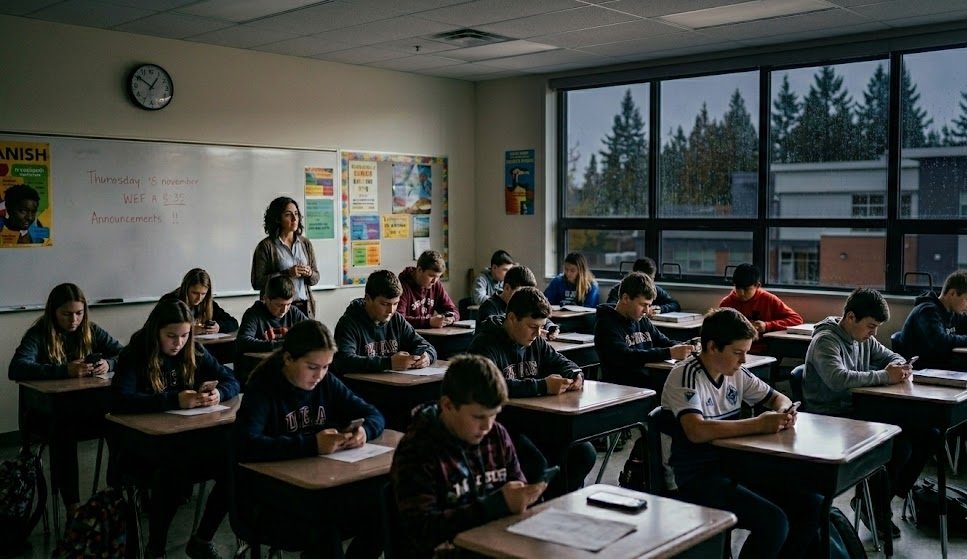
For fifteen years, the morning soundscape of a North American high school was defined by a chaotic, high-decibel social ritual. Today, that noise has been replaced by what educators call a “strange sort of silence.” Even in a room full of students, heads are down, tethered to smartphone screens. This isn’t just a shift in behavior; it is a profound transformation of the Canadian educational environment from a community hub into a collection of isolated digital silos. In districts from North Vancouver to Halifax, teachers are observing that loneliness is rarely loud; it is a quiet, persistent barrier to learning. New longitudinal data from Harvard’s Making Caring Common project confirms that this “silent loneliness” was widespread even before the pandemic and has since become the primary obstacle to student health and happiness—outranking even income or physical exercise as a predictor of long-term well-being. Why This Matters School Leaders and Educators In the Canadian context, where provincial curricula increasingly emphasize “Social-Emotional Learning” (SEL), loneliness is a “silent tax” on academic performance. When students sit in digital isolation, their capacity for cognitive load decreases. For administrators, the implication is clear: community is no longer a “soft skill” or an extracurricular add-on. It is “medicine.” Strategic investment must move toward relational pedagogy—the intentional engineering of social interactions to break the digital trance. Households and Individuals The transition to secondary school is a period of high social risk. Canadian parents often assume that if a child is “connected” via social media, they are socially satisfied. The reality is that many students, including those who appear gregarious, “don’t know where to start” when it comes to face-to-face connection. Households must recognize that the “silence” reported in schools is a signal that students need modeled, low-stakes opportunities to practice human interaction in the physical world. Entrepreneurs and Business Leaders The “loneliness economy” poses a direct threat to the future Canadian workforce. Collaboration, empathy, and the ability to navigate diverse perspectives are the “human-centric” skills that AI cannot replicate. If the “classroom-as-community” fails, the pipeline of emotionally intelligent, collaborative professionals thins. There is a significant opportunity for Canadian EdTech innovators to move away from “solo-user” platforms toward tools that facilitate “stewardship” and collective contribution. Implications and Emerging Signals The move from “classrooms to communities” signals a shift in how we value the school day in Canada: The Rise of the “Classroom Host”: Educators are moving away from being “sages on the stage” to becoming “social architects.” This involves active facilitation—connecting students based on shared interests rather than leaving social bonds to chance. Service-Based Belonging: Canadian schools are finding success in assigning daily roles that create “stewardship.” When a student is responsible for a task—even something as simple as taking attendance or managing equipment—they transition from a passive consumer to a needed contributor. Strategic Physical Re-shuffling: Frequent seating changes (every two months) are becoming a necessity to disrupt fixed social cliques and lower the “social risk” of meeting new peers. Key Takeaways Interrupt the “Digital Trance”: Use intentional rituals (like a “word of the day” or visual check-ins) to break the smartphone silence the moment class begins. Don’t wait for students to look up; give them a social reason to do so. Facilitate “Low-Stakes” Vulnerability: Use play-based learning and non-evaluative projects (like community art or shared cooking) to let students show their unique “quirks” without the pressure of academic judgment. Model Social Connectivity: Actively play the role of a “connector.” If two students share a hobby or a favorite local haunt, name it publicly to give them a built-in conversation starter. Prioritize Contribution over Attendance: Assign tangible roles to every student. Feeling “needed” is the most direct antidote to feeling “lonely.” Normalize Change: Predictable, frequent seating rotations lower the stakes of sitting next to someone new, preventing the “awkwardness” that often keeps students isolated. This reflects a broader shift toward treating the Canadian classroom as a social sanctuary. In an era of digital immersion, the most radical thing a school can do is teach a student how to be seen by—and how to truly see—the person sitting next to them. For fifteen years, the morning soundscape of a North American high school was defined by a chaotic, high-decibel social ritual. Today, that noise has been replaced by what educators call a “strange sort of silence.” Even in a room full of students, heads are down, tethered to smartphone screens. This isn’t just a shift in behavior; it is a profound transformation of the Canadian educational environment from a community hub into a collection of isolated digital silos. In districts from North Vancouver to Halifax, teachers are observing that loneliness is rarely loud; it is a quiet, persistent barrier to learning. New longitudinal data from Harvard’s Making Caring Common project confirms that this “silent loneliness” was widespread even before the pandemic and has since become the primary obstacle to student health and happiness—outranking even income or physical exercise as a predictor of long-term well-being. Why This Matters School Leaders and Educators In the Canadian context, where provincial curricula increasingly emphasize “Social-Emotional Learning” (SEL), loneliness is a “silent tax” on academic performance. When students sit in digital isolation, their capacity for cognitive load decreases. For administrators, the implication is clear: community is no longer a “soft skill” or an extracurricular add-on. It is “medicine.” Strategic investment must move toward relational pedagogy—the intentional engineering of social interactions to break the digital trance. Households and Individuals The transition to secondary school is a period of high social risk. Canadian parents often assume that if a child is “connected” via social media, they are socially satisfied. The reality is that many students, including those who appear gregarious, “don’t know where to start” when it comes to face-to-face connection. Households must recognize that the “silence” reported in schools is a signal that students need modeled, low-stakes opportunities to practice human interaction in the physical world. Entrepreneurs and Business Leaders The “loneliness economy” poses a direct threat to the future Canadian workforce. Collaboration, empathy,

US-Kindergatten-Cover.jpg

6min5160
In the United States, the decision of when to start a child in kindergarten has shifted from a simple age milestone to a strategic maneuver. Known as “redshirting”—a term borrowed from collegiate sports where athletes sit out a year to mature—the practice involves delaying a child’s entry until age six. While social media and high-pressure school districts often frame this as an essential “gift of time,” a landmark 2026 study from the research firm NWEA suggests the benefits are far more fleeting than many parents realize. Despite a small spike during the pandemic, redshirting remains a niche choice, practiced by only about 5% of US families. As states across the country—including Connecticut, Ohio, and Colorado—begin mandating earlier birthdate cut-offs, the debate over “readiness” versus “regulations” is reaching a critical inflection point. Why This Matters Households and Individuals For American parents, the redshirting dilemma is often a choice between perceived academic competitive advantage and immediate financial reality. The NWEA report highlights that a “hold-back year” can cost a family upwards of $15,000 in additional childcare or private preschool expenses. Furthermore, while redshirted children often enjoy a boost in confidence as the oldest in their class, they face long-term risks: they are statistically more likely to drop out of high school because they reach the age of 18 during their junior year. School Leaders and Educators The US educational landscape is currently seeing a wave of “forced redshirting” through legislative changes. States like Connecticut recently moved their cut-off from January 1 to September 1, while Ohio has standardized cut-offs to the first day of school. For administrators, these shifts create logistical hurdles, such as managing “bubble” classes and navigating a 6% drop in disability identification among delayed-entry students. Educators warn that starting late can sometimes delay the diagnosis of developmental needs that would otherwise be caught through early intervention services. Entrepreneurs and Business Leaders The childcare and private “bridge” preschool market is directly influenced by these trends. In affluent US districts, redshirting has created an “academic arms race,” driving demand for high-end “Transitional Kindergarten” (TK) programs. Conversely, in rural and lower-income areas, the 2021-2022 school year saw a jump in redshirting (up to 9% in rural zones), signaling a shift in how these communities utilize local, often less formal, childcare networks to manage school readiness. Implications and Emerging Signals The current state of kindergarten entry reveals several shifting patterns in the US: Standardization of Cut-offs: A growing number of states are moving toward an August or September 1 cut-off to align with the start of the school year, reducing the “January 1” outliers that previously allowed four-year-olds into classrooms. The “Third-Grade Catch-Up”: NWEA data confirms that by the third grade, “on-time” entrants have completely closed the achievement gap with their redshirted peers in math and reading, rendering the initial advantage obsolete. Gender and Racial Disparity: Redshirting remains a “luxury item” predominantly utilized by white families and for boys. Research indicates this practice can inadvertently widen the racial-ethnic achievement gap, as it provides no statistically significant benefit for Hispanic students while offering a 4% boost in “gifted” identification for white students. Key Takeaways Evaluate the “Third-Grade Reset”: Recognize that the 20% to 30% learning advantage seen in redshirted kindergartners is temporary and usually disappears by age nine. Audit Childcare Costs: Before choosing to redshirt, families should perform a cost-benefit analysis of the $12,000–$15,000 expense of an extra year of preschool against the likely short-term academic gains. Prioritize Early Screening: Rather than delaying entry for a “late bloomer,” utilize the public school system’s mandated screening resources to identify and address potential learning disabilities early. Monitor State Cut-off Changes: Parents in states like Ohio and Connecticut should check for new “assessment” or “waiver” processes if their child falls just past new, earlier cut-off dates. Long-term Graduation Risk: Consider the social impact of a child being 19 at high school graduation, which can lead to late-stage disengagement or early entry into the workforce at the cost of higher education. This reflects a broader shift toward a “standardized readiness” model in the US, where the focus is moving away from parental discretion and toward data-driven entry dates and early intervention.

UK-Cover-1280x747.png

6min4530
The UK government has issued its first evidence-backed guidance regarding digital consumption for children under the age of five, marking a significant shift toward a “precautionary approach” in early childhood development. The new recommendations advise that children under five should be limited to one hour of screen time per day, while those under two should avoid solo screen use entirely. Co-authored by the Department for Education’s scientific advisers and the Children’s Commissioner, the guidance arrives amid growing concerns over “fast-paced” digital content and its link to emotional dysregulation. By suggesting “screen swaps”—replacing digital devices with shared reading or physical play—ministers aim to mitigate the risks screens pose to sleep, physical activity, and cognitive growth. This move signals a broader transition in public health policy, treating digital habits with the same level of scrutiny as nutrition or physical exercise. Why This Matters School Leaders and Educators For those in early years settings, this guidance provides a long-awaited benchmark for parental engagement. Educators often deal with the “after-effects” of excessive screen time, such as shortened attention spans or difficulty with peer-to-peer interaction. The focus on “fast-paced” content is particularly relevant; researchers suggest that modern, high-speed digital media can trigger a physiological “fight-or-flight” response in toddlers. Schools and nurseries may now need to align their own digital policies with these national standards, emphasizing the difference between passive consumption and active, adult-led digital learning. Households and Individuals The guidance places a significant burden of “digital modeling” on parents. It acknowledges that children’s brains are “sponges” that mimic adult habits, meaning parental phone use is now directly linked to a child’s developmental environment. However, the reality of modern parenting—where screens often serve as a “digital crutch” during chores or stressful mornings—creates a gap between policy and practice. The shift from “solo” to “joint” viewing is the most practical middle ground offered to families struggling with the “guilt” of screen reliance. Professionals For those working in the tech and toy industries, the government’s recommendation to avoid AI-integrated toys for the under-five demographic is a notable signal. It suggests a growing skepticism toward “smart” playthings that lack human interaction. Furthermore, the emphasis on “slow-paced” content may drive a market shift toward “slow media” or educational tools that prioritize steady engagement over dopamine-driven sensory overload. Implications and Emerging Signals This guidance is not merely a set of rules for parents; it is a harbinger of a more regulated digital childhood. Several key trends are emerging: The End of the “Digital Wild West” for Toddlers: This represents the first time the UK government has provided specific, time-based limits for early years, moving away from vague suggestions toward concrete public health targets. A Shift in Content Standards: The research highlighted by the University of East London suggests that the cadence of content—not just the duration—is a risk factor. We may see future ratings or labels that categorize content based on its pacing and cognitive load. The “Co-Viewing” Mandate: Policy is moving away from the total prohibition of tech and toward “active mediation.” The distinction between a child watching a tablet alone and a child engaging with a screen alongside an adult is now a formal part of developmental strategy. Legislative Momentum: These guidelines arrive alongside consultations on banning social media for under-16s, suggesting a multi-layered government strategy to “de-digitalize” the foundational years of human development. Key Takeaways Prioritize “Co-Engagement”: If a screen must be used, ensure an adult is present to narrate and interact with the child. Solo use is the primary risk factor for cognitive delays. Audit Content Speed: Parents and educators should favor “slower” media—content with fewer cuts, slower speech, and predictable narratives—to avoid triggering stress responses in young brains. Implement “Screen Swaps”: Identify high-friction times (like mealtimes or morning routines) where screens are used as a distraction and gradually replace them with tactile activities or shared reading. Model the Behavior: Children are unlikely to follow time limits if they observe parents in a state of “endless scrolling.” Digital hygiene must be a household-wide commitment. Watch for AI Integration: Be cautious with toys or tools that utilize artificial intelligence for toddlers, as current guidance suggests these are not yet proven to be beneficial for early-stage development. This reflects a broader shift toward treating digital consumption as a public health issue, moving beyond “online safety” to address the fundamental neurological and physical impact of technology on the next generation.

Nigeria-Maths-MAIN-Cover.png

6min5910
The Nigerian Federal Government, through the National Mathematical Centre (NMC), recently reaffirmed that mathematical proficiency is the primary engine for the country’s national development. In a statement marking the International Day of Mathematics, acting CEO Benjamin Oyelami positioned the discipline not merely as an academic requirement, but as the critical infrastructure underpinning Nigeria’s science, technology, and policy planning. This declaration arrives at a pivotal moment. While the government is introducing digital tools like “Wiz Teacher” and “DIMANET” to modernize instruction, Nigeria simultaneously faces a systemic hurdle: a significant proportion of secondary students still struggle to achieve credit passes in the subject. This gap between policy ambition and classroom reality carries profound implications for Africa’s largest economy as it attempts to transition into a global knowledge hub. Why This Matters School Leaders and Educators For educational administrators, this development signals a shift toward “Mental Arithmetic” and digitized pedagogy. There is an urgent mandate to move beyond rote learning toward conceptual mastery. Leaders must now prioritize the “upskilling” of faculty to handle new simulation softwares, as the government increasingly views math teachers as the frontline agents of national security and economic stability. Entrepreneurs and Business Leaders The “talent hunt” programs mentioned by the NMC are essential for the private sector. As Nigeria expands its fintech and agritech sectors, the scarcity of mathematically grounded graduates creates a “talent tax”—where firms must spend more on remedial training for new hires. Business leaders should view the NMC’s partnerships with universities as an entry point for corporate social responsibility (CSR) or direct recruitment pipelines. Students and Academics The formalization of MoUs between the NMC and institutions like the Federal University of Technology, Minna, opens advanced research corridors. For academics, this is a signal that funding and collaborative opportunities are shifting toward applied mathematics—specifically areas that solve “complex socio-economic problems” like climate modeling and cybersecurity. Africa in the Global Context Nigeria’s focus on mathematics mirrors a broader global trend where human capital is being redefined by “STEM-readiness.” In the UK and US, mathematical literacy is increasingly linked to a nation’s “AI Sovereignty.” By prioritizing the same foundations, Nigeria is signaling its intent to move from being a consumer of global technology to a producer. The inclusion of “Mental Arithmetic” in the basic curriculum since 2015 aligns Nigeria with high-performing education systems in East Asia (such as Singapore and South Korea), where foundational speed and accuracy are viewed as precursors to advanced coding and engineering skills. For global investors in Canada or Europe, a mathematically literate Nigeria represents a more reliable “BPO” (Business Process Outsourcing) destination for high-end technical tasks. Implications and Emerging Signals The government’s emphasis on mathematics reveals several strategic shifts: The Digitization of Pedagogy: The introduction of simulation software suggests that Nigeria is preparing for a future where physical textbooks are secondary to interactive, digital learning environments. The “Brain Drain” Risk vs. Gain: While Nigeria aims to produce “high-level manpower,” the global demand for math-heavy roles (Data Scientists, Actuaries) in the West remains high. Without competitive local opportunities, Nigeria risks becoming a “finishing school” for global talent markets. A Shift in National Planning: By stating that “every course in life requires mathematics,” the government is signaling a move toward data-driven governance. We can expect future Nigerian policy—from healthcare to urban planning—to rely more heavily on mathematical modeling. Key Takeaways Watch the Curriculum Pivot: Expect a tighter integration of digital tools (Wiz Teacher/DIMANET) in public and private schools; early adoption will be a competitive advantage for private institutions. Prepare for “Applied” STEM: The era of theoretical mathematics is waning. Future funding and scholarships will likely favor students who can apply math to cybersecurity, medical imaging, and fintech. Invest in Foundational Mastery: For households, the focus should be on ensuring “credit passes” at the secondary level, as these remain the gatekeepers to higher education and high-paying global careers. Monitor Institutional Partnerships: Watch for new “Centres of Excellence.” These hubs will likely become the primary incubators for Nigeria’s next generation of tech entrepreneurs. This reflects a broader shift toward treating educational standards not just as social milestones, but as critical economic indicators in the global race for digital dominance.

Canadian-Cover-1280x905.png

6min4080
The British Columbia School Counsellors’ Association (BCSCA) recently released a comprehensive framework designed to assist educators in navigating the aftermath of tragic events. This guidance arrives at a critical juncture for the global education sector, which increasingly faces the challenge of maintaining learning environments amidst external crises—ranging from localized violence to international conflicts. The core of the initiative is a shift from reactive crisis management to a proactive, trauma-informed pedagogical approach. By focusing on emotional regulation, factual clarity, and the maintenance of routines, the framework aims to mitigate the long-term psychological impact on students while preventing the fragmentation of diverse school communities.   Why This Matters School Leaders and Educators For those on the front lines, the guidance provides a standardized protocol to replace improvisation during high-stress periods. It emphasizes that a teacher’s primary role during a crisis is “modeling calm”—a form of emotional leadership that stabilizes the classroom. This matters because untreated secondary trauma can lead to educator burnout and a breakdown in the school’s social fabric. Professionals (HR and Instructional Design) The principles of “psychological safety” outlined here are directly transferable to the corporate world. Professionals in Human Resources and Instructional Design can adapt these methods—such as validating distress and maintaining predictable structures—to support workforce resilience when external tragedies affect employee mental health and productivity. Households and Individuals Parents and caregivers are often the first to witness “regression” (changes in sleep or behavior) in children. This framework provides a vocabulary for families to understand these changes not as “bad behavior,” but as a natural response to a perceived lack of safety. It empowers households to mirror school-based strategies, creating a consistent environment for the child. Students and Academics For older students and the academic community, the focus on “student agency” is vital. It recognizes that for many, the path to healing is through action—organizing, creating, and problem-solving. This shifts the narrative from students as passive victims of news cycles to active participants in community restoration. Implications and Emerging Signals The release of this guidance reflects several broader shifts in the global educational and social landscape: The De-Stigmatization of “Not Knowing”: There is a growing trend in leadership—both in schools and business—toward “honest uncertainty.” Modeling that it is okay to not have all the answers builds more trust than providing forced or premature conclusions. The Rise of Neuro-Inclusive Crisis Management: For the first time, we are seeing significant emphasis on how traumatic events specifically affect neurodiverse individuals (those with Autism, ADHD, or sensory processing differences). The signal here is clear: crisis support must be as diverse as the population it serves. Combatting “Digital Contagion”: The explicit instruction to limit short-form, graphic media exposure highlights a growing consensus that the “24-hour news cycle” and social media algorithms are active contributors to youth anxiety and community prejudice. Community Cohesion as a Security Measure: The shift toward emphasizing that no single ethnic or religious group is responsible for a tragedy is a strategic move to prevent radicalization and social fracturing in multicultural societies like the UK, US, and Canada.   Key Takeaways Prioritize Routine Over Curriculum: In the immediate wake of a tragedy, the stability of a predictable schedule provides more “educational value” than the lesson plan itself. Monitor for Regression: Watch for behavioral changes across all age groups—from clinginess in younger children to irritability or withdrawal in adolescents—as these are primary indicators of distress. Empower Through Agency: Support students who wish to take prosocial actions (memorials, advocacy, or helping others). “Doing” is a sophisticated form of coping that restores a sense of control. Correct Misinformation Gently: Children often hold fragmented or inaccurate views of events. Providing simple, age-appropriate facts helps prevent the development of fear-based prejudices. Listen More, Speak Less: Children do not need perfect answers; they need a calm, steady adult presence that validates their feelings without judgment. This framework underscores a fundamental truth for the modern “edupreneur” and leader: in an era of global volatility, the ability to foster emotional and community resilience is just as critical as the ability to deliver technical or academic content.