Category: Beauty & Self-Care

Cover.jpg

6min3300
While literacy achievement is often discussed through the lens of phonics, fluency, and cognitive processing, a growing body of research suggests that the “emotional architecture” of the classroom is equally critical. New insights from literacy advocates emphasize that “belonging” is not merely a social goal but a rigorous academic strategy. When students feel safe and validated, they are more willing to take the cognitive risks necessary to master complex reading and writing tasks. By the time a student in Canada reaches high school, they have spent approximately 8,000 hours in the classroom. If that space feels culturally or emotionally alien, literacy outcomes suffer. Conversely, when the environment validates a student’s home language and identity, learning becomes “sticky”—embedding knowledge through authentic human connection rather than rote memorization. Why This Matters School Leaders and Educators For administrators and teachers, the shift toward a “belonging-first” framework requires moving beyond standard curriculum delivery. In Canada—where classrooms are increasingly diverse and inclusive of Indigenous perspectives and immigrant voices—the intentional “legitimization” of home cultures is a pedagogical necessity. Educators are tasked with building “cultural bridges,” such as connecting regional dialects or youth slang to academic vocabulary, ensuring that a student’s lived experience is treated as an asset rather than a barrier. Households and Individuals Parents often view literacy as a set of technical skills to be practiced at home. However, evidence suggests that a child’s emotional comfort is the primary engine of their reading progress. When a “home-away-from-home” environment is created—prioritizing comfortable seating and diverse book collections—children are more likely to engage in deep reading. For families, the takeaway is clear: confidence and curiosity are the prerequisites for competence. Academics and Students The “Validation, Affirmation, Building, and Bridging” (VABB) framework serves as a strategic roadmap for reversing negative stereotypes in marginalized communities. Academics are increasingly focusing on how “coherence” in curriculum—linking social studies, vocabulary, and project-based learning—strengthens neural pathways. For the student, a sense of belonging reduces the “affective filter” (anxiety), allowing the brain to process linguistic information more efficiently. Implications and Emerging Signals The move toward belonging-fueled literacy reflects a broader transition in global education toward “Whole-Child” instructional models. Environmental Design as Pedagogy: Classroom aesthetics are shifting away from industrial lighting and rigid seating. In provinces across Canada, there is a trend toward “resimercial” design (blending residential warmth with commercial durability) to reduce student stress and improve focus. Curriculum Representation as a Functional Requirement: Representation is no longer just a diversity initiative; it is an instructional tool. Future curriculum audits will likely prioritize “identity-reflecting texts” as a core requirement for driving literacy growth in underperforming demographics. Strategic Intentionality Over Hope: As literacy advocates suggest, “hope is not a strategy.” We are seeing a shift where school districts codify “belonging” into their strategic plans, measuring it through student engagement data and long-term academic growth. Key Takeaways Audit the Physical Environment: School leaders should evaluate classrooms for “warmth” and sensory comfort. Small changes—using lamps instead of harsh overheads or creating cozy reading nooks—lower the barriers to student engagement. Implement the VABB Framework: Focus on Validating backgrounds, Affirming identities, Building on existing assets, and Bridging to academic skills. This transforms cultural background into a tool for learning. Prioritize Curricular Coherence: Ensure that core and supplemental programs are aligned. When students see themes like “community” repeated across literacy and social studies, vocabulary acquisition becomes more durable. Diversify “Classroom Libraries”: Ensure students encounter “mirrors” (stories that reflect them) and “windows” (stories that show others). Affirmation is the most direct route to building a child’s reading confidence. Move Beyond Technical Instruction: While phonics and fluency are essential, they must be housed in a supportive environment. Without a sense of belonging, even high-quality technical instruction may fail to produce long-term success. This reflects a broader shift toward an integrated view of education, where the emotional safety of the learner is recognized as the foundational substrate for all academic achievement.

Untitled.jpg

6min6770
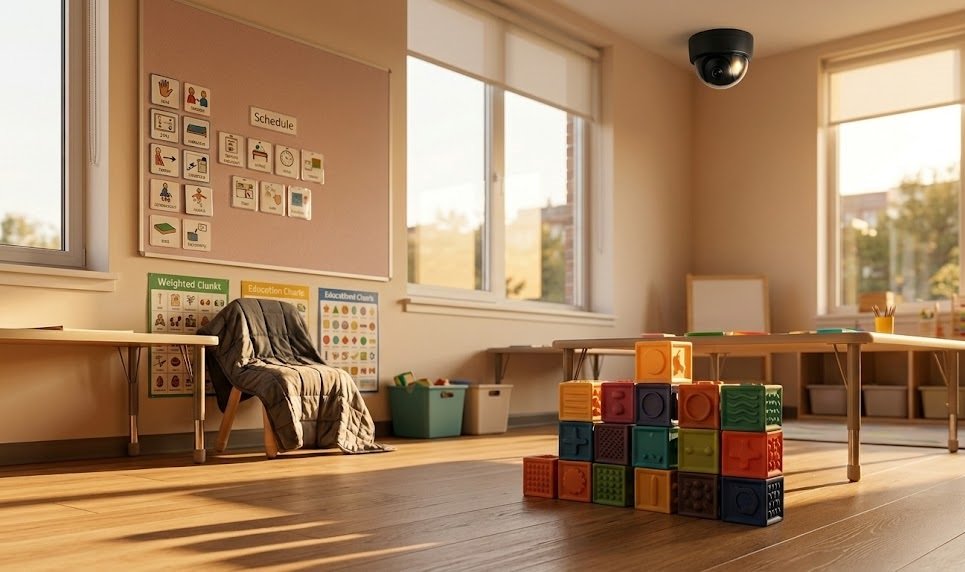
In a period defined by the aggressive removal of personal technology from schools, a countertrend is emerging: the mandated installation of surveillance cameras. Legislators in Florida, Iowa, Maryland, South Carolina, and Tennessee have introduced bills this year to place video monitoring in “self-contained” special education classrooms. These proposals aim to protect students who may be non-verbal or have significant disabilities from improper physical restraints, seclusion, or abuse. While the movement is driven by a desire for accountability and the protection of vulnerable learners, it has ignited a complex debate over privacy, professional trust, and the root causes of classroom safety issues. As more states—including Louisiana and West Virginia—move from optional to mandatory surveillance, the education sector faces a pivotal moment in balancing student safety with the ethical implications of constant monitoring. Why This Matters School Leaders and Educators For administrators, the introduction of cameras represents a dual-edged sword. While footage provides a clear “eyewitness” to resolve disputes and protect staff from false accusations, it also introduces significant logistical burdens. Leaders must navigate the complexities of the Family Educational Rights and Privacy Act (FERPA) and manage the storage and review of sensitive data. For educators, the presence of cameras can feel like a vote of no confidence, potentially impacting morale in a field already suffering from acute labor shortages. Households and Individuals For parents of children with special needs, cameras are often viewed as an essential safeguard. Because many students in these settings cannot communicate what happens during the school day, video provides a voice for the voiceless. It offers peace of mind that any incident involving physical restraint or “seclusion rooms” will be documented, ensuring that “no one can say someone got it wrong.” Students and Academics The primary concern for advocates is the “othering” of students with disabilities. Monitoring only special education classrooms suggests that these environments are inherently more dangerous or less trustworthy than general education settings. There is also the unresolved question of how constant surveillance affects the psychological development and behavioral outcomes of students who are already navigating complex sensory and emotional challenges. Implications and Emerging Signals The push for surveillance reflects a broader shift in educational governance—moving away from trust-based professional autonomy toward data-driven accountability. Technology as a Proxy for Training: Experts suggest that the reliance on cameras may be a “red herring” that allows districts to “check a box” on safety without addressing the underlying need for intensive de-escalation training and better staffing ratios. The Privacy-Accountability Paradox: As cameras become cheaper and more ubiquitous, the threshold for “invasive” technology is lowering. We are seeing a trend where parental rights to transparency are increasingly prioritized over the traditional privacy expectations of the workplace. Legal and Regulatory Standardization: With most states referencing FERPA, we may see a push for updated federal guidelines that specifically address video data in special education, as current 1974 standards did not anticipate the “technology age” of 2026. Workforce Impact: While some argue cameras deter teachers, the deeper signal is a “leaky bucket” pipeline. If cameras are perceived as a tool for “survival” rather than support, they may exacerbate the teacher shortage in the 45 states currently reporting deficits in special education. Key Takeaways Expect Increased Legislative Momentum: Following the lead of Texas and Louisiana, expect more states to move from “parental request” models to mandatory “all-room” surveillance in self-contained units. Prioritize Professional Development: Cameras record incidents but do not prevent them. School leaders should view surveillance as a secondary tool to comprehensive de-escalation and behavioral support training. Audit Privacy Protocols: Districts must establish rigorous protocols for who can view footage and under what circumstances, ensuring compliance with FERPA to avoid litigation. Focus on Culture Over Hardware: Long-term safety is a product of school culture, trust, and community. Surveillance should not be used as a substitute for the “hard work” of cultivating inclusive environments. Monitor Data Gaps: There is currently a lack of empirical evidence proving that cameras reduce the intensity of incidents. Stakeholders should demand better data collection to determine if these investments actually improve student outcomes. This reflects a broader shift toward the “securitization” of the classroom, where digital oversight is increasingly viewed as the only objective arbiter of truth in public institutions.

Kenya-Cover.jpg

6min4400
The 2026 Global Education Monitoring report by UNESCO has unveiled a stark divergence in the East African educational landscape. While the region has made historic strides in school enrollment, a massive “retention gap” remains. Kenya, however, has emerged as a regional outlier, successfully transitioning nearly its entire primary-aged population to completion—a feat that contrasts sharply with the struggles of its neighbors. With Sub-Saharan Africa now home to half of the world’s 273 million out-of-school children, the “Kenyan Model” offers a critical case study in how steady investment and policy consistency can stabilize an education system in an era of global volatility. Why This Matters School Leaders and Educators The data shifts the focus from access to progression. In Kenya, primary completion rates have hit a near-universal 99% for boys and 100% for girls, whereas in Uganda, completion hovers at just over 50%. For educators, this highlights that getting a child into a seat is only the first step; the real challenge is building the infrastructure and social support systems that prevent mid-cycle dropouts. Entrepreneurs and Business Leaders Kenya’s success is partly attributed to a diversified “education marketplace,” including a robust private sector and the rapid expansion of distance learning platforms. For investors and EdTech entrepreneurs, this signals a maturing market where the demand is shifting from basic literacy tools to sophisticated platforms that support secondary transition and vocational readiness. Households and Individuals Education remains a significant private cost. In Uganda, public spending has dipped to 6.6% of government expenditure, forcing families to turn to private institutions, which account for 84% of schools in urban hubs like Kampala. Households are increasingly bearing the financial burden of “quality,” creating a tiered system where income level determines a child’s likelihood of finishing secondary school. Africa in the Global Context The stagnation of education transition rates is a global phenomenon. Between 1985 and 2000, global transition rates jumped by 10%, but progress has since slowed to a crawl. Kenya’s ability to buck this trend and near universal completion puts it in a unique position relative to other emerging markets in Southeast Asia and Latin America. However, the UNESCO report warns that this “diversification” of education—while helpful for capacity—mirrors trends seen in the US and UK, where a heavy reliance on private schooling can entrench long-term inequality. Kenya’s challenge now is to ensure that its “layers” of education do not create a permanent class divide, a risk currently facing many Western education systems. Implications and Emerging Signals The Rise of Private-Public Hybrids: We are seeing a strategic shift where governments are no longer the sole providers but the regulators of a vast network of private and digital learning providers. Secondary School as the New Battleground: With primary completion nearing 100% in leading African economies, the strategic focus is moving to secondary and tertiary retention to avoid a “skills ceiling.” Legal Frameworks as Stability Anchors: UNESCO notes that the fastest gains were made in countries that combined investment with “core policies” and strong legal frameworks, rather than radical, frequent overhauls. Key Takeaways Prioritize Completion over Enrollment: Success should be measured by the number of students who finish the cycle, not just those who register on day one. Watch the “Urban-Private” Shift: In cities like Kampala and Nairobi, private education is no longer an alternative—it is the primary system. Businesses should align their CSR and training initiatives with these private networks. Prepare for a High-Skilled Pipeline: Kenya’s near-universal completion rate means it will likely produce a more literate and digitally-ready workforce than its neighbors by 2030. Mitigate Inequality Risks: As the system diversifies, policy-makers must implement targeted financial support for low-income households to prevent a “two-tier” society. “This reflects a broader shift toward a more pragmatic, multi-stakeholder approach to African education, where the state provides the framework and the private sector provides the scale.”

Canada-Cover-2.jpg

12min7010
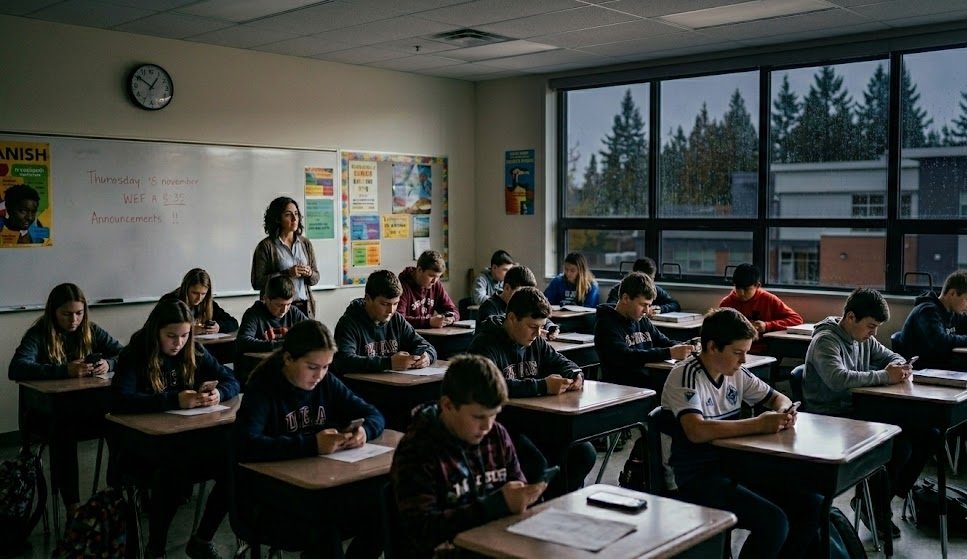
For fifteen years, the morning soundscape of a North American high school was defined by a chaotic, high-decibel social ritual. Today, that noise has been replaced by what educators call a “strange sort of silence.” Even in a room full of students, heads are down, tethered to smartphone screens. This isn’t just a shift in behavior; it is a profound transformation of the Canadian educational environment from a community hub into a collection of isolated digital silos. In districts from North Vancouver to Halifax, teachers are observing that loneliness is rarely loud; it is a quiet, persistent barrier to learning. New longitudinal data from Harvard’s Making Caring Common project confirms that this “silent loneliness” was widespread even before the pandemic and has since become the primary obstacle to student health and happiness—outranking even income or physical exercise as a predictor of long-term well-being. Why This Matters School Leaders and Educators In the Canadian context, where provincial curricula increasingly emphasize “Social-Emotional Learning” (SEL), loneliness is a “silent tax” on academic performance. When students sit in digital isolation, their capacity for cognitive load decreases. For administrators, the implication is clear: community is no longer a “soft skill” or an extracurricular add-on. It is “medicine.” Strategic investment must move toward relational pedagogy—the intentional engineering of social interactions to break the digital trance. Households and Individuals The transition to secondary school is a period of high social risk. Canadian parents often assume that if a child is “connected” via social media, they are socially satisfied. The reality is that many students, including those who appear gregarious, “don’t know where to start” when it comes to face-to-face connection. Households must recognize that the “silence” reported in schools is a signal that students need modeled, low-stakes opportunities to practice human interaction in the physical world. Entrepreneurs and Business Leaders The “loneliness economy” poses a direct threat to the future Canadian workforce. Collaboration, empathy, and the ability to navigate diverse perspectives are the “human-centric” skills that AI cannot replicate. If the “classroom-as-community” fails, the pipeline of emotionally intelligent, collaborative professionals thins. There is a significant opportunity for Canadian EdTech innovators to move away from “solo-user” platforms toward tools that facilitate “stewardship” and collective contribution. Implications and Emerging Signals The move from “classrooms to communities” signals a shift in how we value the school day in Canada: The Rise of the “Classroom Host”: Educators are moving away from being “sages on the stage” to becoming “social architects.” This involves active facilitation—connecting students based on shared interests rather than leaving social bonds to chance. Service-Based Belonging: Canadian schools are finding success in assigning daily roles that create “stewardship.” When a student is responsible for a task—even something as simple as taking attendance or managing equipment—they transition from a passive consumer to a needed contributor. Strategic Physical Re-shuffling: Frequent seating changes (every two months) are becoming a necessity to disrupt fixed social cliques and lower the “social risk” of meeting new peers. Key Takeaways Interrupt the “Digital Trance”: Use intentional rituals (like a “word of the day” or visual check-ins) to break the smartphone silence the moment class begins. Don’t wait for students to look up; give them a social reason to do so. Facilitate “Low-Stakes” Vulnerability: Use play-based learning and non-evaluative projects (like community art or shared cooking) to let students show their unique “quirks” without the pressure of academic judgment. Model Social Connectivity: Actively play the role of a “connector.” If two students share a hobby or a favorite local haunt, name it publicly to give them a built-in conversation starter. Prioritize Contribution over Attendance: Assign tangible roles to every student. Feeling “needed” is the most direct antidote to feeling “lonely.” Normalize Change: Predictable, frequent seating rotations lower the stakes of sitting next to someone new, preventing the “awkwardness” that often keeps students isolated. This reflects a broader shift toward treating the Canadian classroom as a social sanctuary. In an era of digital immersion, the most radical thing a school can do is teach a student how to be seen by—and how to truly see—the person sitting next to them. For fifteen years, the morning soundscape of a North American high school was defined by a chaotic, high-decibel social ritual. Today, that noise has been replaced by what educators call a “strange sort of silence.” Even in a room full of students, heads are down, tethered to smartphone screens. This isn’t just a shift in behavior; it is a profound transformation of the Canadian educational environment from a community hub into a collection of isolated digital silos. In districts from North Vancouver to Halifax, teachers are observing that loneliness is rarely loud; it is a quiet, persistent barrier to learning. New longitudinal data from Harvard’s Making Caring Common project confirms that this “silent loneliness” was widespread even before the pandemic and has since become the primary obstacle to student health and happiness—outranking even income or physical exercise as a predictor of long-term well-being. Why This Matters School Leaders and Educators In the Canadian context, where provincial curricula increasingly emphasize “Social-Emotional Learning” (SEL), loneliness is a “silent tax” on academic performance. When students sit in digital isolation, their capacity for cognitive load decreases. For administrators, the implication is clear: community is no longer a “soft skill” or an extracurricular add-on. It is “medicine.” Strategic investment must move toward relational pedagogy—the intentional engineering of social interactions to break the digital trance. Households and Individuals The transition to secondary school is a period of high social risk. Canadian parents often assume that if a child is “connected” via social media, they are socially satisfied. The reality is that many students, including those who appear gregarious, “don’t know where to start” when it comes to face-to-face connection. Households must recognize that the “silence” reported in schools is a signal that students need modeled, low-stakes opportunities to practice human interaction in the physical world. Entrepreneurs and Business Leaders The “loneliness economy” poses a direct threat to the future Canadian workforce. Collaboration, empathy,

US-Kindergatten-Cover.jpg

6min5160
In the United States, the decision of when to start a child in kindergarten has shifted from a simple age milestone to a strategic maneuver. Known as “redshirting”—a term borrowed from collegiate sports where athletes sit out a year to mature—the practice involves delaying a child’s entry until age six. While social media and high-pressure school districts often frame this as an essential “gift of time,” a landmark 2026 study from the research firm NWEA suggests the benefits are far more fleeting than many parents realize. Despite a small spike during the pandemic, redshirting remains a niche choice, practiced by only about 5% of US families. As states across the country—including Connecticut, Ohio, and Colorado—begin mandating earlier birthdate cut-offs, the debate over “readiness” versus “regulations” is reaching a critical inflection point. Why This Matters Households and Individuals For American parents, the redshirting dilemma is often a choice between perceived academic competitive advantage and immediate financial reality. The NWEA report highlights that a “hold-back year” can cost a family upwards of $15,000 in additional childcare or private preschool expenses. Furthermore, while redshirted children often enjoy a boost in confidence as the oldest in their class, they face long-term risks: they are statistically more likely to drop out of high school because they reach the age of 18 during their junior year. School Leaders and Educators The US educational landscape is currently seeing a wave of “forced redshirting” through legislative changes. States like Connecticut recently moved their cut-off from January 1 to September 1, while Ohio has standardized cut-offs to the first day of school. For administrators, these shifts create logistical hurdles, such as managing “bubble” classes and navigating a 6% drop in disability identification among delayed-entry students. Educators warn that starting late can sometimes delay the diagnosis of developmental needs that would otherwise be caught through early intervention services. Entrepreneurs and Business Leaders The childcare and private “bridge” preschool market is directly influenced by these trends. In affluent US districts, redshirting has created an “academic arms race,” driving demand for high-end “Transitional Kindergarten” (TK) programs. Conversely, in rural and lower-income areas, the 2021-2022 school year saw a jump in redshirting (up to 9% in rural zones), signaling a shift in how these communities utilize local, often less formal, childcare networks to manage school readiness. Implications and Emerging Signals The current state of kindergarten entry reveals several shifting patterns in the US: Standardization of Cut-offs: A growing number of states are moving toward an August or September 1 cut-off to align with the start of the school year, reducing the “January 1” outliers that previously allowed four-year-olds into classrooms. The “Third-Grade Catch-Up”: NWEA data confirms that by the third grade, “on-time” entrants have completely closed the achievement gap with their redshirted peers in math and reading, rendering the initial advantage obsolete. Gender and Racial Disparity: Redshirting remains a “luxury item” predominantly utilized by white families and for boys. Research indicates this practice can inadvertently widen the racial-ethnic achievement gap, as it provides no statistically significant benefit for Hispanic students while offering a 4% boost in “gifted” identification for white students. Key Takeaways Evaluate the “Third-Grade Reset”: Recognize that the 20% to 30% learning advantage seen in redshirted kindergartners is temporary and usually disappears by age nine. Audit Childcare Costs: Before choosing to redshirt, families should perform a cost-benefit analysis of the $12,000–$15,000 expense of an extra year of preschool against the likely short-term academic gains. Prioritize Early Screening: Rather than delaying entry for a “late bloomer,” utilize the public school system’s mandated screening resources to identify and address potential learning disabilities early. Monitor State Cut-off Changes: Parents in states like Ohio and Connecticut should check for new “assessment” or “waiver” processes if their child falls just past new, earlier cut-off dates. Long-term Graduation Risk: Consider the social impact of a child being 19 at high school graduation, which can lead to late-stage disengagement or early entry into the workforce at the cost of higher education. This reflects a broader shift toward a “standardized readiness” model in the US, where the focus is moving away from parental discretion and toward data-driven entry dates and early intervention.

AI-Cover.jpg

5min5140
A new national survey by Echelon Insights, conducted on behalf of the National Parents Union, reveals a significant gap between the rapid integration of artificial intelligence in American schools and parental oversight. While 56% of parents believe their children are already using generative AI chatbots, 8 in 10 are calling for more stringent guardrails. These findings emerge during a period of high political friction in Washington, following executive orders aimed at accelerating AI infusion in education while simultaneously challenging state-level regulations. The data suggests that US parents are not inherently anti-AI—52% see an equal balance of benefits and downsides—but they are deeply concerned about safety and transparency. Currently, 47% of K-12 parents report that their schools have provided no information regarding AI policies, and 57% feel they have had no opportunity to provide input on how these tools are deployed in the classroom. Why This Matters School Leaders and Educators For US administrators, the lack of communication is a strategic risk. With nearly half of parents unaware of school AI policies, there is a high potential for friction when AI-related issues—such as academic integrity or data privacy—arise. Success in districts like those in Massachusetts shows that proactive engagement, such as “Parent Nights,” can smooth the transition from a single school experiment to a district-wide standard. Households and Individuals American families are increasingly anxious about the “digital barrage” facing their children. The demand for “pop-up” warnings (86%) and parental alerts for harmful discussions (85%) shows that families want AI to function with the same safety expectations as traditional media. Furthermore, only 20% of US mothers feel they fully understand the privacy risks, indicating a massive need for consumer-friendly education on data collection. Professionals and Entrepreneurs The controversy surrounding the Kids Internet and Digital Safety (KIDS) Act (H.R. 7757) serves as a warning for ed-tech entrepreneurs. Parents are pushing Congress to reject bills they perceive as “industry-led” loopholes. For business leaders, the message is clear: products that prioritize transparent “guardrails” over “addictive design” will have a competitive advantage in the K-12 market. Implications and Emerging Signals The Federal-State Tension: Recent executive orders have created a “regulation vacuum” by attempting to preempt state laws. This has led to a grassroots push for federal bills that offer more than just “voluntary” industry standards. Privacy as a Priority: Data collection is no longer a background technicality. A majority of parents now demand to know exactly how ed-tech companies are harvesting student data. The “AI Literacy” Gap: With 39% of parents wanting to be involved but lacking technical knowledge, “AI literacy” for the household is becoming as critical as literacy for the student.   Key Takeaways Audit Your Communication: US schools should immediately review their AI policy distribution. If a policy exists, ensure it is in the parent handbook; if it doesn’t, create a community working group. Scrutinize Vendor Privacy: Procurement teams must look beyond functional utility. Parents are signaling they will hold schools accountable for the data-sharing agreements of third-party platforms. Monitor H.R. 7757: Keep a close eye on the progress of the KIDS Act. The backlash against “loophole” legislation suggests that future regulations will likely be more prescriptive for tech companies. Host AI Literacy Events: Bridge the trust gap by hosting sessions that explain how AI is being used in the curriculum and what specific protections are in place for student data.  

Cover-Phone-Ban.jpg

6min3060
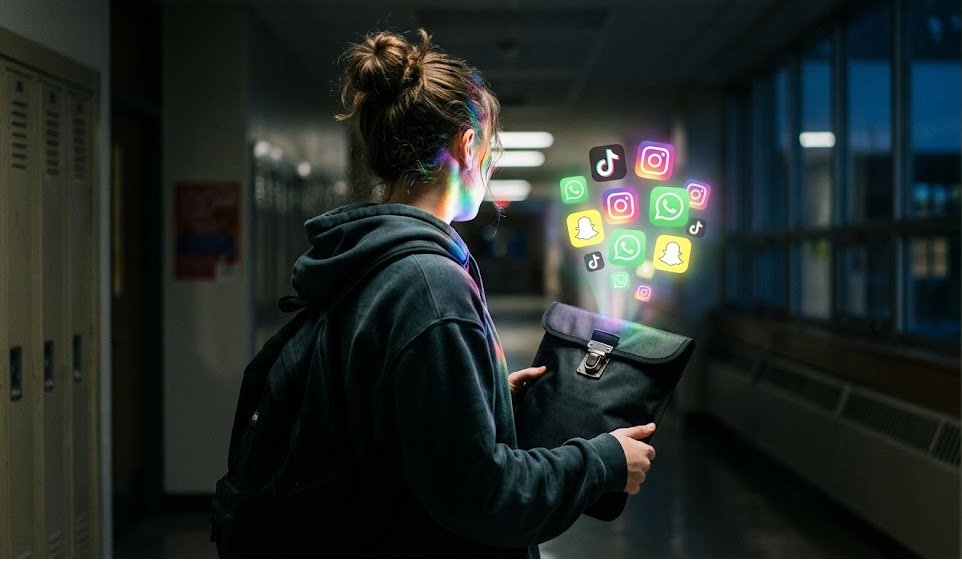
The global movement to purge smartphones from classrooms has reached a fever pitch. In the UK, the Department for Education (DfE) recently strengthened guidance advising “phone-free” school days, while the House of Lords has backed statutory bans to protect student wellbeing. Across the Atlantic, the shift is even more pronounced: as of 2026, over 30 US states and several Canadian provinces, including Ontario and Quebec, have implemented “bell-to-bell” bans. However, new research from the University of Birmingham suggests that physical restriction is not the “silver bullet” many hoped for. The study found that while strict bans—such as using signal-blocking pouches—improve classroom focus, they do not necessarily reduce overall screen time. Instead, they often trigger a “rebound effect,” where students intensify their device use at home to compensate for the school-day “drought,” sacrificing sleep and physical activity in the process. Why This Matters The efficacy of phone bans is not merely a pedagogical concern; it is a systemic challenge affecting the intersection of education, child development, and domestic life. School Leaders and Educators For heads of school, the research validates the “out of sight” approach for improving immediate classroom behavior and face-to-face socialization. However, it also introduces a new burden. Educators must recognize that bans do not eliminate online conflict; they often merely delay it. Tensions that brew on WhatsApp or social media during the day frequently erupt the moment students leave the gates, requiring schools to manage “after-hours” behavioral fallout. Households and Individuals The study highlights that the home has become the primary battleground for digital wellness. When schools implement total bans, the pressure shifts to parents to manage an intensified digital appetite in the evening. As students admit to “making up time” at home, parental rules—prioritizing homework and physical clubs—remain the most effective counterweight to excessive use. Students and Academics For the academic community, this “messy, mixed picture” suggests that neither total prohibition nor complete permissiveness is a perfect solution. While restrictive policies boost social interaction, permissive policies can actually reduce feelings of isolation for some students. The challenge for researchers is now to identify a “middle way” that fosters digital literacy rather than just enforcing digital abstinence.   Implications and Emerging Signals The University of Birmingham study, mirrored by emerging data from the US and Canada, points toward several strategic shifts in how society manages youth technology: The Displacement Effect: Strict school policies may be inadvertently creating a “pressure cooker” environment. Data from the RAND Corporation and NCES in the US suggest that while 86% of principals see safety benefits, students report increased anxiety and a drive to “binge” on content post-school. The Limits of Legislation: With the UK government considering statutory bans and several US states (like California and Florida) already enforcing them, there is a risk that policy focuses too heavily on access and not enough on education. Evolving Safeguarding: “Online” conflict no longer requires a device to be present to disrupt a school day. Digital tensions are now an atmospheric element of the school environment that requires proactive mediation, not just device confiscation. Key Takeaways Recognize the Rebound: School leaders should communicate with parents that in-school bans may lead to increased device “craving” at home, necessitating a coordinated approach to screen time limits. Integrate Digital Literacy: Since bans change when issues happen rather than if they happen, schools must prioritize teaching conflict resolution and digital etiquette as part of the core curriculum. Support Parental Governance: The most successful outcomes involve a “triad” of school policy, parental boundaries, and student buy-in. Schools should provide resources to help parents set effective home boundaries. Focus on Replacement, Not Just Restriction: To prevent students from “making up time” on screens, both schools and households should actively incentivize “high-dopamine” offline alternatives, such as sports and social clubs. Monitor the “Signal”: Watch for further results from the SMART Schools project and similar longitudinal studies in North America, as they suggest the most effective policies are those that adapt to a school’s specific social fabric. This reflects a broader shift toward acknowledging that while we can control the hardware, we have yet to master the habit. A phone in a pouch is a temporary silence, not a permanent solution.