

 Edupreneur Insights Desk
The Digital Rebound: Why School Phone Bans are Not a Silver Bullet
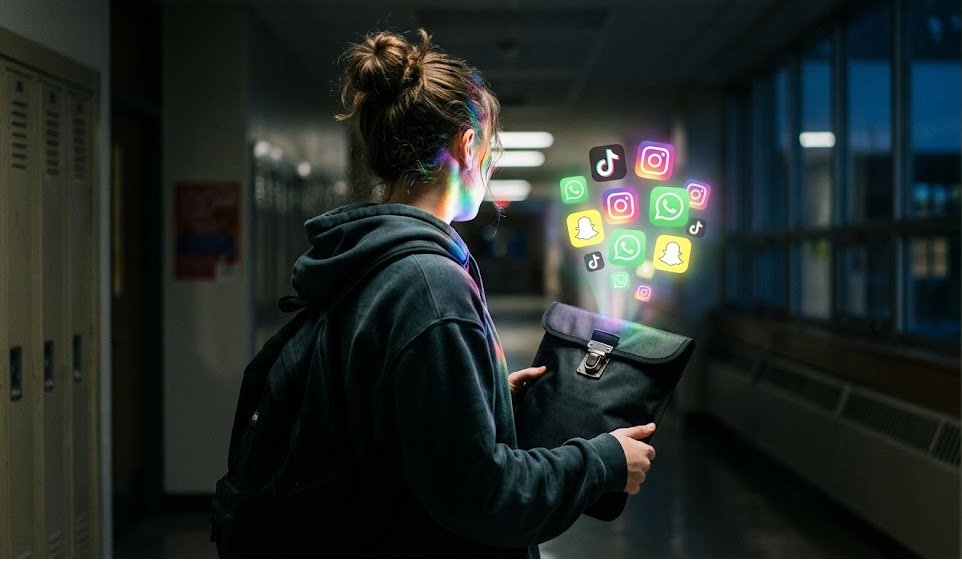
The global movement to purge smartphones from classrooms has reached a fever pitch. In the UK, the Department for Education (DfE) recently strengthened guidance advising “phone-free” school days, while the House of Lords has backed statutory bans to protect student wellbeing. Across the Atlantic, the shift is even more pronounced: as of 2026, over 30 US states and several Canadian provinces, including Ontario and Quebec, have implemented “bell-to-bell” bans.
However, new research from the University of Birmingham suggests that physical restriction is not the “silver bullet” many hoped for. The study found that while strict bans—such as using signal-blocking pouches—improve classroom focus, they do not necessarily reduce overall screen time. Instead, they often trigger a “rebound effect,” where students intensify their device use at home to compensate for the school-day “drought,” sacrificing sleep and physical activity in the process.

Why This Matters
The efficacy of phone bans is not merely a pedagogical concern; it is a systemic challenge affecting the intersection of education, child development, and domestic life.
School Leaders and Educators
For heads of school, the research validates the “out of sight” approach for improving immediate classroom behavior and face-to-face socialization. However, it also introduces a new burden. Educators must recognize that bans do not eliminate online conflict; they often merely delay it. Tensions that brew on WhatsApp or social media during the day frequently erupt the moment students leave the gates, requiring schools to manage “after-hours” behavioral fallout.
Households and Individuals
The study highlights that the home has become the primary battleground for digital wellness. When schools implement total bans, the pressure shifts to parents to manage an intensified digital appetite in the evening. As students admit to “making up time” at home, parental rules—prioritizing homework and physical clubs—remain the most effective counterweight to excessive use.
Students and Academics
For the academic community, this “messy, mixed picture” suggests that neither total prohibition nor complete permissiveness is a perfect solution. While restrictive policies boost social interaction, permissive policies can actually reduce feelings of isolation for some students. The challenge for researchers is now to identify a “middle way” that fosters digital literacy rather than just enforcing digital abstinence.
Implications and Emerging Signals
The University of Birmingham study, mirrored by emerging data from the US and Canada, points toward several strategic shifts in how society manages youth technology:
- The Displacement Effect: Strict school policies may be inadvertently creating a “pressure cooker” environment. Data from the RAND Corporation and NCES in the US suggest that while 86% of principals see safety benefits, students report increased anxiety and a drive to “binge” on content post-school.
- The Limits of Legislation: With the UK government considering statutory bans and several US states (like California and Florida) already enforcing them, there is a risk that policy focuses too heavily on access and not enough on education.
- Evolving Safeguarding: “Online” conflict no longer requires a device to be present to disrupt a school day. Digital tensions are now an atmospheric element of the school environment that requires proactive mediation, not just device confiscation.

Key Takeaways
- Recognize the Rebound: School leaders should communicate with parents that in-school bans may lead to increased device “craving” at home, necessitating a coordinated approach to screen time limits.
- Integrate Digital Literacy: Since bans change when issues happen rather than if they happen, schools must prioritize teaching conflict resolution and digital etiquette as part of the core curriculum.
- Support Parental Governance: The most successful outcomes involve a “triad” of school policy, parental boundaries, and student buy-in. Schools should provide resources to help parents set effective home boundaries.
- Focus on Replacement, Not Just Restriction: To prevent students from “making up time” on screens, both schools and households should actively incentivize “high-dopamine” offline alternatives, such as sports and social clubs.
- Monitor the “Signal”: Watch for further results from the SMART Schools project and similar longitudinal studies in North America, as they suggest the most effective policies are those that adapt to a school’s specific social fabric.
This reflects a broader shift toward acknowledging that while we can control the hardware, we have yet to master the habit. A phone in a pouch is a temporary silence, not a permanent solution.

