Category: Refined Living

AI-Cover.jpg

5min5140
A new national survey by Echelon Insights, conducted on behalf of the National Parents Union, reveals a significant gap between the rapid integration of artificial intelligence in American schools and parental oversight. While 56% of parents believe their children are already using generative AI chatbots, 8 in 10 are calling for more stringent guardrails. These findings emerge during a period of high political friction in Washington, following executive orders aimed at accelerating AI infusion in education while simultaneously challenging state-level regulations. The data suggests that US parents are not inherently anti-AI—52% see an equal balance of benefits and downsides—but they are deeply concerned about safety and transparency. Currently, 47% of K-12 parents report that their schools have provided no information regarding AI policies, and 57% feel they have had no opportunity to provide input on how these tools are deployed in the classroom. Why This Matters School Leaders and Educators For US administrators, the lack of communication is a strategic risk. With nearly half of parents unaware of school AI policies, there is a high potential for friction when AI-related issues—such as academic integrity or data privacy—arise. Success in districts like those in Massachusetts shows that proactive engagement, such as “Parent Nights,” can smooth the transition from a single school experiment to a district-wide standard. Households and Individuals American families are increasingly anxious about the “digital barrage” facing their children. The demand for “pop-up” warnings (86%) and parental alerts for harmful discussions (85%) shows that families want AI to function with the same safety expectations as traditional media. Furthermore, only 20% of US mothers feel they fully understand the privacy risks, indicating a massive need for consumer-friendly education on data collection. Professionals and Entrepreneurs The controversy surrounding the Kids Internet and Digital Safety (KIDS) Act (H.R. 7757) serves as a warning for ed-tech entrepreneurs. Parents are pushing Congress to reject bills they perceive as “industry-led” loopholes. For business leaders, the message is clear: products that prioritize transparent “guardrails” over “addictive design” will have a competitive advantage in the K-12 market. Implications and Emerging Signals The Federal-State Tension: Recent executive orders have created a “regulation vacuum” by attempting to preempt state laws. This has led to a grassroots push for federal bills that offer more than just “voluntary” industry standards. Privacy as a Priority: Data collection is no longer a background technicality. A majority of parents now demand to know exactly how ed-tech companies are harvesting student data. The “AI Literacy” Gap: With 39% of parents wanting to be involved but lacking technical knowledge, “AI literacy” for the household is becoming as critical as literacy for the student.   Key Takeaways Audit Your Communication: US schools should immediately review their AI policy distribution. If a policy exists, ensure it is in the parent handbook; if it doesn’t, create a community working group. Scrutinize Vendor Privacy: Procurement teams must look beyond functional utility. Parents are signaling they will hold schools accountable for the data-sharing agreements of third-party platforms. Monitor H.R. 7757: Keep a close eye on the progress of the KIDS Act. The backlash against “loophole” legislation suggests that future regulations will likely be more prescriptive for tech companies. Host AI Literacy Events: Bridge the trust gap by hosting sessions that explain how AI is being used in the curriculum and what specific protections are in place for student data.  

Cover-Phone-Ban.jpg

6min3060
The global movement to purge smartphones from classrooms has reached a fever pitch. In the UK, the Department for Education (DfE) recently strengthened guidance advising “phone-free” school days, while the House of Lords has backed statutory bans to protect student wellbeing. Across the Atlantic, the shift is even more pronounced: as of 2026, over 30 US states and several Canadian provinces, including Ontario and Quebec, have implemented “bell-to-bell” bans. However, new research from the University of Birmingham suggests that physical restriction is not the “silver bullet” many hoped for. The study found that while strict bans—such as using signal-blocking pouches—improve classroom focus, they do not necessarily reduce overall screen time. Instead, they often trigger a “rebound effect,” where students intensify their device use at home to compensate for the school-day “drought,” sacrificing sleep and physical activity in the process. Why This Matters The efficacy of phone bans is not merely a pedagogical concern; it is a systemic challenge affecting the intersection of education, child development, and domestic life. School Leaders and Educators For heads of school, the research validates the “out of sight” approach for improving immediate classroom behavior and face-to-face socialization. However, it also introduces a new burden. Educators must recognize that bans do not eliminate online conflict; they often merely delay it. Tensions that brew on WhatsApp or social media during the day frequently erupt the moment students leave the gates, requiring schools to manage “after-hours” behavioral fallout. Households and Individuals The study highlights that the home has become the primary battleground for digital wellness. When schools implement total bans, the pressure shifts to parents to manage an intensified digital appetite in the evening. As students admit to “making up time” at home, parental rules—prioritizing homework and physical clubs—remain the most effective counterweight to excessive use. Students and Academics For the academic community, this “messy, mixed picture” suggests that neither total prohibition nor complete permissiveness is a perfect solution. While restrictive policies boost social interaction, permissive policies can actually reduce feelings of isolation for some students. The challenge for researchers is now to identify a “middle way” that fosters digital literacy rather than just enforcing digital abstinence.   Implications and Emerging Signals The University of Birmingham study, mirrored by emerging data from the US and Canada, points toward several strategic shifts in how society manages youth technology: The Displacement Effect: Strict school policies may be inadvertently creating a “pressure cooker” environment. Data from the RAND Corporation and NCES in the US suggest that while 86% of principals see safety benefits, students report increased anxiety and a drive to “binge” on content post-school. The Limits of Legislation: With the UK government considering statutory bans and several US states (like California and Florida) already enforcing them, there is a risk that policy focuses too heavily on access and not enough on education. Evolving Safeguarding: “Online” conflict no longer requires a device to be present to disrupt a school day. Digital tensions are now an atmospheric element of the school environment that requires proactive mediation, not just device confiscation. Key Takeaways Recognize the Rebound: School leaders should communicate with parents that in-school bans may lead to increased device “craving” at home, necessitating a coordinated approach to screen time limits. Integrate Digital Literacy: Since bans change when issues happen rather than if they happen, schools must prioritize teaching conflict resolution and digital etiquette as part of the core curriculum. Support Parental Governance: The most successful outcomes involve a “triad” of school policy, parental boundaries, and student buy-in. Schools should provide resources to help parents set effective home boundaries. Focus on Replacement, Not Just Restriction: To prevent students from “making up time” on screens, both schools and households should actively incentivize “high-dopamine” offline alternatives, such as sports and social clubs. Monitor the “Signal”: Watch for further results from the SMART Schools project and similar longitudinal studies in North America, as they suggest the most effective policies are those that adapt to a school’s specific social fabric. This reflects a broader shift toward acknowledging that while we can control the hardware, we have yet to master the habit. A phone in a pouch is a temporary silence, not a permanent solution.  

Zara Lianne20 March 2026
zz-9.avif

3min6750
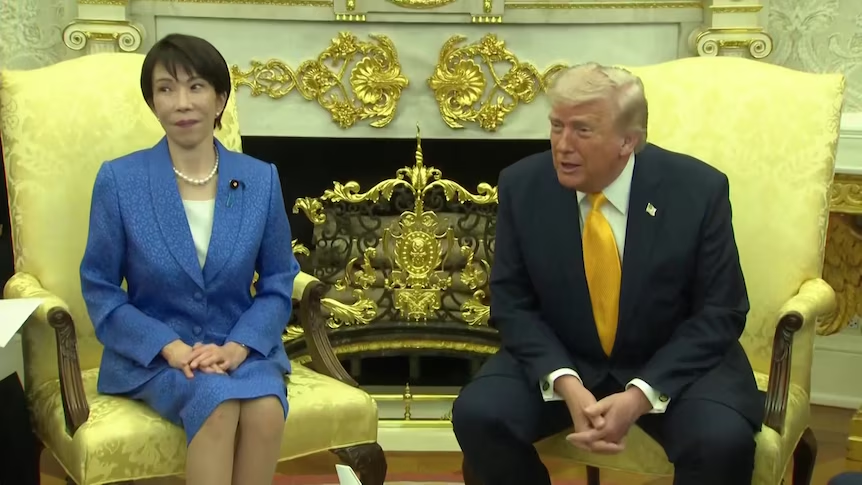
A notable moment during Japanese Prime Minister Sanae Takaichi’s official visit to the United States came when President Donald Trump referenced the historic Pearl Harbor attack in a remark that drew mixed reactions. Responding to a question from a Japanese journalist on why Washington did not inform allies ahead of its reported strike on Iran on February 28, Trump alluded to the 1941 attack on Pearl Harbor. “Who knows better about surprise than Japan? Why didn’t you tell me about Pearl Harbor?” he said, as Takaichi appeared visibly startled. The comment prompted some laughter among those present in the Oval Office, but observers noted signs of discomfort from the Japanese leader. A senior reporter from Yomiuri Shimbun, Mineko Tokito, who was present, said the Prime Minister’s reaction was evident. According to her, Takaichi’s expression changed noticeably, with her smile fading as she leaned back, seemingly taken aback by the unexpected reference. Some members of the public in Japan also reacted to the exchange. One observer described the situation as difficult for the Prime Minister to navigate, while another said the remark evoked unease given the historical significance of the event. The attack on Pearl Harbor on December 7, 1941, saw Japanese forces launch a surprise assault on a US naval base in Hawaii, killing more than 2,300 American military personnel and dozens of civilians. The incident led to the United States entering World War II. The conflict later culminated in the US dropping atomic bombs on Hiroshima and Nagasaki in August 1945, resulting in massive casualties before Japan’s eventual surrender. Despite this history, both countries have since built a strong alliance, often emphasising reconciliation over past conflict. In recent years, leaders from both sides have made symbolic visits to sites linked to the war, underscoring efforts to strengthen ties. Ahead of the visit, Takaichi had expressed concerns that discussions in Washington might be challenging, particularly over tensions surrounding the Strait of Hormuz following recent developments involving Iran. However, during the meeting, Trump described the relationship between both countries as friendly and commended Japan’s willingness to contribute to efforts aimed at ensuring safe passage through the strategic waterway. The Strait of Hormuz remains a critical global oil route, with about 20 per cent of the world’s oil supply passing through it, and recent disruptions have contributed to rising energy prices.

zz-51.jpg

2min9440
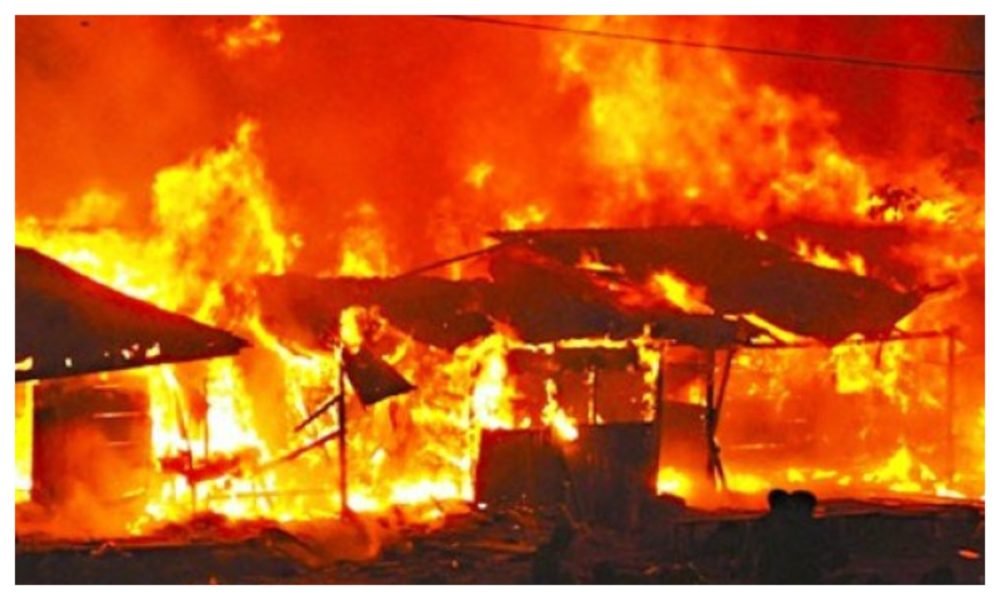
Two separate fire incidents in Dutse, Jigawa State, have resulted in the deaths of two children, while another outbreak was contained without casualties. The incidents were confirmed by the Public Relations Officer of the NSCDC, Jigawa State Command, ASC Badruddeen Tijjani, in a statement issued to journalists in the state capital on Thursday. According to the statement, the first incident occurred around 4:00 a.m. at Layin Dabinai, near Masallacin Malam Babba, where a fire engulfed rooms occupied by two children of Aminuddeen Abubakar, a staff member of the Federal University Dutse (FUD). Despite swift emergency response efforts, the intensity of the blaze made rescue impossible, and the children were burned beyond recognition and confirmed dead at the scene. The NSCDC expressed condolences to the bereaved family, urging residents to remain vigilant and adopt strict fire safety measures. In a separate incident later that day, at about 12:00 noon, another fire broke out in the same Gida Dubu area. Preliminary findings indicated that the fire was caused by an electrical spark in the kitchen of one Nura Garba. No lives were lost in the second incident, as firefighters responded promptly and brought the situation under control, preventing further destruction. However, the fire spread to nearby buildings, damaging kitchens and roofing materials. The NSCDC said investigations are ongoing to determine the causes of both incidents and to recommend preventive measures. The command also advised residents to exercise caution when handling electrical appliances and open flames, reiterating its commitment to protecting lives and property across the state. It further stressed that fire safety is a shared responsibility and called on the public to take proactive steps to prevent such tragedies.

James Obasi20 March 2026
zz-25-1280x673.webp

3min7050
President Bola Tinubu and First Lady Oluremi Tinubu have arrived back in Nigeria following a two-day state visit to the United Kingdom. The presidential aircraft landed on Friday, where the couple was received by senior government officials, including Senate President Godswill Akpabio. A video shared on X by the President’s Special Adviser on Media and Public Communication, Sunday Dare, captured the arrival. Dare described the visit as highly successful, noting the excitement that greeted the President’s return. The trip, which took place between March 18 and 19, 2026, marked the first state visit by a Nigerian leader to the UK in 37 years, the last being in 1989. Tinubu and the First Lady had departed Abuja earlier in the week and arrived at London Stansted Airport. As part of the visit, King Charles III and Queen Camilla hosted the Nigerian delegation at Windsor Castle, where they were accorded full ceremonial honours, including a guard of honour and a carriage procession. The President also attended a state banquet hosted by the British monarch. During the banquet, Tinubu reflected on his time in the UK during Nigeria’s military rule, highlighting the support he received, while reaffirming the enduring relationship between both countries. King Charles, in his remarks, described Nigeria and the UK as partners with strong cultural, economic, and interpersonal ties. Tinubu also held high-level talks with UK Prime Minister Keir Starmer, with discussions centred on deepening bilateral cooperation. Among the outcomes of the visit was the signing of a £746 million financing deal involving UK Export Finance, the Nigerian Ports Authority, and the Federal Ministry of Finance. Additionally, both countries agreed on measures to facilitate the return of failed Nigerian asylum seekers, visa overstayers, and convicted offenders, as part of efforts to strengthen migration management and bilateral collaboration.

Ifunanya Okafor20 March 2026
zz-50.jpg

2min5900
As Muslims across Nigeria mark the end of Ramadan and celebrate Eid-el-Fitr, the National Chairman of the All Progressives Congress, Nentawe Yilwatda, alongside the Grand Sheikh of the Caring and Sharing Sufi Centre, Dr. Rasheed Akinbile, have called on citizens to embrace unity, discipline, and shared responsibility for national development. In a statement issued by his Special Adviser on Media and Communications Strategy, Abimbola Tooki, Yilwatda extended Eid greetings to President Bola Tinubu, members of the Federal Executive Council, the National Assembly, the party’s National Working Committee, and Muslim faithful nationwide. He described Ramadan as a sacred period marked by reflection, sacrifice, compassion, and renewed devotion to God, urging Nigerians to carry its lessons into their everyday lives. Yilwatda stressed the importance of unity, kindness, and fairness, particularly as the country navigates complex challenges. He also commended the President’s leadership, noting ongoing efforts to promote economic stability, sustainable growth, and national cohesion, while encouraging continued public support. Similarly, Akinbile emphasised the need for Muslims to sustain the discipline cultivated during Ramadan beyond the fasting period, especially in the lead-up to future elections. He noted that the conclusion of Ramadan should signal the beginning of a life rooted in continuous devotion and God-consciousness. The cleric urged adherence to the values of kindness, unity, and mutual respect, highlighting that patience and restraint developed during Ramadan are vital for peaceful political participation and national progress. He added that maintaining harmony and togetherness in daily interactions is key to achieving prosperity, not only for Nigeria but for the global community. Both leaders underscored the importance of sustaining the virtues of faith, sacrifice, and unity beyond Ramadan, describing them as essential to building a more peaceful and prosperous nation.

Zara Lianne20 March 2026
zz-8-1280x853.avif

2min2610
Ukrainian President Volodymyr Zelenskiy has reiterated that Kyiv will not surrender any territory in exchange for peace, but expressed readiness to work with U.S. President Donald Trump toward achieving a genuine and lasting resolution to the war. “Ukrainians will not give their land to the occupier,” Zelenskiy declared in a post on Telegram and X, describing any agreement reached without Ukraine’s participation as a “dead solution.” Trump announced on Friday that he will meet Russian President Vladimir Putin in Alaska on August 15, with Zelenskiy apparently excluded from the talks aimed at ending Russia’s invasion, now in its fourth year. According to sources, senior officials from Ukraine, the U.S., and Europe are expected to convene in the UK ahead of the Trump–Putin summit. Zelenskiy’s remarks mark his first response to reports that discussions between Washington and Moscow may involve a settlement that cements Russia’s control over territories seized during the conflict. Such a deal would reportedly require Ukraine to relinquish Crimea—illegally annexed by Russia in 2014—and the entire Donbas region, including the withdrawal of Ukrainian forces from parts of Luhansk and Donetsk still under Kyiv’s control. “Any decisions made without Ukraine are, in effect, decisions against peace. They will achieve nothing,” Zelenskiy said. “The answer to Ukraine’s territorial question is already enshrined in our Constitution. No one can, or will, deviate from that.” He reaffirmed Ukraine’s readiness to work with Trump and “all our partners” to secure “a peace that cannot be dismantled by Moscow’s ambitions.” Meanwhile, hostilities continue. Russia’s defense ministry reported shooting down 118 Ukrainian drones over its territory overnight, including two targeting Moscow. Ukraine’s air force said Russia launched 47 drones and two Iskander missiles, with Ukrainian air defenses intercepting one missile and 16 drones by early morning.

zz-7.avif

2min4910
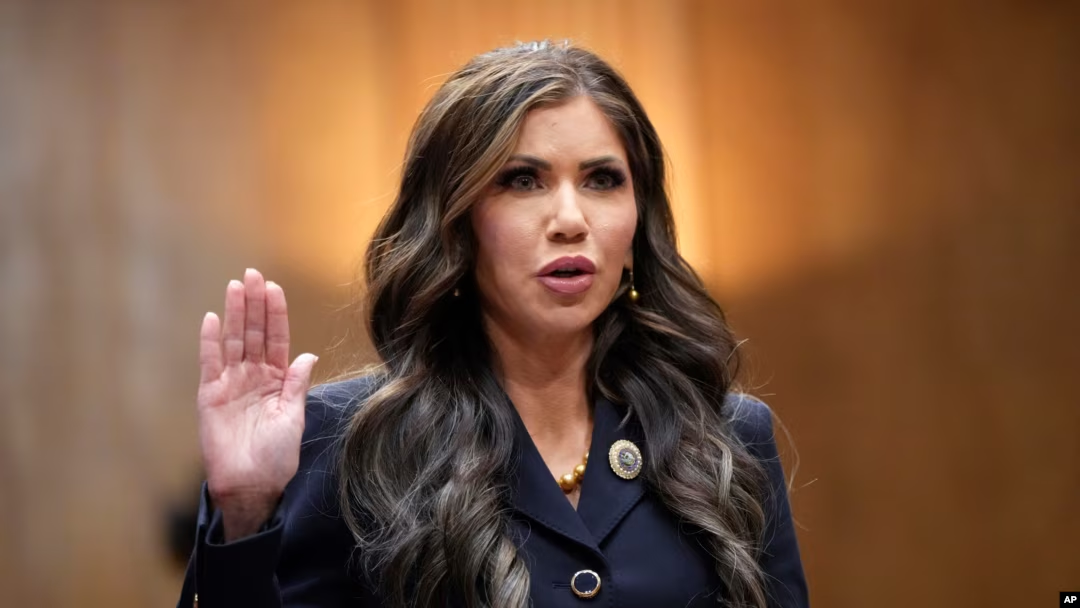
Markwayne Mullin, nominated by Donald Trump to head the Department of Homeland Security, is set to appear before a Senate committee on Wednesday. The Republican lawmaker will testify before the Senate Homeland Security and Governmental Affairs Committee at 9:30 a.m. ET in Washington as part of his confirmation process. Trump selected Mullin to replace Kristi Noem, who was dismissed earlier this month following criticism over her handling of immigration operations in Minnesota. If the committee advances his nomination, the full Senate is expected to vote later this month, where a simple majority will determine the outcome. Mullin would assume leadership of the department at a time when it is grappling with funding challenges that have led to staffing shortages among airport security personnel and increased delays for travellers. A former mixed martial artist known for his outspoken style, Mullin is serving his first term in the Senate after spending a decade in the House of Representatives. He has been a consistent supporter of Trump’s policies, including efforts to detain undocumented immigrants. Following his nomination on March 5, Mullin expressed readiness to advance the administration’s agenda, stating he looks forward to working with those responsible for national security to protect the country. The Department of Homeland Security, established in 2002 after the September 11 attacks, oversees agencies such as Customs and Border Protection, Immigration and Customs Enforcement, Transportation Security Administration, United States Coast Guard, United States Secret Service, and Federal Emergency Management Agency. The department has faced growing scrutiny in recent months, particularly after the deaths of two US citizens during protests in Minnesota. In the aftermath, Noem and border official Greg Bovino described the individuals as domestic terrorists, drawing backlash. Trump later replaced Noem with Tom Homan, who scaled back the Minnesota operation. Following a series of tense congressional hearings, Noem was reassigned to a newly created role as Special Envoy for “The Shield of the Americas,” a regional security initiative.

zz-24.webp

3min2470
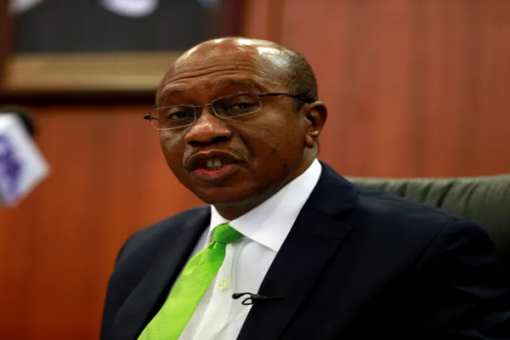
A High Court of the Federal Capital Territory in Maitama, Abuja, on Tuesday ordered Economic and Financial Crimes Commission to pay N500,000 for delaying the trial of former Central Bank of Nigeria governor, Godwin Emefiele. The trial judge, Hamza Muazu, imposed the cost after the prosecution failed to present its witness at the resumed hearing. While granting what he described as a final adjournment, the judge cautioned the prosecution to ensure its witnesses are present at the next sitting. Emefiele is facing a 20-count amended charge marked FCT/HC/CR/577/2023, bordering on alleged criminal breach of trust, forgery, abuse of office, conspiracy, and obtaining money under false pretences. Among the allegations is that he secured $6.23 million under the pretext of funding international election observers for the 2023 general elections. He is also accused of conferring undue advantages on two firms April 1616 Nigeria Ltd and Architekon Nigeria Ltd. At the hearing, prosecuting counsel, Abba Mohammed, informed the court that the prosecution’s witness, a Deputy Commissioner of Police, Elohor Okpoziakeo, was absent despite prior notification. He explained that the witness was attending another matter at the Gwagwalada Division of the FCT High Court involving a personal case against a commercial bank, where a garnishee order had been placed on his account. The prosecutor added that efforts had been made to secure the witness’s attendance, including writing to the Inspector General of Police through the Force Headquarters, and subsequently requested an adjournment. However, defence counsel, Matthew Burkaa, opposed the request, citing provisions of the Administration of Criminal Justice Act, 2015, which limit adjournments in criminal trials. He argued that the prosecution had already exceeded the allowable number, having obtained about eight adjournments since the trial began, and faulted its handling of the case. In his ruling, Justice Muazu acknowledged the legal limits on adjournments but held that the court retains discretion to grant them in the interest of justice. He noted that the absent witness, being an investigator in the case, was crucial and should not be excluded. Relying on Section 396(6) of the Act, the judge awarded N500,000 in costs against the prosecution for the delay and adjourned the matter to April 27 and 28 for continuation of the trial.

zz-6-1280x853.avif

3min7080
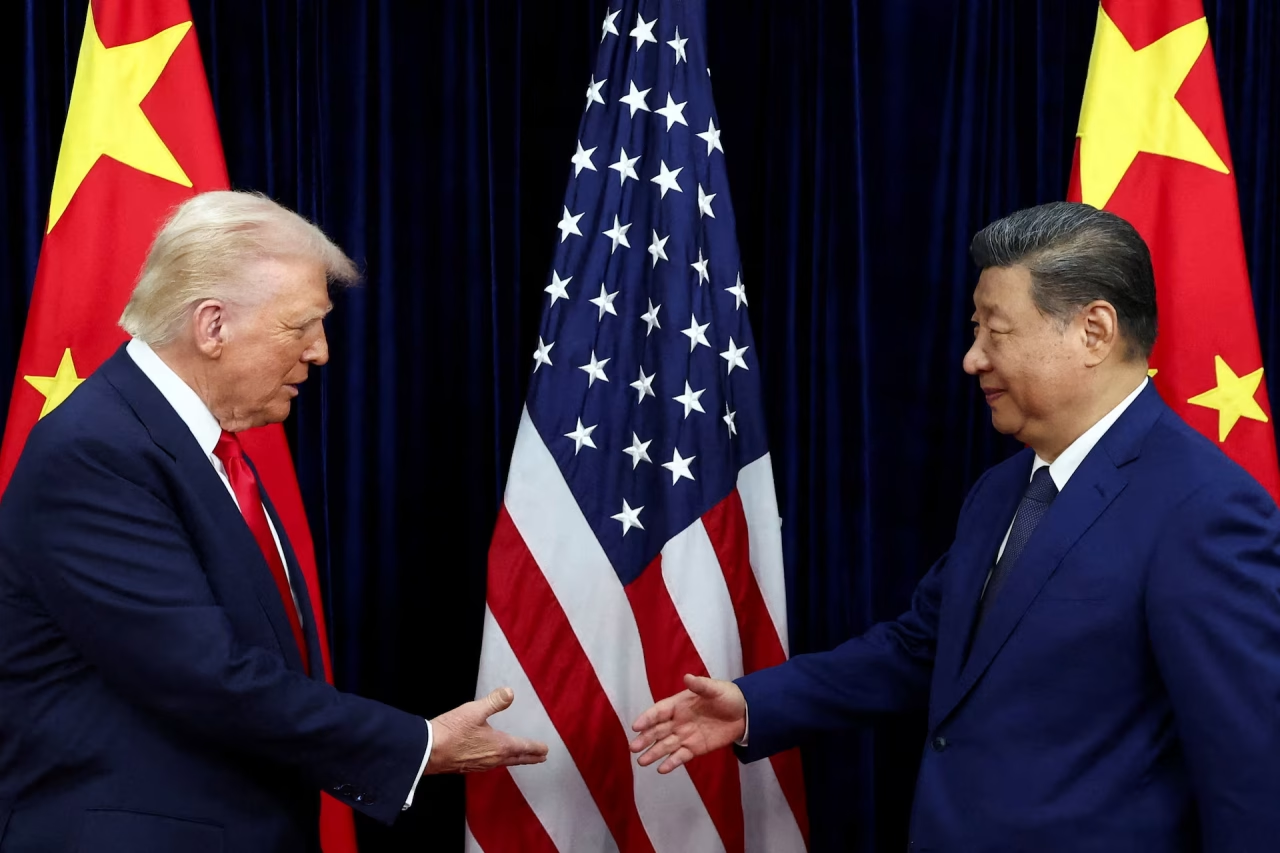
US President Donald Trump announced on Monday that he plans to postpone his high-profile visit to China later this month by roughly a month due to the ongoing war in Iran. “We’ve requested that we delay it a month or so,” Trump told reporters at the White House, emphasizing the importance of staying in the US to manage the conflict. The meeting with Chinese President Xi Jinping was originally scheduled for March 31 to April 2, following their last in-person talks in October of last year. Chinese foreign affairs spokesperson Lin Jian said on Tuesday that Beijing and Washington are discussing “the timing and related matters of President Trump’s visit to China.” The Iran war has overtaken many of Trump’s other foreign policy priorities, with the intensifying conflict and disruptions to global oil supplies threatening to push up energy prices in the US. Trump stressed that the delay was intended solely to ensure he could remain available to oversee the war. “I’m looking forward to being with him,” he said of Xi. “We have a very good relationship. There’s no tricks to it either… We’ve got a war going on. I think it’s important that I be here.” US Treasury Secretary Scott Bessent added that the postponement was not linked to any request for China to assist in the Gulf or trade disagreements. “The President wants to remain in DC to coordinate the war effort… Travelling abroad at a time like this may not be optimal,” he said. This comes a day after Trump indicated he might delay the trip if China did not help ensure safe passage through the Strait of Hormuz, a key route for Gulf energy shipments. He also called on other countries to assist with securing transit through the channel. The situation has heightened tensions between the world’s two largest economies. China, a major buyer of Iranian energy, has criticized US and Israeli military actions against the country. In parallel, Washington has announced plans to investigate trade practices in several countries, including China, following the Supreme Court’s February ruling against Trump’s tariff policy. US and Chinese officials recently met in Paris to discuss investments, tariffs, and economic sanctions. Chinese trade representative Li Chenggang said the talks produced agreement on some issues and that negotiations would continue. US officials updated their Chinese counterparts on changes to Washington’s tariff measures, while China expressed “serious concern” about potential trade probes and urged the US to maintain economic stability.