
 Tech & Tools Desk
Dangote Declines Purchase of NNPC Refineries, Takes A Swipe At DAPPMAN
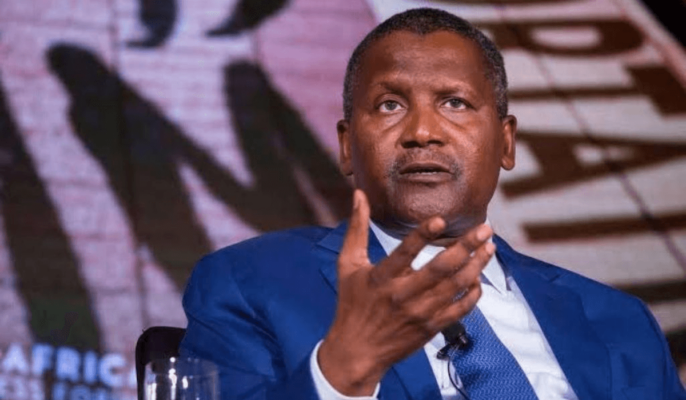
The President of Dangote Group, Alhaji Aliko Dangote, has dismissed suggestions that he should purchase one of Nigeria’s idle government-owned refineries rather than expand the capacity of his privately owned refinery in Lekki, Lagos.
Dangote made this known while announcing the planned expansion of his $20 billion refinery from 650,000 barrels per day to 1.4 million barrels per day, a move he said would make it the largest in the world within three years.
Responding to questions about why he chose expansion over acquisition, Dangote, who spoke alongside his longtime associate, Femi Otedola, said he preferred to grow his own facility rather than face accusations of monopolizing the industry.
He urged other wealthy individuals and groups—particularly the Depot and Petroleum Products Marketers Association of Nigeria (DAPPMAN)—to consider acquiring or constructing refineries themselves.
“Buying those refineries? The moment we do that, there’ll be noise everywhere. There are others with even more resources than we have—let them take their shot so that nobody complains about monopoly,” Dangote stated. “DAPPMAN and similar groups should buy some of the refineries. And if they’re not for sale, they should build their own. It’s better for others to invest too so that we’re not the only ones supporting the President’s policies.”
He added that President Bola Tinubu had pledged to back the local refining sector with crude oil supply, saying the government’s support would help boost domestic production.
“For us, we already have the infrastructure, so expanding our refinery makes more sense than taking over another facility,” he explained. “We’re doubling our capacity from 650,000 to 1.4 million barrels per day because the environment is now favorable for such investment.”
Dangote emphasized that achieving the government’s vision of a $1 trillion economy would require collective effort, urging other investors to take initiative in the refining sector rather than relying on one player.
The billionaire industrialist also recalled that he had once attempted to acquire the refineries during former President Olusegun Obasanjo’s administration in 2007, but was forced to return them after the late President Umaru Musa Yar’Adua reversed the sale.
“We bought the refineries in January 2007, but when the new administration came in, we had to return them. They claimed Obasanjo sold them too cheaply. Since then, over $18 billion has reportedly been spent on them, yet they’re still not functioning. I doubt they ever will,” Dangote remarked.
Meanwhile, the Group Chief Executive Officer of the Nigerian National Petroleum Company Limited (NNPC), Bayo Ojulari, has insisted that the country’s refineries—Port Harcourt, Warri, and Kaduna—will be restored to operation.
Calls for privatisation have grown louder following the repeated shutdowns of the Port Harcourt and Warri refineries, both of which had recently been declared operational after major rehabilitation projects.
Industry stakeholders, including the Manufacturers Association of Nigeria, have described the facilities as a financial burden on the nation, urging the government to sell them off to improve efficiency and accountability.
Despite multiple rounds of funding—$1.4 billion for Port Harcourt, $897 million for Warri, and $586 million for Kaduna—the refineries have remained non-functional for years.
Ojulari revealed that the NNPC is currently conducting a “Technical and Commercial Review” to determine whether the refineries should be overhauled or repurposed for improved performance and long-term sustainability.
According to him, the review is part of a broader effort to reposition the refineries into profitable, globally competitive assets capable of meeting Nigeria’s fuel needs.