
 Tech & Tools Desk
Iran’s Supreme Leader Makes First Public Appearance Since Israel-Iran War
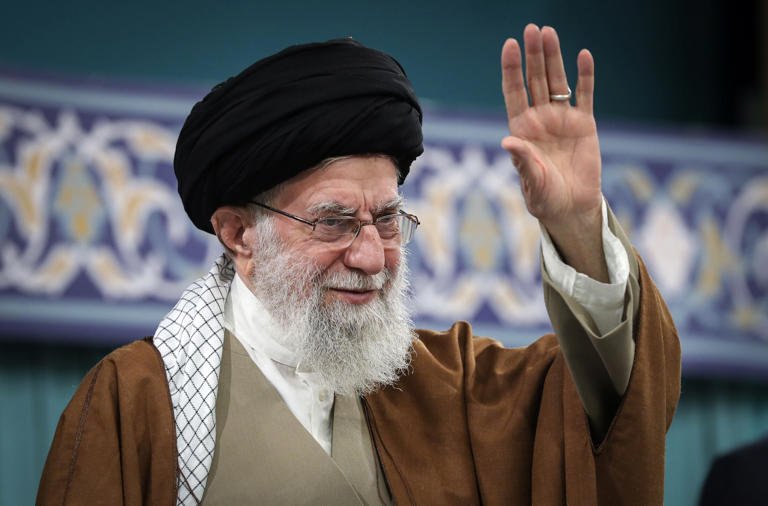
Iran’s Supreme Leader Ayatollah Ali Khamenei resurfaced publicly on Saturday for the first time since the outbreak of the 12-day war between Israel and Iran.
Why It Matters
Khamenei’s appearance signals a possible shift in Iran’s stance following a conflict that left over 900 Iranians dead and saw U.S. airstrikes target three key nuclear sites. His emergence from what sources describe as “bunker seclusion” may reflect renewed confidence in his security or political pressure to project strength during a major religious occasion.
The event comes amid rising tensions, Iran’s suspension of cooperation with the International Atomic Energy Agency (IAEA), and reports of widespread internet blackouts across the country developments seen as signs of further diplomatic and military uncertainty.
What Happened
The 86-year-old leader attended a mourning ceremony marking the eve of Ashoura at a mosque near his residence in Tehran. State television broadcast images of him waving and acknowledging a crowd that stood chanting in his honor.
Khamenei had remained unseen during the recent conflict, fueling speculation about his security and health. The ceremony took place under tight security, with senior Iranian officials, including the parliament speaker, present. There were no immediate reports of any public statements made by Khamenei during the event.
Background
The latest conflict erupted when Israel launched preemptive strikes over concerns Iran was accelerating its nuclear weapons program. Israeli forces targeted defense installations, military officials, and nuclear scientists. In response, Iran fired over 550 ballistic missiles at Israel, most of which were intercepted. The attacks killed 28 people.
The U.S. followed up with strikes on Iran’s nuclear facilities in Fordow, Natanz, and Isfahan an assault President Donald Trump described as “total obliteration.” Iran has since confirmed significant damage to its nuclear infrastructure and blocked U.N. inspectors from accessing the sites.
On Wednesday, Iranian President Masoud Pezeshkian formalized a law halting cooperation with the IAEA after parliament approved the measure.
The ceremony Khamenei attended commemorates the martyrdom of Prophet Muhammad’s grandson, Hussein a defining moment in Shiite Islam that deepened the historic divide between Sunni and Shiite Muslims.
Global Reactions
U.S. State Department spokeswoman Tammy Bruce criticized Iran’s withdrawal from nuclear oversight, calling it “unacceptable” and urging Tehran to “fully cooperate without delay.”
President Trump, speaking in June, took a pointed jab at Khamenei: “You’re a man of faith, respected in your country. But you got beat to hell.”
Khamenei, for his part, had previously hailed Iran’s missile strike on a U.S. base in Qatar as a “slap to America’s face,” warning against further U.S. or Israeli military action.
What’s Next
The full extent of the damage to Iran’s nuclear program remains unclear, including whether Iran relocated enriched uranium or centrifuges prior to the strikes. Iran’s readiness to resume nuclear negotiations with the U.S. is also uncertain, especially after rejecting Trump’s call for immediate talks