

 James Obasi
Nigeria’s Soaring Debt Discouraging Foreign Investment — Afe Babalola
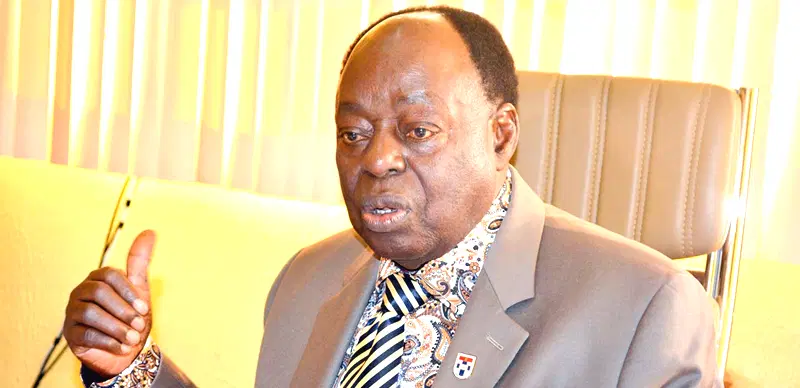
Renowned legal icon and founder of Afe Babalola University, Ado-Ekiti (ABUAD), Aare Afe Babalola, has raised alarm over Nigeria’s escalating debt profile, warning that it is tarnishing the country’s economic image and deterring foreign investment.
Babalola made the remarks during the 2025 International Leadership Conference on Leadership, Governance, Sustainable Change, and Wealth Creation (2.0), held over the weekend in Ado-Ekiti. The event was jointly organised by ABUAD, Nigeria; Trinity Western University (TWU), Vancouver, Canada; and the African Centre for Leadership, Strategy, and Development (CentreLSD).
Speaking on the conference theme, “Shaping Transformational Leaders for a Changing World: Tackling Insecurity, Governance and Development,” Babalola described it as timely, noting that Nigeria’s current financial situation is deeply concerning.
He stated:
“Records show that Nigeria is now a heavily indebted country, with total public debt reaching N152.4 trillion, or $99.7 billion. As a result, many foreign companies are reluctant to invest here. Banks have also raised concerns, stating that the Central Bank of Nigeria (CBN) is unable to honour government-issued promissory notes due to the Federal Government’s inability to meet its financial obligations.”
Babalola warned that the country’s worsening debt crisis is eroding investor confidence and putting additional pressure on the domestic financial system. He called for urgent fiscal reforms and more responsible economic management to restore investor trust and promote sustainable development.
He also referenced the Nigerian Constitution, stressing the government’s obligation to uphold democracy and ensure the welfare and security of its citizens:
“Section 14 of the Constitution clearly states that sovereignty belongs to the people, and that the security and welfare of the people shall be the primary purpose of government.”
In a keynote lecture titled “Transformational Leadership in an Insecure and Disruptive Era: Building Ethical, Resilient and Impactful Leaders for Africa,” Dr. Otive Igbuzor, founding Executive Director of CentreLSD, emphasised that transformational leadership is key to overcoming Nigeria’s challenges including corruption, poor governance, youth unemployment, gender inequality, and environmental degradation.
According to Igbuzor, Africa needs a new wave of visionary leaders who can challenge outdated systems and drive innovation. He urged the Nigerian government to integrate leadership education across all levels of schooling, making it as fundamental as literacy.
He added that ethical leadership, institutional integrity, inclusive governance, and continental collaboration must form the bedrock of Africa’s development strategy.
In her remarks, ABUAD Vice-Chancellor, Professor Smaranda Olarinde, described the conference as timely and crucial. She highlighted the importance of global, regional, and public-private partnerships in addressing pressing issues such as insecurity, poverty, hunger, infrastructural deficits, and economic volatility.

