

 Lifestyle & Wellness Desk
Over 300 South Koreans Among 475 Arrested in U.S. Immigration Raid on Hyundai-LG Battery Plant
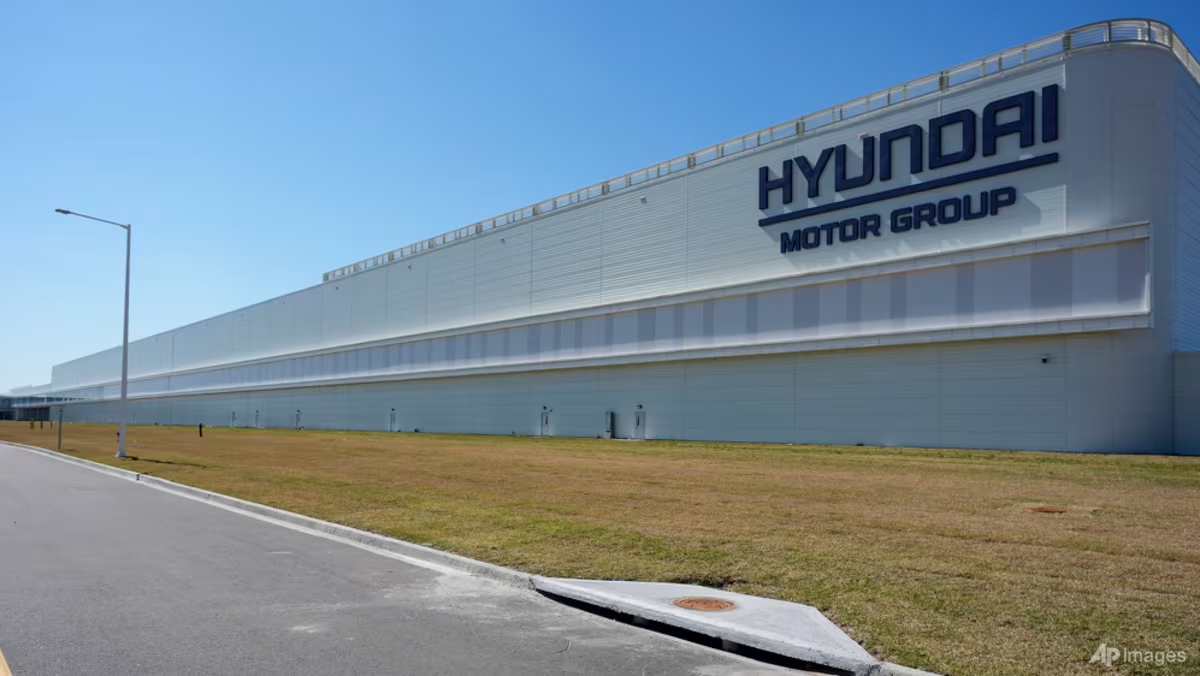
More than 300 South Korean nationals were among 475 individuals arrested during a U.S. immigration raid at a Hyundai-LG Energy Solution battery plant construction site in Georgia, according to South Korea’s Foreign Minister, Cho Hyun.
The raid, conducted on Thursday in the town of Ellabell, marks the largest single-site immigration enforcement action under former U.S. President Donald Trump’s anti-illegal immigration campaign, said Steven Schrank, a special agent with Homeland Security Investigations in Atlanta.
According to Schrank, the operation followed months of criminal investigation into “unlawful employment practices and serious federal violations” at the joint-venture plant between Hyundai Motor and LG Energy Solution.
“This was not a random immigration sweep,” Schrank clarified. “It was the result of a detailed, ongoing criminal investigation. Agents did not simply round up workers; this was targeted based on evidence.”
South Korean Government Responds
At an emergency press briefing in Seoul, Foreign Minister Cho Hyun said the government was “deeply concerned” by the incident.
“Out of the 475 individuals arrested, more than 300 are believed to be South Korean nationals,” he confirmed. “We feel a strong sense of responsibility. If necessary, I am prepared to travel to Washington for direct talks.”
South Korea’s Foreign Ministry had previously urged the U.S. to ensure the rights of its citizens are respected during law enforcement actions.
“The economic activities of Korean investors and the legitimate rights of our nationals should not be unjustly violated,” said spokesperson Lee Jae-woong.
Details on the Arrests
Schrank stated that those detained were found to be either illegally present in the U.S., working in violation of their visa status, or had overstayed their authorized stay. The arrested individuals have since been transferred to U.S. Immigration and Customs Enforcement (ICE) for potential deportation proceedings.
Former President Trump, when asked about the raid, responded:
“They were illegal aliens, and ICE was just doing its job.”
Schrank added that the operation was intended to protect American jobs and ensure compliance with federal labor laws.
“This effort reflects our commitment to safeguarding lawful employment opportunities, protecting workers from exploitation, and maintaining a level playing field for companies that follow the rules,” he said.
Impact on Hyundai and LG Operations
While Hyundai said that none of the arrested individuals were directly employed by the company, LG Energy Solution confirmed that 47 of its employees were detained—46 South Koreans and one Indonesian.
The company further stated that around 250 of those arrested were working for a third-party contractor, and that the majority were South Korean nationals.
As a precautionary measure, LG has temporarily suspended all non-essential business trips to the U.S.
“Those currently in the U.S. on assignments will either return home or remain in place, depending on their specific roles,” said a company spokesperson.
Broader Implications
South Korea is Asia’s fourth-largest economy and a major player in the global automotive and electronics sectors. Its companies have invested billions of dollars in U.S. manufacturing plants, both to tap into the American market and to avoid tariffs under protectionist policies pursued during Trump’s presidency.
In July, Seoul pledged $350 billion in new U.S. investments, and South Korean President Lee Jae-myung met with Trump just last month to reaffirm economic ties.
The Ellabell plant targeted in the raid is part of a broader push by Hyundai and LG to supply electric vehicle batteries for the growing U.S. EV market.