

 Tech & Tools Desk
UNILORIN Hosts Nigeria’s First-Ever Student-Led Neurosurgery Conference
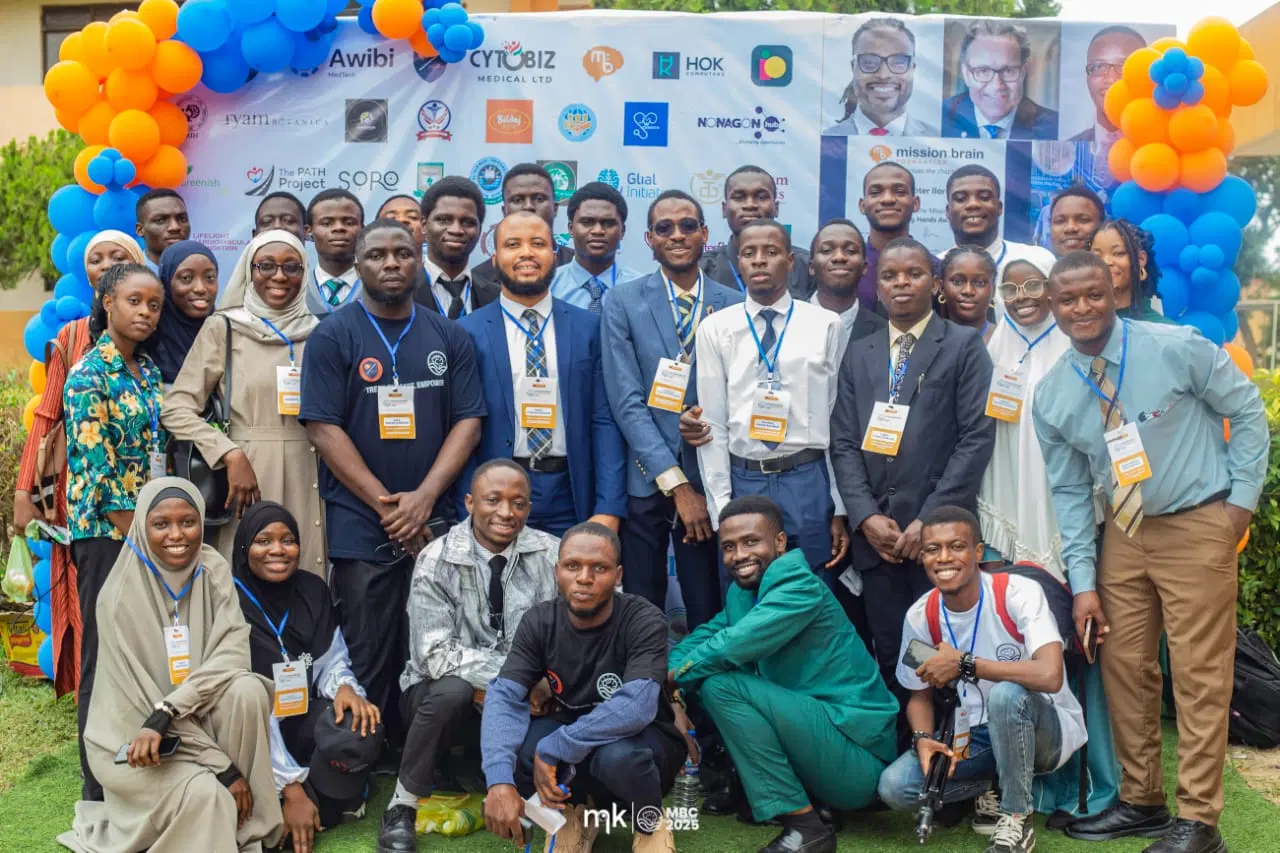
By Demola Akinyemi, Ilorin
The University of Ilorin (UNILORIN) recently hosted Nigeria’s first student-led neurosurgery conference, drawing over 2,000 medical students and healthcare professionals from across the globe for the inaugural Mission: BRAIN Ilorin Conference a landmark event aimed at addressing critical gaps in brain health.
Organised by Mission: BRAIN Ilorin, a student-led initiative at UNILORIN, the two-day conference provided a dynamic platform for knowledge exchange around the science, ethics, and challenges of neurosurgery particularly in underserved Nigerian communities.
With the theme “Bridging Gaps: Advancing Brain Health Through Science, Ethics and Innovation,” the event featured keynote speeches, expert-led panel discussions, research presentations, clinical skills training, and academic competitions.
Supported by the Nigerian Academy of Neurological Surgeons (NANS), the Neuroscience Society of Nigeria (NSNS), and the Department of Surgery at the University of Ilorin Teaching Hospital (UITH), the groundbreaking event began with a pre-conference clinical skills lab. Over 100 participants were trained in essential life-saving techniques including CPR, airway management, and emergency response for traumatic brain injuries.
In his keynote address, Prof. Femi Bankole, a consultant neurosurgeon at Lagos University Teaching Hospital (LUTH), emphasized the complexities of brain health and the need for interdisciplinary collaboration.
“No single person, discipline, or idea can solve the puzzle of brain health in isolation,” he said.
Bankole also highlighted a significant challenge in African neuroscience: the lack of localized data. He warned that using AI diagnostic models trained solely on Western datasets could lead to misdiagnosis in African patients, advocating for ethical innovation driven by region-specific research.
Prof. Olayide Agodirin, Head of the Surgery Department at UNILORIN, further expanded the discussion by exploring how machine learning is transforming neurology from enhanced diagnostic precision to predictive modeling that could aid in prevention strategies.
Mubarak Mustapha, a 400-level medical student and President of Mission: BRAIN Ilorin, explained that the conference was part of the group’s mission to strengthen brain health awareness and capacity in Nigeria.
“This is the first-ever student-led neurosurgery conference in Nigeria. We’ve brought together surgeons, researchers, innovators, and students to foster knowledge exchange, build skills, and create networks aimed at improving brain health outcomes,” he said.
Mustapha explained that Mission: BRAIN Ilorin, established in 2023, is affiliated with the Mission: Brain Foundation, a global nonprofit committed to expanding access to neurosurgical care through training, research, and international collaboration.
He noted that the group’s outreach efforts are focused on demystifying neurological disorders, particularly in communities where such conditions are often misunderstood or attributed to spiritual causes.
“For example, during our World Epilepsy Day outreach, we educated over 1,000 individuals on seizure management and addressed common myths around epilepsy. We also launched the CranioGuard Mission, focused on preventing spinal and brain injuries,” he said.
The chapter’s efforts have earned them international recognition, with awards from the global Mission: Brain Foundation in categories such as Service and Compassion, Academic Leadership, and Healing Hands.
A major highlight of the conference was the unveiling of the Global Surgery Box NG a compact, cost-effective suturing training kit developed by the UNILORIN Cardiothoracic Surgery Interest Group (UCTSIG), designed for use in resource-constrained settings.
Additionally, the Ilorin NeuroJournal, a new academic publication under Mission: BRAIN Ilorin, was launched at the event, featuring scholarly contributions from 10 countries across five continents.
The conference also included awards for outstanding contributions, including prizes for winners of the university-level abstract competition, a secondary school essay contest, and the Neurovation Challenge, which showcased innovative, student-driven solutions to neurological healthcare challenges.

