
 Lifestyle & Wellness Desk
Palestinian Statehood: Canada to Declare Support at UN Assembly
Canada has announced its intention to formally recognise the State of Palestine during the 80th United Nations General Assembly in September 2025, marking a significant departure from its long-standing policy on the Israeli-Palestinian conflict.
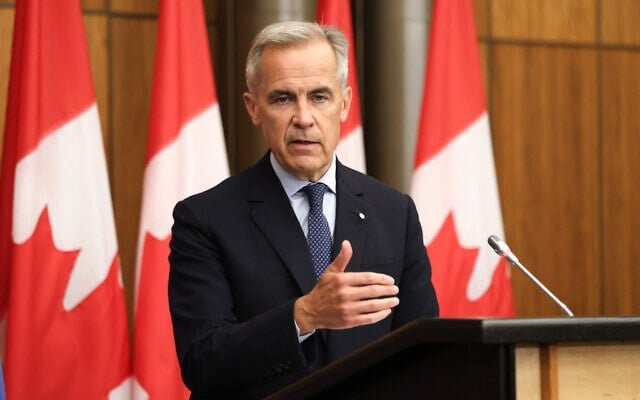
Prime Minister Mark Carney made the announcement on Wednesday, citing the urgent need to revive the two-state solution amid escalating violence and worsening humanitarian conditions in Gaza. “This is a step we take to preserve the hope of peace, a hope that is being eroded before our eyes,” he said.
Canada becomes the third G7 country, following France and the United Kingdom, to signal formal recognition of Palestinian statehood ahead of the upcoming UN session. Carney emphasised that continued civilian suffering in Gaza made coordinated international action imperative.
The announcement has drawn sharp criticism from Israel, which described the move as part of a “distorted campaign of international pressure.” Former U.S. President Donald Trump also reacted strongly, warning that the decision could impact trade relations with Washington. “It will make it very hard for us to make a trade deal with them,” he posted on social media.
Carney acknowledged the potential diplomatic fallout but maintained that Canada’s decision was grounded in a commitment to peace and contingent on key conditions. These include reforms within the Palestinian Authority and a firm commitment to exclude Hamas from future governance. The recognition is also tied to a pledge by Palestinian President Mahmoud Abbas to hold general elections in 2026 and to ensure the demilitarisation of a future Palestinian state.
Despite the controversy, the Palestinian Authority welcomed Canada’s stance as “historic,” while France expressed readiness to work jointly toward restoring prospects for peace in the region. The UK has taken a similar position, stating it will recognise Palestine in September unless Israel commits to a ceasefire and takes other substantive steps.
Carney acknowledged the complexities of the issue, blaming both Hamas’s violent opposition to Israel’s existence and the ongoing expansion of Israeli settlements in the West Bank and East Jerusalem for the erosion of the peace process.
“This is not a decision we take lightly,” he said. “But if we are to support a lasting peace, we must also support a viable and democratic Palestinian state, one that coexists alongside Israel, which has an inalienable right to security.”
The move signals a new chapter in Canada’s foreign policy, potentially reshaping its role in Middle East diplomacy as tensions continue to rise and hopes for negotiated peace grow increasingly fragile.