

 Lifestyle & Wellness Desk
Residents protest spiralling housing rents in Lagos, call for urgent intervention
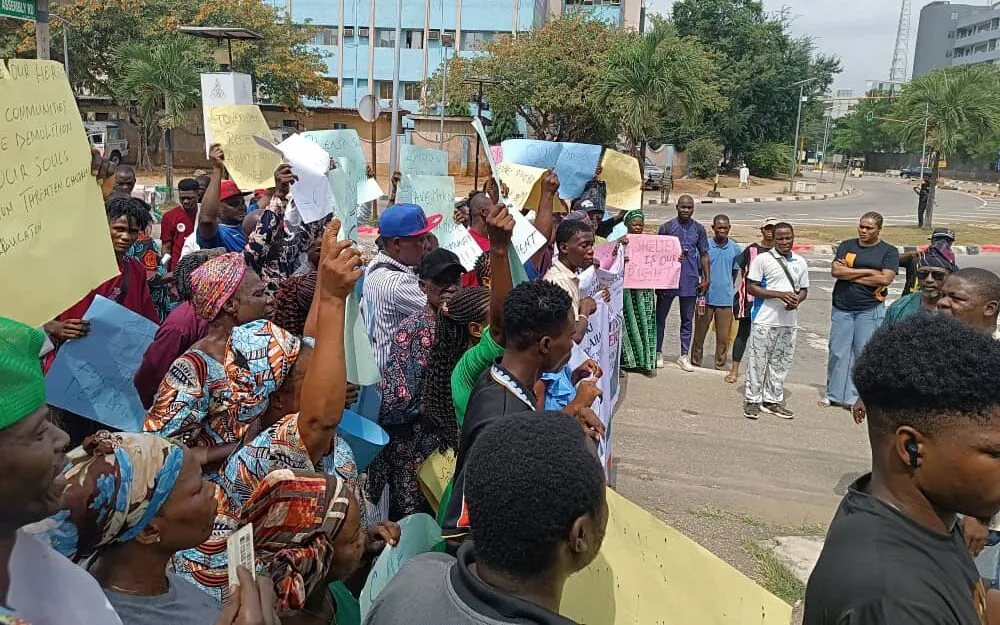
Residents across several parts of Lagos State have raised alarm over the rapidly rising cost of house rents, describing the situation as suffocating and calling for urgent legislative and executive action to avert a worsening housing crisis.
In interviews on Tuesday, residents said rent now consumes nearly half or in some cases more of their annual income, leaving little room for savings or basic living expenses.
A 2023 assessment of Nigeria’s housing market found that households spend between 50 and 70 per cent of their income on rent, far exceeding the globally recommended benchmark of 30 per cent. The report described the trend as evidence of deep structural problems rather than a temporary surge.
Rasaq Adebanjo, a resident of Ogba, said the cost of accommodation in Lagos had become unbearable.
“House rents have become extremely expensive. Some landlords even insist on automatic rent increases after three years. Finding a place you can afford without it swallowing your entire yearly income is very difficult,” he said.
A National Youth Service Corps member, Mercy, recounted her experience searching for accommodation shortly after arriving in Lagos. “When I got to Lagos, my first concern was housing. An agent asked for ₦1.5 million for a mini flat in Surulere not even on the Island. I was shocked,” she said.
She added that pooling resources with colleagues still did not make accommodation affordable, despite earning a monthly allowance of ₦77,000 and an additional ₦30,000 stipend from her place of primary assignment.
Peter, a recent graduate who relocated to Lagos for work, said high rents had forced him to live with a relative in Ogun State.
“I currently stay in Ogun State, and transport costs are extremely high. I honestly don’t understand how people cope with living and working in Lagos,” he said.
A banker based in Obalende, Damola Hafiz, warned that the situation could deteriorate further without decisive intervention.
“Last year, I paid ₦800,000 for rent. Early this year, my landlord increased it to ₦900,000 for a single room in Ketu. I was asked to move out when I said I couldn’t afford it,” he said, adding that he eventually had to plead to remain after seeing the realities of the rental market.
Another tenant, Moses, who lives in Ikeja, said escalating living costs had made saving nearly impossible.
“When someone earns ₦300,000 monthly and still cannot save ₦50,000 after a year because everything goes into rent, food and transport, it leads to frustration and desperation,” he said.
Commenting on the issue, Ayodele Adio, an aspirant for the Eti-Osa seat in the Lagos State House of Assembly, described the situation as a full-blown rent crisis.
He said many working residents now spend between 60 and 70 per cent of their income on rent and transportation combined.
“When people are using almost all their earnings just to secure shelter and get to work, the system is clearly broken,” he said.
Citing inflation data from the National Bureau of Statistics, Adio proposed linking rent increases strictly to official inflation rates.
Under his proposal, landlords would only be allowed to raise rents within the previous year’s inflation margin, with slight variations based on location.
He also pledged to sponsor legislation to cap agency and legal fees at five per cent, mandate a minimum of 12 months’ notice before rent increases, and limit rent adjustments to once every three years.
In addition, he called for tighter regulation of short-term rental platforms such as Airbnb, arguing that their rapid expansion has reduced the availability of long-term housing.
“These are short-term stabilisers. The core issue is housing supply,” he said.
Adio advocated the construction or facilitation of at least 20,000 housing units annually over the next decade to ease pressure on the market, stressing that government involvement was critical.
“Land is expensive, building materials cost more, and financing is increasingly costly. If housing delivery is left solely to the private sector, prices will continue to rise. Government intervention is essential,” he said.
He also called for mortgage reforms to enable working-class residents to access long-term financing at affordable rates, noting that reducing housing and transport costs would free up household income, stimulate economic activity and promote growth.
When contacted, the Lagos State Commissioner for Information and Strategy, Gbenga Omotoso, requested a callback, but further attempts to reach him were unsuccessful as of the time of filing this report.