

 Lifestyle & Wellness Desk
Shrinking HIV Resources Put Children at Risk, UNICEF Says
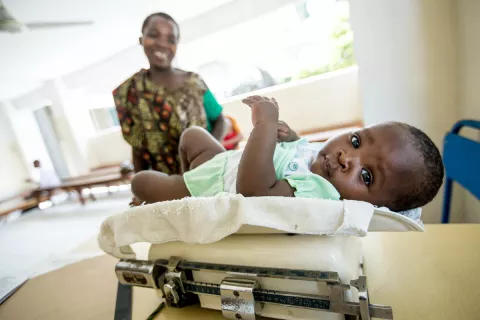
The United Nations Children’s Fund (UNICEF) has called on governments and partners to prioritise HIV services for mothers, children, and adolescents, warning that declining global funding is putting young lives at risk and could undo decades of progress.
In a statement marking World AIDS Day 2025, UNICEF noted that children and adolescents living with HIV continue to face significant gaps in early diagnosis and access to antiretroviral treatment, which could worsen if investment in HIV programmes declines.
World AIDS Day, observed annually on December 1, highlights the ongoing fight against HIV/AIDS, celebrates progress made, and draws attention to remaining gaps. The 2025 theme is “Overcoming Disruption, Transforming the AIDS Response.”
UNICEF cited new modelling by UNICEF and UNAIDS showing that a 50 per cent reduction in programme coverage could result in an additional 1.1 million children acquiring HIV and 820,000 dying from AIDS-related causes by 2040. Even if current coverage is maintained, projections indicate 1.9 million new infections and 990,000 child deaths from AIDS by 2040.
Anurita Bains, UNICEF’s Associate Director for HIV and AIDS, warned that persistent inequalities, particularly in treatment access for children, threaten to derail progress.
“Countries acted quickly to cushion the impact of funding cuts, but ending AIDS in children is in jeopardy without focused action. The choice is clear: invest today or risk reversing decades of progress and losing millions of young lives,” Bains said.
Global data from 2024 show that 120,000 children aged 0–14 acquired HIV, while 75,000 died from AIDS-related causes—approximately 200 deaths daily. Among adolescents aged 15–19, 150,000 became newly infected, with girls accounting for 66 per cent of cases.
Only 55 per cent of children living with HIV received antiretroviral therapy in 2024, compared with 78 per cent of adults, leaving 620,000 children untreated. Sub-Saharan Africa remains the hardest hit region, accounting for 88 per cent of children living with HIV globally.
Despite these gaps, UNICEF noted that sustained efforts have delivered measurable results. Between 2000 and 2024, HIV services prevented 4.4 million infections and 2.1 million AIDS-related deaths among children. Twenty-one countries and territories have been certified for eliminating vertical transmission of HIV and/or syphilis.
UNICEF urged governments to integrate HIV care into broader health systems and ensure predictable, sustainable financing to protect gains and close treatment gaps for the world’s most vulnerable children

