

 Lifestyle & Wellness Desk
Japanese equities hit record highs after Takaichi’s landmark election win
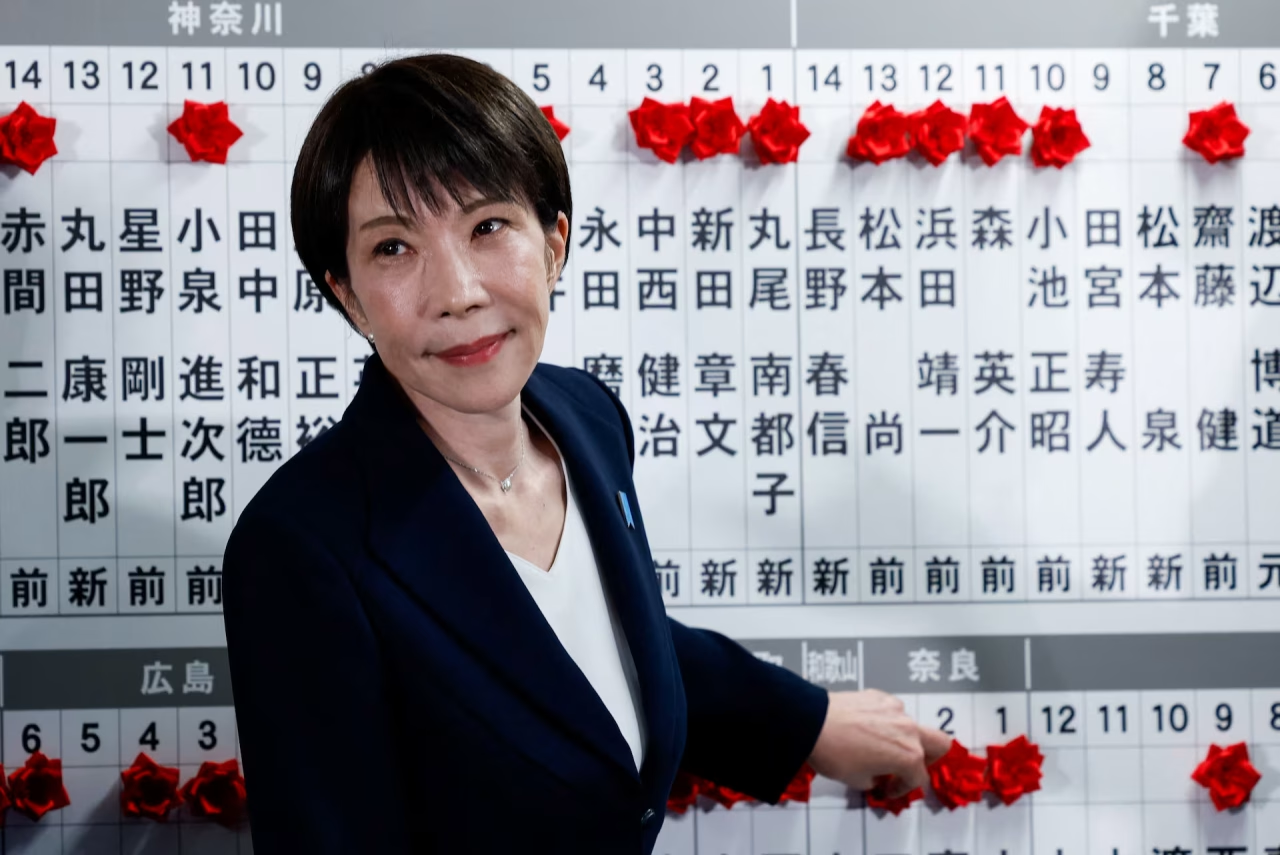
Japanese equities climbed to a record high on Monday following a decisive election victory by Prime Minister Sanae Takaichi’s Liberal Democratic Party (LDP).
In Sunday’s poll, the LDP won 316 of the 465 seats in the lower house, marking the first time since 1947 that a single party has secured a two-thirds majority under Japan’s current parliamentary system. Its coalition partner, the Japan Innovation Party, captured an additional 36 seats, bringing the alliance’s total to 352.
The landslide result represents a significant political win for Takaichi, who now faces the task of reviving Japan’s sluggish economy and addressing mounting cost-of-living pressures.
Markets reacted swiftly to the outcome. The Nikkei 225 index surged more than 5 percent in early trading on Monday, briefly surpassing the 57,000 mark for the first time. Although it later pared some gains, the index closed up 3.9 percent at a record 56,363.94.
The LDP’s commanding mandate is expected to allow Takaichi to push forward her pro-business agenda with minimal resistance from opposition parties. Speaking to reporters on Sunday, she said her government would pursue a “responsible yet aggressive” fiscal approach and confirmed that there would be no cabinet reshuffle, noting that the current team was appointed less than four months ago.
Japan’s first female prime minister called the snap election shortly after taking office in October. Her victory contrasts sharply with the tenure of her two immediate predecessors, during which the LDP lost its parliamentary majority, faced corruption allegations, and struggled to manage rising living costs.
Market analysts believe Takaichi’s policies could provide momentum for the Japanese economy. Investment analyst Yuka Marosek said measures such as stimulus spending, tax adjustments and deregulation could further strengthen an already positive market trend.
Chris Scicluna, head of research at Daiwa Capital Markets Europe, noted that equity investors have long backed Takaichi’s economic vision. He said confidence is driven by her commitment to end austerity, increase investment to support growth, and prioritise strategic sectors including defence and artificial intelligence.
However, Scicluna added that investors in Japanese government bonds and the yen remain cautious, citing concerns over how the government plans to finance increased spending given Japan’s substantial public debt.
Japan’s historically low inflation has made households particularly sensitive to recent increases in living costs. During the election, voters told reporters they were concerned about rising prices for food and housing. The economy also continues to face structural challenges from an ageing population, a shrinking workforce and growing social welfare expenses.
Takaichi has pledged to cut taxes and stimulate growth through higher public spending, though critics warn that without clear funding sources, such policies could heighten risks in an already fragile economic environment.
As her party’s victory became clear, Takaichi said the government carried a heavy responsibility to deliver on its campaign promises.
The LDP had lost its majority under former prime minister Shigeru Ishiba, and Takaichi relied heavily on her personal appeal to restore the party’s dominance. She has strengthened support among conservative voters by revisiting long-standing priorities such as constitutional revision and the promotion of traditional values, while also resonating with younger voters in an unusually personal way.
International reaction followed swiftly. US President Donald Trump congratulated Takaichi on her victory, describing it as an “honor” to have endorsed her ahead of the election and pledging continued support for Japan.
Her early tenure has already drawn attention abroad. Just a week after assuming office, Takaichi hosted Trump during a visit to Japan, marking her first major diplomatic engagement and underscoring her intent to strengthen ties with key allies.

