

 Lifestyle & Wellness Desk
Presidential panels incur N13bn in expenses
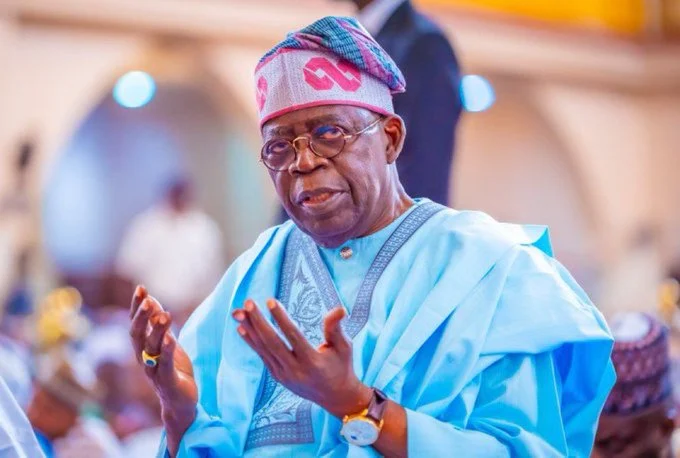
President Bola Tinubu and Vice President Kashim Shettima have set up no fewer than 46 committees since taking office in May 2023, with budgetary provisions and identifiable expenditures on these panels exceeding N13bn in under three years.
A review of budget documents covering 2023 to 2026, alongside federal payment records from GovSpend, shows that N12.99bn was earmarked for the operations of long-standing presidential committees. In addition, at least N105.97m in traceable payments was made to individuals and firms providing services to specific ad hoc panels.
Combined spending of about N13.1bn represents roughly 62 per cent of the N21.17bn reportedly spent on presidential committees over a seven-year period between 2018 and 2025. On average, committee-related expenses under the current administration amount to N4.37bn annually, higher than the N3bn yearly average recorded between 2018 and 2022.
Most of the committees established since 2023 are ad hoc bodies created to address specific policy issues within defined timeframes. Others are statutory committees with permanent secretariats that receive annual allocations under the Office of the Secretary to the Government of the Federation.
Budget records indicate that in 2023, N3.73bn was allocated to these standing committees, covering political officers and bodies such as the Presidential Advisory Committee, the Presidential Technical Committee on Land Reforms, the Advisory Committee on the Prerogative of Mercy, the Presidential Enabling Business Environment Council, the Standing Committee on Private Jetties, and the Standing Committee on Inventions and Innovations.
In 2024, total allocations stood at N2.96bn. This included N2.58bn for Political Officers and Standing Committees, N50m for the Private Jetties committee, N89.29m for Inventions and Innovations, N10.73m for the Presidential Advisory Committee, N221.3m for the Land Reforms committee, and N9.8m for the Prerogative of Mercy panel.
Funding increased again in 2025 to N3.24bn, with the Land Reforms committee receiving N478.45m—more than twice its 2024 allocation. Other provisions included N2.58bn for Political Officers and Standing Committees, N65m for Private Jetties, N89.29m for Inventions and Innovations, N15.38m for the Presidential Advisory Committee, and N8m for the Prerogative of Mercy committee.
For 2026, allocations totalled N3.06bn, made up of N2.58bn for Political Officers and Standing Committees, N418m for the Land Reforms committee, N45.5m for Private Jetties, and N15.37m for the Presidential Advisory Committee.
Beyond budgetary provisions, GovSpend data identified six specific payments made for ad hoc committee operations between May 2023 and December 2025, amounting to N105.97m. The earliest payments, dated May 31, 2023, included N46.64m to Shale Atlantic Intercontinental Services Limited and N21.72m to Good News Creative Ideas Limited as consultancy fees for a presidential committee reviewing earlier salary-related reports.
Additional payments included N5.02m in December 2023 for office consumables for the Presidential Committee on Trade Malpractices, N19m paid as honoraria to members of the Presidential Committee on the Transfer of Technology, N7.52m for printing committee reports in March 2024, and N6.07m disbursed in December 2025 for administrative costs linked to the Trade Malpractices committee.
These figures reflect only expenditures traceable through official government payment systems.
Since assuming office, the President and Vice President have relied heavily on committees to address a wide range of policy challenges. Within weeks of inauguration, committees were formed to respond to organised labour demands following fuel subsidy removal, overhaul fiscal and tax policies, manage palliatives, reform livestock management, mitigate flooding, revitalise industry, assess policing reforms, coordinate climate and human capital initiatives, and tackle economic and security issues.
In 2024 and 2025, dozens more committees were created across sectors such as agriculture, education, health, infrastructure, energy, youth development, sanitation, digital governance, and electoral politics.
Some of these committees have delivered tangible outcomes, including tax reforms that led to the passage of four Tax Reform Acts, a revised national minimum wage framework, and policy proposals on state policing.
However, critics argue that the growing reliance on committees has become an expensive form of political patronage, questioning the overall impact relative to the resources committed. Government officials had yet to respond publicly to concerns raised over the scale and cost of the committees at the time of reporting.

