

 Ifunanya Okafor
Lost Tomb of Pharaoh Thutmose II Discovered Near Luxor
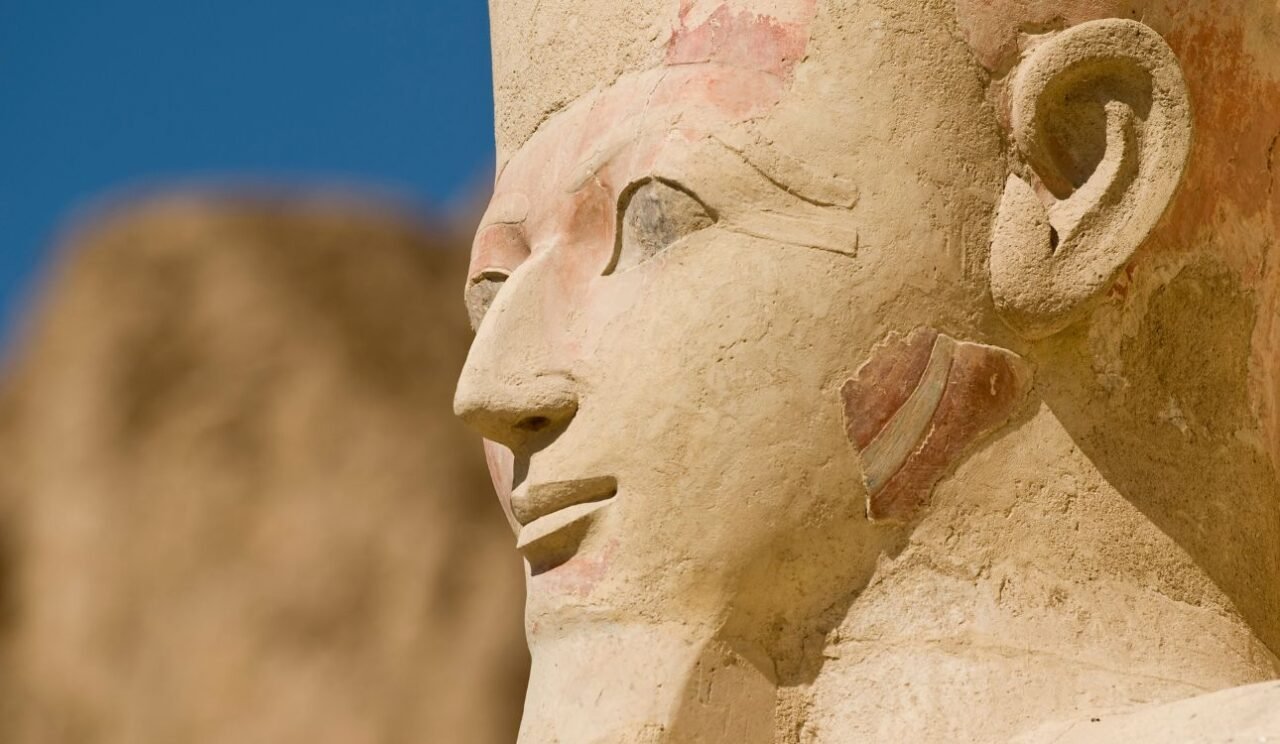
In a groundbreaking archaeological discovery, a joint Egyptian-British mission has identified an ancient tomb near Luxor as that of King Thutmose II, marking the first pharaonic royal tomb found in more than a century. Egypt’s Ministry of Tourism and Antiquities confirmed the finding, calling it a historic moment in Egyptology.
The tomb, located in Wadi Gabbanat el-Qurud, west of the famous Valley of the Kings, was unearthed by a team led by British archaeologist Dr. Piers Litherland. Initial excavations in 2022 suggested it could belong to a royal wife, given its proximity to the burial sites of Thutmose III’s queens and Hatshepsut. However, further exploration revealed alabaster vessels inscribed with the names of Thutmose II and Queen Hatshepsut, confirming the true identity of the tomb’s owner.
A Remarkable Find Despite Damage
Archaeologists describe the tomb’s structure as relatively simple, featuring an entrance, a descending corridor, and a burial chamber. However, it was found in a poor state of preservation due to ancient flooding, which caused severe damage to its interior. Many of the original funerary artifacts had been displaced or destroyed.
Despite this, experts have managed to recover and restore sections of the tomb’s decorative plasterwork. Among the discoveries are inscriptions painted in blue and gold stars on the ceiling, along with excerpts from the Book of Amduat, a key funerary text used in royal burials.
Solving a Centuries-Old Mystery
Thutmose II, the fourth pharaoh of Egypt’s 18th Dynasty, ruled between 1493 and 1479 BC. He was married to his half-sister, Queen Hatshepsut, who later became one of Egypt’s most powerful female pharaohs. While Thutmose II’s mummy was found in a cache at Deir el-Bahari in 1881, the exact location of his original tomb had remained a mystery until now.
Dr. Mohamed Ismail Khaled, Secretary-General of Egypt’s Supreme Council of Antiquities, hailed the discovery as one of the most significant in recent years. “This is the first time we have found any funerary artifacts associated with Thutmose II in their original context,” he said.
What’s Next?
The excavation team is continuing its work at the site, hoping to uncover more details about the tomb’s original contents and its history. This discovery not only adds to our understanding of ancient Egyptian burial practices but also renews interest in future archaeological expeditions in Luxor.
With new technologies and modern excavation methods, experts believe more hidden secrets of Egypt’s royal past may soon come to light.

