

 Lifestyle & Wellness Desk
Turkey Raises Concern Over Presence of ‘Fethullah’ Group in Nigeria
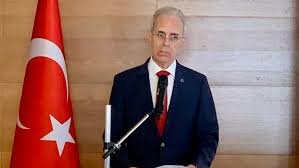
The Turkish government has raised concerns about the presence of members of a group it considers a terrorist organization referred to as the Fethullah Terrorist Organisation (FETO) in Nigeria, as well as in various other countries.
Speaking at a dinner event in Abuja marking Turkey’s Democracy and National Unity Day, the Turkish Ambassador-designate to Nigeria, Mehmet Poroy, said the group remains active globally.
The annual event commemorates the failed coup attempt in Turkey on July 15, 2016, which Turkish authorities blame on followers of the Gülen movement, led by Fethullah Gülen. According to the Turkish government, the attempted coup was thwarted by the combined resistance of the military, security forces, and citizens who stood in support of President Recep Tayyip Erdoğan’s administration.
Ambassador Poroy emphasized that individuals linked to the Gülen movement are still being apprehended in various countries, describing the group’s international operations as a serious threat.
“They are still being captured and arrested today. The presence of such an organisation poses a threat to every country in which it operates,” he said.
He added that the group remains active in Nigeria, particularly in education and healthcare sectors, and stressed the importance of vigilance. “We consistently inform our Nigerian friends about the nature and dangers of this organisation and urge them to remain cautious.”
According to Poroy, through international cooperation, Turkey has disrupted many of the group’s global networks. In several countries, Turkish authorities have taken over institutions particularly schools once linked to the movement.
Despite these efforts, Poroy noted that the group’s international networks have not been fully dismantled. “The fact that investigations and arrests continue shows that this fight must go on with unwavering determination,” he said.
He warned that in places like Nigeria, the group often operates under the guise of humanitarian aid, education, healthcare, and interfaith dialogue. “Behind this humanitarian appearance lies an organisation that seeks to infiltrate the political and bureaucratic systems of host countries,” he cautioned.
The Gülen movement also known as Hizmet, meaning “service” in Turkish was founded in the late 1950s and is known for its involvement in education, religious activities, and social initiatives. Its founder, Fethullah Gülen, passed away in October 2024 at the age of 83 while living in exile in the United States.
Turkey holds Gülen responsible for the 2016 coup attempt, which claimed more than 250 lives, and has officially designated his movement as a terrorist organisation. The group, however, denies involvement and rejects the terrorism label.
Since the coup, Turkish authorities have intensified efforts to shut down the group’s operations worldwide, seizing or freezing assets, including schools, foundations, and businesses linked to the movement.
Some international bodies and countries, including the Organisation of Islamic Cooperation, the Gulf Cooperation Council, Pakistan, and Northern Cyprus, have also designated the group as a terrorist entity.

