

 Tech & Tools Desk
Tinubu Set to Appoint New INEC Chairman This Week
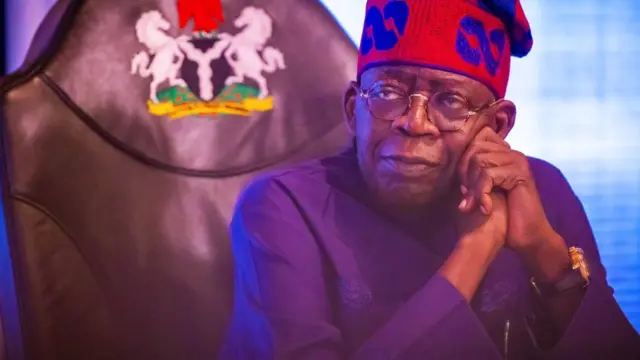
President Bola Tinubu has officially accepted the exit of Professor Mahmood Yakubu as Chairman of the Independent National Electoral Commission (INEC), following the completion of his second and final term in office.
The President is expected to name Yakubu’s successor after Thursday’s Council of State meeting in Abuja, where he will present a list of nominees for the position.
Yakubu, who handed over on Tuesday to May Agbamuche-Mbu — a senior national commissioner and legal expert — will be temporarily replaced by her as acting chairman pending the appointment of a substantive head.
In recognition of Yakubu’s decade-long service, President Tinubu conferred on him the national honour of Commander of the Order of the Niger (CON). Former Presidents Olusegun Obasanjo and Goodluck Jonathan, state governors, and other members of the Council of State are expected to advise the President on the choice of the next electoral chief.
According to a statement issued by the President’s Special Adviser on Information and Strategy, Bayo Onanuga, Tinubu praised Yakubu for his contributions to strengthening Nigeria’s democracy through credible elections.
“President Tinubu thanked Professor Yakubu for his services to the nation and his efforts to sustain Nigeria’s democracy, particularly through the organisation of free and fair elections throughout his two-term tenure. In recognition of his dedicated service, the President has bestowed on him the honour of Commander of the Order of the Niger,” the statement read.
The President also directed Yakubu to hand over to Agbamuche-Mbu to oversee the affairs of the Commission until a new chairman is appointed.
In a letter dated October 3, 2025, Yakubu expressed appreciation to the President for the opportunity to serve. He highlighted INEC’s progress under his leadership, including the introduction of the Bimodal Voter Accreditation System (BVAS) and the Results Viewing Portal (IReV), which enhanced transparency in Nigeria’s electoral process.
Appointed in November 2015 as the 14th INEC chairman, Yakubu was reappointed in 2020, marking the first time in Nigeria’s history that an electoral chief served two consecutive terms. His tenure oversaw the 2019 and 2023 general elections, as well as several off-cycle polls.
Yakubu expanded the number of polling units nationwide, implemented continuous voter registration, and introduced measures to accommodate persons with disabilities and internally displaced voters. His tenure, however, faced criticism over glitches during the 2023 general elections and allegations of delayed result transmission.
Speaking at a brief handover ceremony at INEC headquarters in Abuja, Yakubu said he stepped down in line with constitutional provisions to allow a smooth transition.
He thanked staff, national commissioners, civil society organisations, development partners, and Nigerians for their support, urging continued commitment to electoral reform.
“As part of my farewell, I have presented two publications documenting the Commission’s work between 2015 and 2025: Election Management in Nigeria and Innovations in Electoral Technology. I pray that God continues to bless our country and our democracy,” he stated.
Agbamuche-Mbu, now acting chairman, is a seasoned lawyer with over 30 years of professional experience in both the public and private sectors. A Delta State indigene born in Kano, she holds law degrees from Obafemi Awolowo University and Queen Mary University of London. She is also a member of the Chartered Institute of Arbitrators.
Meanwhile, legal experts have weighed in on the appointment process for the next INEC chairman.
Senior Advocate of Nigeria (SAN) Ifedayo Adedipe described the debate over presidential appointment of the INEC chair as a distraction, arguing that credible elections depend more on institutions and citizens than on who occupies the office.
“Was it not Jonathan that appointed Professor Jega? Didn’t Jonathan lose the election? The real issue lies in the conduct of politicians and voters, not who appoints the chairman,” Adedipe said.
Another SAN, Adedayo Adedeji, affirmed that the President has the constitutional power to appoint an INEC chairman subject to Senate confirmation, while calling for broad consultation and transparency in the selection process.
Similarly, Wale Balogun, SAN, stressed the importance of a credible and rigorous screening mechanism to ensure impartiality.
During the House of Representatives’ resumption on Tuesday, Speaker Tajudeen Abbas reaffirmed the legislature’s commitment to electoral reform ahead of the 2027 general elections. He said the ongoing amendment of the Electoral Act aims to strengthen transparency, ensure inclusion, and reduce disputes arising from elections.
“Our goal is to make elections less contentious, enhance disability access, and ensure party primaries are more democratic and inclusive,” Abbas said.
He also emphasised that the parliament would prioritise constitutional amendments, state policing, and economic reforms in the coming months, adding that Nigerians expect deliberate legislative actions that improve their quality of life.

