

 Tech & Tools Desk
FG Urged to Maximise Oil, Gas Reserves Before Global Demand Declines
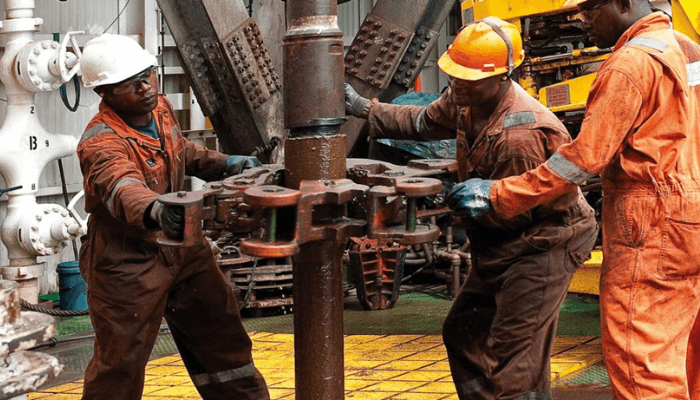
Nigeria may be left behind in the ongoing global energy transition if it fails to strategically monetise its vast oil and gas reserves, experts have warned.
Former President of the Nigerian Economic Society, Prof. Adeola Adenikinju, gave the warning while delivering a keynote address at the 18th edition of the NAEE/International Association for Energy Economics (IAEE) Annual International Conference in Abuja on Monday.
He urged the government to balance investments in renewable and conventional energy sources to expand electricity access to the 87 million Nigerians currently without power.
The three-day conference, themed “Emerging Geopolitics of Energy: Navigating Global Shifts and Impact on Emerging Countries,” brought together policymakers, academics, and energy executives to deliberate on the complex and evolving dynamics shaping the global and African energy landscape.
Adenikinju described the global energy market as increasingly volatile and shaped by multiple factors such as geopolitical tensions, wars, artificial intelligence, and shifting alliances.
“The global energy market is being influenced by rising geopolitical conflicts, the growing energy needs of AI-driven data centres, and the slow pace of energy efficiency improvements,” he said. “These dynamics have wide-reaching implications across regions.”
Turning attention to Nigeria, he lamented that despite being a top global producer of oil and gas, millions of Nigerians still live without access to electricity.
“Nigeria is one of the world’s largest oil producers but remains the biggest importer of refined petroleum products. That is an unacceptable paradox,” he said.
Adenikinju cautioned that unless the country swiftly monetises its oil and gas reserves, it risks having its hydrocarbons stranded as the world transitions toward low-carbon energy sources.
“As global demand for oil approaches its peak, Nigeria must act decisively to exploit its resources while investing heavily in renewable options like solar, hydro, and wind,” he noted.
He explained that the war in Ukraine and the resulting disruption of Europe-Russia energy ties had reshaped global supply chains and reignited debates about energy security.
Before 2022, he said, “the European Union sourced about 40 per cent of its natural gas from Russia. That figure has dropped sharply as nations seek alternative suppliers.”
Adenikinju also highlighted the growing strategic competition between the United States and China over renewable energy technology and battery manufacturing, which he said now defines the new geopolitics of energy.
“China controls over 80 per cent of global solar panel production and critical mineral processing. This forces developing nations to make difficult strategic choices about their energy partnerships,” he added.
He referenced data from the International Energy Agency (IEA) and the IMF’s July 2025 World Economic Outlook, which described the global economy as one of “tenuous resilience amid persistent uncertainty,” saying such instability discourages long-term investments in developing nations.
“When uncertainty rises, investors delay or demand higher returns. This threatens the viability of large energy projects in countries like Nigeria,” he warned.
The economist urged African governments to move beyond merely exporting raw materials and instead build full value chains for clean energy technologies.
“Africa must not limit itself to supplying lithium, cobalt, or copper. We must attract green capital, develop technology, and participate meaningfully in global energy markets,” he advised.
Adenikinju commended ongoing reforms under the Petroleum Industry Act, rising rig activity, and private-sector involvement but stressed the need for faster policy execution to strengthen infrastructure, investment confidence, and energy security.
“Energy security is back on the national agenda,” he said. “The challenge is to ensure profitability while maintaining sustainability and global competitiveness.”
He also called for stronger regional collaboration through the African Union to safeguard critical minerals and build shared industrial capacity for a carbon-neutral future.
“In macroeconomic terms, the government is doing well,” he said. “But reforms must also protect vulnerable groups. The market alone will not achieve that.”
The professor recommended that the government expand access to affordable electricity through solar energy and remove barriers hindering domestic gas distribution and Liquefied Petroleum Gas (LPG) access.
Also speaking, the President of the International Association for Energy Economics, Professor Edmund Lewis, commended Nigeria’s leadership in advancing energy scholarship and policy dialogue across Africa.
Representing IAEE, Prof. Wunmi Iledare said Africa’s energy transition should not mirror Europe’s historical model but evolve through “pragmatic prosperity” — a development approach grounded in data, inclusiveness, and collaboration.
“Africa’s energy future is not a copy of Europe’s past,” Iledare said. “It must be shaped by pragmatic prosperity and evidence-based policy that reflects Africa’s realities.”
He added that the IAEE remains committed to fostering dialogue and inclusive development amid the global shift toward clean energy.
Meanwhile, the Secretary-General of the African Petroleum Producers Association (APPO), Omar Faruk, noted that the IEA had, for the first time, acknowledged that fossil fuels cannot be easily phased out.
According to him, this reinforces APPO’s long-held stance that while energy transition is vital, Africa’s development depends on a balanced approach that preserves the role of fossil fuels.
“If Africa fails to develop the components it needs for renewable or conventional energy systems, it will remain trapped in dependency,” Faruk said.
He concluded that Nigeria must first stabilise its existing energy systems and master available technologies before fully transitioning, saying, “We cannot move forward in the dark; we must first master what we already have.”

