

 Lifestyle & Wellness Desk
Trump: Why We Oppose US Threat Against Nigeria — China
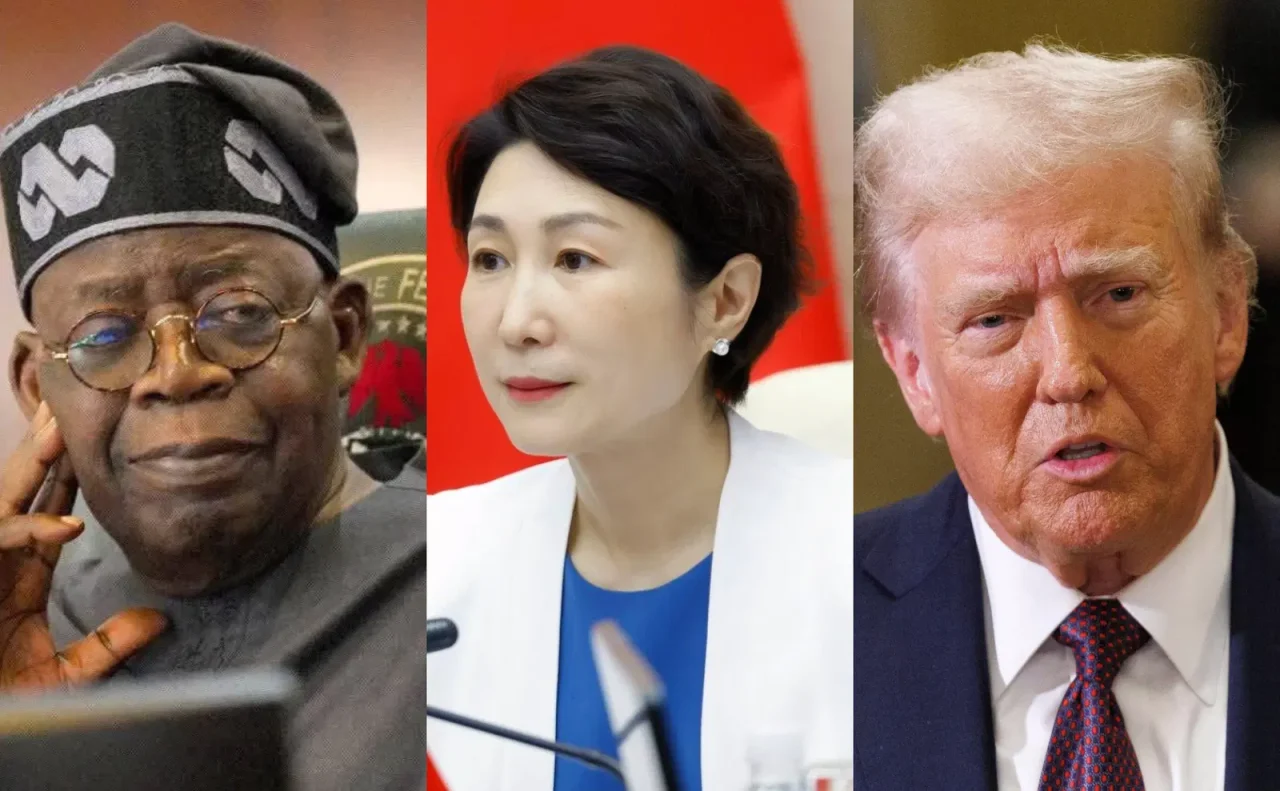
ABUJA — China has firmly rejected the United States’ recent threat of military action against Nigeria, stressing its opposition to any form of external interference in the country’s internal affairs.
This follows U.S. President Donald Trump’s warning over alleged persecution of Christians in Nigeria — a claim the Nigerian government has dismissed, describing it as a narrative driven by religious extremists seeking to divide the nation.
Chinese Foreign Ministry spokesperson Mao Ning, in a statement posted on the ministry’s website, said China stands with Nigeria as a “comprehensive strategic partner” and supports its right to choose its own development path.
He said, “China strongly supports the Nigerian government in leading its people on a development path that suits its national realities. We oppose any country’s interference in another nation’s internal affairs under the pretext of religion or human rights. We also reject threats of sanctions or use of force.”
Meanwhile, Nigeria’s Senate President, Godswill Akpabio, stated that the Senate will discuss Trump’s remarks with the executive arm, emphasizing the need for a coordinated national response since the issue concerns foreign policy and diplomacy.
Akpabio noted that Trump’s position appeared to be based on outdated reports that failed to capture the country’s current security realities, adding that both Christians and Muslims have been victims of terrorism and banditry across Nigeria.
Similarly, the Federal Government reiterated that there is no genocide against Christians in the country. Minister of Information and National Orientation, Mohammed Idris, said after a meeting with President Bola Tinubu that the President remains calm and focused, engaging international partners to clarify Nigeria’s efforts in tackling insecurity.
He added that President Tinubu’s administration is addressing the situation through reforms, including the appointment of new service chiefs, and urged Nigerians not to fall for extremist propaganda aimed at dividing the nation.
Also reacting, two members of the U.S. Congress — Gregory Meeks and Sara Jacobs — criticised President Trump’s comments, describing them as “reckless and irresponsible.” The lawmakers said the situation in Nigeria is complex, driven by resource conflicts rather than religious persecution, and warned that military threats would worsen instability.
In its response, ECOWAS also dismissed allegations of Christian genocide in Nigeria, describing them as false claims meant to incite division and weaken regional stability. The regional bloc reaffirmed that terrorist violence in West Africa affects people of all faiths and called for continued international cooperation against extremism.
Former Chief of Army Staff and ex-Minister of Interior, Lt. Gen. Abdulrahman Dambazau (rtd), also criticised Trump’s position, arguing that the U.S. was acting out of self-interest and might be seeking to establish a new military base in Nigeria.
The Christian Association of Nigeria (CAN) in the 19 northern states, through its chairman, Rev. John Hayab, urged both Christians and Muslims to use Trump’s comments as a call for unity and cooperation to end violence rather than a reason for division.
Similarly, the Southern and Middle Belt Leaders Forum (SMBLF) rejected Trump’s threat, calling instead for Nigerians to stand together and urging the government to intensify efforts to curb killings, disarm armed groups, and restore peace.
The Nigerian Christian Pilgrim Commission (NCPC) also cautioned that Nigeria needs partnership and intelligence sharing, not threats of invasion. Its Executive Secretary, Bishop Stephen Adegbite, said insecurity affects all faiths and urged for greater international collaboration to build a safer, more peaceful nation.
In his view, former Deputy Ambassador to the U.S., Ambassador Hassan Mohammed, said Trump’s military threat was unlawful under the U.S. International Freedom of Religion Act, explaining that the act allows for diplomatic pressure — not military intervention — in matters related to religious freedom.
He added that Nigeria had previously resolved similar designations through dialogue, stressing that fairness and cooperation remain the best path forward.

