Author: Edupreneur Insights Desk

zz-46.jpg

3min7390
The Publisher of Triangle International Magazine, Femi Salako, has said the organisation’s upcoming 10th anniversary lecture in United Kingdom aims to promote diaspora investment in Africa. Salako stated that the London event will bring together Africans in the diaspora, investors, and international development partners to explore opportunities for economic and institutional growth across the continent. He explained that hosting the event in London reflects the magazine’s international outlook and its growing influence beyond Nigeria. According to Salako, “Although Triangle International Magazine remains a proudly Nigerian brand, the publication has grown over the past decade into a respected platform celebrating distinguished Africans across sectors both on the continent and in the diaspora. London offers a global stage capable of attracting influential diaspora Africans, international development actors, investors, and strategic partners whose engagement is vital to Africa’s growth.” “One of the main objectives of the anniversary lecture is to encourage Nigerians and other Africans in the diaspora to deepen their economic and intellectual engagement with the continent by investing in Africa’s future,” he added. Salako noted that diaspora communities play a crucial role in Africa’s transformation through remittances, entrepreneurship, policy engagement, and institutional partnerships. He also highlighted the long-standing diplomatic, educational, and economic ties between Nigeria and the United Kingdom, describing London as both a symbolic and practical venue for discussions about Africa’s development. The publisher said the event will provide a platform to strengthen partnerships between African institutions and international stakeholders, while also promoting positive narratives about African leadership, enterprise, and opportunities. He emphasised that despite the London location, the magazine’s identity remains rooted in Nigeria. “The soul and identity of Triangle International Magazine remain deeply Nigerian. Hosting the anniversary in London is intended to expand our international mission while preserving our African vision,” Salako said. He added that the anniversary lecture and awards ceremony will gather policymakers, entrepreneurs, professionals, scholars, and members of the African community in the UK to discuss development challenges and opportunities across the continent. Salako described the 10th anniversary as a major milestone for the publication, marking a decade of storytelling, celebrating excellence, and building bridges across nations.

zz-45.jpg

2min5980
The Federal Government has responded to criticisms over President Bola Tinubu’s planned state visit to the United Kingdom, describing some of the reactions as either misinformed or intentionally misleading. Speaking to international media in the UK, the Minister of Information and Orientation, Mohammed Idris, said the trip reflects the long-standing partnership between Nigeria and the United Kingdom. Idris noted that some criticisms of government policies stem from inadequate understanding, while others appear to be driven by mischief. He emphasised that the visit underscores the historic and strategic ties between both nations, which are rooted in strong diplomatic, economic, cultural and democratic connections. According to the minister, the relationship between the two countries has for decades covered areas such as trade, education, security cooperation, cultural exchange and shared democratic values. He explained that the president’s visit offers an opportunity to deepen cooperation in key sectors including trade and investment, security collaboration, climate initiatives, education and technological innovation. Idris added that the engagement with international media was intended to clarify Nigeria’s policies and programmes implemented in recent years, while also addressing questions and receiving feedback. President Tinubu is expected to arrive in the United Kingdom on March 18, 2026, for the state visit, which will formally begin the following day. He and his wife, Oluremi Tinubu, will be hosted by Charles III at Windsor Castle. It will mark the first time a Nigerian leader will receive such a state honour at Windsor rather than Buckingham Palace. Senior Special Assistant to the President on Media and Publicity, Temitope Ajayi, said the visit will highlight the enduring relationship between Nigeria and the United Kingdom while strengthening cooperation between the two countries. Tinubu will become the fifth Nigerian leader to receive a UK state visit, following Abubakar Tafawa Balewa, Yakubu Gowon, Shehu Shagari, and Ibrahim Babangida.

zz-20.webp

4min4330
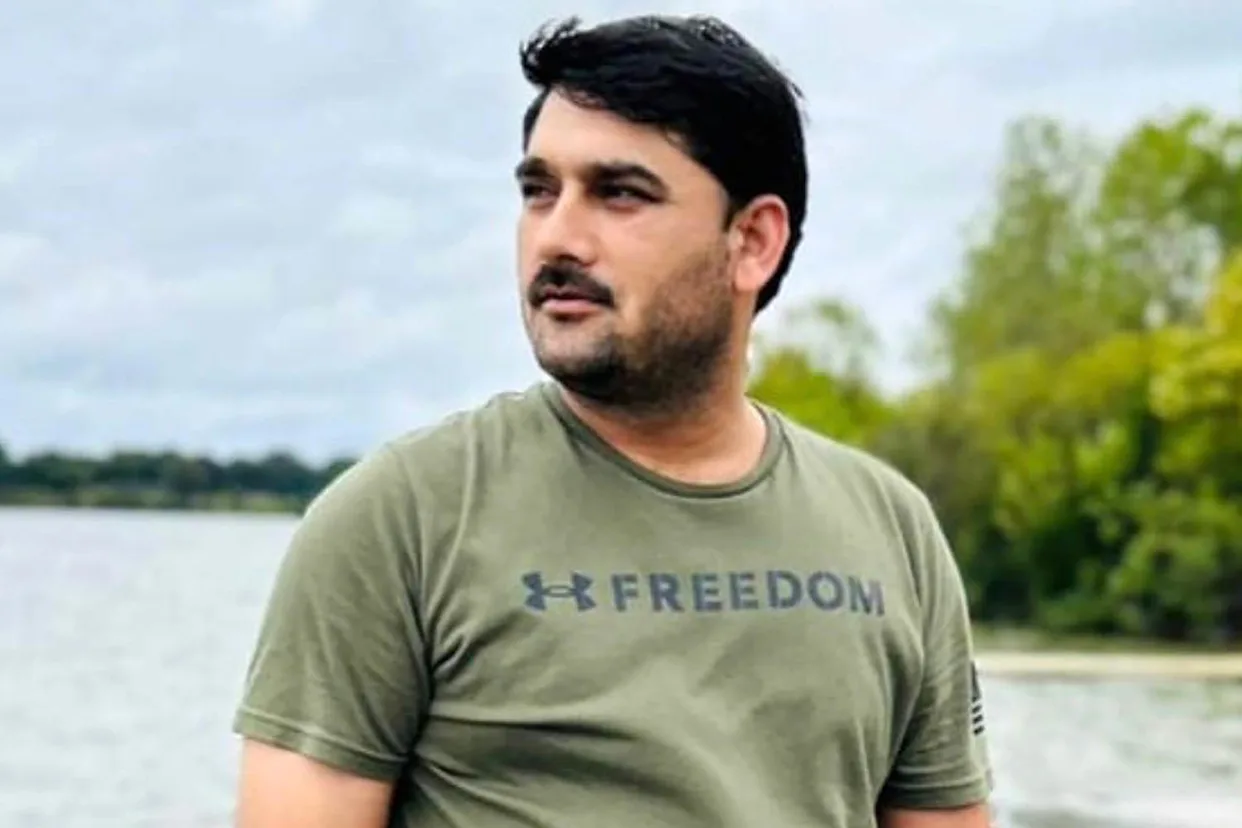
An Afghan man died in a Texas hospital less than 24 hours after being taken into the custody of US Immigration and Customs Enforcement (ICE), the agency said on Sunday, sparking calls for an investigation. The man, identified as 41-year-old Mohommad Nazeer Paktyawal, had previously worked with US Army Special Forces in Afghanistan. He was evacuated to the United States in 2021, where his asylum application remains pending, according to AfghanEvac, an organisation that assists with the resettlement of Afghans in the US. ICE said Paktyawal was arrested during a targeted enforcement operation on Friday and was later taken to Parkland Hospital in Dallas, Texas, after complaining of shortness of breath and chest pains. According to the agency, medical staff noticed early on March 14 that Paktyawal’s tongue had become swollen while he was eating breakfast, prompting an emergency response. Despite several attempts to revive him, he was pronounced dead at 9:10 a.m. ICE said the cause of death has not yet been determined and that the incident is under active investigation. The agency also noted that Paktyawal did not report any prior medical conditions when he was arrested. AfghanEvac called for an immediate and transparent inquiry into the circumstances surrounding his detention, medical treatment, and death, including oversight by the Department of Homeland Security’s inspector general and the US Congress. Paktyawal’s family described him as a father of six, with his youngest child just 18 months old. “We still cannot understand how this happened. He was only 41 years old and was a strong and healthy man,” the family said in a statement shared by AfghanEvac. Last week, the United Nations Committee on the Elimination of Racial Discrimination criticised ICE for what it described as the excessive use of force during immigration enforcement operations, noting that at least eight people have died during ICE operations or while in custody since January. ICE said Paktyawal entered the United States in August 2021 and that his parole status expired in August 2025. The agency also stated that he had been arrested twice last year over allegations related to fraud and theft involving the Supplemental Nutrition Assistance Program (SNAP), which provides food assistance to low-income households. AfghanEvac said those arrests did not lead to criminal charges and that, based on currently available information, Paktyawal had not been convicted of any crimes. During the 20-year international presence in Afghanistan, hundreds of thousands of Afghans worked with foreign military forces, diplomatic missions, and US-funded organisations. Many later feared they could face retaliation, including from the Taliban. The United Nations has previously reported cases of extrajudicial killings and enforced disappearances involving former Afghan officials under Taliban rule, despite the group’s declared amnesty for former adversaries. According to the US State Department, more than 190,000 Afghans have been resettled in the United States since the Taliban returned to power.

zz-44.jpg

4min7080
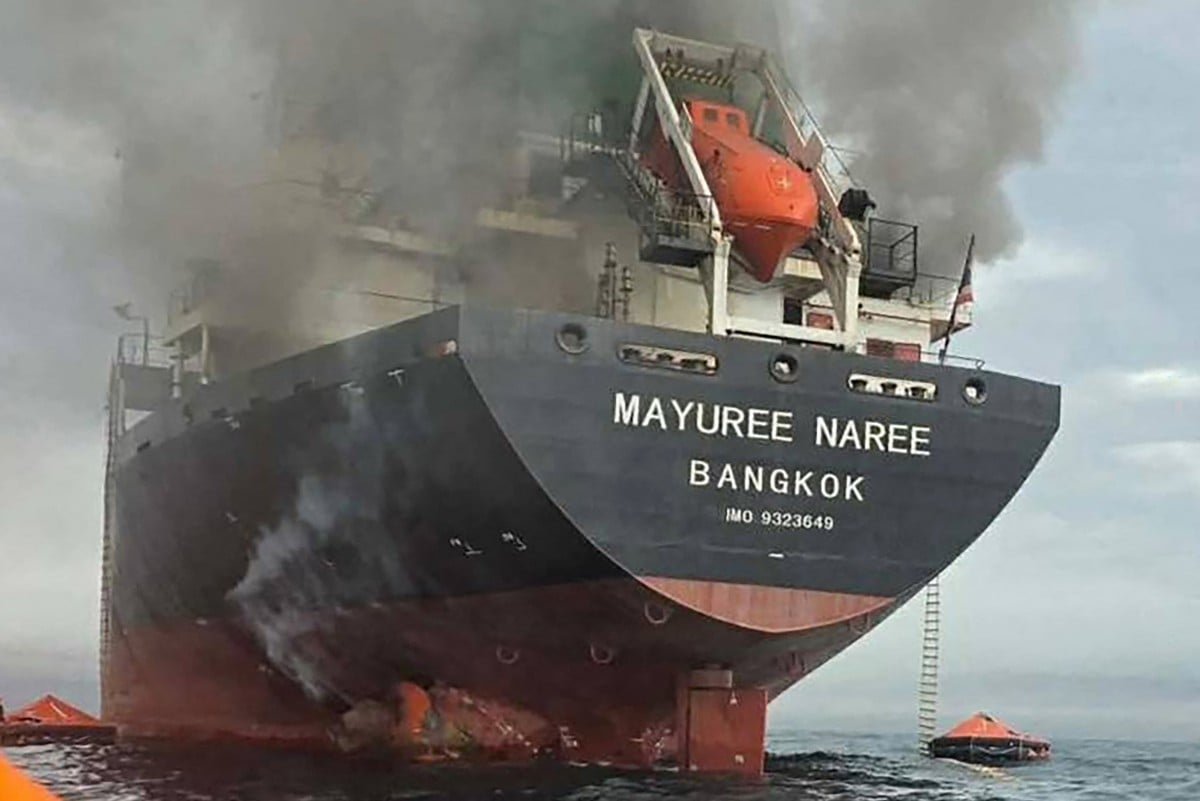
Twenty Thai crew members of a cargo vessel attacked in the strategic Strait of Hormuz arrived in Thailand on Monday, while three of their colleagues remain stranded on the ship in the Gulf. The Thai-registered vessel Mayuree Naree was struck by two projectiles on Wednesday while passing through the Gulf after departing from a port in the United Arab Emirates. Iran’s Revolutionary Guards later said they had targeted the Thai vessel and a Liberia-flagged ship in the strait, claiming both had ignored warnings. The 20 rescued sailors arrived at Thailand’s main international airport early Monday and were quickly escorted away by officials without addressing waiting journalists. A woman identified as Bass, whose husband was among the returning crew members, said she had yet to reunite with him after the incident. “We are all afraid, but they are employees if they refuse to go out to sea, they won’t get paid,” the 32-year-old said. She added that she had not received any information from the shipping company about her husband’s movements or when he would return home. Bass said she had only communicated with him through Facebook Messenger and had brought their one-year-old son to the airport at his request. Journalists at the airport saw the returning sailors board a bus shortly after their arrival. According to Bass, when the vessel was hit last week, her husband was only able to grab his phones before evacuating. He later apologised to her for leaving behind a small pillow that belonged to their son. She urged the company to ensure the safety of its workers during the ongoing conflict. “I want them to be sure the ship will be safe when it goes out during this war situation,” she said. “They should treat the employees like their own family.” The vessel’s owner, Precious Shipping, said in a statement on Monday that it would provide welfare support for the crew, including medical checks and mental health assessments. The company added that its highest priority was continuing efforts to locate the three crew members who remain missing. Earlier, the firm said the three sailors were believed to be trapped in the engine room, which was damaged during the attack. Thai officials said the country was seeking assistance from two other nations to help locate the missing crew members. The Thai navy previously reported that the Omani navy rescued the 20 sailors on Wednesday. The incident comes amid escalating tensions in the Middle East. Following strikes by the United States and Israel on Iran more than two weeks ago, Tehran has carried out retaliatory attacks against regional targets. The situation has raised concerns over the safety of shipping through the Strait of Hormuz, a vital waterway that normally carries about one-fifth of the world’s oil supply, heightening fears of disruption in global energy markets.

zz-5.avif

1min3850
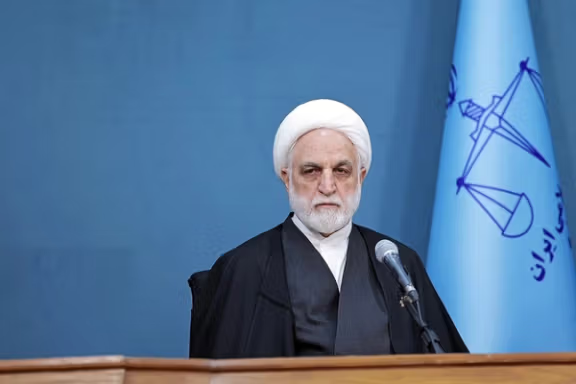
Iran’s judiciary chief said on Monday that there should be no leniency or delays in delivering verdicts against individuals accused of having links with Israel and the United States. Speaking through remarks reported by the Tasnim news agency, Gholam Hossein Mohseni Ejei said authorities must act decisively against those who allegedly committed crimes during periods of conflict and unrest while cooperating with what he described as hostile forces. He stated that the judiciary should move quickly to enforce final rulings against suspects connected to the two countries. Ejei also stressed the need to speed up the handling of cases involving individuals accused of posing threats to public security. In recent weeks, Iranian authorities have conducted widespread raids across the country, with local media reporting that hundreds of people suspected of collaborating with Israel and the United States have been arrested in recent days. On February 28, Israel and the United States carried out strikes on Iran that killed its supreme leader, Ayatollah Ali Khamenei, and sparked a conflict that quickly spread across the Middle East. Iran later responded by launching attacks targeting Israeli and American interests across the region.

zz-23.webp

7min9470
The United States government has begun a trade investigation into Nigeria and 59 other economies over allegations that they have not done enough to prevent the importation of goods produced with forced labour. In a notice issued by the Office of the United States Trade Representative (USTR), the US said the probe was initiated under Section 301 of the Trade Act of 1974 to assess whether the trade practices of the listed economies are “unreasonable or discriminatory” and whether they negatively affect American commerce. The notice, signed by the General Counsel at the USTR, Jennifer Thornton, stated that the investigation commenced on March 12, 2026. It will examine whether Nigeria and the other economies have failed to establish or effectively enforce bans on the importation of goods made with forced labour. According to the notice, the investigation will focus on policies and practices related to the failure to impose and enforce restrictions on goods produced through forced labour. Nigeria is among 60 economies included in the review, alongside China, India, Brazil, South Africa, the United Kingdom, Canada, and the European Union. The USTR explained that the investigation aims to determine whether the absence of effective import restrictions on forced-labour goods in these economies creates unfair trade conditions that place American businesses at a disadvantage. The agency noted that although many countries prohibit forced labour within their borders, weak controls on imports can allow companies to continue sourcing products made under exploitative conditions through global supply chains. US law has prohibited the importation of goods produced wholly or partly with forced labour for nearly a century, a policy rooted in humanitarian, foreign policy, and national security concerns. According to the USTR, forced labour gives producers an unfair cost advantage, enabling them to sell goods at lower prices and distort competition in global markets. Estimates from the International Labour Organisation show that forced labour remains widespread globally. The ILO reported that about 28 million people were trapped in forced labour as of 2021, representing roughly 3.5 out of every 1,000 people worldwide. The organisation also noted that the number of people subjected to forced labour increased by about 2.7 million between 2016 and 2021, largely driven by exploitation in the private sector. Profits generated from forced labour in the global private economy were estimated at about $63.9bn annually in 2024. The USTR added that forced labour affects entire global supply chains. Products linked to the practice include agricultural goods, textiles, minerals, fish products, and palm oil derivatives used in food and biofuel production. The US government warned that such goods can re-enter global markets even after being denied entry into the United States, creating unfair competition for American firms. As part of the process, the USTR will engage with governments of the economies under review and gather input from stakeholders. Businesses, labour organisations, and other interested groups have been invited to submit written comments on whether the countries involved have implemented or are developing laws to prohibit the importation of goods produced with forced labour. The agency is also seeking information on whether the absence of such policies has resulted in reduced US exports, lower economic output, or wage pressure on American workers. Public hearings on the investigation are scheduled to begin on April 28, 2026, at the US International Trade Commission in Washington, DC, and may continue until May 1. Stakeholders who wish to participate in the hearings or submit written comments must do so through the USTR’s electronic portal by April 15, 2026. After the hearings and consultations, the Trade Representative will decide whether the practices of the economies under investigation violate Section 301 of the Trade Act. If the investigation finds evidence of unfair trade practices, the United States may impose trade measures such as additional duties or import restrictions on goods from the affected economies. Meanwhile, recent data from the National Bureau of Statistics showed that Nigeria’s merchandise trade surplus declined sharply to N1.71tn in the fourth quarter of 2025, compared with N3.42tn recorded in the same period of 2024, as falling crude oil exports and rising imports narrowed the country’s positive trade balance. Although Nigeria maintained a trade surplus during the quarter, the balance weakened significantly on a year-on-year basis, largely due to a decline in crude oil exports. Total trade in the quarter stood at N36.21tn, slightly lower than the N36.60tn recorded in the corresponding period of 2024, representing a 1.07 per cent decline year-on-year. Exports remained higher than imports but dropped significantly compared with the previous year. Total exports fell to N18.96tn in the fourth quarter of 2025, a 5.25 per cent decline from N20.01tn recorded in the same period of 2024 and a 16.88 per cent drop compared with the previous quarter. Exports accounted for 52.36 per cent of total trade during the quarter. Crude oil continued to dominate Nigeria’s export earnings, contributing N9.70tn or 51.17 per cent of total exports, although revenue from crude oil declined sharply. Imports, however, continued to increase. Total imports rose to N17.25tn in the fourth quarter of 2025, representing a 3.98 per cent increase from N16.59tn recorded in the same period of 2024. Imports accounted for 47.64 per cent of total trade. Further analysis showed that Nigeria remained heavily dependent on imported manufactured goods and fuel products. Machinery and transport equipment were the largest import category, valued at N5.13tn and accounting for 29.75 per cent of total imports. This was followed by mineral fuels valued at N4.52tn, representing 26.19 per cent, and chemicals and related products worth N2.70tn, accounting for 15.68 per cent. Regionally, most imports came from Asia, valued at N8.08tn and representing 46.83 per cent of total imports. Europe followed with N5.75tn or 33.31 per cent, while imports from Africa stood at N696.13bn, accounting for 4.04 per cent. China remained Nigeria’s largest import partner with N5.39tn, representing 31.22 per cent of total imports, followed by the United States, the Netherlands, India, and Brazil.