
Author: Ifunanya Okafor

Ifunanya Okafor28 January 2026
SPRAY-1280x852.jpg

4min4760
Minnesota Congresswoman Ilhan Omar was targeted with an unknown substance during an event she hosted on Tuesday, after an audience member used a syringe to spray liquid at her, Minneapolis police reported. Omar was unharmed and continued her remarks. “I’m ok. I’m a survivor, so this small agitator isn’t going to intimidate me from doing my work. I don’t let bullies win,” she later posted on X. Authorities have yet to determine the nature of the liquid. A journalist present at the event described it as having a sour chemical-like odor. The suspect, 55-year-old Anthony James Kazmierczak, has been charged with third-degree assault and is currently in custody, according to the local sheriff’s office. Omar, a Democrat, has been an outspoken critic of US President Donald Trump and his immigration policies in Minnesota, where two US citizens were recently fatally shot. In response to the second fatal shooting, Trump said his administration was “going to de-escalate a little bit.” During the event, Omar called for the abolition of Immigration and Customs Enforcement (ICE), which has faced scrutiny over its operations in the state. She also criticized DHS Secretary Kristi Noem, calling for her resignation or impeachment over recent incidents. Earlier this month, US citizen Renee Good was fatally shot by an immigration officer, followed by Alex Pretti, who was killed after being stopped by border agents, sparking local and national protests. It was after Omar’s comments on Noem that she was attacked. As Kazmierczak was removed from the venue, he reportedly said Omar was “pitting us against each other,” though it was unclear what he meant. The suspect was arrested immediately, and forensic investigations were conducted at the scene. Despite calls from officials to end the event, Omar continued speaking, telling attendees, “We will continue… we are Minnesota strong,” and later adding, “We’re gonna keep talking. Just give me ten minutes. Please don’t let them have the show.” One attendee, Alfred Flowers Jr., praised Omar’s courage, noting her determination to finish the town hall. Minneapolis Mayor Jacob Frey condemned the attack, stating, “Violence and intimidation have no place in Minneapolis. We can disagree without putting people at risk… This kind of behaviour will not be tolerated in our city.” The event drew around 100 attendees in a north Minneapolis basement, who came to discuss the presence of federal immigration officers and recent shootings. Omar, who became the first Somali-American and first African-born American woman elected to the US Congress in 2019, regularly hosts such town halls. Trump’s immigration operation in Minneapolis began in December after Somali immigrants were convicted in a large-scale welfare fraud case. The state has the largest Somali-American community in the country. Many locals have suggested the operation may be politically motivated, given Trump’s frequent personal attacks on Omar. Earlier this month, Trump wrote on Truth Social that Omar “should be in jail, or even face a worse punishment, sent back to Somalia,” adding that she could “help to MAKE SOMALIA GREAT AGAIN!”

Ifunanya Okafor28 January 2026
Tax-illustration-1.webp

7min4980
From January 1, 2026, Nigeria’s new tax laws will take effect, offering a wide range of exemptions and reliefs aimed at easing the burden on low-income earners, average taxpayers, and small businesses. These measures are designed to improve welfare and promote the growth of small-scale enterprises. Personal Income Tax (PAYE) Individuals earning the national minimum wage or less are fully exempt. Annual gross income up to ₦1,200,000 (approx. ₦800,000 taxable) is exempt. Reduced PAYE for earners with annual gross income up to ₦20 million. Gifts are tax-exempt. Allowable Deductions & Reliefs for Individuals Pension contributions to PFA National Health Insurance Scheme contributions National Housing Fund contributions Interest on loans for owner-occupied housing Life insurance or annuity premiums Rent relief: 20% of annual rent (up to ₦500,000) Pensions & Gratuities – Exempt Pension funds and assets under the Pension Reform Act (PRA) Retirement benefits, gratuities, or compensation under the PRA Compensation for loss of employment up to ₦50 million Capital Gains Tax (CGT) – Exempt Sale of owner-occupied homes Personal effects worth up to ₦5 million Sale of up to two private vehicles per year Gains on shares below ₦150 million or gains up to ₦10 million Gains above the exemption threshold if reinvested Pension funds, charities, and religious institutions (non-commercial) Companies Income Tax (CIT) – Exemptions & Reliefs Small companies (turnover ≤ ₦100 million; fixed assets ≤ ₦250 million) pay 0% tax Eligible startups exempt 50% additional deduction for salary increases, wage awards, or transport subsidies for low-income employees 50% deduction for new employees retained for at least three years Five-year tax holiday for agricultural businesses (crop production, livestock, dairy, etc.) Gains from investment in eligible startups by venture capital, private equity, or incubators Development Levy – Exempt Small companies are exempt from the 4% levy Withholding Tax – Exempt Small businesses, manufacturers, and agricultural firms exempt from withholding tax on income Small companies exempt from deductions on supplier payments Value Added Tax (VAT) – 0% or Exempt Basic food items, education services/materials, health and medical services, pharmaceuticals Rent Small companies (turnover ≤ ₦100 million) exempt from charging VAT Diesel, petrol, solar power equipment – VAT suspended or exempt Refunds on VAT for assets or overheads used to produce VATable or 0% VAT goods/services Agricultural inputs: fertilizers, seeds, seedlings, feeds, live animals Equipment for agricultural use Disability aids: hearing aids, wheelchairs, braille materials Shared passenger road transport (non-charter) Electric vehicles and parts Humanitarian supplies Baby products Sanitary products Land and building Stamp Duties – Exempt Electronic transfers below ₦10,000 Salary payments Intra-bank transfers Transfers of government securities or shares All documents, stocks, and share-related transactions

Ifunanya Okafor28 January 2026
Tinubu-Restricts-UNGA-Attendance-to-Authorised-Officials-1-1024x576-1.jpg

3min5660
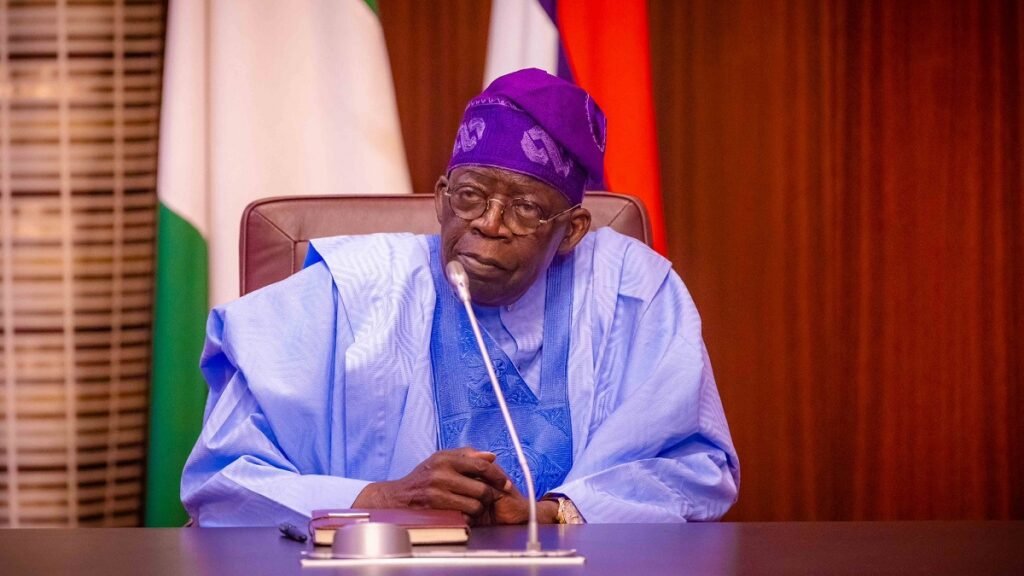
The Senate has received 24 health sector bills transmitted by President Bola Tinubu for legislative consideration, in accordance with Section 58(2) of the Constitution of the Federal Republic of Nigeria. The proposed legislations were conveyed in a letter to the Senate and formally read during plenary by the Senate President, Senator Godswill Akpabio. President Tinubu stated that the bills emerged from a comprehensive review of existing health sector laws conducted by the Attorney-General of the Federation and Minister of Justice, in collaboration with the Minister of Health and Social Welfare. The review was subsequently approved by the Federal Executive Council. According to the President, the proposed amendments are designed to streamline governance structures within health institutions by reducing excessively large board memberships, with the aim of enhancing efficiency, effectiveness, and overall service delivery across the sector. He explained that the bills cover a broad range of health institutions and regulatory bodies, including tertiary and teaching hospitals, specialty hospitals, professional councils, and regulatory agencies. The amendment bills relate to institutions such as the National Hospital for Women and Children, Federal Medical Centres, National Specialty Hospitals Management Board, Orthopaedic Hospitals Management Board, National Eye Centre, National Ear Care Centre, Nursing and Midwifery Council of Nigeria, Medical Laboratory Science Council of Nigeria, the National Agency for Food and Drug Administration and Control (NAFDAC), and the National Blood Service Agency, among others. The President also highlighted additional legislative proposals, including the Records Officers Registration and Digital Health Bill 2025 and the Federal College of Complementary and Alternative Medicine Bill 2025. Tinubu expressed confidence that the Senate would give the bills thorough and judicious consideration in the interest of strengthening Nigeria’s health sector. Following their presentation at plenary, the Senate President referred all 24 bills to the Senate Committee on Rules and Business for further legislative action.

Ifunanya Okafor28 January 2026
Monopoly-3-1280x905.png

6min12480
As an Amazon Associate, Edupreneur earns from qualifying purchases. In an increasingly digital world, the challenge for parents and educators is finding engaging ways to teach critical life skills. While apps and online games have their place, the classic board game Monopoly – particularly the edition that includes Fan Vote Community Chest Cards – remains an unparalleled, hands-on tool for developing essential financial literacy, strategic thinking, and social skills in children aged 8 and up. As a Principal Facilitator with years of experience in educational development, I’ve seen firsthand how effective game-based learning can be. And when it comes to practical education, Monopoly isn’t just fun; it’s a powerful simulator for the real world. Beyond the Board: Key Learning Outcomes from Monopoly Monopoly’s enduring popularity for 2 to 6 players isn’t just about the thrill of owning properties. It’s about the invaluable lessons embedded in every roll of the dice and every property transaction. Financial Literacy Fundamentals: Budgeting & Money Management: Players learn to count money, make change, and manage their cash flow – simple yet crucial skills often overlooked in standard curricula. Investment & Risk Assessment: Deciding when to buy a property, build houses, or mortgage assets teaches the basics of investment, risk, and return. Children quickly grasp that smart investments can yield dividends, while reckless spending leads to bankruptcy. Debt & Assets: The concepts of owing money (rent) and owning valuable assets (properties) become tangible. The updated Fan Vote Community Chest Cards can even introduce modern financial scenarios that resonate more with today’s youth. Strategic Thinking & Planning: Resource Allocation: Players must strategically decide where to invest their limited funds for maximum impact. Should they prioritize buying a complete color set or diversify their portfolio? Negotiation Skills: Trading properties with opponents fosters negotiation, persuasion, and understanding mutual benefit – invaluable social skills for future interactions. Probabilistic Thinking: While based on chance, understanding the likelihood of landing on certain squares (especially those with houses) helps develop a rudimentary sense of probability. Social & Emotional Development: Patience & Turn-Taking: The game naturally teaches patience and respect for others’ turns, a vital skill for classroom and family harmony. Coping with Wins and Losses: Monopoly can be unpredictable. Learning to win gracefully and lose with resilience is a powerful emotional lesson that prepares children for life’s ups and downs. Rule Following & Fair Play: Adhering to the game’s rules reinforces the importance of structure and fairness in any system. Why This Edition is Perfect for Your Learning Arsenal The Monopoly Game, Family Board Game for 2 to 6 Players, Monopoly Board Game for Children from 8 Years, Includes Fan Vote Community Chest Cards, offers several advantages: Age Appropriateness: Specifically designed for children from 8 years, the rules are accessible, yet the strategic depth grows with the child. Family Engagement: It’s a fantastic way for 2 to 6 players to bond, creating shared experiences and memories away from screens. Parents can guide discussions around financial decisions, turning gameplay into teachable moments. Modern Relevance: The inclusion of Fan Vote Community Chest Cards means the game can evolve, incorporating contemporary events or dilemmas that children might encounter, making the lessons even more relevant. The Bottom Line for Schools, Parents, and Educators In a world demanding greater financial literacy and critical thinking, Monopoly is more than just a game; it’s a dynamic classroom in a box. It provides a safe, engaging environment for children to experiment with financial decisions, practice strategic thinking, and develop essential social skills that will serve them well into adulthood. Invest in a copy for your home or classroom today, and watch your children master money, strategy, and resilience, one property at a time. Check on Amazon: https://amzn.to/4ahkleq (As an Amazon Associate, Edupreneur earns from qualifying purchases.)

Ifunanya Okafor27 January 2026
Nigerianbandits.png

4min7610
Residents of Gidan Waya in Lere Local Government Area of Kaduna State have accused bandits of refusing to release 13 villagers abducted despite the payment of a ₦40 million ransom, leaving the community in hunger and despair. The Chairman of the Gidan Waya Elders Forum, Mallam Rabo Sambo, made the disclosure on Monday during a press conference in Kaduna. Sambo said the villagers were kidnapped during a violent night raid on November 11, 2025, when armed men attacked the community between 11 p.m. and midnight, firing gunshots and throwing residents into panic. “We heard gunshots, and before we knew it, the bandits had surrounded the settlement,” Sambo said. “Our community is a closed settlement, so they easily ambushed us.” He added that four residents were killed and five others were injured and taken to medical facilities for treatment. Thirteen villagers—five men and eight women—were taken to an unknown location, he said. “This is the first time we are experiencing such an attack. We have always lived in peace here, and there has never been any crisis among us,” Sambo noted, adding that the attackers wore masks, making identification impossible. The kidnappers later contacted the community in January 2026, demanding a ransom of ₦40 million for the release of the abducted villagers. “To raise the ransom, we sold over 3,000 bags of maize. When the trailers came to load the maize, everyone in the community was crying,” Sambo said, explaining that the maize was the community’s main food reserve meant to sustain families for months. “After selling our food to pay the ransom, we are now going hungry. We can no longer feed our families,” he added. Sambo said the ransom was delivered immediately, with the expectation that the villagers would be released without delay. “As soon as we got the money, it was taken straight to the kidnappers,” he said. However, he lamented that weeks after the payment, none of the abductees had been freed. “It has been more than two months since they were taken. Even today, none of them has returned,” he said, explaining that the elders went public because they were unsure whether the Kaduna State Government or the Lere Local Government Council had been fully informed. “We don’t know if Governor Uba Sani is aware of what happened to us. That is why we are appealing through the media,” Sambo said. While acknowledging the efforts of the Divisional Police Officer in Lere, who has visited the community several times, Sambo appealed to state and federal authorities for urgent intervention to secure the release of the abductees and provide food assistance. “Our people are still in captivity, and those at home are suffering. Everyone shed tears. We are living in fear, hunger, and uncertainty,” he said. His revelation comes shortly after over 160 worshippers were abducted in a separate incident in Kaduna.

Ifunanya Okafor27 January 2026
Bola-Tinubu66.png

3min7060
The Senior Special Assistant to President Bola Tinubu on Community Engagement (North West), Alhaji Abdullahi Tanko Yakasai, has reiterated the President’s commitment to delivering extensive infrastructural development across the country, with particular focus on the North-West region. Yakasai made the statement in Gusau on Tuesday while leading members of the National Media Tour on an inspection of the ongoing Zaria–Gusau–Sokoto dual carriageway project awarded by the Federal Government. He praised President Tinubu for initiating and driving the project in the North-West, noting that once completed, it would significantly enhance commercial activities, improve security, and promote social development in the region. According to Yakasai, the Federal Government is determined to ensure the project is completed on schedule, adding that durable materials and substantial investment consistent with President Tinubu’s Renewed Hope Agenda for infrastructure have been committed to the project. He also commended the contractors for their efforts and urged them to strictly adhere to contractual terms while delivering quality work within the agreed timeframe. Yakasai stressed that President Tinubu deserves the continued support of the people of the North-West, citing the execution of long-lasting legacy projects as evidence of his administration’s commitment to the region. In his remarks, the Controller of the Federal Ministry of Works in Zamfara State, Engr. Kasimu Yusuf, described the inspection visit as timely and encouraging. He explained that the contract for the dualisation of the 372-kilometre Zaria–Gusau–Sokoto highway was awarded in 2023 with a completion period of 48 months. Yusuf outlined that the project was divided into four sections: Section One runs from Zaria in Kaduna State to Sheme in Katsina State; Section Two spans Sheme to Gusau in Zamfara State; Section Three covers Gusau to Talata Mafara in Zamfara State; while Section Four stretches from Talata Mafara to Sokoto. He disclosed that the 86.1-kilometre Section Two has reached 52 per cent completion, while the 93.7-kilometre Section Three has achieved 14 per cent completion. Yusuf added that contractors on the project are delivering quality work and complying with the terms of the contract set by the Federal Government.

Ifunanya Okafor26 January 2026
tax.webp

6min3710
A dispute has surfaced between the House of Representatives and its Minority Caucus over an ad hoc committee investigating alleged changes to Nigeria’s tax laws. Afam Ogene, chairman of the Minority Caucus ad hoc committee, warned on Sunday that dismissing the committee’s interim report would encourage impunity and undermine the authority of the National Assembly. His comments followed remarks by House deputy spokesperson Philip Agbese, who reportedly described the report as “overtaken by events” after Certified True Copies of the affected tax laws were released. In a statement issued in Abuja, Ogene said: “While I might ordinarily have ignored the remarks as a personal opinion, Agbese’s position as a principal officer of the House carries the responsibility of safeguarding the integrity of the legislature and democratic processes.” He added, “I am therefore perplexed as to why he has assumed the role of spokesperson for the executive in this matter.” Ogene, who represents Ogbaru Federal Constituency in Anambra State, stressed that the minority caucus committee’s report did not indict the National Assembly or question its authority. Instead, it highlighted “the concerning attempt by perpetrators of the illegal alterations to undermine the legislature’s functional integrity and independence.” He questioned claims that the issue had been resolved, noting that a separate bipartisan committee, chaired by Muktar Betara, is still reviewing the tax acts. “If, as Agbese claims, the alleged alterations have been overtaken by events following the release of Certified True Copies, why is the Betara committee still sitting and has not been dissolved by the House?” Ogene asked. The lawmaker cautioned that overlooking such procedural irregularities could weaken democratic institutions. “Speaking in the manner that Agbese has spoken will only enable unacceptable behaviour that ought to attract the collective upbraid of all lawmakers, irrespective of partisan divide. Democratic institutions are strengthened when accountability is upheld, not when official malfeasance is overlooked,” he said. Ogene expressed confidence in Speaker Abbas Tajudeen’s leadership, adding: “I trust that the Speaker will continue to defend the independence of the legislature and ensure that public interest prevails over political expediency.” Responding to the Minority Caucus, House spokesman Akin Rotimi described the committee’s actions as “procedurally flawed and lacking institutional authority.” “The House recognises the legitimate role of the minority caucus within parliamentary democracy and affirms its right to express dissenting opinions, engage in policy advocacy, and raise public concerns,” Rotimi said. “However, it is necessary to distinguish clearly between political activities and the formal parliamentary processes of the House.” He stressed that, according to the House Standing Orders, only the House acting in plenary or the Speaker can formally constitute ad hoc committees. “No political caucus, whether majority or minority, possesses the procedural authority to establish a committee with parliamentary status,” Rotimi added. Rotimi explained that caucuses serve as platforms for consultation and coordination, without investigative authority, oversight powers, or the ability to summon individuals or request official documents. “Any action taken by a caucus in this regard is non-binding, informal, and without legal or institutional consequence,” he said. He also highlighted that the Betara-led bipartisan committee, appointed in December 2025 to examine multiple purported copies of the tax legislation, remains active and will submit its report to the House upon conclusion. The spokesman noted that the National Assembly has published the official Gazette and issued Certified True Copies of the enacted tax laws, formally disowning any unofficial documents. He warned that the caucus-led committee “only serves to compound public misunderstanding on an issue that has been institutionally resolved and overtaken by events.” “For the avoidance of doubt, only committees constituted by the House in plenary or by the Speaker have parliamentary authority,” Rotimi said. “Members of the public should regard any committee or report not authorised by the House as a political initiative rather than an official action of the Green Chamber.” The disagreement underscores rising tensions over legislative oversight and highlights the need to maintain procedural integrity while addressing allegations of malpractice in Nigeria’s tax legislation process. Analysts note that the dispute reflects the delicate balance between political advocacy by minority lawmakers and formal parliamentary authority.

Ifunanya Okafor26 January 2026
Tinubu-7.jpg

3min5050
It’s not just investors who have been buying up gold. Last year, central banks added hundreds of tons of bullion to their reserves, according to the World Gold Council. “There’s a very clear shift away from the US dollar, which is benefiting gold immensely,” said Kavalis. The start of this year has seen gold continue to rally but Frappell warns the “news-driven” market could also result in a fall in its price. “There’s got to be scope for unexpected news that actually might be positive for the world and not necessarily positive for gold,” he said. But not everybody is buying gold for purely investment reasons. In many cultures, the metal is purchased during festivals or given as gifts at celebrations such as weddings. In India, the annual Diwali festival is believed to be an auspicious occasion to buy precious metals in order to bring on wealth and luck. According to the US investment bank Morgan Stanley, Indian households held $3.8tn of gold, equivalent to 88.8% of the country’s gross domestic product (GDP). Neighbouring China is the world’s largest single consumer market for gold, with many believing that buying it brings good fortune. “We often see a seasonal uptick in demand around Chinese New Year, which we are seeing at the moment to an extent,” said Kavalis, referencing the upcoming Year of the Horse, which begins in February.

Ifunanya Okafor25 January 2026
aa.jpg

4min7230
The Joint Admissions and Matriculation Board (JAMB) has discontinued the special concessions and registration procedures previously extended to candidates living with albinism for the 2026 Unified Tertiary Matriculation Examination (UTME), citing widespread abuse and examination malpractice. JAMB Registrar, Prof. Isaq Oloyede, disclosed that the decision followed findings that some individuals exploited the privilege by using artificial intelligence and other means to falsely present themselves as albino candidates during registration. According to him, more than 7,000 candidates claimed to be albinos in the previous UTME cycle, prompting the Board to abolish the special arrangement entirely. The announcement was made on Saturday in Ikeja, Lagos, during a meeting between JAMB management and Commissioners for Education from the 36 states and the Federal Capital Territory, convened to review past admission exercises. Prof. Oloyede noted that despite several safeguards introduced by JAMB, some candidates and institutions remained intent on undermining the system. He also cautioned faith-based tertiary institutions to be transparent about their religious identity at the point of admission. According to him, it is misleading for institutions to present themselves as secular only to later impose compulsory religious practices on students. “If you are a faith-based institution, declare it clearly from the onset. The law permits the establishment of faith-based schools, but applicants deserve to know what they are signing up for,” he said. On examination malpractice, Oloyede revealed that investigations showed some undergraduates sit for UTME either to change courses or to impersonate other candidates. He cited a case from the previous year where the highest-scoring UTME candidate was later discovered to be a 300-level university student. He warned that any candidate already admitted into a tertiary institution who fails to disclose their status while sitting for UTME would be disqualified and risk losing their current admission. Addressing admission criteria, the registrar explained that federal institutions allocate 45 per cent of admissions on merit, 20 per cent to catchment areas, 20 per cent to educationally disadvantaged states, while the remaining slots cover other considerations. He encouraged state-owned institutions to allocate at least 10 per cent of admissions purely on merit to promote diversity. Oloyede also criticised states that establish new universities despite failing to exhaust their admission quotas in existing institutions. On underage admissions, he reaffirmed that 16 years remains the minimum entry age, noting that while over 42,000 candidates claimed to be underage last year, only 78 were found exceptional enough to be admitted after assessment. The meeting further agreed that parental pressure was a major factor driving premature educational advancement among children. As part of efforts to curb malpractice, JAMB has also banned the movement of computers between Computer-Based Test (CBT) centres, ensuring that systems accredited to a centre remain permanently there. Providing an update on the 2025 UTME, Oloyede said about 974,855 candidates had secured admission out of nearly 1.95 million candidates who sat for the examination. He added that over ₦2.4 billion had been disbursed in the last decade to institutions that consistently complied with JAMB regulations. He concluded by warning state governments against partnerships with private CBT centre promoters that could be exploited to facilitate examination malpractice.

Ifunanya Okafor24 January 2026
aa-11.jpeg

4min5270
The Minister of State for Industry, Senator John Owan, has urged Nigeria to drastically cut its reliance on imports and deliberately harness its large population for productive industrial activity, warning that population size alone does not translate into economic growth. Speaking at the Redeemed Christian Church of God Lagos Province 35 Economic Summit on Saturday, Owan said the success of the Federal Government’s Nigeria-First policy hinges on policy consistency, coordinated implementation, and the effective use of public procurement to drive local manufacturing. He explained that President Bola Tinubu introduced the Nigeria-First policy in 2025 to prioritise Nigerian-made goods and services in government procurement, but stressed that implementation is now the critical challenge. According to the minister, engagements have begun between the Ministry of Industry and Development and the Bureau of Public Procurement to focus on key sectors such as textiles and apparel, automotive, medical equipment, furniture, and others. He noted that a well-structured procurement framework could create steady demand for locally produced goods and unlock significant private-sector investment. Owan described public procurement as a powerful but underutilised tool for industrial development, saying predictable government demand can accelerate domestic value-chain growth. He cited countries like Bangladesh and Vietnam, which built global manufacturing strength not through perfect infrastructure but through policy predictability, competitiveness, and focused value chains. He also argued that Nigeria could achieve self-sufficiency in areas like clothing and automotive manufacturing if procurement policies were deliberately used to encourage local production. As an example, he said multinational firms would be compelled to invest locally if government purchases were tied to domestic manufacturing. The minister revealed that manufacturers consistently emphasise the need for predictability rather than perfection. He said stable rules and clear policy direction are essential for businesses to invest, expand, and create jobs. “Predictability is the foundation of competitiveness,” Owan said, adding that uncertainty forces businesses to focus on survival instead of growth. He noted that the current administration’s reforms aim to shift Nigeria from consumption-driven policies to a rule-based, production-oriented economy, built on stability, fairness, and investor confidence. Owan warned that Nigeria’s youthful population could become a burden if industrial capacity is not expanded quickly enough to generate jobs, stressing that a large population only becomes an advantage when it is productive. He added that aligning industrial policy with procurement reform would reduce import dependence, strengthen local manufacturing, and ensure government spending supports Nigerian industries. “We are aligning policy, procurement, and production to turn population into demand, demand into production, and production into jobs,” he said. The minister concluded by expressing hope that reforms in 2026 would result in more jobs, stronger industries, increased trade, and deeper investment across the economy.