Author: Tech & Tools Desk

Tech & Tools Desk31 October 2025
healthcare-.jpg

5min1220
Health experts have raised serious concerns that the continued migration of medical professionals, widely known as the “Japa” phenomenon, is pushing Nigeria’s already fragile healthcare system toward collapse. The warning was issued during the 10th Olikoye Ransome-Kuti Memorial Lecture, organised by the IFEMED Journal Club under the Obafemi Awolowo University Medical Students’ Association, held on Thursday at the university’s Ile-Ife campus. Themed around tackling the mass exodus of healthcare workers, the event attracted notable figures, including the Coordinating Minister of Health and Social Welfare, Ali Muhammed (represented by the Chief Medical Director of the Obafemi Awolowo University Teaching Hospital, John Okeniyi), and former Elizade University Vice-Chancellor, Prof. Kayode Ijadunola, who delivered the keynote address. Speaking on behalf of the minister, Okeniyi said the Japa wave undermines the vision of the late Prof. Olikoye Ransome-Kuti, who championed accessible and high-quality healthcare for all Nigerians. He, however, expressed optimism about the emerging “reverse Japa” trend, noting that some professionals are beginning to return home as ongoing reforms take effect. Chairman of the event, Prof. Roger Makanjuola, described Ransome-Kuti as a man of unmatched integrity who left an indelible legacy of transparency and service. He urged Nigerians to safeguard the health sector the late professor helped to strengthen. Delivering his keynote address, Ijadunola criticised what he called the government’s “tokenistic” approach to addressing the worsening brain drain among health professionals. “Any nation that trivialises the migration of its critical workforce and adopts token measures as a response is essentially sabotaging itself,” he stated. Citing disturbing data, he noted that Nigeria currently has only 1.83 skilled health workers per 1,000 citizens—less than half of the World Health Organisation’s recommended benchmark of 4.45. Out of the country’s 55,000 licensed doctors, about 17,000 are said to have left for opportunities abroad. He traced the root of the crisis to long-standing neglect, recalling that as far back as 1988, a presidential committee under General Ibrahim Babangida was set up to address brain drain triggered by poor working conditions and infrastructure. To stem the tide, Ijadunola called for transparent governance, merit-based promotions, better pay, and structured opportunities for Nigerian professionals abroad to contribute to the local health system. “Rebuilding the sector requires stronger institutions, accountability, and a renewed commitment to good governance,” he said. The lecture also featured the presentation of awards for the 6th National Olikoye Ransome-Kuti Memorial Essay Competition themed “Global Health Workforce Migration and Its Impact on the Nigerian Health Sector.” From over 200 entries, Yusuf Zabairub of Ahmadu Bello University emerged the winner, followed by Buhari Ahmad of the University of Ilorin in second place, and Abubakar Daniel Bade of the University of Maiduguri in third. Meanwhile, the Nigerian Association of Resident Doctors has declared a nationwide indefinite strike beginning November 1, following the expiration of its 30-day ultimatum to the Federal Government. NARD President, Dr. Muhammad Suleiman, disclosed that the government owes doctors and other health workers across the country an estimated ₦38 billion in unpaid allowances. He added that resident doctors have already begun ward handovers in preparation for the industrial action.

Tech & Tools Desk31 October 2025
s2.png

5min2180
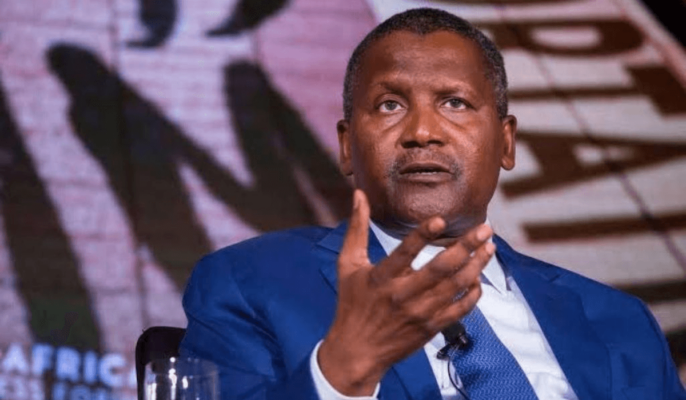
The President of Dangote Group, Alhaji Aliko Dangote, has dismissed suggestions that he should purchase one of Nigeria’s idle government-owned refineries rather than expand the capacity of his privately owned refinery in Lekki, Lagos. Dangote made this known while announcing the planned expansion of his $20 billion refinery from 650,000 barrels per day to 1.4 million barrels per day, a move he said would make it the largest in the world within three years. Responding to questions about why he chose expansion over acquisition, Dangote, who spoke alongside his longtime associate, Femi Otedola, said he preferred to grow his own facility rather than face accusations of monopolizing the industry. He urged other wealthy individuals and groups—particularly the Depot and Petroleum Products Marketers Association of Nigeria (DAPPMAN)—to consider acquiring or constructing refineries themselves. “Buying those refineries? The moment we do that, there’ll be noise everywhere. There are others with even more resources than we have—let them take their shot so that nobody complains about monopoly,” Dangote stated. “DAPPMAN and similar groups should buy some of the refineries. And if they’re not for sale, they should build their own. It’s better for others to invest too so that we’re not the only ones supporting the President’s policies.” He added that President Bola Tinubu had pledged to back the local refining sector with crude oil supply, saying the government’s support would help boost domestic production. “For us, we already have the infrastructure, so expanding our refinery makes more sense than taking over another facility,” he explained. “We’re doubling our capacity from 650,000 to 1.4 million barrels per day because the environment is now favorable for such investment.” Dangote emphasized that achieving the government’s vision of a $1 trillion economy would require collective effort, urging other investors to take initiative in the refining sector rather than relying on one player. The billionaire industrialist also recalled that he had once attempted to acquire the refineries during former President Olusegun Obasanjo’s administration in 2007, but was forced to return them after the late President Umaru Musa Yar’Adua reversed the sale. “We bought the refineries in January 2007, but when the new administration came in, we had to return them. They claimed Obasanjo sold them too cheaply. Since then, over $18 billion has reportedly been spent on them, yet they’re still not functioning. I doubt they ever will,” Dangote remarked. Meanwhile, the Group Chief Executive Officer of the Nigerian National Petroleum Company Limited (NNPC), Bayo Ojulari, has insisted that the country’s refineries—Port Harcourt, Warri, and Kaduna—will be restored to operation. Calls for privatisation have grown louder following the repeated shutdowns of the Port Harcourt and Warri refineries, both of which had recently been declared operational after major rehabilitation projects. Industry stakeholders, including the Manufacturers Association of Nigeria, have described the facilities as a financial burden on the nation, urging the government to sell them off to improve efficiency and accountability. Despite multiple rounds of funding—$1.4 billion for Port Harcourt, $897 million for Warri, and $586 million for Kaduna—the refineries have remained non-functional for years. Ojulari revealed that the NNPC is currently conducting a “Technical and Commercial Review” to determine whether the refineries should be overhauled or repurposed for improved performance and long-term sustainability. According to him, the review is part of a broader effort to reposition the refineries into profitable, globally competitive assets capable of meeting Nigeria’s fuel needs.

Tech & Tools Desk30 October 2025
gtb.jpeg

3min2400
Guaranty Trust Holding Company Plc (GTCO) has announced its unaudited financial results for the third quarter of 2025, reporting a 39% year-on-year increase in Profit Before Tax (PBT) to ₦299.9 billion. The report showed that gross earnings for the period rose by 15.5% year-on-year to ₦532 billion, compared to ₦461 billion in Q3 2024. GTCO’s nine-month PBT stood at ₦900.8 billion, driven by strong growth in interest and fee income, which rose by 25.6% and 16.8% respectively. The company noted that its solid core earnings helped mitigate the 26% year-on-year decline in PBT, following the non-recurrence of ₦523.2 billion fair value gains recorded in Q3 2024. GTCO’s unaudited consolidated and separate financial statements as of September 30, 2025, submitted to the Nigerian Exchange Group (NGX) and the London Stock Exchange (LSE), showed growth across all asset categories. The Group maintained a strong, liquid, and diversified balance sheet across its banking, payments, pension, and fund management businesses. Total assets stood at ₦16.7 trillion, while shareholders’ funds closed at ₦3.3 trillion. The Capital Adequacy Ratio (CAR) remained strong at 36.5%. Asset quality also improved, with IFRS 9 Stage 3 Loans declining to 3.3% and 4.4% at the Bank and Group levels, respectively, compared to 3.5% and 5.2% in December 2024. The Cost of Risk (COR) also improved to 2.2% from 4.9% at the end of 2024. The Group’s loan book (net) expanded by 16.5% from ₦2.79 trillion in December 2024 to ₦3.24 trillion in September 2025, while customer deposits grew by 16% from ₦10.4 trillion to ₦12.06 trillion during the same period. Commenting on the results, GTCO Group Chief Executive Officer, Mr. Segun Agbaje, said:“Our third-quarter performance highlights the strength and consistency of our business model. We continue to see sustainable growth across our banking and non-banking operations, driven by disciplined execution and a strong focus on operational efficiency.”

Tech & Tools Desk30 October 2025
2.png

2min2730
FirstBank of Nigeria Limited, a subsidiary of FBN Holdings Plc (FirstHoldCo), has fully redeemed its $350 million subordinated Eurobond due in October 2025, reaffirming its strong liquidity and financial resilience. The Eurobond, issued in 2020 at an 8.625% coupon rate, matured on October 23, 2025, and was repaid in full from the bank’s balance sheet without any refinancing. This achievement highlights FirstBank’s solid capital position and disciplined risk management strategy. In a statement filed with the Nigerian Exchange Limited on Wednesday, the bank noted that the successful redemption reflects its unwavering commitment to maintaining investor confidence and preserving its reputation in the global debt market. Since 2007, FirstBank has issued and fully redeemed four Eurobonds, totalling $1.275 billion, underscoring its consistent financial performance and reliability in meeting international debt obligations. Recently, Fitch Ratings and Standard & Poor’s reaffirmed the credit ratings of both FBN Holdings and FirstBank, maintaining a stable outlook on the group’s operations. Commenting on the development, FirstBank CEO Olusegun Alebiosu said the successful Eurobond redemption “demonstrates our strong financial fundamentals and the enduring trust of our stakeholders in the FirstBank brand.” He added that the bank remains committed to pursuing sustainable funding options to drive growth and support key sectors of the Nigerian economy.

Tech & Tools Desk29 October 2025
7-1.jpg

4min3370
About 630 young people, women, and persons with disabilities on Tuesday began an orientation for the Livelihood Improvement Family Enterprises in the Niger Delta programme in Edo State. According to the organisers, the training duration will vary for participants, with the minimum period being three months. Speaking at the event, Governor Monday Okpebholo said his administration’s agricultural initiatives were pathways to prosperity and economic development. The Head of the Edo Agricultural Development Programme, Princewill Igbinedion, who represented the governor and the Commissioner for Agriculture, Jerry Uwangue, said the government was determined to transform Edo into a hub of modern agriculture and food security. The governor commended the International Fund for Agricultural Development and the Federal Government of Nigeria, through the Niger Delta Development Commission, for their consistent partnership and support for the project, which he said had continued to empower rural youths and women to engage meaningfully in agriculture. He said his administration prioritised agricultural mechanisation, youth empowerment, job creation, rural development, and industrialisation. He added, “The IFAD LIFE-ND project objectives align perfectly with the vision of our administration to nurture young farmers into successful agripreneurs who can transform subsistence farming into profitable agribusiness ventures. “With 630 incubatees participating, we are not just training individuals, we are breeding a new generation of innovators, leaders, and wealth creators who will drive Edo State towards self-sufficiency in food production. “Our government remains committed to supporting all LIFE-ND beneficiaries through improved access to inputs, extension services, value chain development, and linkages to markets. We are also integrating LIFE-ND initiatives into the broader state agricultural transformation framework to ensure sustainability beyond donor support. “As a government, we will continue to provide an enabling environment for agribusiness to thrive through policies that encourage mechanisation, irrigation, access to finance, and private sector collaboration.” The Edo Project Coordinator of LIFE-ND, John Omoruyi, said Governor Okpebholo had shown strong commitment to strengthening food security and empowering youths through agriculture. Omoruyi noted that large hectares of land would be made available for the trainees under the programme. The Agribusiness Promotion Coordinator of the project, Anthonia Esenwa, urged the beneficiaries to take the programme seriously, warning that those found to be underperforming would be replaced. The National Coordinator of the project, Dr Abiodun Sanni, represented by Justina Osaegwiwa, said that when the project began, some communities initially resisted it, but that attitudes had since changed, with many now eager to participate. A representative of the Niger Delta Development Commission, Clementina Osabuohien, cautioned beneficiaries against diverting funds meant for agricultural purposes.

Tech & Tools Desk29 October 2025
2.avif

3min2840
Far-right German-speaking rappers are reportedly violating hate speech rules by spreading extremist ideologies and disinformation across platforms like TikTok, according to an investigation. One such artist, MaKss Damage — real name Julian Fritsch — used the Gaza conflict in his lyrics to justify Adolf Hitler’s antisemitic views, even morphing his image into a demonic figure in one video. In his song, he rapped, “Back then it was Germany, today it’s Palestine,” while displaying a tattoo commonly associated with far-right groups. He also echoed baseless antisemitic conspiracy theories linking Jews to the September 11 attacks. TikTok removed all accounts linked to Fritsch after the investigation but did not respond to specific inquiries about its hate speech enforcement. German intelligence agencies have identified Fritsch as a right-wing extremist, while a far-right political group, The Third Way, has listed him as a supporter. Experts say Fritsch is part of a growing circle of far-right rappers promoting neo-Nazi rhetoric online. Despite platform policies, many of their videos remain accessible. Analysts note that some of these rappers attempt to link their ideologies to pro-Palestinian causes, reflecting a contradiction within the European far-right movement — opposing Islam domestically while expressing sympathy for Palestinians abroad. Another artist, E.Mar, known for his nationalist lyrics, boasts tens of thousands of Spotify listeners and millions of TikTok views. His songs criticize Germany’s immigration policies and depict a nation “ready for war.” Researchers warn that TikTok’s live-streaming features may be enabling extremist recruitment by allowing real-time interaction between creators and followers. Some extremists reportedly direct their audiences to less regulated platforms like Telegram and Discord, where hate speech and radicalization efforts often continue unchecked.

Tech & Tools Desk28 October 2025
7.jpg

2min9800
The West African Examinations Council (WAEC) has refuted claims that it directed schools to restrict Senior Secondary students to specific subjects for the 2026 West African Senior School Certificate Examination (WASSCE) for School Candidates. In a statement released on Tuesday by the Acting Head of Public Affairs, Moyosola Adeshina, on behalf of the Head of National Office, the Council described the reports as baseless and urged schools and the public to disregard them. Responding to recent social media posts alleging that schools were instructed to limit students’ subject combinations, WAEC clarified that no such directive was issued. The Council explained that it has no authority to determine or modify senior secondary curricula, as that responsibility rests with the Federal Government through its educational agencies. “WAEC categorically distances itself from the false information circulating about subject restrictions for WASSCE (SC) 2026. The Council did not issue any such directive or restrict students from offering any particular subjects,” the statement read. WAEC emphasised that its role is strictly to assess students based on government-approved curricula and policies. It added that any change to the curriculum must follow due process and cannot be implemented unilaterally by the Council. Founded in 1952, WAEC conducts public examinations across Nigeria, Ghana, Sierra Leone, The Gambia, and Liberia, maintaining a long-standing reputation for integrity and fairness in student assessment. The Council advised schools, parents, and the general public to rely only on official information from WAEC for accurate updates regarding the 2026 WASSCE. It reaffirmed its commitment to transparency, professionalism, and ensuring equal opportunities for all candidates.

Tech & Tools Desk28 October 2025
2.jpg

5min3960
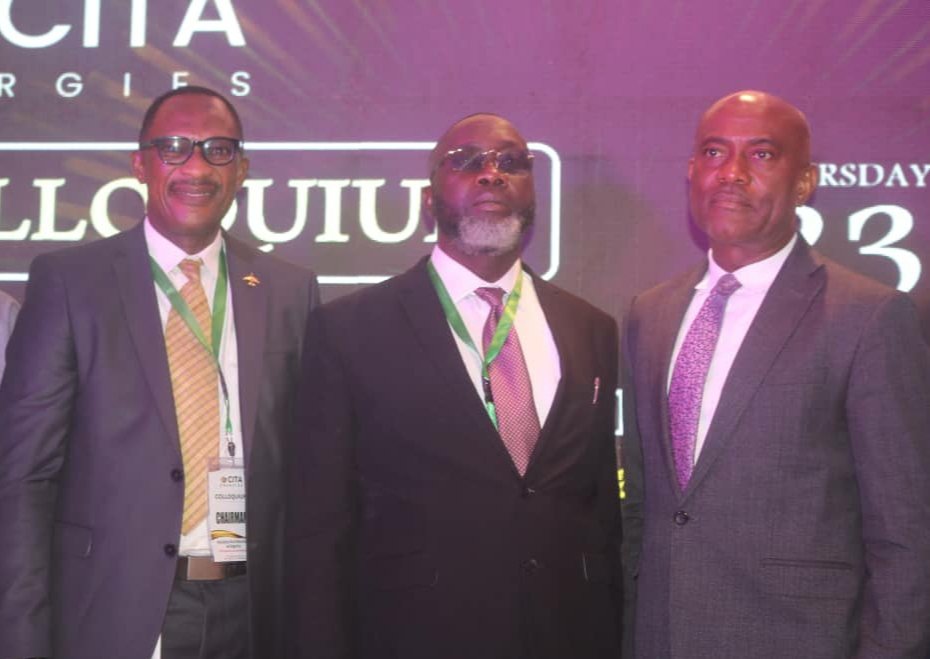
Aviation and oil industry experts have urged the Nigeria Civil Aviation Authority (NCAA) to take urgent steps to regulate the growing number of aviation fuel marketers supplying airlines across the country. They warned that the rapid increase in marketers has led to black market activities, raising serious safety concerns for the flying public. According to industry stakeholders, the sector once had only six licensed marketers, but the number has now surged to about 45 — a situation that has cast doubts on the quality of aviation fuel available. They called for stronger oversight to safeguard the industry from potential risks. Speaking at a forum hosted by CITA Energies over the weekend, the company’s Managing Director, Dr. Thomas Ogungbangbe, expressed concern that aviation fuel marketers now outnumber operating airlines in Nigeria. He appealed to the NCAA to urgently review the number of licensed operators across airports, noting that poor control measures have created room for quality lapses. He said, “Our industry is growing, but we are struggling due to weak regulation. We used to have about six fuel marketers; now there are around 45. While competition is good, the growing number is affecting product quality.” Similarly, Chris Ndulue, Chairman of Ndano Energy and former Managing Director of Arik Air, decried the rising black market for aviation fuel, warning that if not curbed, it could pose a serious threat to flight safety. Ndulue explained that the low entry barriers in the market have allowed smaller, unqualified players to emerge, some of whom engage in illegal fuel diversion and resale. He emphasized the need for the NCAA to tighten its regulatory framework and closely monitor every stage of the supply chain — from procurement to delivery — to ensure product integrity. “The black market is growing because too many small marketers are entering the business without proper oversight,” he said. “We must ensure that aviation fuel operations guarantee safety, security, and quality. Regulations should be strengthened to protect both airlines and passengers.” He noted that some airports now have as many as 30 marketers, citing Enugu Airport as an example, where five operate — a number he described as excessive for its size. He also called for better collaboration among marketers to improve industry standards. Efforts to reach Michael Achimugu, spokesperson for the NCAA, were unsuccessful as he did not respond to calls or messages on the matter. In a separate position paper, the Federal Airports Authority of Nigeria (FAAN) pledged to improve standards in the aviation fuel sector by ensuring that only qualified and compliant players are licensed to operate. FAAN’s spokesperson, Henry Agbebire, stated, “We are working with regulators to streamline and accredit fuel marketers so that only competent operators remain in the Jet A-1 business. This will enhance transparency and create a fair operating environment. We also encourage collaboration among marketers to shift focus from competition for volume to cooperation for quality and sustainability.” He added that FAAN would continue providing essential infrastructure, including improved airside access and modern storage facilities, while exploring innovations such as Sustainable Aviation Fuel (SAF) in partnership with progressive marketers. “FAAN remains committed to being an enabler and partner in building a stronger, cleaner, and more resilient aviation fuel ecosystem in Nigeria,” Agbebire concluded.

Tech & Tools Desk27 October 2025
1.77.jpg

3min2530
The Association of Corporate Treasurers of Nigeria (ACTN) has called on the Central Bank of Nigeria (CBN) to reconsider its decision to invalidate $2.2 billion worth of forward contracts and ensure that the affected transactions are duly settled. Speaking at a press briefing to announce the upcoming 2025 Treasury360 Conference and Exhibition, ACTN President, Yinka Ogunnubi, explained that while the CBN had cleared a backlog of $7.5 billion in inherited forward contracts, $2.2 billion of these were declared invalid. He noted that the transactions in question were legitimate, carried out between ₦440 and ₦460 per dollar at the time. “It’s not that the transactions were fake — they were legitimate deals. Our appeal to the CBN is to review and revalidate these transactions, as the delay in resolution is causing financial losses for corporates who must now fund them at today’s rate of about ₦1,460 per dollar,” Ogunnubi stated. He further disclosed that although the CBN refunded part of the funds in naira, it was done at the old rate of ₦460 per dollar, which he described as unfair given the current exchange rate. The ACTN president also highlighted the forthcoming Treasury360 Conference, scheduled for November 6–7, 2025, in Lagos, with the theme “Navigating Treasury Challenges in Nigeria: Leveraging Digital Finance & AI for Efficiency.” According to him, the event will examine practical strategies for managing today’s economic challenges — including inflation, high interest rates, fiscal tightening, and liquidity pressures — while redefining the role of treasury professionals toward enterprise-wide financial risk management and capital optimisation. The conference will host top industry figures such as Dr. Olayemi Cardoso, Governor of the CBN, as Special Guest of Honour, and Dr. Emomotimi Agama, Director-General of the Securities and Exchange Commission (SEC), among others.

Tech & Tools Desk27 October 2025
1.22.webp

4min5390
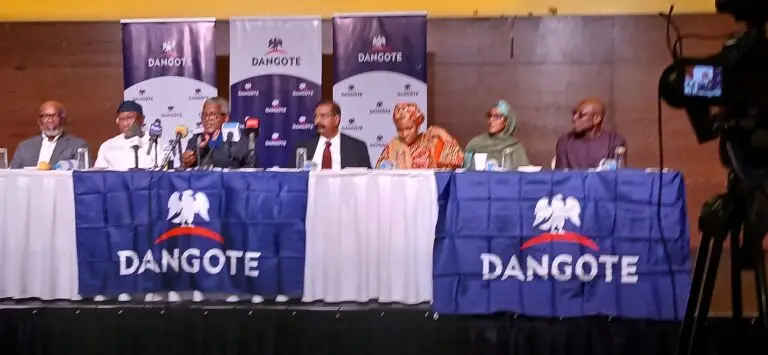
The Dangote Refinery has commenced construction on a major expansion project that will increase its refining capacity from 650,000 barrels per day to 1.4 million barrels per day. President of the Dangote Group, Aliko Dangote, made the announcement during a press briefing in Lagos, where he was joined by First Bank Chairman Femi Otedola. Dangote explained that upon completion, the expansion would make the facility the largest refinery in the world, surpassing India’s Jamnagar Refinery. He disclosed that the company had signed an agreement with its technology licensor to facilitate the upgrade, which is expected to be completed within three years. Dangote expressed appreciation to President Bola Tinubu and the Federal Government for their policies promoting industrialisation, such as the Nigeria First, Naira-for-Crude, and One-Stop Shop initiatives. According to him, these measures have strengthened confidence in domestic refining and encouraged major investments in local production. Despite ongoing crude supply challenges, he expressed optimism that the government would ensure adequate crude availability for the refinery. He also acknowledged the government’s intervention in resolving recent disruptions at the facility caused by union disputes and sabotage attempts. Dangote stated that the expansion underscores the company’s confidence in Nigeria’s future and its vision for Africa’s energy independence. “This is about believing in Nigeria, in Africa, and in our ability to define our own energy future,” he said. The project is expected to create 65,000 construction jobs, with 85 per cent of the workforce to be Nigerians. It will also see an increase in power generation capacity from 500 megawatts to 1,000 megawatts and an expansion of polypropylene production from 900,000 metric tonnes to 2.4 million metric tonnes annually. Dangote added that the refinery will transition from Euro V to Euro VI fuel standards, meeting the world’s highest environmental benchmarks and boosting local industrial opportunities. Within the next year, the company plans to list 10 per cent of the refinery’s shares on the Nigerian Stock Exchange, a move aimed at promoting transparency and broader ownership. He encouraged other refinery licence holders to support the government’s vision of making Nigeria the refining hub of Africa. Dangote also assured Nigerians of steady fuel supply during the festive season, pledging to maintain stable prices and prevent shortages. “We are committed to ensuring uninterrupted petrol supply across the country throughout the festive period,” he said. Since commencing operations in 2024, the Dangote Refinery has significantly reduced Nigeria’s reliance on imported fuel and turned the country into an exporter of petroleum products to nations including Saudi Arabia and the United States.