Author: Lifestyle & Wellness Desk

aa-3.jpeg

4min9530
The Federal Government has announced that Nigerian business visitors can stay in the United Arab Emirates for up to 90 days within a 12-month period, while intra-corporate transferees from Nigerian companies—including managers, executives, and specialists—can live and work in the UAE for a renewable three-year term. These provisions are part of the Nigeria–UAE Comprehensive Economic Partnership Agreement (CEPA), signed on 13 January 2026, which aims to expand market access for Nigerian products, businesses, and professionals, while encouraging increased investment flows between the two countries. In a statement, the Federal Ministry of Industry, Trade and Investment explained that the CEPA establishes a framework for mutual market access in services trade and sets clearer rules for the commercial presence of companies and the movement of professionals. Under the agreement, Nigerian business visitors can enter the UAE for 90 days per year, while intra-corporate transferees of Nigerian firms can stay for a renewable three-year period. Similarly, the UAE will allow entry for its professionals in line with Nigeria’s immigration regulations. The CEPA allows Nigerian companies to establish operations in the UAE through subsidiaries, branches, representative offices, or companies, while UAE service providers can also operate in Nigeria, subject to local laws and regulations. Services commitments cover 10 sectors from Nigeria and 11 sectors from the UAE, with market access for 99 Nigerian services and 108 UAE services. For Nigerian firms, opportunities in the UAE include tourism and travel-related services, such as hotels, restaurants, hotel management, and tourist guides. Creative and media services, including film production, digital media, entertainment, news agencies, and creative agencies, will be permitted, particularly within Dubai Media City. Professional services include legal consultancy on international law, accounting, auditing, taxation (excluding Zakat), architecture, engineering, urban planning, medical, dental, veterinary services, advertising, management consulting, and software development. Nigerian financial service providers can operate within the Dubai International Financial Centre, covering investment, corporate and private banking, capital markets, asset management, insurance, and reinsurance. In Nigeria, the CEPA opens the market to UAE service providers in financial services, health and environmental services, professional services, distribution, recreation, culture, sports, audiovisual services, telecommunications, and construction-related engineering services. All services and market access commitments are subject to relevant licensing, regulations, and certification requirements in both countries. Beyond services trade, Nigeria has removed tariffs on 6,243 UAE-imported products, while the UAE has eliminated tariffs on 7,315 Nigerian products under the pact. The agreement is expected to enhance market access for Nigerian goods, businesses, and professionals, while supporting investment flows and contributing to Nigeria’s non-oil export drive and economic diversification agenda. The CEPA was signed by Nigeria’s Minister of Industry, Trade and Investment, Dr Jumoke Oduwole, and the UAE Minister of Foreign Trade, Dr Thani bin Ahmed Al Zeyoudi, in the presence of President Bola Tinubu and UAE President Sheikh Mohamed bin Zayed Al Nahyan. The ministry described the agreement as a comprehensive and practical pact expected to bring significant economic and strategic benefits, including expanded trade, improved market access, increased investment, and job creation, particularly for young Nigerians.
TECNO.png

3min8900
TECNO has brought artificial intelligence to the forefront of football fandom, hosting a series of AFCON watch parties in Nigeria that combined live match viewing with interactive, AI-driven experiences. The events, centred on Nigeria’s matches against Tanzania and Mozambique, transformed regular game nights into immersive fan gatherings that blended technology, lifestyle, and youth culture. In a statement on Wednesday, TECNO said the initiative aimed to show how AI can enhance entertainment and deepen fan engagement, particularly among young audiences who already see football as a shared cultural experience. Held in Lagos, the watch parties attracted football fans, influencers, and content creators, creating a vibrant social atmosphere beyond simply watching the game. TECNO integrated ELLA, its AI technology, into the events, allowing fans to engage through match predictions, trivia, and personalised digital content. The first event at VSP Lounge, Ikeja, during Nigeria’s group-stage match against Tanzania, featured music, conversations, and excitement ahead of kick-off. A TECNO booth became a key attraction, where attendees interacted with ELLA to predict match outcomes, answer AI-driven football trivia, and generate custom digital images. Fans could create visuals placing themselves alongside Super Eagles striker Victor Osimhen, turning their fandom into a personalised digital experience. Those who engaged successfully with ELLA received TECNO-branded merchandise, footballs, and other giveaways, keeping the atmosphere lively throughout the match. The second watch party at Cubana Night Club, Ikeja GRA, for Nigeria’s quarter-final against Mozambique, was transformed into a premium fan hub with large screens, curated lighting, and a high-energy social setting. ELLA again allowed real-time predictions, AI-generated content, and personalised digital keepsakes. Guests enjoyed cocktails, mocktails, and curated food platters, while live commentary and trivia kept excitement high. Goal celebrations spread across the venue, highlighting football’s unifying social power. TECNO said the watch parties demonstrated ELLA’s versatility, showing that AI can extend beyond productivity into entertainment, community building, and fan engagement. By integrating AI into the viewing experience, the brand aimed to turn passive spectators into active participants. The initiative also reflected TECNO’s broader strategy of combining innovation with youth culture and everyday experiences. As the AFCON tournament continues, the company plans more interactive fan engagements, using ELLA to create immersive, personalised moments beyond matchday.

debts.jpg

2min9800
The Nigeria Infrastructure Debt Fund posted a profit of N23.63bn for the year ended 31 December 2025, up from N19.59bn in 2024. The fund, which invests in infrastructure loans nationwide, recorded a fourth-quarter profit of N6.75bn, compared with N5.91bn in the same period the previous year. According to its unaudited financial statements, total income for 2025 rose to N25.78bn from N21.58bn in 2024. Interest income on infrastructure loans contributed N21.56bn, while net fair value gains on loans and other income added N1.0bn and N3.21bn, respectively. Total operating expenses were N2.15bn, slightly higher than N1.99bn in 2024. By the end of 2025, the fund’s total assets were valued at N137.79bn, up from N120.74bn the previous year. Cash and cash equivalents increased to N40.2bn from N25.78bn, while financial assets held at fair value through profit or loss rose to N95.86bn from N93.37bn. Liabilities edged up marginally to N7.05bn from N6.99bn, resulting in net assets of N130.74bn, compared with N113.75bn in 2024. The fund’s net asset value per unit grew to N109.28 from N107.79, with total units increasing to 1,196,358 from 1,055,292. Distributions paid and payable to unitholders for the year amounted to N21.88bn, slightly higher than N19.37bn in 2024. The fund has also committed an additional N3.0bn to investments and approved two new projects totaling N35.4bn, which are currently in the documentation stage.

oil02.jpg

3min5750
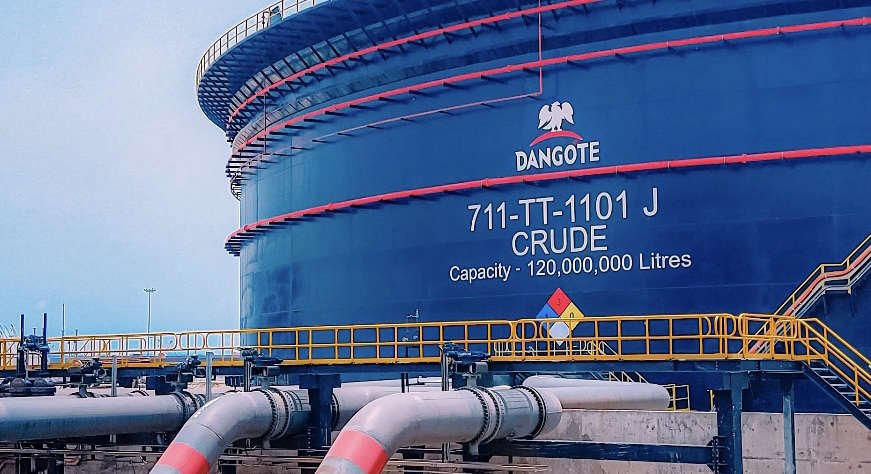
Nigeria imported around 1.31 billion litres of petrol in December 2025, according to data from the Nigerian Midstream and Downstream Petroleum Regulatory Authority (NMDPRA). During the same month, the Dangote refinery supplied 992 million litres, marking a notable increase in domestic refining output compared with November. Total petrol supply in December averaged 74.2 million litres per day, with imports contributing 42.2 million litres and Dangote supplying 32 million litres daily. This represents a shift from November, when imports reached 1.57 billion litres and Dangote produced just 585 million litres. The average daily supply in November was 71.5 million litres, with imports at 52.1 million litres and Dangote supplying 19.5 million litres. The increase in total supply from 2.15 billion litres in November to 2.3 billion litres in December reflected seasonal demand pressures during the holiday period. Despite growth in local refining, some marketers continued to prefer imported petrol. NMDPRA noted that import licences were justified due to supply shortages in September and October 2025. In November, NNPC and other marketers imported 1.5 billion litres, with daily imports of 52.1 million litres—the highest since Dangote began petrol production in September 2024. In September, Dangote supplied 17.6 million litres per day while imports were 22.1 million litres daily. The President of the Dangote Group, Aliko Dangote, criticized the former NMDPRA Chief Executive for issuing what he described as “reckless licences” for fuel importation despite sufficient refinery stock, accusing the move of undermining the economy. He noted that licences for 7.5 billion litres were planned for the first quarter of 2026, even as Dangote guaranteed adequate supply. Dangote also disrupted the market by cutting pump prices from around N900 to N739 per litre during the period, incurring losses for both refiners and importers. The Dangote refinery has now begun night-time loading operations to maintain a daily petrol supply of over 50 million litres across Nigeria, marking a shift to full 24-hour operations. Managing Director David Bird said this move was necessary to meet market demand and improve product evacuation turnaround times. He noted that in the second half of 2025, the refinery consistently delivered over 50 million litres daily, even while ramping up capacity in conversion and downstream units. Reports from the Major Energies Marketers Association of Nigeria (MEMAN) indicate that the landing cost of imported petrol remains above Dangote’s ex-depot price of N699 per litre, fluctuating between N750 and N780. This pricing gap has made it difficult for importers to compete with Dangote-backed MRS stations. When Dangote reduced his gantry price by N129 in December, the move aimed to keep retail prices below N740 during the holiday season and to discourage unnecessary importation.

electricity.webp

3min4550
To fully harness Nigeria’s electricity potential, the country must carefully review the terms and conditions attached to foreign aid in the power sector, according to a recent study published in the Energy Research & Social Science Journal. The study, titled “Energy Transition in the Global South: Donor Bargains and the Future of the Aid Machine”, was authored by Monica Maduekwe, founder of PUTTRU. The journal is a peer-reviewed publication by Elsevier that explores the intersections of energy systems, markets, policy, climate change, and societal impacts. The research analysed several West African countries to show how financial pressures affect aid negotiations and, in turn, shape institutional performance in the power sector. It found that nations facing significant financial stress are more likely to accept aid conditions that limit long-term planning and technical capacity, often trapping power sectors in reform cycles that look promising on paper but fail to deliver real improvements. The study notes, “Aid becomes costly because of the bargaining process. The terms under which aid is negotiated influence institutional outcomes long after projects end. Without careful attention, financial stress can lock countries into cycles where aid undermines the very institutions needed for development.” It highlighted that aid negotiations are not uniform; differences in leverage, tactics, and processes mean countries under high debt and heavy aid dependence have weaker bargaining positions. In such cases, donors may impose conditions that seem reasonable short-term but, over time, can erode governance, weaken institutions, and limit the ability to deliver reliable electricity and sustained development. The research warned of a dangerous feedback loop: financial stress reduces negotiating power, harmful aid conditions follow, institutional capacity is weakened, and the country’s ability to achieve independence from aid diminishes. The study urged Nigeria and other aid-recipient countries to adopt strategic approaches to aid negotiations, especially during periods of financial strain. Governments must evaluate vulnerabilities, understand their leverage, and recognise that poorly negotiated aid can compromise long-term development goals. PUTTRU is Africa’s leading provider of financial solutions for the energy sector.

website-images-4-1-1280x744.png

3min6570
The European Union has officially removed Nigeria from its list of high-risk jurisdictions for money laundering and terrorism financing, a move expected to ease cross-border transactions and boost investor confidence. The update, published on the European Commission’s website, follows Nigeria’s removal from the Financial Action Task Force (FATF) greylist in 2025 after implementing comprehensive anti-money laundering and counter-terrorism financing reforms. Under the new EU decision, enhanced due diligence requirements for transactions involving Nigeria will be lifted from January 29, 2026, pending procedural approval by the European Parliament and the Council of the European Union. The European Commission explained that the move reflects FATF decisions from its June and October 2025 plenaries, during which several countries were removed from the list of jurisdictions under increased monitoring. The Commission stated, “The EU has added new third-country jurisdictions to the list (Bolivia and the British Virgin Islands) and delisted several others, including Burkina Faso, Mali, Mozambique, Nigeria, South Africa, and Tanzania.” With Nigeria’s removal, entities covered by the EU’s anti-money laundering framework will no longer be required to apply heightened scrutiny to Nigerian-related transactions once the regulation takes effect. Reacting to the development, the Minister of State for Finance, Dr Doris Uzoka-Anite, described the decision as a major win for the country, noting that it will boost trade and investor confidence. Coordinating Minister of the Economy and Minister of Finance, Mr Wale Edun, also called it a landmark achievement, saying it signals to investors that Nigeria is committed to a stable, credible, and transparent business environment. Nigeria’s exit from the EU high-risk list is expected to reduce transaction costs, shorten payment timelines, strengthen correspondent banking relationships, and encourage foreign investment. Banks, exporters, fintechs, and other businesses engaging with European partners will face fewer compliance hurdles, potentially improving trade flows, remittances, and capital inflows. The move also reinforces Nigeria’s credibility as the country continues reforms to curb illicit financial flows and deepen integration into global financial markets. Nigeria was delisted from the FATF greylist in October 2025 alongside South Africa, Burkina Faso, and Mozambique, all of which strengthened their anti-money laundering and counter-terrorism financing frameworks in recent years.

Nigerian-Navy-.jpg

3min7070
The Nigerian Navy has urged closer cooperation with the Nigerian Maritime Administration and Safety Agency (NIMASA) in hydrography to further enhance the safety of navigation in the country’s waters. According to a statement on Tuesday by NIMASA’s Deputy Director/Head of Public Relations, Osagie Edward, the Flag Officer Commanding, Western Naval Command, Rear Admiral Abdullahi Mustapha, made the call during a familiarisation visit to NIMASA Headquarters. He also commended the achievements of the Navy-NIMASA partnership over the years. Rear Admiral Mustapha highlighted that “the longstanding and steadfast collaboration between NIMASA and the Nigerian Navy has contributed to the stability currently observed in our maritime domain, reflecting the strength of this partnership.” He noted that improved information sharing, particularly integrating NIMASA’s C4i Centre with the Navy’s Falcon Eye system, would significantly boost maritime security. Mustapha also praised NIMASA for providing platforms under the Deep Blue Project, which are operated by the Navy, stating that these assets have enhanced operational efficiency. He pointed to the two new hydrographic vessels, NNS Lana and NNS Ochuzor, which can precisely locate and assess wrecks, as key to advancing wreck removal operations and raising safety standards in the maritime sector. “It is essential that we maintain and build upon these standards through deeper collaboration with NIMASA,” he added. In response, NIMASA’s Director-General/CEO, Dr Dayo Mobereola, said the enhanced security of Nigeria’s territorial waters is central to President Bola Tinubu’s economic diversification agenda. “The maritime sector is pivotal to the Renewed Hope Agenda and the Federal Government’s diversification policy. NIMASA and the Navy share the responsibility of providing a secure maritime environment, which gives shipping companies the confidence to invest and ensures maritime activities thrive,” Mobereola stated. He also acknowledged the support of the Minister of Marine and Blue Economy, Adegboyega Oyetola, for his consistent commitment to advancing the sector.

custommm.jpeg

2min4570
In a bid to enhance border security and facilitate smooth cross-border trade, the Nigeria Customs Service, Ogun I Area Command, recently organised a joint security engagement. The high-level meeting, held last week at Idiroko, brought together heads of sister security agencies from Nigeria and the Republic of Benin, along with other key stakeholders involved in border management, the command said via its social media channels. Speaking at the forum, Acting Customs Area Controller, Deputy Comptroller Oladapo Afeni, who chairs the Joint Security Forum, emphasised that securing the border is essential for effective trade facilitation and revenue generation. “My goal is to assess the current security situation at the border and address challenges affecting both trade and regional safety,” Afeni said, noting that the participation of Beninese counterparts highlights the importance of bilateral cooperation. He added that discussions included issues such as multiple checkpoints and other obstacles affecting trade flow. Afeni further stressed that while security remains the top priority, efficient cargo movement along border corridors can only be achieved through continued collaboration among all stakeholders. He described the outlook for the New Year as positive and assured that officers and men of the command are committed to surpassing past operational successes. The engagement included interactive sessions where participants identified challenges and proposed solutions aimed at reducing travel time and boosting business activities along the Idiroko border corridor. Ogun I Area Command, headquartered in Idiroko, oversees strategic land border points connecting Nigeria with the Republic of Benin, making it a critical unit for border security, smuggling prevention, and trade regulation in the South-West region.

TotalEnergies-to-curtail-Ebola-Covid.png

1min3490
TotalEnergies EP Nigeria has entered into a Sale and Purchase Agreement with Vaaris for the divestment of its 10 per cent non-operated interest in the Renaissance Joint Venture (JV) licences in Nigeria. The Renaissance JV, formerly known as the SPDC JV, is an unincorporated partnership comprising Nigerian National Petroleum Company Limited (55%), Renaissance Africa Energy Company Ltd (30%, operator), TotalEnergies EP Nigeria (10%), and Agip Energy and Natural Resources Nigeria (5%). The JV holds 18 licences across the Niger Delta. Under the agreement, TotalEnergies will transfer its 10 per cent participating interest, along with all associated rights and obligations, in 15 primarily oil-producing licences. These licences accounted for roughly 16,000 barrels of oil equivalent per day in TotalEnergies’ share in 2025. The company will also assign its 10 per cent participating interest in three gas-focused licences—OML 23, OML 28, and OML 77—to Vaaris, while retaining full economic interest. These gas assets currently supply 50 per cent of Nigeria LNG’s gas output. The transaction is subject to customary conditions, including regulatory approvals, before it is finalized.

gg-ff.jpg

3min9800
The landing cost of imported premium motor spirit (petrol) has continued to trade above the Dangote refinery’s ex-depot price of N699 per litre. According to the Major Energies Marketers Association of Nigeria (MEMAN), while the Dangote refinery’s gantry price has remained steady at N699 since December, the landing cost for imported petrol has fluctuated between N750 and N780, intensifying competition among importers. In its latest bulletin, MEMAN reported that the landing cost fell slightly to N754.96 from N758 the previous week, while Dangote’s gantry price remained at N699, a difference of about N44 per litre. As a result, many importers are struggling to sell petrol at competitive rates compared with Dangote-backed MRS filling stations. When Aliko Dangote reduced the refinery’s gantry price by N129 in December, the move aimed to ensure consumers paid no more than N740 per litre during the Yuletide and to discourage importation. Dangote explained that while marketers faced losses due to the price reduction, the refinery also incurred significant losses, estimating about N60 billion in November alone after cutting gantry prices by N49. He stressed that the refinery’s $20 billion investment is too large to fail, signalling a long-term strategy to maintain competitiveness against imported petrol. The price war in the petroleum sector intensified over the weekend, with some filling stations dropping pump prices below N739 per litre. Surveyed outlets showed that retailers not supplied by Dangote but seeking competitiveness sold petrol at slightly higher rates—NIPCO at N738, SAO at N735, Akiavic at N737, and AP in Mowe, Ogun State, at N736 per litre. Filling stations now closely monitor competitors’ prices to avoid losing customers, as motorists increasingly flock to outlets offering the lowest rates. Retailers directly supplied by Dangote have successfully matched MRS prices, while some independent stations, such as Heyden, continued to sell petrol at N780 per litre.