Category: Shop by Region

Canada-Cover-2.jpg

12min6900
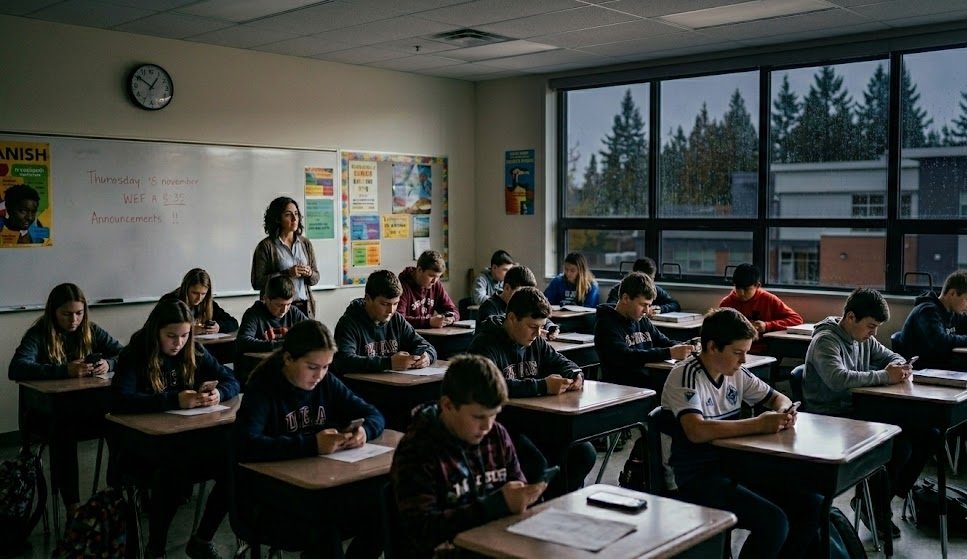
For fifteen years, the morning soundscape of a North American high school was defined by a chaotic, high-decibel social ritual. Today, that noise has been replaced by what educators call a “strange sort of silence.” Even in a room full of students, heads are down, tethered to smartphone screens. This isn’t just a shift in behavior; it is a profound transformation of the Canadian educational environment from a community hub into a collection of isolated digital silos. In districts from North Vancouver to Halifax, teachers are observing that loneliness is rarely loud; it is a quiet, persistent barrier to learning. New longitudinal data from Harvard’s Making Caring Common project confirms that this “silent loneliness” was widespread even before the pandemic and has since become the primary obstacle to student health and happiness—outranking even income or physical exercise as a predictor of long-term well-being. Why This Matters School Leaders and Educators In the Canadian context, where provincial curricula increasingly emphasize “Social-Emotional Learning” (SEL), loneliness is a “silent tax” on academic performance. When students sit in digital isolation, their capacity for cognitive load decreases. For administrators, the implication is clear: community is no longer a “soft skill” or an extracurricular add-on. It is “medicine.” Strategic investment must move toward relational pedagogy—the intentional engineering of social interactions to break the digital trance. Households and Individuals The transition to secondary school is a period of high social risk. Canadian parents often assume that if a child is “connected” via social media, they are socially satisfied. The reality is that many students, including those who appear gregarious, “don’t know where to start” when it comes to face-to-face connection. Households must recognize that the “silence” reported in schools is a signal that students need modeled, low-stakes opportunities to practice human interaction in the physical world. Entrepreneurs and Business Leaders The “loneliness economy” poses a direct threat to the future Canadian workforce. Collaboration, empathy, and the ability to navigate diverse perspectives are the “human-centric” skills that AI cannot replicate. If the “classroom-as-community” fails, the pipeline of emotionally intelligent, collaborative professionals thins. There is a significant opportunity for Canadian EdTech innovators to move away from “solo-user” platforms toward tools that facilitate “stewardship” and collective contribution. Implications and Emerging Signals The move from “classrooms to communities” signals a shift in how we value the school day in Canada: The Rise of the “Classroom Host”: Educators are moving away from being “sages on the stage” to becoming “social architects.” This involves active facilitation—connecting students based on shared interests rather than leaving social bonds to chance. Service-Based Belonging: Canadian schools are finding success in assigning daily roles that create “stewardship.” When a student is responsible for a task—even something as simple as taking attendance or managing equipment—they transition from a passive consumer to a needed contributor. Strategic Physical Re-shuffling: Frequent seating changes (every two months) are becoming a necessity to disrupt fixed social cliques and lower the “social risk” of meeting new peers. Key Takeaways Interrupt the “Digital Trance”: Use intentional rituals (like a “word of the day” or visual check-ins) to break the smartphone silence the moment class begins. Don’t wait for students to look up; give them a social reason to do so. Facilitate “Low-Stakes” Vulnerability: Use play-based learning and non-evaluative projects (like community art or shared cooking) to let students show their unique “quirks” without the pressure of academic judgment. Model Social Connectivity: Actively play the role of a “connector.” If two students share a hobby or a favorite local haunt, name it publicly to give them a built-in conversation starter. Prioritize Contribution over Attendance: Assign tangible roles to every student. Feeling “needed” is the most direct antidote to feeling “lonely.” Normalize Change: Predictable, frequent seating rotations lower the stakes of sitting next to someone new, preventing the “awkwardness” that often keeps students isolated. This reflects a broader shift toward treating the Canadian classroom as a social sanctuary. In an era of digital immersion, the most radical thing a school can do is teach a student how to be seen by—and how to truly see—the person sitting next to them. For fifteen years, the morning soundscape of a North American high school was defined by a chaotic, high-decibel social ritual. Today, that noise has been replaced by what educators call a “strange sort of silence.” Even in a room full of students, heads are down, tethered to smartphone screens. This isn’t just a shift in behavior; it is a profound transformation of the Canadian educational environment from a community hub into a collection of isolated digital silos. In districts from North Vancouver to Halifax, teachers are observing that loneliness is rarely loud; it is a quiet, persistent barrier to learning. New longitudinal data from Harvard’s Making Caring Common project confirms that this “silent loneliness” was widespread even before the pandemic and has since become the primary obstacle to student health and happiness—outranking even income or physical exercise as a predictor of long-term well-being. Why This Matters School Leaders and Educators In the Canadian context, where provincial curricula increasingly emphasize “Social-Emotional Learning” (SEL), loneliness is a “silent tax” on academic performance. When students sit in digital isolation, their capacity for cognitive load decreases. For administrators, the implication is clear: community is no longer a “soft skill” or an extracurricular add-on. It is “medicine.” Strategic investment must move toward relational pedagogy—the intentional engineering of social interactions to break the digital trance. Households and Individuals The transition to secondary school is a period of high social risk. Canadian parents often assume that if a child is “connected” via social media, they are socially satisfied. The reality is that many students, including those who appear gregarious, “don’t know where to start” when it comes to face-to-face connection. Households must recognize that the “silence” reported in schools is a signal that students need modeled, low-stakes opportunities to practice human interaction in the physical world. Entrepreneurs and Business Leaders The “loneliness economy” poses a direct threat to the future Canadian workforce. Collaboration, empathy,


US-Kindergatten-Cover.jpg

6min5040
In the United States, the decision of when to start a child in kindergarten has shifted from a simple age milestone to a strategic maneuver. Known as “redshirting”—a term borrowed from collegiate sports where athletes sit out a year to mature—the practice involves delaying a child’s entry until age six. While social media and high-pressure school districts often frame this as an essential “gift of time,” a landmark 2026 study from the research firm NWEA suggests the benefits are far more fleeting than many parents realize. Despite a small spike during the pandemic, redshirting remains a niche choice, practiced by only about 5% of US families. As states across the country—including Connecticut, Ohio, and Colorado—begin mandating earlier birthdate cut-offs, the debate over “readiness” versus “regulations” is reaching a critical inflection point. Why This Matters Households and Individuals For American parents, the redshirting dilemma is often a choice between perceived academic competitive advantage and immediate financial reality. The NWEA report highlights that a “hold-back year” can cost a family upwards of $15,000 in additional childcare or private preschool expenses. Furthermore, while redshirted children often enjoy a boost in confidence as the oldest in their class, they face long-term risks: they are statistically more likely to drop out of high school because they reach the age of 18 during their junior year. School Leaders and Educators The US educational landscape is currently seeing a wave of “forced redshirting” through legislative changes. States like Connecticut recently moved their cut-off from January 1 to September 1, while Ohio has standardized cut-offs to the first day of school. For administrators, these shifts create logistical hurdles, such as managing “bubble” classes and navigating a 6% drop in disability identification among delayed-entry students. Educators warn that starting late can sometimes delay the diagnosis of developmental needs that would otherwise be caught through early intervention services. Entrepreneurs and Business Leaders The childcare and private “bridge” preschool market is directly influenced by these trends. In affluent US districts, redshirting has created an “academic arms race,” driving demand for high-end “Transitional Kindergarten” (TK) programs. Conversely, in rural and lower-income areas, the 2021-2022 school year saw a jump in redshirting (up to 9% in rural zones), signaling a shift in how these communities utilize local, often less formal, childcare networks to manage school readiness. Implications and Emerging Signals The current state of kindergarten entry reveals several shifting patterns in the US: Standardization of Cut-offs: A growing number of states are moving toward an August or September 1 cut-off to align with the start of the school year, reducing the “January 1” outliers that previously allowed four-year-olds into classrooms. The “Third-Grade Catch-Up”: NWEA data confirms that by the third grade, “on-time” entrants have completely closed the achievement gap with their redshirted peers in math and reading, rendering the initial advantage obsolete. Gender and Racial Disparity: Redshirting remains a “luxury item” predominantly utilized by white families and for boys. Research indicates this practice can inadvertently widen the racial-ethnic achievement gap, as it provides no statistically significant benefit for Hispanic students while offering a 4% boost in “gifted” identification for white students. Key Takeaways Evaluate the “Third-Grade Reset”: Recognize that the 20% to 30% learning advantage seen in redshirted kindergartners is temporary and usually disappears by age nine. Audit Childcare Costs: Before choosing to redshirt, families should perform a cost-benefit analysis of the $12,000–$15,000 expense of an extra year of preschool against the likely short-term academic gains. Prioritize Early Screening: Rather than delaying entry for a “late bloomer,” utilize the public school system’s mandated screening resources to identify and address potential learning disabilities early. Monitor State Cut-off Changes: Parents in states like Ohio and Connecticut should check for new “assessment” or “waiver” processes if their child falls just past new, earlier cut-off dates. Long-term Graduation Risk: Consider the social impact of a child being 19 at high school graduation, which can lead to late-stage disengagement or early entry into the workforce at the cost of higher education. This reflects a broader shift toward a “standardized readiness” model in the US, where the focus is moving away from parental discretion and toward data-driven entry dates and early intervention.

UK-Cover-1280x747.png

6min4360
The UK government has issued its first evidence-backed guidance regarding digital consumption for children under the age of five, marking a significant shift toward a “precautionary approach” in early childhood development. The new recommendations advise that children under five should be limited to one hour of screen time per day, while those under two should avoid solo screen use entirely. Co-authored by the Department for Education’s scientific advisers and the Children’s Commissioner, the guidance arrives amid growing concerns over “fast-paced” digital content and its link to emotional dysregulation. By suggesting “screen swaps”—replacing digital devices with shared reading or physical play—ministers aim to mitigate the risks screens pose to sleep, physical activity, and cognitive growth. This move signals a broader transition in public health policy, treating digital habits with the same level of scrutiny as nutrition or physical exercise. Why This Matters School Leaders and Educators For those in early years settings, this guidance provides a long-awaited benchmark for parental engagement. Educators often deal with the “after-effects” of excessive screen time, such as shortened attention spans or difficulty with peer-to-peer interaction. The focus on “fast-paced” content is particularly relevant; researchers suggest that modern, high-speed digital media can trigger a physiological “fight-or-flight” response in toddlers. Schools and nurseries may now need to align their own digital policies with these national standards, emphasizing the difference between passive consumption and active, adult-led digital learning. Households and Individuals The guidance places a significant burden of “digital modeling” on parents. It acknowledges that children’s brains are “sponges” that mimic adult habits, meaning parental phone use is now directly linked to a child’s developmental environment. However, the reality of modern parenting—where screens often serve as a “digital crutch” during chores or stressful mornings—creates a gap between policy and practice. The shift from “solo” to “joint” viewing is the most practical middle ground offered to families struggling with the “guilt” of screen reliance. Professionals For those working in the tech and toy industries, the government’s recommendation to avoid AI-integrated toys for the under-five demographic is a notable signal. It suggests a growing skepticism toward “smart” playthings that lack human interaction. Furthermore, the emphasis on “slow-paced” content may drive a market shift toward “slow media” or educational tools that prioritize steady engagement over dopamine-driven sensory overload. Implications and Emerging Signals This guidance is not merely a set of rules for parents; it is a harbinger of a more regulated digital childhood. Several key trends are emerging: The End of the “Digital Wild West” for Toddlers: This represents the first time the UK government has provided specific, time-based limits for early years, moving away from vague suggestions toward concrete public health targets. A Shift in Content Standards: The research highlighted by the University of East London suggests that the cadence of content—not just the duration—is a risk factor. We may see future ratings or labels that categorize content based on its pacing and cognitive load. The “Co-Viewing” Mandate: Policy is moving away from the total prohibition of tech and toward “active mediation.” The distinction between a child watching a tablet alone and a child engaging with a screen alongside an adult is now a formal part of developmental strategy. Legislative Momentum: These guidelines arrive alongside consultations on banning social media for under-16s, suggesting a multi-layered government strategy to “de-digitalize” the foundational years of human development. Key Takeaways Prioritize “Co-Engagement”: If a screen must be used, ensure an adult is present to narrate and interact with the child. Solo use is the primary risk factor for cognitive delays. Audit Content Speed: Parents and educators should favor “slower” media—content with fewer cuts, slower speech, and predictable narratives—to avoid triggering stress responses in young brains. Implement “Screen Swaps”: Identify high-friction times (like mealtimes or morning routines) where screens are used as a distraction and gradually replace them with tactile activities or shared reading. Model the Behavior: Children are unlikely to follow time limits if they observe parents in a state of “endless scrolling.” Digital hygiene must be a household-wide commitment. Watch for AI Integration: Be cautious with toys or tools that utilize artificial intelligence for toddlers, as current guidance suggests these are not yet proven to be beneficial for early-stage development. This reflects a broader shift toward treating digital consumption as a public health issue, moving beyond “online safety” to address the fundamental neurological and physical impact of technology on the next generation.

Home & Living Desk27 March 2026
EXPRESSO-MAIN-1280x759.png

4min4080
Editor’s Note: This article contains affiliate links. As an Amazon Associate, I earn from qualifying purchases. In the 2026 professional landscape, the quality of your morning ritual is a primary indicator of your daily output. For the Edupreneur—the school leader, the researcher, or the high-impact facilitator—energy management is a strategic necessity. Transitioning from a complex task to a state of flow requires a sensory “reset,” and nothing facilitates this transition more effectively than a precision-crafted espresso. The Philips 3300 Series Fully Automatic Espresso Machine (EP3341/50) is the technical solution for the executive suite, bringing barista-level systems into your workspace with zero-friction operation. SilentBrew Technology: Maintaining the Focused Environment In leadership, silence is a luxury. Unlike traditional espresso machines that disrupt the cognitive environment with loud grinding, the Philips 3300 features SilentBrew Technology. This patented sound-shielding system reduces noise by 40%, ensuring that your mid-morning cappuccino doesn’t compromise the “Quiet Luxury” of your office or the focus of a nearby Zoom session. It is the invisible layer of technical confidence that allows your machine to perform its duties without announcing them. The LatteGo System: High-Speed Cyclonic Precision For the modern professional, complexity is the enemy of consistency. The LatteGo Milk System is a masterpiece of simplified engineering. Tube-Free Design: By utilizing a two-part cyclonic chamber, LatteGo creates a silky-smooth milk froth—even with plant-based alternatives—without the need for internal tubes. Operational Readiness: In professional facilitation, we prioritize tools that are “Ready to Go.” The LatteGo system can be rinsed clean in just 15 seconds or placed in the dishwasher, ensuring your maintenance cycles never interfere with your meeting schedule. 6 Pre-Set Masterpieces: Versatility at Scale The EP3341/50 is pre-programmed to deliver 6 hot and iced beverages at the touch of a button. Whether you need a double-shot Espresso for a leadership summit or a refreshing Iced Coffee for a post-lecture debrief, the machine utilizes its 15-Bar Pressure and 100% Ceramic Grinders to extract the full flavor profile of your beans. With the “My Coffee Choice” menu, you can adjust aroma strength and volume to mirror your personal preferences with scientific precision. Facilitator’s Insight: The Discipline of Maintenance In leadership, we understand that longevity is a result of proactive systems. The AquaClean Filter is a strategic asset, allowing you to brew up to 5,000 cups before a full descaling cycle is required. It ensures that your water—and therefore your coffee—remains at a high standard of purity, reflecting the internal care you apply to your organizational strategy. By utilizing the Philips 3300 Series, you remove the variable of “mediocre coffee” from your daily routine. It allows you to maintain a polished, high-performance visual presence while fueling the transition toward your 2026 financial goals. The 2026 Executive Essential For our readers who demand both technical excellence and effortless sophistication in their workspace, the Philips 3300 Series LatteGo is an absolute necessity. It is the “Smart Home Cafe” system that ensures your morning fuel is as sophisticated as your strategy. Get the Philips 3300 Series LatteGo Espresso Machine on Amazon Here: https://amzn.to/47mYXmn (Paid Link)

Nigeria-Maths-MAIN-Cover.png

6min5790
The Nigerian Federal Government, through the National Mathematical Centre (NMC), recently reaffirmed that mathematical proficiency is the primary engine for the country’s national development. In a statement marking the International Day of Mathematics, acting CEO Benjamin Oyelami positioned the discipline not merely as an academic requirement, but as the critical infrastructure underpinning Nigeria’s science, technology, and policy planning. This declaration arrives at a pivotal moment. While the government is introducing digital tools like “Wiz Teacher” and “DIMANET” to modernize instruction, Nigeria simultaneously faces a systemic hurdle: a significant proportion of secondary students still struggle to achieve credit passes in the subject. This gap between policy ambition and classroom reality carries profound implications for Africa’s largest economy as it attempts to transition into a global knowledge hub. Why This Matters School Leaders and Educators For educational administrators, this development signals a shift toward “Mental Arithmetic” and digitized pedagogy. There is an urgent mandate to move beyond rote learning toward conceptual mastery. Leaders must now prioritize the “upskilling” of faculty to handle new simulation softwares, as the government increasingly views math teachers as the frontline agents of national security and economic stability. Entrepreneurs and Business Leaders The “talent hunt” programs mentioned by the NMC are essential for the private sector. As Nigeria expands its fintech and agritech sectors, the scarcity of mathematically grounded graduates creates a “talent tax”—where firms must spend more on remedial training for new hires. Business leaders should view the NMC’s partnerships with universities as an entry point for corporate social responsibility (CSR) or direct recruitment pipelines. Students and Academics The formalization of MoUs between the NMC and institutions like the Federal University of Technology, Minna, opens advanced research corridors. For academics, this is a signal that funding and collaborative opportunities are shifting toward applied mathematics—specifically areas that solve “complex socio-economic problems” like climate modeling and cybersecurity. Africa in the Global Context Nigeria’s focus on mathematics mirrors a broader global trend where human capital is being redefined by “STEM-readiness.” In the UK and US, mathematical literacy is increasingly linked to a nation’s “AI Sovereignty.” By prioritizing the same foundations, Nigeria is signaling its intent to move from being a consumer of global technology to a producer. The inclusion of “Mental Arithmetic” in the basic curriculum since 2015 aligns Nigeria with high-performing education systems in East Asia (such as Singapore and South Korea), where foundational speed and accuracy are viewed as precursors to advanced coding and engineering skills. For global investors in Canada or Europe, a mathematically literate Nigeria represents a more reliable “BPO” (Business Process Outsourcing) destination for high-end technical tasks. Implications and Emerging Signals The government’s emphasis on mathematics reveals several strategic shifts: The Digitization of Pedagogy: The introduction of simulation software suggests that Nigeria is preparing for a future where physical textbooks are secondary to interactive, digital learning environments. The “Brain Drain” Risk vs. Gain: While Nigeria aims to produce “high-level manpower,” the global demand for math-heavy roles (Data Scientists, Actuaries) in the West remains high. Without competitive local opportunities, Nigeria risks becoming a “finishing school” for global talent markets. A Shift in National Planning: By stating that “every course in life requires mathematics,” the government is signaling a move toward data-driven governance. We can expect future Nigerian policy—from healthcare to urban planning—to rely more heavily on mathematical modeling. Key Takeaways Watch the Curriculum Pivot: Expect a tighter integration of digital tools (Wiz Teacher/DIMANET) in public and private schools; early adoption will be a competitive advantage for private institutions. Prepare for “Applied” STEM: The era of theoretical mathematics is waning. Future funding and scholarships will likely favor students who can apply math to cybersecurity, medical imaging, and fintech. Invest in Foundational Mastery: For households, the focus should be on ensuring “credit passes” at the secondary level, as these remain the gatekeepers to higher education and high-paying global careers. Monitor Institutional Partnerships: Watch for new “Centres of Excellence.” These hubs will likely become the primary incubators for Nigeria’s next generation of tech entrepreneurs. This reflects a broader shift toward treating educational standards not just as social milestones, but as critical economic indicators in the global race for digital dominance.

Canadian-Cover-1280x905.png

6min3990
The British Columbia School Counsellors’ Association (BCSCA) recently released a comprehensive framework designed to assist educators in navigating the aftermath of tragic events. This guidance arrives at a critical juncture for the global education sector, which increasingly faces the challenge of maintaining learning environments amidst external crises—ranging from localized violence to international conflicts. The core of the initiative is a shift from reactive crisis management to a proactive, trauma-informed pedagogical approach. By focusing on emotional regulation, factual clarity, and the maintenance of routines, the framework aims to mitigate the long-term psychological impact on students while preventing the fragmentation of diverse school communities.   Why This Matters School Leaders and Educators For those on the front lines, the guidance provides a standardized protocol to replace improvisation during high-stress periods. It emphasizes that a teacher’s primary role during a crisis is “modeling calm”—a form of emotional leadership that stabilizes the classroom. This matters because untreated secondary trauma can lead to educator burnout and a breakdown in the school’s social fabric. Professionals (HR and Instructional Design) The principles of “psychological safety” outlined here are directly transferable to the corporate world. Professionals in Human Resources and Instructional Design can adapt these methods—such as validating distress and maintaining predictable structures—to support workforce resilience when external tragedies affect employee mental health and productivity. Households and Individuals Parents and caregivers are often the first to witness “regression” (changes in sleep or behavior) in children. This framework provides a vocabulary for families to understand these changes not as “bad behavior,” but as a natural response to a perceived lack of safety. It empowers households to mirror school-based strategies, creating a consistent environment for the child. Students and Academics For older students and the academic community, the focus on “student agency” is vital. It recognizes that for many, the path to healing is through action—organizing, creating, and problem-solving. This shifts the narrative from students as passive victims of news cycles to active participants in community restoration. Implications and Emerging Signals The release of this guidance reflects several broader shifts in the global educational and social landscape: The De-Stigmatization of “Not Knowing”: There is a growing trend in leadership—both in schools and business—toward “honest uncertainty.” Modeling that it is okay to not have all the answers builds more trust than providing forced or premature conclusions. The Rise of Neuro-Inclusive Crisis Management: For the first time, we are seeing significant emphasis on how traumatic events specifically affect neurodiverse individuals (those with Autism, ADHD, or sensory processing differences). The signal here is clear: crisis support must be as diverse as the population it serves. Combatting “Digital Contagion”: The explicit instruction to limit short-form, graphic media exposure highlights a growing consensus that the “24-hour news cycle” and social media algorithms are active contributors to youth anxiety and community prejudice. Community Cohesion as a Security Measure: The shift toward emphasizing that no single ethnic or religious group is responsible for a tragedy is a strategic move to prevent radicalization and social fracturing in multicultural societies like the UK, US, and Canada.   Key Takeaways Prioritize Routine Over Curriculum: In the immediate wake of a tragedy, the stability of a predictable schedule provides more “educational value” than the lesson plan itself. Monitor for Regression: Watch for behavioral changes across all age groups—from clinginess in younger children to irritability or withdrawal in adolescents—as these are primary indicators of distress. Empower Through Agency: Support students who wish to take prosocial actions (memorials, advocacy, or helping others). “Doing” is a sophisticated form of coping that restores a sense of control. Correct Misinformation Gently: Children often hold fragmented or inaccurate views of events. Providing simple, age-appropriate facts helps prevent the development of fear-based prejudices. Listen More, Speak Less: Children do not need perfect answers; they need a calm, steady adult presence that validates their feelings without judgment. This framework underscores a fundamental truth for the modern “edupreneur” and leader: in an era of global volatility, the ability to foster emotional and community resilience is just as critical as the ability to deliver technical or academic content.  

AI-Cover.jpg

5min5020
A new national survey by Echelon Insights, conducted on behalf of the National Parents Union, reveals a significant gap between the rapid integration of artificial intelligence in American schools and parental oversight. While 56% of parents believe their children are already using generative AI chatbots, 8 in 10 are calling for more stringent guardrails. These findings emerge during a period of high political friction in Washington, following executive orders aimed at accelerating AI infusion in education while simultaneously challenging state-level regulations. The data suggests that US parents are not inherently anti-AI—52% see an equal balance of benefits and downsides—but they are deeply concerned about safety and transparency. Currently, 47% of K-12 parents report that their schools have provided no information regarding AI policies, and 57% feel they have had no opportunity to provide input on how these tools are deployed in the classroom. Why This Matters School Leaders and Educators For US administrators, the lack of communication is a strategic risk. With nearly half of parents unaware of school AI policies, there is a high potential for friction when AI-related issues—such as academic integrity or data privacy—arise. Success in districts like those in Massachusetts shows that proactive engagement, such as “Parent Nights,” can smooth the transition from a single school experiment to a district-wide standard. Households and Individuals American families are increasingly anxious about the “digital barrage” facing their children. The demand for “pop-up” warnings (86%) and parental alerts for harmful discussions (85%) shows that families want AI to function with the same safety expectations as traditional media. Furthermore, only 20% of US mothers feel they fully understand the privacy risks, indicating a massive need for consumer-friendly education on data collection. Professionals and Entrepreneurs The controversy surrounding the Kids Internet and Digital Safety (KIDS) Act (H.R. 7757) serves as a warning for ed-tech entrepreneurs. Parents are pushing Congress to reject bills they perceive as “industry-led” loopholes. For business leaders, the message is clear: products that prioritize transparent “guardrails” over “addictive design” will have a competitive advantage in the K-12 market. Implications and Emerging Signals The Federal-State Tension: Recent executive orders have created a “regulation vacuum” by attempting to preempt state laws. This has led to a grassroots push for federal bills that offer more than just “voluntary” industry standards. Privacy as a Priority: Data collection is no longer a background technicality. A majority of parents now demand to know exactly how ed-tech companies are harvesting student data. The “AI Literacy” Gap: With 39% of parents wanting to be involved but lacking technical knowledge, “AI literacy” for the household is becoming as critical as literacy for the student.   Key Takeaways Audit Your Communication: US schools should immediately review their AI policy distribution. If a policy exists, ensure it is in the parent handbook; if it doesn’t, create a community working group. Scrutinize Vendor Privacy: Procurement teams must look beyond functional utility. Parents are signaling they will hold schools accountable for the data-sharing agreements of third-party platforms. Monitor H.R. 7757: Keep a close eye on the progress of the KIDS Act. The backlash against “loophole” legislation suggests that future regulations will likely be more prescriptive for tech companies. Host AI Literacy Events: Bridge the trust gap by hosting sessions that explain how AI is being used in the curriculum and what specific protections are in place for student data.  

Cover-Phone-Ban.jpg

6min2980
The global movement to purge smartphones from classrooms has reached a fever pitch. In the UK, the Department for Education (DfE) recently strengthened guidance advising “phone-free” school days, while the House of Lords has backed statutory bans to protect student wellbeing. Across the Atlantic, the shift is even more pronounced: as of 2026, over 30 US states and several Canadian provinces, including Ontario and Quebec, have implemented “bell-to-bell” bans. However, new research from the University of Birmingham suggests that physical restriction is not the “silver bullet” many hoped for. The study found that while strict bans—such as using signal-blocking pouches—improve classroom focus, they do not necessarily reduce overall screen time. Instead, they often trigger a “rebound effect,” where students intensify their device use at home to compensate for the school-day “drought,” sacrificing sleep and physical activity in the process. Why This Matters The efficacy of phone bans is not merely a pedagogical concern; it is a systemic challenge affecting the intersection of education, child development, and domestic life. School Leaders and Educators For heads of school, the research validates the “out of sight” approach for improving immediate classroom behavior and face-to-face socialization. However, it also introduces a new burden. Educators must recognize that bans do not eliminate online conflict; they often merely delay it. Tensions that brew on WhatsApp or social media during the day frequently erupt the moment students leave the gates, requiring schools to manage “after-hours” behavioral fallout. Households and Individuals The study highlights that the home has become the primary battleground for digital wellness. When schools implement total bans, the pressure shifts to parents to manage an intensified digital appetite in the evening. As students admit to “making up time” at home, parental rules—prioritizing homework and physical clubs—remain the most effective counterweight to excessive use. Students and Academics For the academic community, this “messy, mixed picture” suggests that neither total prohibition nor complete permissiveness is a perfect solution. While restrictive policies boost social interaction, permissive policies can actually reduce feelings of isolation for some students. The challenge for researchers is now to identify a “middle way” that fosters digital literacy rather than just enforcing digital abstinence.   Implications and Emerging Signals The University of Birmingham study, mirrored by emerging data from the US and Canada, points toward several strategic shifts in how society manages youth technology: The Displacement Effect: Strict school policies may be inadvertently creating a “pressure cooker” environment. Data from the RAND Corporation and NCES in the US suggest that while 86% of principals see safety benefits, students report increased anxiety and a drive to “binge” on content post-school. The Limits of Legislation: With the UK government considering statutory bans and several US states (like California and Florida) already enforcing them, there is a risk that policy focuses too heavily on access and not enough on education. Evolving Safeguarding: “Online” conflict no longer requires a device to be present to disrupt a school day. Digital tensions are now an atmospheric element of the school environment that requires proactive mediation, not just device confiscation. Key Takeaways Recognize the Rebound: School leaders should communicate with parents that in-school bans may lead to increased device “craving” at home, necessitating a coordinated approach to screen time limits. Integrate Digital Literacy: Since bans change when issues happen rather than if they happen, schools must prioritize teaching conflict resolution and digital etiquette as part of the core curriculum. Support Parental Governance: The most successful outcomes involve a “triad” of school policy, parental boundaries, and student buy-in. Schools should provide resources to help parents set effective home boundaries. Focus on Replacement, Not Just Restriction: To prevent students from “making up time” on screens, both schools and households should actively incentivize “high-dopamine” offline alternatives, such as sports and social clubs. Monitor the “Signal”: Watch for further results from the SMART Schools project and similar longitudinal studies in North America, as they suggest the most effective policies are those that adapt to a school’s specific social fabric. This reflects a broader shift toward acknowledging that while we can control the hardware, we have yet to master the habit. A phone in a pouch is a temporary silence, not a permanent solution.  

Event & Hosting Desk7 February 2026
Mashmelow-DJ.jpg

3min7590
Editor’s Note: This article contains affiliate links. As an Amazon Associate, I earn from qualifying purchases. In the world of leadership and facilitation, we often talk about the power of “Presence.” Sometimes, making a statement isn’t about what you say, but about the energy you bring to the room. Whether you’re a professional DJ, a cosplay enthusiast, or just looking to be the life of the party, the Candora Marshmello Full Head DJ Mask is the ultimate tool for a high-impact entrance. Why This Mask is a Must-Have for 2026 This isn’t just a costume piece; it’s a portal into the high-energy world of electronic music and modern performance. Breathable Engineering: Unlike many cheap imitations, this full-head helmet is designed with mesh eye and mouth panels. Maximum Comfort: This provides vital ventilation, allowing you to perform, dance, or socialize for hours without the typical “mask fog” or discomfort. Universal Professional Fit: The one-size-fits-most design is crafted from durable, lightweight materials, making it comfortable for both adults and teens. The “Bar & Club” Aesthetic: This specific model is built for low-light environments. Strobe-Ready Finish: Its clean, white finish “pops” under club lights and strobe effects, ensuring you remain the focal point of the event. Facilitator’s Insight: The Psychology of the Mask In my sessions, we explore how “Anonymity” can actually lead to greater creative expression. By wearing a mask like this, performers often find they can step into a more confident, high-energy version of themselves. It removes the barrier of self-consciousness, allowing the music and the moment to take over. The Choice for European Events For our community members in Germany and across Europe, we have selected this model for its reliability and high-quality, breathable materials. Get the Marshmello DJ Mask on Amazon Here: https://amzn.to/4rdEh7x (Paid Link)

Ifunanya Okafor28 January 2026
Monopoly-3-1280x905.png

6min12480
As an Amazon Associate, Edupreneur earns from qualifying purchases. In an increasingly digital world, the challenge for parents and educators is finding engaging ways to teach critical life skills. While apps and online games have their place, the classic board game Monopoly – particularly the edition that includes Fan Vote Community Chest Cards – remains an unparalleled, hands-on tool for developing essential financial literacy, strategic thinking, and social skills in children aged 8 and up. As a Principal Facilitator with years of experience in educational development, I’ve seen firsthand how effective game-based learning can be. And when it comes to practical education, Monopoly isn’t just fun; it’s a powerful simulator for the real world. Beyond the Board: Key Learning Outcomes from Monopoly Monopoly’s enduring popularity for 2 to 6 players isn’t just about the thrill of owning properties. It’s about the invaluable lessons embedded in every roll of the dice and every property transaction. Financial Literacy Fundamentals: Budgeting & Money Management: Players learn to count money, make change, and manage their cash flow – simple yet crucial skills often overlooked in standard curricula. Investment & Risk Assessment: Deciding when to buy a property, build houses, or mortgage assets teaches the basics of investment, risk, and return. Children quickly grasp that smart investments can yield dividends, while reckless spending leads to bankruptcy. Debt & Assets: The concepts of owing money (rent) and owning valuable assets (properties) become tangible. The updated Fan Vote Community Chest Cards can even introduce modern financial scenarios that resonate more with today’s youth. Strategic Thinking & Planning: Resource Allocation: Players must strategically decide where to invest their limited funds for maximum impact. Should they prioritize buying a complete color set or diversify their portfolio? Negotiation Skills: Trading properties with opponents fosters negotiation, persuasion, and understanding mutual benefit – invaluable social skills for future interactions. Probabilistic Thinking: While based on chance, understanding the likelihood of landing on certain squares (especially those with houses) helps develop a rudimentary sense of probability. Social & Emotional Development: Patience & Turn-Taking: The game naturally teaches patience and respect for others’ turns, a vital skill for classroom and family harmony. Coping with Wins and Losses: Monopoly can be unpredictable. Learning to win gracefully and lose with resilience is a powerful emotional lesson that prepares children for life’s ups and downs. Rule Following & Fair Play: Adhering to the game’s rules reinforces the importance of structure and fairness in any system. Why This Edition is Perfect for Your Learning Arsenal The Monopoly Game, Family Board Game for 2 to 6 Players, Monopoly Board Game for Children from 8 Years, Includes Fan Vote Community Chest Cards, offers several advantages: Age Appropriateness: Specifically designed for children from 8 years, the rules are accessible, yet the strategic depth grows with the child. Family Engagement: It’s a fantastic way for 2 to 6 players to bond, creating shared experiences and memories away from screens. Parents can guide discussions around financial decisions, turning gameplay into teachable moments. Modern Relevance: The inclusion of Fan Vote Community Chest Cards means the game can evolve, incorporating contemporary events or dilemmas that children might encounter, making the lessons even more relevant. The Bottom Line for Schools, Parents, and Educators In a world demanding greater financial literacy and critical thinking, Monopoly is more than just a game; it’s a dynamic classroom in a box. It provides a safe, engaging environment for children to experiment with financial decisions, practice strategic thinking, and develop essential social skills that will serve them well into adulthood. Invest in a copy for your home or classroom today, and watch your children master money, strategy, and resilience, one property at a time. Check on Amazon: https://amzn.to/4ahkleq (As an Amazon Associate, Edupreneur earns from qualifying purchases.)