

 Zara Lianne
Crude Imports to End at Dangote Refinery by December
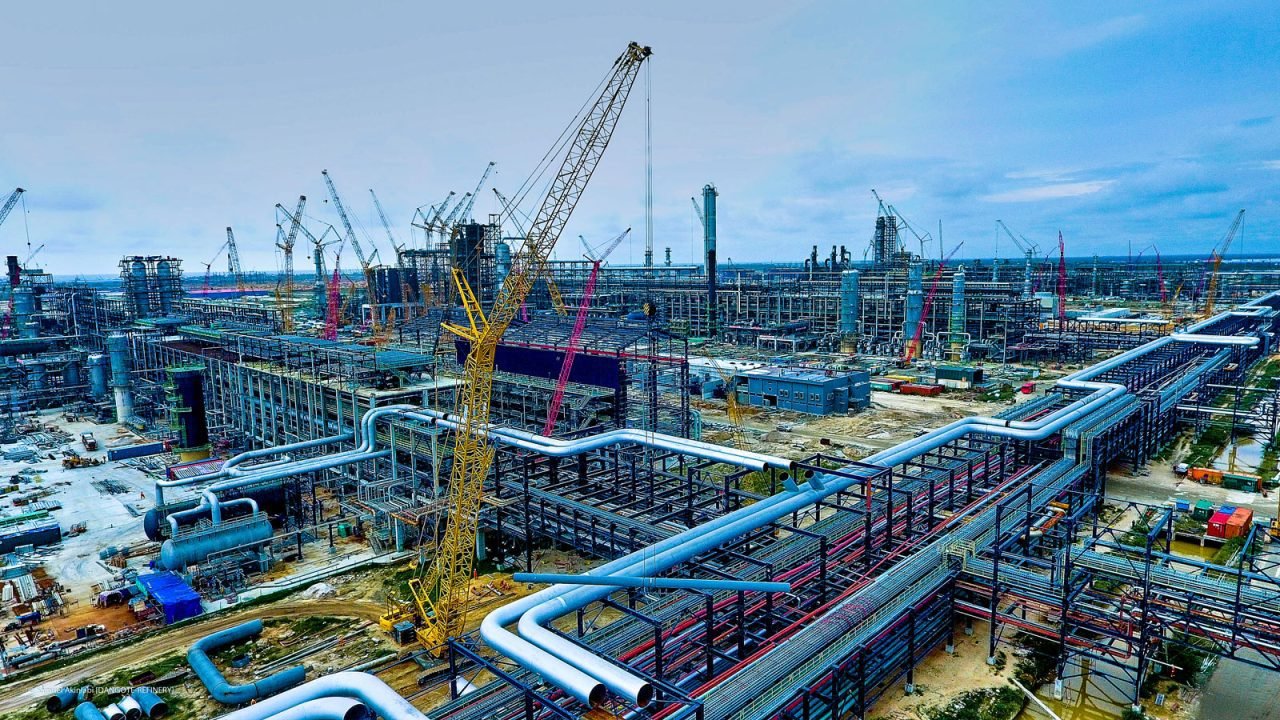
The Dangote oil refinery is aiming to stop importing crude oil by December 2025, with plans to rely entirely on Nigerian crude by the end of the year. This shift would eliminate the need for hundreds of thousands of barrels of imported oil per day.
In June, about half of the refinery’s crude came from local producers, who are expected to increase their supply as existing foreign contracts begin to expire. According to Devakumar Edwin, Vice President at Dangote Industries and overseer of the 650,000-barrel-a-day facility in Lagos, the refinery expects to fully transition to domestic crude before the end of the year.
He explained that several long-term agreements with international suppliers are set to end soon, paving the way for the plant to rely completely on Nigerian oil.
Previously, it was noted that the refinery had depended heavily on crude from the United States, despite a local oil-for-naira exchange arrangement. Oil producers in Nigeria have raised concerns about directives requiring them to prioritize supply to Dangote and other local refineries, as outlined in the country’s Domestic Crude Supply Obligations.
Crude theft, pipeline vandalism, and existing international supply contracts have made it challenging to ensure steady domestic availability. As a result, the refinery has sourced oil from countries such as Brazil, Angola, Ghana, and Equatorial Guinea.
Edwin, however, expressed optimism that better cooperation with local oil traders and government agencies would lead to a more stable domestic supply. The refinery expects a noticeable increase in local crude deliveries in the coming months.
In June, more than half of the plant’s crude around 53% came from Nigerian producers, while 47% was imported from the U.S. The facility is currently processing approximately 550,000 barrels of crude daily.
Dangote is scheduled to receive five shipments of crude from the Nigerian National Petroleum Company Limited in both July and August. Each cargo contains nearly one million barrels.
The $20 billion refinery was built with the goal of ending the cycle of exporting Nigerian crude only for it to be refined abroad and re-imported at a higher cost. While the plant is still ramping up to its full capacity of 650,000 barrels per day, it has already started contributing to Nigeria becoming a net exporter of refined petroleum products despite initial challenges in securing consistent domestic crude supply.