

 Tech & Tools Desk
Exchange Rate Falls as Naira Hits ₦1,529 per Dollar
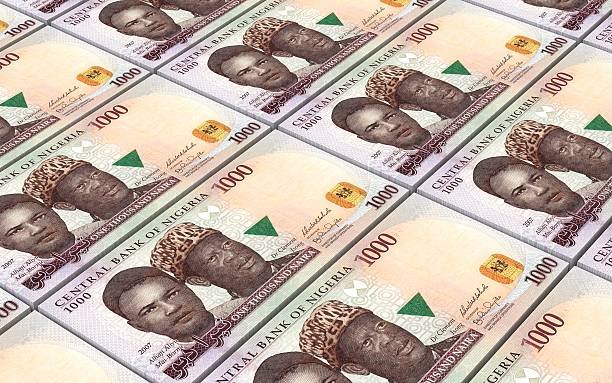
The naira closed at ₦1,529.22 per dollar on Tuesday at the official Nigerian Foreign Exchange Market, slightly weaker than Monday’s rate of ₦1,528.33 per dollar, according to data from the Central Bank of Nigeria.
This slight dip follows the recent resumption of international transactions using naira-denominated cards. Several banks including UBA, Wema Bank, GTBank, and First Bank have reinstated the service, with monthly or quarterly spending limits ranging from $500 to $1,000.
The restart of these services was expected to increase demand for foreign exchange in a market that has remained relatively stable in recent weeks. At the parallel market, the naira remained unchanged at ₦1,540 to the dollar.
Analysts have projected that the naira will likely trade within a stable range between ₦1,550 and ₦1,635 per dollar in the second half of 2025. They noted that during the first half of the year, the naira faced pressure due to rising global uncertainties tied to U.S. trade policies and geopolitical tensions.
These international developments prompted foreign exchange outflows totaling $22.83 billion, as some investors redirected funds into U.S. Treasuries and gold. In response, the Central Bank stepped in, selling $4.72 billion in the foreign exchange market during the period.
Despite these interventions, analysts do not believe the Central Bank is attempting to fix the exchange rate or target a specific value for the naira. Instead, the current framework allows for occasional interventions when market imbalances arise.
They added that the instability seen in the first half of the year was largely driven by global factors rather than domestic issues. The Central Bank has also taken steps to improve transparency in its foreign exchange operations.
The bank’s average monthly intervention in the FX market stood at $786.58 million significantly lower than the $2.30 billion seen before COVID-19 and $1.38 billion in the post-COVID period, both of which were used to maintain the naira at levels that were ultimately unsustainable. Encouragingly, there is growing consensus locally and internationally that the naira is now trading closer to its fair value.

