

 James Obasi
Fuel Deal Between Dangote Refinery and Marketers Falls Apart Amid Import Surge
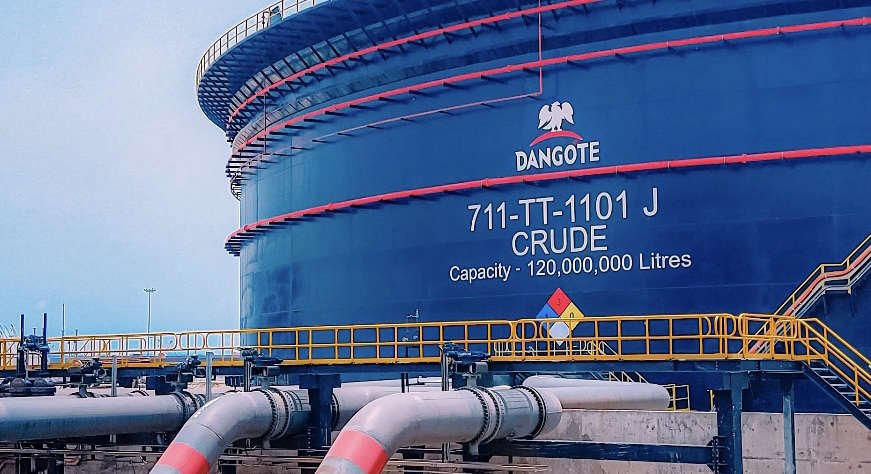
The fuel supply agreement between the Dangote Petroleum Refinery and 20 major petroleum marketers, which provided for the monthly offtake of about 600 million litres of petrol, has broken down following disagreements over pricing.
The collapse of the arrangement is believed to have contributed to the sharp increase in petrol imports recorded in November 2025, when total import volumes rose to about 1.563 billion litres, according to data from the Nigerian Midstream and Downstream Petroleum Regulatory Authority (NMDPRA).
The import figure was disclosed in the regulator’s November 2025 Fact Sheet on the State of the Midstream and Downstream Sector, which showed a significant rise in imported petrol volumes during the period the pricing dispute escalated.
The agreement, reached in October 2025, was designed as a pilot scheme under which 20 depot owners were to collectively lift roughly 600 million litres of petrol monthly from the Dangote Refinery, with each marketer allocated about 30 million litres.
The National Public Relations Officer of the Independent Petroleum Marketers Association of Nigeria (IPMAN), Chinedu Ukadike, had earlier explained that the arrangement followed a strategic meeting between the refinery and key downstream stakeholders aimed at stabilising supply and moderating pump prices.
According to him, the meeting brought together representatives of major distributors, including A.Y.M. Shafa, A.A. Rano, NNPCL Retail, Salbas, and others, to streamline product distribution and reduce the role of multiple intermediaries blamed for price distortions.
At the meeting, the refinery announced plans to sell petrol exclusively to 20 selected marketers, who would act as primary distributors to other dealers. Each marketer was expected to lift a minimum of two million litres monthly, translating to about 600 million litres in total.
Industry sources, however, confirmed that the deal, which lasted less than a month, eventually collapsed after the refinery declined to adjust its gantry price in line with declining international petrol benchmarks.
One stakeholder familiar with the agreement said it included a provision for monthly price reviews. Under the initial terms, petrol was sold at N806 per litre for coastal delivery and N828 per litre at the gantry.
As part of the arrangement, the refinery temporarily halted direct sales to independent marketers, limiting them to purchases of 250,000 litres or less and requiring them to source supplies through the approved 20 marketers.
The source explained that the arrangement initially worked smoothly, with products being loaded through ships and gantries, and more marketers gradually added to the approved list. However, problems emerged in November when international petrol prices fell below the refinery’s selling price.
Importers reportedly observed that global benchmark prices suggested petrol should sell closer to N750 per litre, but the refinery was slow to reflect this decline. This price gap, the source said, encouraged a surge in petrol imports during the month.
Although the refinery later reduced its gantry price to N699 per litre — the lowest recorded in 2025 — the adjustment came after many depot owners and marketers had already incurred losses from stocks purchased at higher prices.
Data from the Major Energies Marketers Association of Nigeria (MEMAN) and petroleumprice.ng showed that the average landing cost of imported premium motor spirit fell to N829.77 per litre by October 30, down from earlier averages above N840 per litre. In contrast, the refinery’s gantry price remained as high as N877 per litre around October 24.
Market participants said this disparity made imported fuel more attractive despite the push for local refining.
Further industry sources disclosed that the breakdown of the agreement later spilled into a public dispute involving the refinery and the former leadership of the NMDPRA over the issuance of import licences, a situation that contributed to heightened tensions in the sector.
Confirming the collapse, petroleumprice.ng Chief Executive Officer, Jeremiah Olatide, said the pricing framework for the agreement was tied to Eurobob, the international benchmark for European gasoline, with monthly reviews expected to track global crude oil movements.
He noted that while the refinery implemented a price reduction after international benchmarks declined, the adjustment was not sufficient to match global prices, prompting marketers to turn to imports in November.
According to him, the agreement between depot owners and the refinery lasted only about a month before falling apart, forcing the refinery to revert to open-market sales.
Ukadike also confirmed that the agreement was no longer in effect, stating that the refinery had liberalised its sales strategy and reopened direct sales to marketers, including those able to lift as little as 250,000 litres.
He explained that the move was intended to promote competition, prevent supply bottlenecks, and avoid artificial price increases. He also noted that some marketers had continued importing petrol even after signing the agreement, undermining its exclusivity.
Currently, the refinery is selling petrol on an open-market basis to interested buyers. Meanwhile, fresh market data from MEMAN indicate that the spot price of imported petrol at the Apapa jetty has dropped to about N696 per litre, slightly below the refinery’s current gantry price of N699 per litre.
MEMAN attributed the decline in spot prices to lower international benchmarks, reduced shipping costs, and relative stability in foreign exchange. The association added that similar downward trends have been recorded for diesel and kerosene, highlighting the continued sensitivity of domestic fuel prices to global market conditions.