
 Zara Lianne
WAEC Under Fire as Lawmakers Probe Exam Disruptions, Irregularities

The House of Representatives Committee on Basic Education and Examination Bodies sharply criticized the West African Examinations Council (WAEC) on Monday over widespread operational failures and irregularities that have marred the 2025 Senior Secondary School Certificate Examination (SSSCE).
During a heated investigative hearing at the National Assembly, the committee grilled WAEC Nigeria’s Head, Dr. Amos Dangut, over what legislators described as deep-rooted systemic lapses that have shaken public confidence in the credibility of Nigeria’s examination system.
The session follows mounting backlash from students, parents, and education stakeholders who have decried logistical failures, security breakdowns, and poor coordination during the ongoing examination exercise. The controversy has fueled calls for immediate reforms to protect the integrity of the country’s education assessment framework.
Opening the hearing, Committee Chairman Oforji Oboku (PDP – Yenagoa/Opokuma, Bayelsa State) delivered a stinging critique of WAEC’s recent performance. Despite the National Assembly being on recess, Oboku praised committee members for prioritizing the urgent oversight.
“This session underscores our collective commitment to restoring dignity and integrity to our national examination system,” he stated. “To every Nigerian parent, guardian, and candidate affected by the recent chaos, we offer our deepest apologies. This failure must never be repeated.”
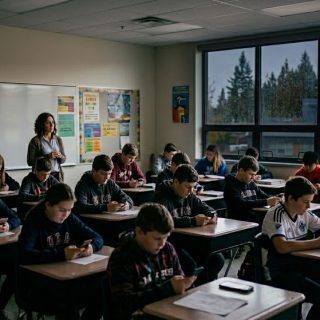
He recalled a May 30 meeting with WAEC where it emerged that students in multiple centres were forced to take exams under inhumane conditions, including sitting late-night papers lit by torchlight.
“In what world is it acceptable that students are writing exams at 11 p.m. using phone flashlights?” Oboku asked. “That is not just a logistical failure; it is a complete breakdown of leadership.”
While clarifying that the inquiry was not intended as a witch-hunt, lawmakers expressed frustration with WAEC’s pattern of negligence. Tensions escalated when one lawmaker openly called for Dr. Dangut’s resignation.
“Own up to the Nigerian people,” the lawmaker said. “If you must cry, cry. But once you’re done, resign.”
Committee members also pushed back on WAEC’s plans to roll out nationwide Computer-Based Testing (CBT) by 2026, describing the proposal as disconnected from current realities.
“You talk about CBT readiness when entire local governments lack a single CBT centre,” Oboku said. “That’s like claiming you own a car and a driver—but there’s no road. It’s not readiness; it’s wishful thinking.”
Beyond infrastructure concerns, lawmakers expressed alarm over the reputational damage Nigeria is suffering across the West African region due to repeated WAEC failures.
Dr. Dangut, in his defense, cited logistical setbacks and ongoing insecurity in some regions as major obstacles to smooth exam delivery. However, lawmakers found the explanation unconvincing, frequently cutting him off and describing his responses as inadequate.
By the end of the session, the committee passed several resolutions, including a directive for WAEC to submit a full audit of its digital and examination infrastructure—particularly in underserved areas—and a clear implementation plan for CBT deployment.
Additionally, the council was instructed to provide the National Assembly with detailed operational protocols and all reports linked to exam malpractice or paper leakages.
Concluding the session, Oboku remarked, “This moment demands accountability, transparency, and lasting reform. Education cannot be governed by trial and error. The future of our children, and our country, is on the line.”