

 James Obasi
Boko Haram Members Discovered on Army and Police Recruitment Lists – Wase
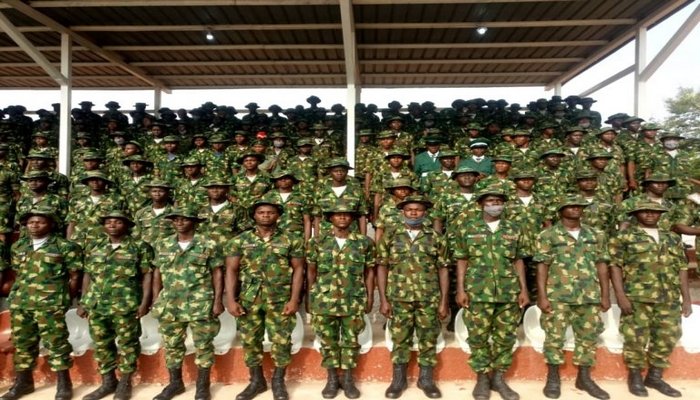
Former Deputy Speaker of the House of Representatives, Idris Wase, has revealed that suspected Boko Haram members and other criminal elements were previously identified on the recruitment lists of the Nigerian Army and police.
He made the disclosure on Wednesday during a special plenary session focused on the state of national security.
Wase, an All Progressives Congress lawmaker representing Wase Federal Constituency in Plateau State, warned that the infiltration of security agencies by criminally-minded individuals poses a serious threat to the country’s safety.
He added that his claim can be corroborated by Muktar Betara, former Chairman of the House Committee on Defence and now Chairman of the Committee on the Federal Capital Territory. “My brother and friend, Honourable Betara, can attest to this. There were recruitment exercises where names of known Boko Haram members appeared on the shortlist. Armed robbers and other criminals were also among those cleared for the Army and police,” Wase said.
The lawmaker urged caution in endorsing candidates for military and police recruitment, emphasizing that only credible and trustworthy individuals should be recommended.
Speaking emotionally, Wase noted that he has lost a brother, cousin, and nephew to terrorist attacks. He said the North Central region bears about 52 percent of the country’s overall insecurity burden and recounted a distressing plea from a younger brother requesting relocation from their violence-affected community.
Wase also called for a review of the presidential directive that withdrew police officers from VIP protection duties. While acknowledging the policy’s intent, he stressed that categories must be clearly defined to prevent unnecessary exposure of key officials to danger.
Addressing the North-West Caucus, Sada Soli described the region’s insecurity as “complex and layered,” driven by criminality, environmental pressures, weak governance, and worsening economic conditions. He argued that a purely military response would not solve the crisis and called for a combined approach involving security operations, governance reforms, environmental management, and economic development.
“Lasting peace depends on rebuilding trust in government, reforming land and livestock systems, and involving communities in shaping solutions,” Soli said.
Speaking for the North-East Caucus, Muktar Betara described the region as the “ground zero of terrorism, insurgency, and recurring communal violence.” He recounted tragedies from the 2015 Baga massacre to recent bomb blasts that have claimed the lives of civilians and security personnel. “Our challenges are massive, but with coordinated action, commitment, and sound strategy, we can restore confidence and curb the spread of violence,” Betara said.
South-South Senator Solomon Bob (PDP, Rivers) accused successive governments of lacking the political will to confront insecurity. “Since 1999, leadership failure has defined the response. Governments have chosen to placate terrorists, negotiating with killers instead of enforcing the law,” he said, adding that labelling terrorism merely as banditry diminishes the gravity of the crisis.
In her contribution, Chairman of the House Committee on Women Affairs, Kafilat Ogbara, highlighted the devastating impact of insecurity on women and children, citing recent mass abductions in Papiri and Kamba. “These are not just security failures; they represent a breach of the state’s fundamental responsibility to protect lives and property,” she lamented.

