

 Tech & Tools Desk
Tinubu Renews Commitment to Ogoni Peace Dialogue as Global Oil Demand Hits $540bn
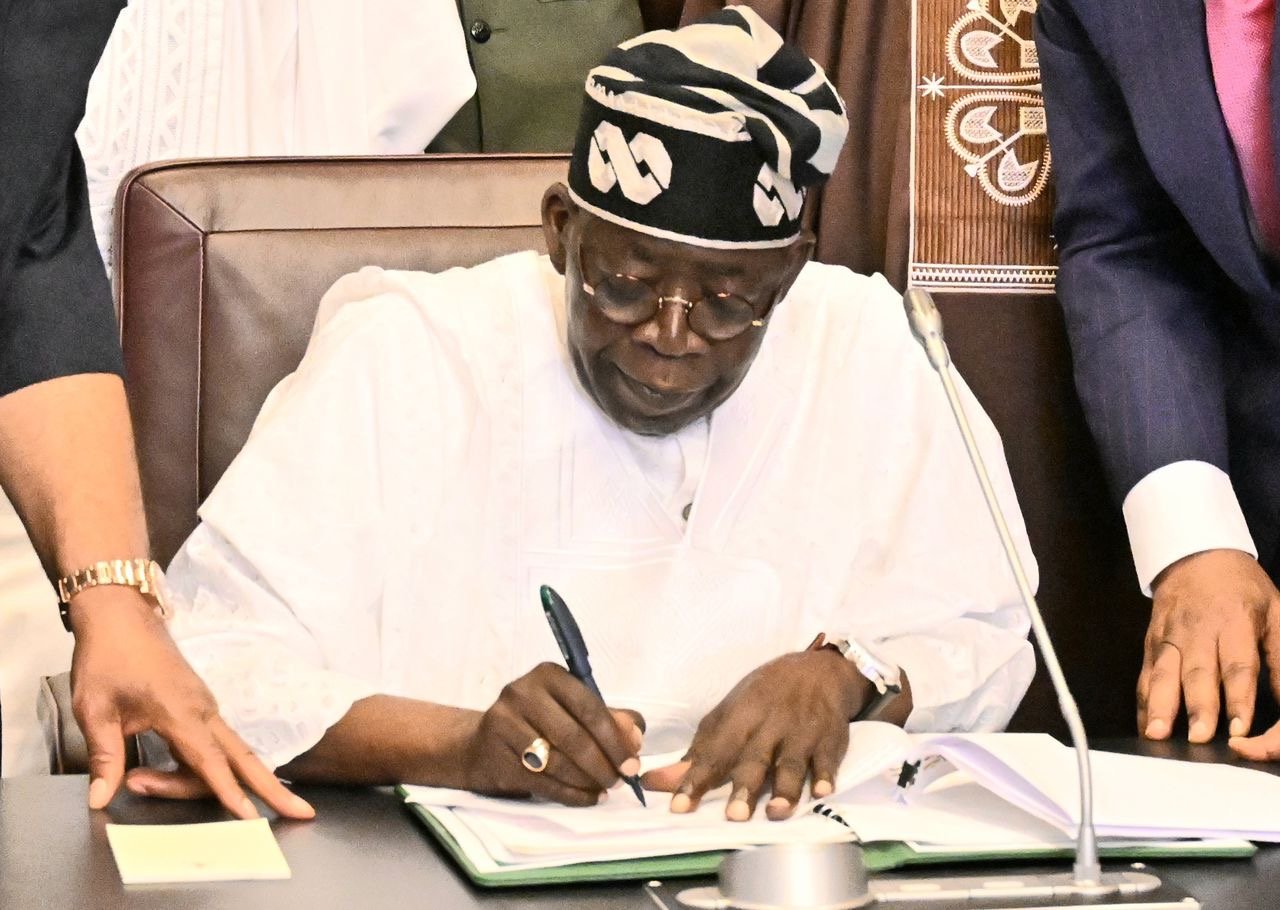
President Bola Tinubu has disclosed that the Federal Government is in advanced discussions with Ogoni leaders to resolve long-standing disputes that have stalled oil production in the region for decades.
Speaking on Wednesday at the official commissioning of the Otakikpo Crude Oil Export Terminal in Ikuru Town, Andoni Local Government Area of Rivers State, the President said Nigeria’s oil and gas sector remains vital to the country’s future, despite global moves toward cleaner energy.
Represented by the Minister of State for Petroleum Resources (Oil), Senator Heineken Lokpobiri, Tinubu said projections from the International Energy Agency (IEA) show that the world must invest about $540 billion annually in upstream oil and gas development over the next 25 years to prevent an energy crisis.
He noted that this projection reaffirms the relevance of Nigeria’s petroleum reserves and underscores the need for continuous engagement with host communities, particularly in Ogoniland, to resume production in dormant oilfields.
“Oil and gas will remain critical to global energy demand for decades,” Tinubu said. “For years, we were told to abandon our resources in the name of energy transition. But the global narrative has changed. The IEA now acknowledges the importance of sustained investment in hydrocarbons.”
The President explained that renewed international interest in oil and gas makes it imperative for Nigeria to resolve all lingering issues in the Niger Delta, adding that talks with Ogoni leaders are ongoing to ensure lasting peace and the resumption of operations.
“Once the issues in Ogoniland are resolved, the Otakikpo terminal will serve as the main evacuation point for crude produced from the area. This project is both timely and strategic for our production growth,” he said.
Developed by Green Energy International Limited at a cost of over $400 million, the Otakikpo terminal is the first onshore crude export terminal built entirely by an indigenous company in more than 50 years.
Tinubu described the facility as a landmark achievement that demonstrates the capacity of Nigerian firms to deliver world-class infrastructure.
“This commissioning marks a new chapter for our oil and gas industry,” he said. “The project will ease crude evacuation challenges, support indigenous producers, and align with our government’s objective to ramp up production.”
Lokpobiri added that the facility’s impact extends beyond Green Energy, as it will serve multiple operators in nearby fields, reduce bottlenecks, and strengthen Nigeria’s energy infrastructure.
The President also restated his administration’s commitment to ensuring peace and collaboration in oil-producing communities, urging residents of the Niger Delta to work closely with investors.
“If these resources remain untapped, no one benefits — not Ogoni, not Nigeria. We must work together to unlock our nation’s vast energy potential,” he said.
Lokpobiri further announced that Nigeria has fulfilled all requirements to host the African Energy Bank, which will provide much-needed financing for energy projects across the continent.
“The African Energy Bank will help mobilise local and continental capital, including pension funds, to finance key energy projects,” he explained.
Chief Executive Officer of the Nigerian Upstream Petroleum Regulatory Commission (NUPRC), Gbenga Komolafe, described the Otakikpo terminal as a milestone that redefines Nigeria’s upstream landscape.
He said the terminal, which currently handles 750,000 barrels of crude per day and is expandable to three million barrels, provides a critical alternative export hub and reduces reliance on ageing facilities prone to vandalism and disruption.
Komolafe noted that the facility would improve efficiency for indigenous operators, lower transportation costs, and stimulate economic activity in host communities through jobs and local content participation.
Chairman of Green Energy International, Professor Anthony Adegbulugbe, hailed the project as proof of Nigerian ingenuity and capacity.
“For over five decades, Nigeria relied on five major onshore export terminals built by foreign oil companies. This terminal changes that story. It is fully conceived, designed, and executed by Nigerians,” he said.
Adegbulugbe added that the project could unlock more than 40 stranded oilfields in the Niger Delta, estimated to hold over three billion barrels of reserves, and contribute up to 200,000 barrels per day to national production.
He said, “This terminal is not just an export facility; it is a gateway to unlocking Nigeria’s full upstream potential.”

