Author: Edupreneur Editorial Team

article-1280x744.jpg

8min24350
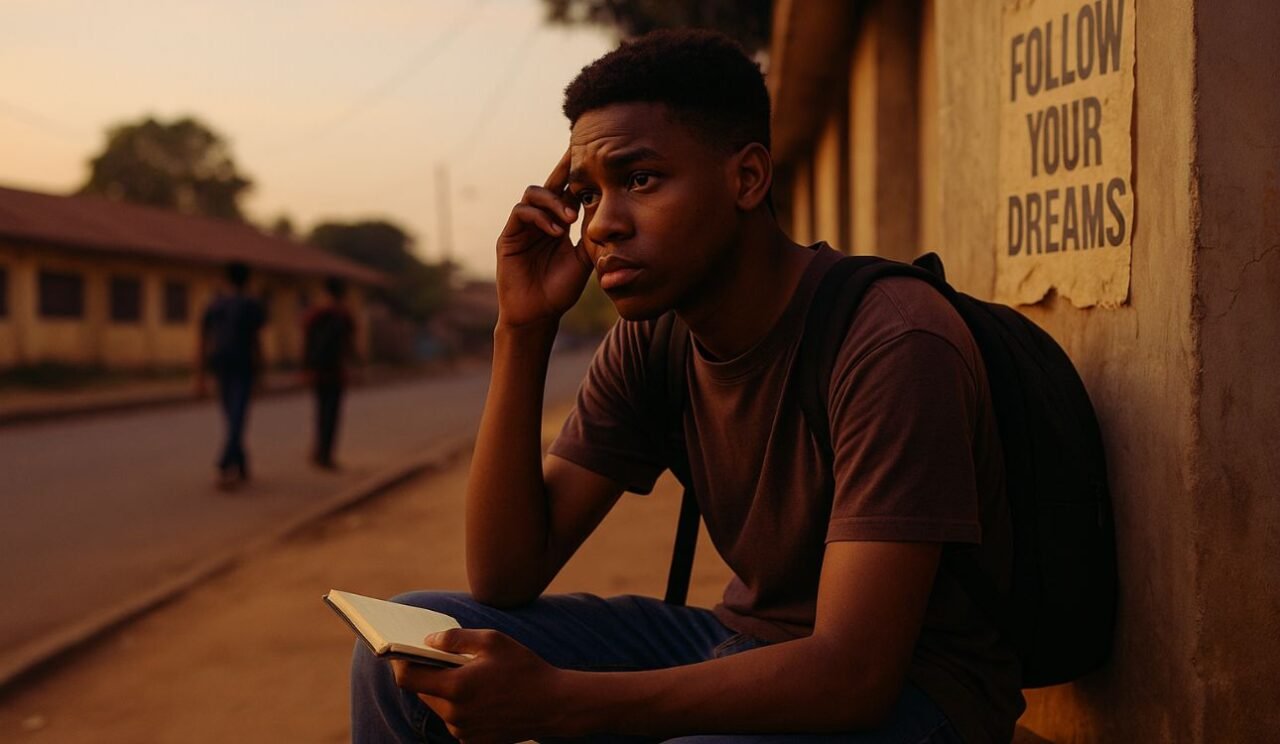
“I thought life after secondary school would be fun and freeing. Instead, I felt lost, confused, and unsure of what was next.” Sound familiar? You are not alone. Every year, thousands of Nigerian teens walk out of their secondary school gates, heads full of dreams, hearts full of hope, and then bam, it reality hits. Life after secondary school is rarely what we imagine it to be. It is complex, unpredictable, and in many ways, just the beginning of a whole new learning curve. So let’s talk about it. No filters. No hype. Just the honest truth. 1. Freedom Comes With Pressure Yes, you will probably be free from uniforms, bells, and assembly lines. But that freedom? It comes with choices, and choices come with pressure. Do I go to university or polytechnic? Which course should I choose? Should I wait for JAMB or try something else? What if I don’t get admission this year? What will people say? For many, these questions lead to anxiety, comparison, and self-doubt especially when classmates seem to be “moving forward” faster. Truth: Everyone’s journey is different. Your path doesn’t have to look like theirs. 2. The Gap Year Confusion Let’s talk about “the waiting period”  that stretch of time between graduation and the next step. It might be a few months or even years. And in Nigeria, it’s common due to admission delays, strikes, or financial setbacks. This season can feel like a trap: You’re not in school, you’re not working, you’re not doing “big things.” But it’s also a golden opportunity if used wisely. Learn a skill. Volunteer. Intern somewhere. Start a side hustle. Explore your interests. Invest in you. Truth: A gap year isn’t a setback. It’s a setup, if you use it intentionally. 3. Passion vs Pressure So you love music, fashion, content creation, sports? Great. But Uncle Chuks thinks accounting is “better.” And Dad says, “You better go study medicine.” Sound familiar? Nigerian teens often face the tough choice between passion and parental pressure. It’s not easy navigating this especially when approval and financial support are at stake. But remember: You are the one who has to live your life. Truth: You can respectfully make your case, show results, and create a path that aligns with your strengths even if it is unconventional. 4. Life Skills Matter More Than You Think Life after school reveals something schools rarely teach: how to survive real life. Managing money, staying consistent, making decisions, cooking your own food (hello boarding school pros), dealing with disappointment, showing up when no one’s watching… these become the new curriculum. You begin to realize that street smarts, emotional intelligence, and resilience are just as important as certificates. Truth: Your success isn’t just about grades. It’s also about grit. 5. You are Not Behind Maybe you didn’t get admission yet. Maybe your friends are abroad. Maybe you’re still figuring things out. Maybe you’re tired of being asked, “So what are you doing now?” Take a breath. There is no master clock ticking against your dreams. Life isn’t a race; it’s a journey. Truth: It’s okay not to have it all figured out at 16, 18, or even 25. What matters is that you keep learning, growing, and showing up. So, What Now? If you’re in that in-between space, unsure of what’s next — here’s what you can do: Reflect on what excites you. Not what others expect — what you love. Explore your options: school, vocational training, online courses, internships. Find mentors; people who are doing what you dream of, but be careful to not be exploited. Start small. Big journeys begin with small steps. And most importantly, don’t give up on yourself. Conclusively: Life after secondary school isn’t a straight road. It is a winding path filled with surprises, lessons, and growth. There’s no single formula, no one-size-fits-all success story. But if you stay curious, stay hungry, and stay true to yourself , you will find your way. The world may not hand you a map, but you can build your own compass.


2-1280x744.jpg

2min4270
U.S. chipmaker Nvidia has announced it expects a financial hit of $5.5 billion following new U.S. government restrictions on the export of its AI chips to China. The export controls specifically target the company’s H20 chips, designed for the Chinese market, but now requiring special licenses to be sold overseas. Sudden Restrictions, No Warning The company revealed that it was notified about the updated export rules on April 9 and received confirmation on April 14 that the licensing requirements would remain in place indefinitely. Reports indicate that Nvidia did not inform some of its major Chinese customers ahead of time, leaving companies such as ByteDance, Alibaba, and Tencent blindsided after collectively placing orders worth approximately $16 billion for H20 chips. Strategic Response: Investing at Home In a strategic shift, Nvidia has announced plans to invest up to $500 billion in developing AI supercomputers in the United States over the next four years. This is seen as part of a broader move to strengthen domestic production and reduce dependency on international markets. Ripple Effects in the Tech Industry The tightening of export rules is part of ongoing U.S. efforts to prevent advanced American technology from potentially benefiting China’s military. The new policy has also affected other chipmakers, including AMD, and triggered share price drops among key Asian suppliers like TSMC and SK Hynix. This development marks another chapter in the intensifying tech standoff between the U.S. and China – one with far-reaching consequences for the global semiconductor and AI industries.

medic-1280x744.png

2min11220
Authorities in Germany have charged a Berlin-based palliative care doctor with the murder of 15 patients, accusing him of administering fatal doses of medication over a period of 10 months. The 40-year-old physician, whose name has not been made public due to German privacy laws, is alleged to have used a mix of anesthetics and muscle relaxants that caused patients to suffer respiratory failure and die within minutes. The incidents reportedly occurred between September 2021 and July 2022, primarily involving patients receiving end-of-life care at home. No Consent, No Warning Investigators say the doctor carried out the lethal injections without informing the patients or their families. Some of the deceased were as young as 25 years old, while the oldest was 94. In an alarming twist, prosecutors claim the doctor even attempted to destroy evidence in certain cases by setting fires at the homes of the victims. Widening Investigation What began as a probe into four suspicious deaths quickly expanded as authorities exhumed additional bodies and conducted autopsies, uncovering a total of 15 cases now linked to the suspect. The investigation has shocked the country and raised concerns about oversight in home-based healthcare services. Seeking the Maximum Penalty Prosecutors have submitted their case to the Berlin state court, pushing for a life sentence without parole after 15 years—the harshest penalty allowed under German law. They are also requesting a permanent ban on the doctor’s right to practice medicine. This case echoes that of Niels Högel, a former nurse convicted in 2019 of killing at least 85 patients, and reignites debates about monitoring and accountability in the healthcare system.

healthcare-1280x744.png

2min5340
Bauchi State Governor, Bala Mohammed, has approved the release of ₦872 million as the state’s counterpart funding to boost its primary healthcare system. The funds will support the Primary Healthcare (PHC) Basket Fund, a key initiative aimed at improving access to essential healthcare services across the state, especially in rural and underserved communities. Funds Already in Action Out of the approved amount, ₦261.7 million has already been disbursed to the Bauchi State Primary Healthcare Development Agency to kick-start critical projects. These include strengthening healthcare infrastructure, supporting frontline health workers, and expanding access to quality care for mothers and children. Focus on Maternal and Child Health This move is part of a broader effort under the Maternal and Neonatal Mortality Reduction Innovation Initiative (MAMII), which aims to reduce maternal and child deaths in the state. Bauchi is working closely with partners like the Bill and Melinda Gates Foundation and the Aliko Dangote Foundation to drive these outcomes. Leading the Way in Healthcare Investment Notably, Bauchi is currently the only state contributing to the PHC Basket Fund this year, underscoring its leadership and commitment to universal health coverage. The government has also called for more support from development partners to sustain progress in the health sector beyond the current funding cycle. This development is a major step toward ensuring that every citizen, regardless of location, has access to reliable and affordable healthcare.

supreme-court-1280x744.png

3min11530
In a historic ruling delivered today, Britain’s Supreme Court has clarified the legal meaning of the word “woman” under the Equality Act 2010, declaring that it refers exclusively to biological females. The decision came after a legal challenge by the advocacy group For Women Scotland, which objected to a Scottish law aimed at improving female representation on public boards. The law had included transgender women—those who have legally changed their gender as part of its definition of “woman.” However, the court found that this broader definition went beyond the scope of the Equality Act. What the Court Decided According to the ruling, only biological females can be legally recognized as women when applying the Equality Act. This means that even transgender women who hold a Gender Recognition Certificate are not included in this definition in specific legal contexts, such as policies around gender balance and access to single-sex services. Why It Matters This ruling has significant consequences: Gender Representation: Public bodies must now review their policies to ensure only biological females are counted in quotas for women. Legal Clarity: The judgment gives a clear legal interpretation that may affect other gender-related laws and rights across the UK. Trans Rights Debate: While the court emphasized that transgender individuals are still protected from discrimination, the ruling has sparked renewed debates about the balance between sex-based rights and gender identity. Mixed Reactions The judgment has been welcomed by those who support clearer distinctions based on biological sex. Celebrated author J.K. Rowling praised the decision, calling it a victory for women’s rights. However, critics, including human rights organizations like Amnesty International, worry the ruling could marginalize transgender people and reduce the legal recognition of their identities. What’s Next? As this decision reshapes legal interpretations around gender in the UK, institutions and organizations may have to reassess how they apply gender-related laws and ensure compliance with the new understanding set by the highest court.

pharma-1280x744.png

2min10040
The Trump administration has launched investigations into U.S. imports of pharmaceuticals and semiconductors, signaling the potential for new tariffs on both sectors. Citing national security concerns, the administration argues that the U.S. has become overly reliant on foreign suppliers for essential goods like medicines and semiconductor chips. These investigations, initiated under Section 232 of the Trade Expansion Act, aim to assess whether the heavy dependence on foreign production, particularly from countries like Taiwan, South Korea, India, and China, poses a threat to U.S. security. If the probes result in a positive finding, tariffs ranging from 10% to 25% could be imposed on these critical imports. The U.S. Department of Commerce will now evaluate the potential risks of this dependency, including the impact on national defense and the economy. Public comments on the investigations will be accepted for 21 days, with the probes expected to conclude within 270 days. While some industry groups, especially in the pharmaceutical sector, have expressed concerns that such tariffs could lead to shortages and higher prices, the Trump administration remains focused on strengthening domestic manufacturing and reducing foreign dependence.

ghana-1280x744.png

2min10300
Ghana is set to receive another $370 million from the International Monetary Fund (IMF) following a staff-level agreement on the fourth review of its $3 billion loan programme. The approval, which still awaits the IMF Executive Board’s final greenlight, marks a major step in Ghana’s ongoing efforts to stabilize its economy and push through key reforms. This development follows a two-week assessment by an IMF team led by Mission Chief Stéphane Roudet. The review looked at Ghana’s economic performance under the Extended Credit Facility (ECF) agreement signed in May 2023. Although Ghana recorded stronger-than-expected growth in 2024, thanks largely to mining and construction, the IMF flagged several concerns. It noted that fiscal discipline weakened during the 2024 election period, inflation exceeded targets, and several crucial reforms in finance and energy sectors were delayed. In response, Ghana’s new leadership has rolled out a series of corrective measures, including a tighter budget, public finance reforms, adjustments to electricity tariffs, and stricter monetary policy. If the Board gives final approval, this new disbursement will bring Ghana’s total IMF funding under the program to about $2.36 billion.

poly-1280x744.png

1min9810
The National Association of Polytechnic Students (NAPS) has called on the President of the National Association of Nigerian Students (NANS), Olushola Ladoja, to publicly oppose any move to convert polytechnics across Nigeria into universities. Speaking on behalf of the association, NAPS President Eshiofune Oghayan warned that converting polytechnics would undermine their core purpose, delivering hands-on, technical, and industrial training essential for national development. He emphasized that turning these institutions into universities would shift their focus to theoretical education, weakening Nigeria’s capacity to produce skilled, job-ready graduates. Instead of conversions, NAPS is advocating for the full implementation of the Higher National Diploma (HND) to Bachelor of Technology (B.Tech) upgrade, which would grant polytechnic graduates globally recognized degrees while preserving the practical approach of polytechnic education. The association also proposed upgrading the National Board for Technical Education (NBTE) into a Polytechnic Education Commission to better oversee policy, funding, and graduate progression. NAPS has vowed to resist any policy threatening the relevance and future of Nigeria’s polytechnic system.

harvard-1280x744.png

1min9670
In a bold move, Harvard University is now facing a $2.2 billion federal funding freeze after rejecting a list of demands from the Trump administration. The university reportedly declined to dismantle its diversity and inclusion programs, shift to strictly merit-based admissions, restrict protest activities like face coverings, and collaborate more with immigration authorities. Harvard President Alan M. Garber responded by reaffirming the university’s autonomy, stating that such decisions should remain internal and not dictated by political pressure. As a result of the freeze, Harvard has announced a hiring freeze and is reviewing all non-essential spending to cushion the impact on research and student aid. This development is part of a broader push by the Trump administration to reshape university policies nationwide. Other elite institutions, including Columbia, have faced similar ultimatums. The move has sparked legal challenges, with civil liberties groups and education advocates calling it a direct threat to academic freedom. More updates to follow as the situation unfolds.

savings-1280x744.jpg

7min16250
Stepping into student life feels like a new world of freedom and with that freedom comes responsibility, especially when it comes to managing money. Whether you’re getting an allowance, managing a part-time job, or receiving support from family, how you handle your cash today can shape your financial future. Let’s break down some of the most common money mistakes students make and how to steer clear of them. 1. Living the “Big Boy/Big Girl” Life The Mistake: Trying to keep up with trends, eating out often, buying the latest gadgets, all to “feel among” or impress peers. The Fix: Learn to differentiate needs from wants. Set a weekly or monthly budget and stick to it. Remember, being smart with money is far cooler than being broke in style. Pro Tip: Use a budgeting app like Mint or a simple notebook to track your spending habits. 2. Ignoring the Power of Saving The Mistake: Thinking, “I’m too young to save” or “I’ll start saving when I earn more.” The Fix: Start small. Even ₦500 or ₦1,000 saved consistently adds up. Create a savings jar, piggy bank, or open a student-friendly bank account. Pro Tip: Adopt the 70-20-10 rule: 70% for needs, 20% for savings, 10% for fun. 3. Relying Heavily on Friends or Family for Financial Rescue The Mistake: Spending carelessly with the belief that someone will always bail you out. The Fix: Practice personal accountability. Financial independence starts with learning to manage what you have — no matter how little. You’ll respect money more when you earn and manage it yourself. 4. Avoiding Financial Literacy The Mistake: Thinking finance is for “adults” or “business people.” The Fix: Read books, follow finance influencers, or take free online courses. Understanding basic terms like interest, debt, or budgeting gives you a head start in life. Recommended: “The Richest Man in Babylon” (simple and timeless wisdom) or Smart Money Woman by Arese Ugwu (especially for African readers). 5. Not Earning on the Side The Mistake: Believing student life means you can’t earn money. The Fix: Think of ways to monetize your skills: graphic design, writing, tutoring, social media management, selling handmade crafts, or even starting a small food business on campus. Tip: Never underestimate your talents. Someone needs what you are good at. 6. Skipping a Budget Altogether The Mistake: Spending without tracking anything. The Fix: Budgeting is not boring, it’s your financial map. Plan for every naira. Know how much is coming in and where it is going. Hack: The envelope system works well; divide your money into envelopes for food, transport, data, and savings. 7. Overlooking “Small” Expenses The Mistake: Dismissing daily little spends like airtime, snacks, or impulsive rideshare trips. The Fix: Track your daily expenses for one week: you will be shocked at how much these “small things” cost in total. Learn to cut back and make smarter choices. Final Thoughts Money management is not about being stingy,  it is about being smart. As a student, this is the best time to build healthy money habits. The choices you make today will reflect in your confidence, independence, and success tomorrow. So next time you are tempted to splurge, pause and ask: “Will future me thank me for this?”