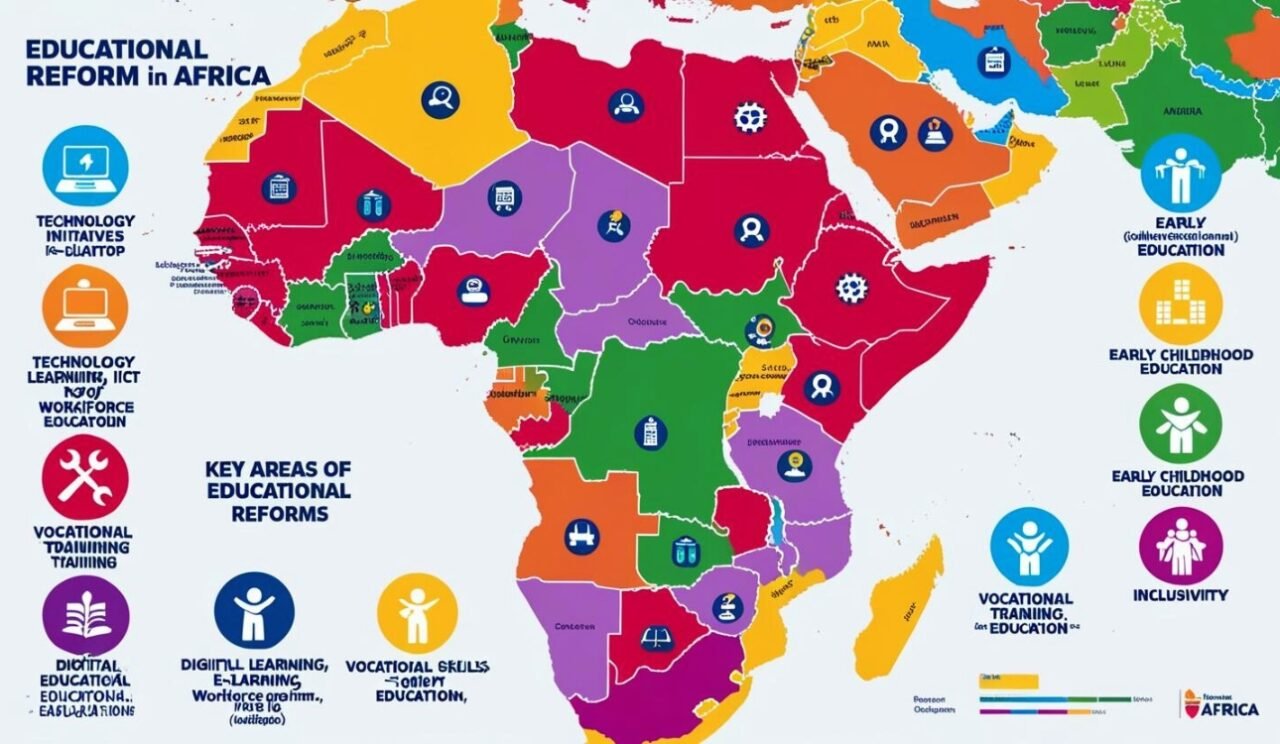
Education in Africa faces unique challenges, from access and quality to relevance and equity. In response, various African nations are implementing educational reforms aimed at transforming their systems to better serve their populations. These reforms focus on shifting from traditional success metrics towards more holistic approaches that consider a broader range of student outcomes. The Need for Educational Reforms Africa’s education sector is diverse, with varying levels of development across countries. Common challenges include: Access to Education: Many children, particularly in rural areas, lack access to quality education. Quality of Education: Inadequate infrastructure, lack of trained teachers, and outdated curricula hinder effective learning. Relevance to Local Needs: Education systems often emphasize rote learning and standardized tests, which may not align with local socio-economic contexts. Key Educational Reforms 1. Curriculum Overhaul Many African countries are revising their curricula to make education more relevant and practical. This includes integrating local knowledge, life skills, and vocational training. Example: Kenya’s Competency-Based Curriculum (CBC) focuses on developing students’ competencies, such as critical thinking, creativity, and communication, to prepare them for real-world challenges. 2. Emphasis on Early Childhood Education Recognizing the importance of early childhood development, several African nations are investing in pre-primary education. Early interventions can significantly impact long-term educational outcomes. Example: Rwanda’s Early Childhood Development (ECD) program aims to provide comprehensive care, including health, nutrition, and education, to children from birth to six years. 3. Teacher Training and Professional Development Improving teacher quality is central to educational reforms. Continuous professional development and training programs are being implemented to equip teachers with modern pedagogical skills. Example: South Africa’s Integrated Strategic Planning Framework for Teacher Education and Development emphasizes in-service training and mentorship for teachers. 4. Use of Technology in Education Digital learning and technology integration are becoming key components of educational reforms. These initiatives aim to bridge the digital divide and enhance learning outcomes. Example: Nigeria’s e-learning initiatives, such as the Digital Literacy Project, provide students with access to digital resources and training in ICT skills. 5. Inclusive Education Inclusive education reforms focus on ensuring that all children, regardless of their background or abilities, have access to quality education. This includes addressing the needs of marginalized groups, such as girls, children with disabilities, and refugees. Example: Uganda’s Universal Primary Education (UPE) policy aims to eliminate barriers to education for disadvantaged children by providing free primary education. Impact of Reforms Educational reforms in Africa are yielding positive outcomes, including increased enrollment rates, improved literacy levels, and enhanced student engagement. However, challenges remain, such as ensuring consistent implementation, adequate funding, and addressing socio-cultural barriers. Conclusion Educational reforms in Africa are crucial for building systems that support holistic success. By focusing on curriculum relevance, teacher quality, technology integration, and inclusivity, African nations are laying the groundwork for a more equitable and effective education system. Continued investment and commitment to these reforms will be essential in achieving sustainable development and empowering future generations.


 Ifunanya Okafor16 January 2025