Author: Ifunanya Okafor

Ifunanya Okafor25 February 2025
4-1-1280x744.jpg

2min5160
China has announced an ambitious goal to effectively eliminate severe air pollution by the end of 2025 as authorities intensify efforts to control emissions and improve air quality. The plan, part of the country’s ongoing “battle for blue skies,” was outlined by Li Tianwei, Director of the Department of Atmospheric Environment. To achieve this target, China will implement stricter emission standards, enhance air quality forecasting, and expand early warning systems. Authorities will focus on reducing PM2.5 and ozone levels—two major pollutants linked to respiratory diseases. The government also plans to increase the adoption of new energy vehicles in key sectors such as airports and logistics while shifting bulk transportation of goods from roads to rail and waterways. China has made significant progress in tackling air pollution over the past decade. In 2024, the average PM2.5 concentration in Chinese cities dropped to 29.3 micrograms per cubic meter—a 2.7% reduction from the previous year. The percentage of days with good air quality increased to 87.2%, reflecting a steady improvement. However, despite these efforts, air pollution remains a major public health issue, contributing to approximately 2 million deaths annually, according to the World Health Organization. The initiative aligns with China’s 14th Five-Year Plan (2021-2025), which includes a commitment to reduce PM2.5 density in cities by 10% compared to 2020 levels. President Xi Jinping has repeatedly emphasized the importance of environmental protection in China’s long-term development strategy. While China has invested heavily in renewable energy and surpassed several domestic green targets, its reliance on coal remains a challenge. Balancing economic growth with environmental sustainability will be crucial as the country works toward its pollution-free goal by 2025.

Ifunanya Okafor25 February 2025
1-1-1280x744.jpg

2min9380
Unilever is facing difficulties in selling its plant-based meat brand, The Vegetarian Butcher, as consumer interest in meat alternatives continues to decline, industry experts say. The company has hired investment bank Piper Sandler to facilitate the sale, but potential buyers may be hesitant due to the brand’s financial struggles and broader market downturn. Unilever acquired The Vegetarian Butcher in 2018, aiming to capitalize on the growing plant-based food trend. However, the brand has struggled with profitability, generating around €50 million in annual sales while operating at a loss. The plant-based meat industry, once predicted to be a game-changer, has seen a dip in sales. U.S. retail sales of plant-based meat fell from $1.7 billion in 2022 to $1.6 billion in 2023, as consumers shift towards less processed food options. Critics, including U.S. Health Secretary Robert F. Kennedy Jr., have labeled plant-based meats as “ultra-processed,” further damaging their market appeal. Unilever’s decision to sell The Vegetarian Butcher aligns with its broader strategy to streamline operations and focus on top-performing brands. However, experts warn that the brand’s financial struggles and the overall market decline could make it difficult to attract buyers. Competitors like Nestlé are also reassessing their presence in the plant-based meat market. Analysts suggest that the industry’s potential could be revived if traditional meat prices rise, making plant-based alternatives more competitive. For now, Unilever’s efforts to exit the sector highlight the growing challenges faced by plant-based food companies in a changing consumer landscape.

Ifunanya Okafor25 February 2025
2-3-1280x744.jpg

1min5140
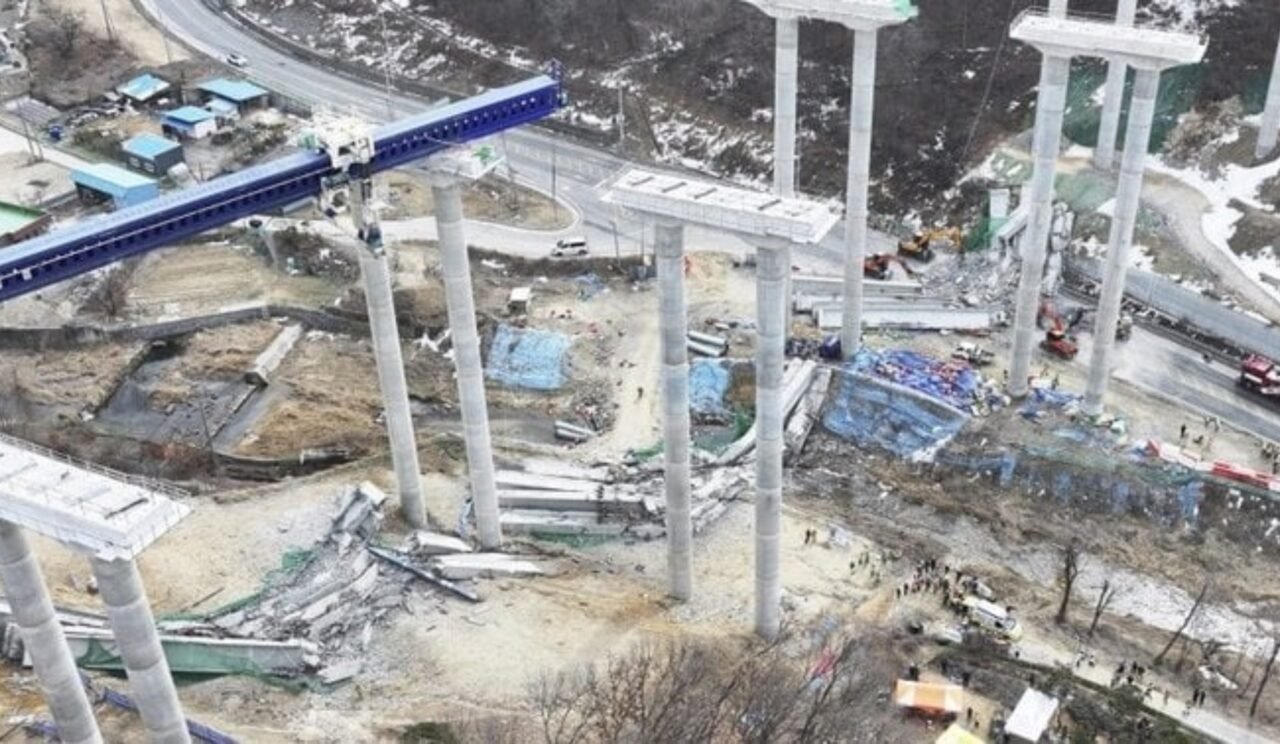
At least four people died and six others were injured on Tuesday after a section of a highway under construction collapsed in Cheonan, about 90 kilometers south of Seoul, South Korea. The incident occurred at around 9:49 a.m. local time while workers were installing a deck on the elevated highway. Fire officials reported that the victims fell from the structure and were trapped under debris. The deceased include two Chinese nationals and two South Koreans, while five of the injured remain in critical condition. More than 150 rescue personnel, including firefighters and emergency responders, were deployed to the site, using fire trucks and helicopters to assist in the rescue operations. Authorities have since confirmed that all workers have been accounted for. The exact cause of the collapse remains unclear. Hyundai Engineering & Construction, the main contractor for the project, has expressed condolences and pledged full cooperation in the investigation. In response, Acting President Choi Sang-mok has ordered a thorough inquiry and called for stricter safety measures to prevent future accidents in the country’s infrastructure projects.

Ifunanya Okafor25 February 2025
3-2-1280x744.jpg

2min6170
The Democratic Republic of Congo (DRC), the world’s largest producer of cobalt, has announced a temporary halt to cobalt exports due to an oversupply in the global market. The suspension  is expected to last for at least four months as the government seeks to stabilize falling cobalt prices. Cobalt, a key mineral used in batteries for electric vehicles and electronics, has seen its prices drop significantly in recent months. Analysts attribute this decline to increased production, particularly from Chinese mining companies operating in the DRC. The government’s decision is aimed at controlling the market and ensuring fair pricing for the country’s vast cobalt reserves. The export suspension is expected to impact major mining companies, including Glencore and CMOC Group, which dominate cobalt production in the DRC. While this move may help boost prices, some experts remain skeptical about its effectiveness in countering the global glut. The DRC is also considering additional measures to promote local mineral processing and reduce reliance on raw material exports. Meanwhile, other cobalt-producing countries, such as Indonesia, may benefit from the temporary halt as buyers look for alternative sources. This decision underscores the growing challenges in the global cobalt market, where supply chain dynamics and geopolitical factors continue to shape the future of this critical mineral.

Ifunanya Okafor24 February 2025
pici-1280x744.jpg

7min15160
Whenever a teacher reaches out to an individual or small group to vary their teaching in order to create the best learning experience possible, that teacher is differentiating instruction. It’s not a fancy buzzword, it’s the secret sauce that turns an average lesson into a personalized learning experience. But how do you do it, and why should you care? Let’s break it down. What Is Differentiated Instruction, Anyway? In a nutshell, differentiated instruction means ditching the one-size-fits-all approach. Instead of treating every student the same, teachers tailor their content, process, and products to meet each student’s unique needs. Think of it like a custom-tailored suit, but this time you fit instruction to individual students, everyone benefits. The Process: A Quick, Actionable Game Plan Assess What They Know Before you even plan your lesson, find out what your students already know. Use diagnostic tools, quick surveys, or even a show-of-hands poll. This isn’t just busywork, it’s your roadmap. Knowing the starting point is crucial. Plan Like a Pro Content: Use different materials for different levels. Provide a basic version for those who need extra support and challenge your advanced learners with deeper, more complex texts. Process: Mix up your delivery. Some students absorb best through visuals, others through hands-on activities or lively discussions. Switch it up to match their learning style. Product: Let students demonstrate their learning in ways that suit them. Whether it’s writing an essay, creating a presentation, or even making a video, give them choices. Implement and Monitor Don’t set it and forget it. Keep an eye on how students are doing. Use quick check-ins and informal assessments to see what’s working and what isn’t. Adjust as you go on. Reflect and Revise After the lesson, ask yourself: What rocked and what flopped? Gather feedback, reflect on student outcomes, and tweak your next lesson accordingly. Is Differentiated Instruction (DI)  Necessary in Secondary Education? Absolutely! Some might think DI is only for the little ones, but secondary classrooms are just as diverse. In fact, as subjects get tougher and expectations rise, secondary students benefit immensely from tailored support. Differentiation in secondary school should not be a luxury, it’s a necessity. Whether it’s breaking down complex math concepts or unpacking dense literature, personalized teaching ensures that every student has the opportunity to thrive. Why It Matters: The Big Picture Meeting Individual Needs: Every student is different. Personalized instruction means no student gets left behind or bored out of their mind. When lessons match each student’s readiness and interests, learning becomes more effective and fun. Boosting Engagement and Motivation: Imagine being a student who can choose how to learn, this sense of ownership ignites passion and keeps you involved. Active participation translates to deeper understanding and better retention. Improving Academic Outcomes: With targeted support and continuous feedback, students can quickly bridge gaps in their understanding. This isn’t just theory; research shows that students in differentiated classrooms tend to perform better academically. Developing 21st-Century Skills: DI isn’t just about test scores: it builds collaboration, critical thinking, and problem-solving skills. When students work in groups and engage in diverse activities, they prepare for real-world challenges. Teaching with Intentionality Many teachers are already practicing elements of differentiated instruction (especially lesson teachers), sometimes without even knowing it. But here’s the catch: when DI isn’t intentional, its full power isn’t unleashed. To truly transform your classroom, you need to plan, implement, and reflect on DI with purpose. So, what’s the next step? Invest in professional development, share best practices with colleagues, and don’t be afraid to experiment. When teachers intentionally tailor their instruction, they not only enhance academic outcomes but also prepare students for a future where personalized learning is the norm. It’s time to break free from the one-size-fits-all approach. Embrace the power of differentiated instruction and watch as every student finds their path to success. The journey starts with you, so reach out to that one student or group today and transform the learning experience!


Ifunanya Okafor24 February 2025
35-1280x744.jpg

3min5200
The battle for satellite internet dominance is heating up as Elon Musk’s Starlink faces stiff competition from China’s state-backed SpaceSail and Amazon’s Project Kuiper. Both rivals are accelerating their efforts to launch large satellite networks, challenging Starlink’s position as the leading provider of global high-speed broadband. China’s SpaceSail Expands Its Reach China’s SpaceSail has been rapidly expanding its satellite operations, launching multiple satellites since August 2024. The company plans to deploy 648 satellites by the end of 2025, with an ambitious target of 15,000 satellites in orbit by 2030. SpaceSail has already secured international agreements to provide internet services in countries such as Brazil and Kazakhstan, signaling China’s push for greater influence in the global satellite communications market. Amazon’s Project Kuiper Joins the Race Amazon is also making a strong entry into the satellite broadband industry with Project Kuiper. The tech giant has committed billions to launching a constellation of over 3,000 satellites in low-Earth orbit. With significant investments in satellite production and multiple launch contracts secured, Amazon is expected to begin providing services later this decade, offering consumers an alternative to Starlink. Starlink’s Strategy to Stay Ahead Despite increasing competition, Starlink remains the dominant player, with around 7,000 satellites currently in operation. Musk’s company plans to expand its fleet to 42,000 satellites in the coming years, aiming to maintain its edge in speed, availability, and affordability. Starlink has already gained millions of subscribers worldwide, particularly in remote and underserved regions where traditional broadband services are limited. What’s Next for the Satellite Internet Industry? With multiple companies racing to expand their networks, the satellite internet industry is expected to see major advancements in affordability, connectivity, and speed. As competition intensifies, consumers could benefit from lower costs and more reliable service options. While Starlink remains the frontrunner, the entry of China’s SpaceSail and Amazon’s Project Kuiper is reshaping the market. The question remains: Can Starlink maintain its dominance, or will these new challengers change the game?  

Ifunanya Okafor24 February 2025
34-1280x744.jpg

2min7540
World leaders and environmental experts have gathered in Rome this week to find solutions for generating $200 billion annually to protect global biodiversity. This high-stakes meeting comes as countries struggle to meet their commitments under the Kunming-Montreal Global Biodiversity Framework, an international agreement aimed at halting and reversing nature loss by 2030. Why This Meeting Matters The urgent need for biodiversity funding has been a key issue since the framework’s adoption in 2022. Despite previous discussions, securing financial resources remains a challenge. Developing nations, which hold much of the world’s biodiversity, are calling for stronger commitments from wealthier countries, while alternative funding models such as private investments and the restructuring of harmful subsidies are also on the table. Challenges and Setbacks One major challenge in this round of negotiations is the shifting role of the United States. The recent decision to withdraw from key international environmental agreements has raised concerns about global cooperation and funding gaps. Without U.S. contributions, other countries may need to step up to meet financial targets. Potential Solutions on the Horizon Countries are exploring various funding mechanisms, including: Redirecting $500 billion in harmful subsidies toward conservation efforts. Increasing private sector investments in nature-positive projects. Strengthening international financial institutions’ role in biodiversity financing. The European Union has expressed strong support for advancing these discussions, emphasizing the need for collective action beyond 2030.

Ifunanya Okafor24 February 2025
33-1-1280x744.jpg

2min7520
The Academic Staff Union of Universities (ASUU) at Kaduna State University (KASU) has officially suspended its strike, which began on February 18, 2025. The decision came after successful negotiations with the Kaduna State Government to resolve lingering issues affecting university staff. Why ASUU KASU Went on Strike The strike was triggered by unresolved welfare concerns, including unpaid salaries, earned academic allowances, and pension remittances dating back several years. ASUU KASU had also raised concerns about the university’s funding and the need for improved working conditions for lecturers. Government’s Response and Resolution Following weeks of negotiations, the Kaduna State Government agreed to: Pay 60% of withheld salaries for September 2017. Settle outstanding Students Industrial Work Experience Scheme (SIWES) supervision allowances for five sessions. Implement a timeline for clearing backlogs of unpaid salaries, promotion arrears, and pension remittances. Introduce a wage award and grant greater autonomy to the university. Dr. Peter Adamu, Chairman of ASUU KASU, expressed appreciation for Governor Uba Sani’s intervention, stating that the union suspended the strike in good faith to allow academic activities to resume. What This Means for Students and Lecturers With the strike now over, students can return to classrooms, and lecturers are expected to resume academic duties immediately. The university management has assured students that measures will be taken to make up for lost time. ASUU KASU has also urged the government to uphold its commitments to prevent future disruptions to the academic calendar.

Ifunanya Okafor23 February 2025
IMG-20250223-WA0013.jpg

1min4660
Residents of Sabon Birni Local Government Area in Sokoto State are under pressure to pay a ₦25 million levy demanded by a notorious bandit leader, Bello Turji. This demand follows the killing of one of his gang members and the loss of weapons during a clash with military forces. Hon. Aminu Boza, a Sokoto State House of Assembly member representing Sabon Birni West, confirmed that several villages, including Garin Idi, the hometown of Deputy Governor Idris Mohammed Gobir are affected. Initially, Turji set the levy at ₦25 million but later reduced it to ₦22 million after negotiations. In addition to this financial demand, families of 13 worshippers abducted in the area two weeks ago are being pressured to pay ₦250,000 each for their release. So far, five hostages have regained freedom after their relatives met the ransom requirements. Boza criticized the inconsistent presence of security forces in the region, noting that military troops withdraw too soon after operations, leaving communities vulnerable to retaliatory attacks. He called for continuous security intervention in eastern Sokoto to safeguard residents from further threats. The situation underscores the persistent security crisis in Sokoto State, where banditry and kidnappings remain major concerns for local communities.

Ifunanya Okafor23 February 2025
IMG-20250223-WA0014.jpg

2min5640
The National Drug Law Enforcement Agency (NDLEA) has thwarted an attempt by a 24-year-old Thai national, Ms. Pattaphi Wimonnat, to smuggle 43 parcels of Canadian Loud, a highly potent strain of synthetic cannabis, into Nigeria. The illicit drugs, weighing a total of 46.60 kilograms, were intercepted at Murtala Muhammed International Airport (MMIA) in Lagos. Ms. Wimonnat was apprehended during passenger screening after arriving on a Qatar Airways flight from Thailand via Doha on February 20. Upon questioning, she admitted to being recruited by a drug syndicate that promised her a payment of $3,000 upon successful delivery of the narcotics. In a separate operation, NDLEA officers prevented the illegal shipment of 68 parcels of Ghanaian Loud, totaling 42.2 kilograms, which were concealed in crated cartons bound for the United Kingdom. The interception at Lagos airport led to the arrest of a freight agent and two dispatch riders, with further investigations resulting in the capture of the alleged mastermind, Samuel Bitris, at his residence in Ajah, Lagos. Additionally, at the Port Harcourt Port Complex in Onne, Rivers State, security operatives seized 49 cartons containing 49,000 tablets of Tamol (a 225mg tramadol brand) during a joint inspection with the Nigeria Customs Service. Further arrests were made in Nasarawa State, where two men, Bello Adamu (40) and Pius Azuka (42), were caught in possession of 517 kilograms of cannabis. In Niger State, two more suspects, Usman Ruwa (43) and Yunusa Haruna (45), were arrested while transporting 62.7 kilograms of the substance in a Toyota Corolla along the Sabon Asibiti Road in Kontagora. As part of its ongoing War Against Drug Abuse (WADA) initiative, the NDLEA continues to engage communities through awareness campaigns in schools, religious institutions, and workplaces across the country. NDLEA Chairman, Brig. Gen. Mohamed Buba Marwa (Rtd), praised the agency’s operatives for their efforts in combating drug-related crimes and reaffirmed the agency’s commitment to reducing both the supply and demand for illicit substances in Nigeria.