Author: Tech & Tools Desk

Tech & Tools Desk11 December 2025
Police-stories-3.png

3min1910
The Police Service Commission (PSC), in partnership with the Nigeria Police Force (NPF), has launched the recruitment of 50,000 police constables, following approval by President Bola Tinubu. The recruitment drive aligns with the President’s directive to strengthen community policing, enhance internal security, and expand the police workforce. On November 26, 2025, President Tinubu declared a nationwide security emergency and instructed the Nigerian Police and Armed Forces to recruit additional personnel to address growing insecurity across the country. According to a statement by the PSC’s Head of Protocol and Public Affairs, Torty Kalu, the recruitment portal will be open to eligible Nigerians from December 15, 2025, to January 25, 2026. “The PSC, in collaboration with the NPF, is pleased to announce the commencement of recruitment of 50,000 Police Constables into the Nigeria Police Force, following the Presidential directive to strengthen community policing, boost internal security, and increase manpower,” the statement said. Applicants for the General Duty cadre must have GCE Ordinary Level, SSCE/NECO, or equivalent qualifications with at least five credits, including English Language and Mathematics, obtained in no more than two sittings. For the Specialists cadre, applicants must possess at least four credits, including English and Mathematics, obtained in no more than two sittings, along with a minimum of three years’ experience and relevant trade test certifications. All applicants must be Nigerian citizens by birth. Age requirements are 18 to 25 years for General Duty applicants and 18 to 28 years for Specialist candidates. General Duty applicants must also meet minimum height requirements of 1.67m for men and 1.64m for women. All applications are to be submitted online via the official portal.

Tech & Tools Desk11 December 2025
Tinubu-1.webp

4min5440
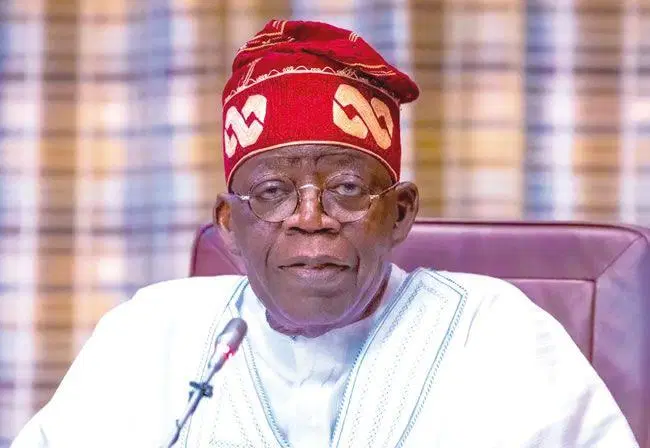
The senator representing Borno South, Ali Ndume, has commended President Bola Tinubu for recent security measures, particularly the improved kitting and enhanced remuneration for troops. He said the initiatives introduced following the declaration of a national emergency on insecurity are beginning to produce meaningful results. Ndume, a former Chairman of the Senate Committee on Army and a consistent advocate for stronger support for frontline personnel, stated this in a release issued in Abuja. His remarks follow the President’s renewed national security push aimed at reclaiming ungoverned territories and improving collaboration among security agencies. A key component of the new strategy is the directive to the Department of State Services to deploy its trained forest guards to dislodge bandits operating in forests and other remote areas. The President also reiterated that those fueling insecurity would no longer have safe havens, while efforts are underway to recruit additional personnel into both the Nigerian Police Force and the Nigerian Army to strengthen overstretched units. Ndume praised the deployment of forest guards and the improved synergy it has generated within the security architecture. He noted that their involvement has been a significant boost to military operations, explaining that their specialised training has complemented the efforts of the Nigerian Army. He also acknowledged the Federal Government’s recent improvements in troop welfare. However, he stressed that the current salary adjustments still fall short of what is obtainable among armed forces in neighbouring countries. According to him, despite progress, more should be done to align with regional standards. Ndume further pointed to notable upgrades in military gear, including new weapons, uniforms, protective helmets, boots, and bulletproof vests, describing these improvements as visible and impactful. Even so, he insisted that more resources must be directed toward combat needs. He called for increased procurement of attack helicopters, Armoured Personnel Carriers, and gun trucks to support operations in conflict-prone areas. Representing a region deeply affected by insurgency, the senator also commended Borno State Governor Babagana Zulum for his unwavering support to security agencies. Ndume noted that the governor has invested over N100bn in backing the Nigerian Army, the Civilian JTF, the Police, and other security organisations — contributions he said have reinforced federal efforts and accelerated stability in the state. He encouraged other northern governors to follow this example.

Tech & Tools Desk10 December 2025
wole-soyinka-1280x853.jpeg

5min5910
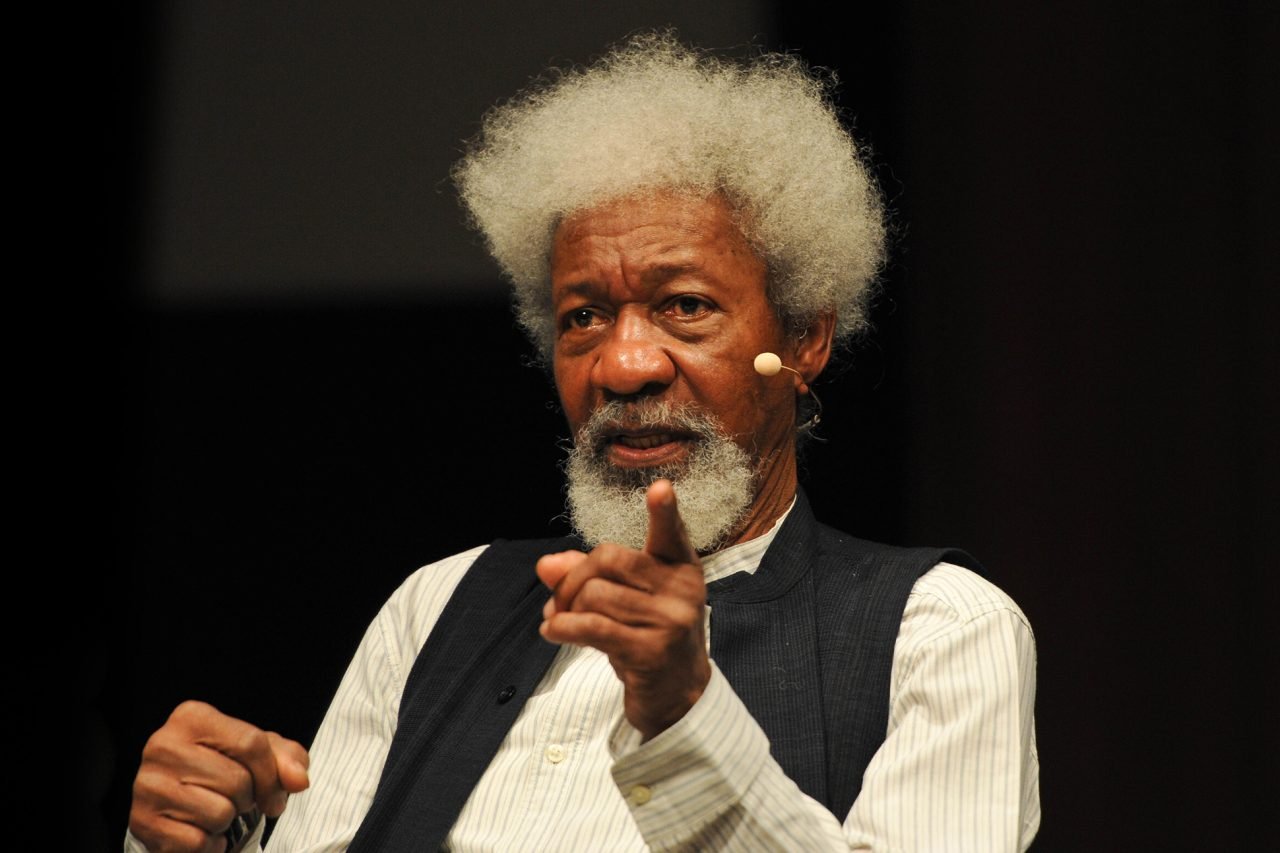
Professor Wole Soyinka has advised President Bola Tinubu to exercise greater caution in managing regional security, internal governance, and the allocation of state protection to individuals connected to power. He made the remarks during the 20th Wole Soyinka Centre for Investigative Journalism Awards held in Lagos on Tuesday. A viral four-minute video widely circulated on social media captured Soyinka recounting a recent incident in his Ikoyi hotel room that left him deeply concerned. He said he witnessed what he described as an unusually large security convoy assigned to a young man closely linked to the Presidency—an escort he claimed was “large enough to take over a small country.” The individual, he later discovered, was Seyi Tinubu, the President’s son. Soyinka said the incident troubled him enough to reach out to the National Security Adviser, Nuhu Ribadu. According to him, “I was so shocked that I immediately tried to reach the national security adviser… I told him what I saw and asked if it was normal for the child of a head of state to move around with such a heavily armed battalion.” He added that his own inquiries confirmed that this was reportedly the standard security arrangement around Seyi.“I was astonished,” he said, stressing that children of leaders must recognize that they are not elected officials and should not inherit the machinery of state power simply because of their proximity to authority. During the event—which also celebrated poet Odia Ofeimum and other honorees—Soyinka urged the President to reconsider the number of security operatives attached to his son. He joked that if a major uprising were to occur, perhaps Seyi should be deployed to handle it given the size of his escort, but he emphasised that the issue was one of national priorities, not humour. He argued that concentrating such a large security force around one individual is misplaced at a time when Nigeria is battling kidnappings, rural violence, insurgency, and widespread criminal attacks. Security assets, he insisted, must reflect the country’s urgent needs rather than privilege. Turning to the media, he commended journalists for their endurance but called for stronger editorial responsibility in a time of rampant misinformation. He warned that society could face serious conflict if social media continues to be misused, stressing that adherence to truth and verification remains one of the strongest safeguards against instability. The viral video continues to attract significant attention online, fuelling public debate on governance, accountability, and the deployment of state resources. Soyinka also used the occasion to comment on Nigeria’s role in the recently halted coup attempt in the Republic of Benin. He described the involvement as an unnecessary military venture and urged the government to prioritise the strengthening of democratic institutions instead of reflex military responses. Instability in neighbouring countries, he said, will inevitably affect Nigeria. He further criticised the ongoing demolitions in Lagos, noting that he has received disturbing images and testimonies from displaced families. While acknowledging that urban renewal may be necessary, he stressed that the dignity of affected residents must not be ignored. The video has continued to circulate widely on social media, prompting further discussion on leadership and public accountability. In late November, President Tinubu ordered the withdrawal of police officers attached to VIPs, instructing that they be redirected to core policing duties nationwide. As of Tuesday night, there has been no official confirmation or public response from the Presidency regarding the security details surrounding Seyi Tinubu.

Tech & Tools Desk9 December 2025
aa-4.jpg

10min6030
In 1975, a young engineer working inside Kodak took a photograph that would quietly change the world. That picture captured not on film but on a homemade electronic device marked the birth of the handheld digital camera and set photography on a path it could never return from. When Steve Sasson joined Eastman Kodak in 1973, the company stood as a towering symbol of American industrial innovation. Founded in the 1870s by George Eastman, Kodak had become practically synonymous with photography itself. People bought Kodak film, placed it inside Kodak cameras, developed the negatives using Kodak chemicals, and viewed the results on Kodak photographic paper. The company had even captured this seamless process in a famous slogan: “You press the button, we do the rest.” But Sasson, a newly hired electrical engineer, felt different from most of the people around him. He wasn’t trained as a chemist designing better films, and he wasn’t a mechanical expert crafting new camera bodies. He was fascinated by electronics and to him, the traditional photographic process felt slow, messy, and outdated. “When you started at Kodak, you were required to take photography lessons,” Sasson, now 75, recalled during a video interview from his home office in the US. “You had to learn how to expose film, develop it, and handle chemicals. Honestly, I found it very frustrating. You’d take a picture and then wait forever to see it.” Growing up watching Star Trek, Sasson imagined something better. “I kept thinking why not do everything electronically? Why not capture and store the image without any film at all?” Although no one had set out to invent a digital camera, the underlying technology had been evolving for years. Scientists already knew that certain metals could generate tiny electrical currents when exposed to light. This principle had been used in early light meters, including selenium-based cells. NASA’s Landsat satellites were already capturing crude digital images from space, and astronomers were using large, expensive computers to convert telescope data into pictures. The missing link arrived in 1969 when Bell Labs created the charge-coupled device (CCD), a special integrated circuit capable of storing and transferring electrical charges. While its inventors suspected it might one day help with imaging, they had not yet figured out how. By 1974, Fairchild Semiconductors had built the first commercial CCD a tiny, 100-by-100-pixel sensor. Still, no one had tried to use it to actually take and display a photograph. That changed when Sasson’s supervisor, Gareth Lloyd, casually handed the project to him. “I vividly remember him leaning on my filing cabinet and telling me, ‘I’ve got two small filler projects for you,’” Sasson said. One was related to modelling exposure systems for a movie camera. The second was simple: “Take a look at this new thing called a CCD.” Sasson was immediately hooked. His academic background included experiments with light-sensitive semiconductors, and he believed he now had enough pieces to create something entirely new. “I thought, all I need is a way to store a charge pattern from light an optical image,” he said. “It felt clean, elegant, and modern.” With no official budget and no formal approval, Sasson began building in secret. He scavenged parts from around Kodak’s labs, including a lens assembly he found in a used-parts bin. He sourced an analogue-to-digital converter from a cheap digital voltmeter instead of an expensive specialist component. “I basically stole everything,” he admitted. “Nobody had told me to build a camera.” The early CCD chips were extremely difficult to work with, requiring as many as 12 different voltage supplies. The slightest mistake meant no output at all. Even when it worked, the chip had a major flaw: the image degraded almost immediately due to a phenomenon called “dark current,” now known as electronic noise. Still, Sasson pushed on. He linked the sensor to a lens, created a system to convert light into digital data, and then faced a new challenge storage. With no modern memory options available, he used an audio cassette tape to store the raw digital information. But capturing the image was only half the battle. He also had to show it. So he built a separate playback system that converted the stored digital data into a signal a television could display. To do this, he needed a microprocessor technology that was still brand new and extremely expensive. He cleverly wrote a proposal asking for one under the pretext of “research.” To his surprise, it was approved. Together with colleague Jim Schueckler, Sasson spent over a year assembling the ever-growing device. By the end of 1975, the machine was ready. The camera was anything but elegant. It weighed about 8 pounds (3.6kg), was the size of a small appliance, and resembled a cobbled-together toaster more than a consumer product. But it worked. Sasson carried it into a nearby office and asked coworker Joy Marshall if he could take her photograph. She agreed, somewhat amused by what she viewed as an eccentric experiment from “the weird guys down the hall.” He pressed the shutter. The image was captured in 1/20th of a second, but took 23 seconds to record onto the cassette tape. Back in the lab, he loaded the tape into the playback unit and connected it to a television. Slowly, a crude image formed on the screen. Her head and hair were visible. Her shoulders appeared. But her face was badly distorted. Despite the flaws, Sasson and Schueckler were ecstatic. The structure of the image was there. It worked. Joy Marshall, standing in the doorway watching, simply said, “Needs work,” and walked away. After adjusting the circuit which at the time meant physically reversing wires instead of rewriting software the image improved. A real, recognizable picture had been taken and displayed without a single piece of film. This was the first handheld digital photograph in history. Word soon reached Kodak management, and Sasson began demonstrating his invention to executives across the company. Each time, he repeated the same routine: photographing people


Tech & Tools Desk8 December 2025
aa-3-1280x640.webp

3min4540
The Christian Association of Nigeria (CAN) in Niger State has said it has not yet received official confirmation regarding reports that 100 abducted students from Agwara have been released, but expressed hope that such development would be an answer to prayers. The Chairman of the state chapter of CAN and proprietor of St. Mary Private Catholic Primary and Secondary Schools in Papiri, Agwara Local Government Area, Bishop Bulus Yohanne, made this known in a statement on Sunday through his media aide, Daniel Atori. The school was attacked by bandits on November 21, 2025, during which at least 303 pupils, students, and teachers were abducted. Two days later, 50 pupils reportedly escaped and made their way back home. The National Security Adviser, Nuhu Ribadu, later visited the school and assured the management and parents that efforts were ongoing and that the abducted children were safe. Reacting to reports of the release of 100 students, Bishop Yohanne expressed cautious optimism, describing the news as a potential source of joy if confirmed. He said the association had continued to pray and wait for the return of the children but had not been formally notified of any release. Meanwhile, Nasarawa State Governor, Abdullahi Sule, and a retired senior military officer, Major General John Enenche, have commended the Federal Government and security agencies over reports of the students’ release aired by television stations. Governor Sule, during a live interview on a current affairs programme, described the development as encouraging and praised the coordinated security efforts said to have led to the reported breakthrough. Across Niger State, Christians observed a three-day period of fasting and prayers, organised by the state chapter of CAN, calling for the release of the remaining abducted victims. The prayer programme was held across all 25 local government areas and concluded at the 1st ECWA Church in Minna. Christians from different denominations gathered to pray for the freedom of the 265 children and teachers still in captivity, expressing concern over the length of their ordeal. Speaking at the event, Pastor Peter Ojo encouraged Nigerians to remain steadfast in prayer, while Rev. Ezekiel Ibrahim, representing Bishop Yohanne, urged citizens to set aside their differences and unite in seeking divine intervention. The Organisation of African Instituted Churches also expressed solidarity with the affected families, the school community and the Kontagora Diocese. Its Secretary, Sunday Ojimi, said the incident had caused deep pain but strengthened the resolve of the faithful to remain hopeful, adding that prayers would continue until the children and teachers are safely reunited with their families.

Tech & Tools Desk6 December 2025
aa-1280x640.jpeg

2min7410
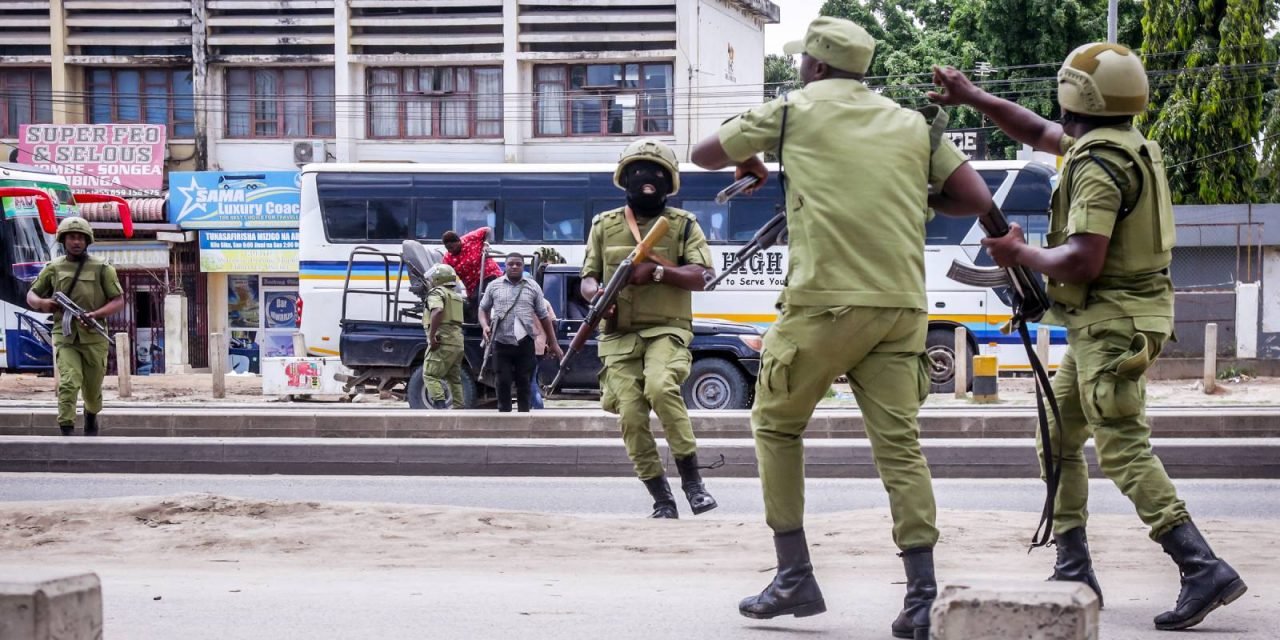
Tanzanian authorities have prohibited fresh nationwide demonstrations planned for next week, days after a violent security crackdown on election-related protests. Unrest broke out after the October 29 polls, with opposition groups accusing President Samia Suluhu Hassan of rigging the vote and orchestrating killings and abductions of political critics. Hassan was declared the winner with 98% of the vote. Opposition parties and human rights groups claim more than 1,000 people were shot dead during several days of clashes with security forces. The government has yet to release an official casualty figure. Despite efforts to restrict information, public anger continues to rise, and some groups had called for renewed protests on December 9. In a statement issued late Friday, police spokesperson David Misime said authorities had seen the mobilization on social media but noted that no formal notification had been submitted for any planned rallies. He said the proposed protests “no longer meet the legal requirements to be authorised,” citing “unlawful tactics” observed in recent days. “The Police Force hereby bans the planned demonstrations described as peaceful and indefinite,” the statement said, adding that the calls to protest were being coordinated using phone numbers and online accounts operated both inside and outside Tanzania, including anonymous platforms. The ban comes after Meta suspended the Instagram accounts of two Tanzanian activists who shared images of the violent crackdown. International concern is mounting, with the United States announcing it will “comprehensively review” its relationship with Tanzania in response to the election violence. AFP

Tech & Tools Desk5 December 2025
aa-1.webp

2min5430
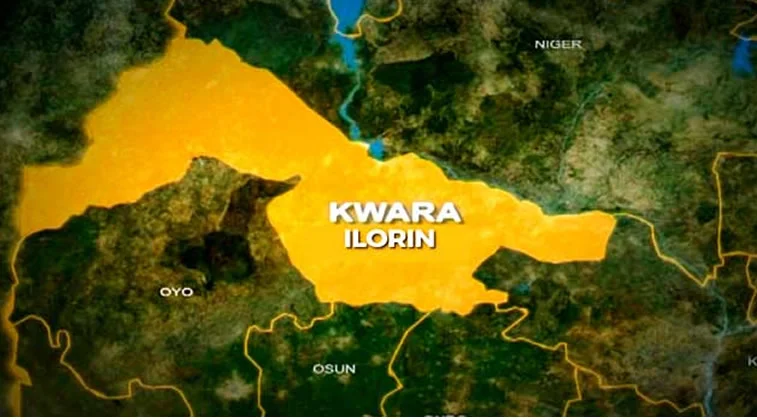
A medical doctor has been arrested by operatives of the Department of State Services (DSS) for allegedly transporting medical supplies from Sokoto State to suspected kidnapping gangs operating in Kwara State. The Kwara State Government confirmed the arrest in a statement posted on its official Facebook page on Friday. According to the statement, the suspect was intercepted in Jebba, Moro Local Government Area, after intelligence linked him to a network responsible for delivering medical items to armed groups across the region. “The Department of State Services has taken into custody a medical doctor who was ferrying drugs from Sokoto to kidnappers in parts of Kwara State,” the statement read. “The doctor was intercepted in the Jebba area following intelligence reports about the activities of the kidnappers and their couriers. “The secret service says the criminal gangs appear desperate for medical care following gunshot wounds sustained in encounters with security forces.” Security sources said that the arrest is part of a broader, intensified operation aimed at disrupting the logistics and medical support networks sustaining kidnapping cells in the North-Central region. One of the sources noted that kidnapping syndicates have recently stepped up efforts to secure medical treatment—especially for gunshot wounds suffered during clashes with security operatives—prompting security agencies to increase surveillance on the movement of medical supplies. Kwara, long considered one of the more peaceful states in the North-Central zone, has recently recorded a rise in insecurity, with incidents reported in Kaiama, Baruten, Ekiti, and parts of Moro LGAs.Border communities have been particularly vulnerable due to their proximity to vast forest belts that serve as hideouts for criminal gangs.

Tech & Tools Desk4 December 2025

3min10700
The Vice Chancellor of Rivers State University, Nkpolu-Oroworukwo, Port Harcourt, Prof. Isaac Zeb-Obipi, has ordered an immediate suspension of lectures at the university’s Emuoha satellite campus after five students were abducted from their residence on Tuesday. In addition, the VC directed the prompt evacuation of all students from the Emuoha campus until further notice. According to reports, gunmen stormed an off-campus residence in Rumuchi/Rumuohia, Emuoha, firing sporadically before abducting the students. The attack sparked a student protest, with some marching to the VC’s office to voice concerns over the safety of their colleagues. Addressing the protesters, Prof. Zeb-Obipi condemned the attack and stated that the matter would be presented to Governor Siminalayi Fubara, the visitor to the university, for guidance and appropriate intervention. He emphasized that those responsible must be apprehended and punished, warning that failure to enforce consequences emboldens criminals. “Students at the Emuoha campus, if you can relocate, please do so, as lectures have been suspended. Our priority now is ensuring the safe return of the abducted students. Those behind this act must be found and brought to justice,” the VC said. Meanwhile, the Rivers State chapter of the National Youth Council of Nigeria (NYCN) has demanded the immediate and unconditional release of the abducted students. NYCN State Chairman Nwisabari Bani condemned the incident and called on the university to consider relocating students from the Emuoha campus to the main campus in Port Harcourt. Bani further urged the government, security agencies, traditional leaders, and community stakeholders to strengthen security measures in all communities hosting students. “The safety of our young people—the future scientists, engineers, leaders, and entrepreneurs—must not be compromised. Immediate, coordinated security reinforcement is essential,” he said. This marks the second student protest at the Emuoha campus over criminal attacks and harassment in the area. Rivers State University currently runs four satellite campuses—Emuoha, Etche, Ahoada, and Sakpenwa—established during the previous administration of Nyesom Wike.  

Tech & Tools Desk4 December 2025
us-tr.webp

5min5310
The United States Department of State has announced new measures aimed at addressing what it described as widespread killings and attacks against Christians in Nigeria, signaling that visa restrictions may soon be imposed on those linked to the violence. In a statement released on Wednesday, US Secretary of State Marco Rubio said Washington was responding firmly to what it considers persistent faith-based attacks carried out by extremist groups and armed militias in Nigeria and other regions. According to Rubio, the new measures are being implemented under Section 212(a)(3)(C) of the US Immigration and Nationality Act, which grants the government authority to deny visas to individuals who have directed, authorised, significantly supported, or participated in violations of religious freedom. The policy also allows for the extension of such restrictions to immediate family members where applicable. Rubio noted that these restrictions could apply to Nigeria and any other country where individuals or authorities are found to be complicit in religious persecution, stressing the United States’ growing concern over the safety of vulnerable faith communities. The announcement followed a high-level briefing by members of the US House of Representatives on Tuesday, where lawmakers raised concerns about the increasing scale of religious violence in Nigeria. The session was convened at the directive of President Donald Trump, who had earlier instructed the House Appropriations Committee to investigate reports of mass killings of Christians in the country. The briefing was led by House Appropriations Vice Chair and National Security Subcommittee Chairman Mario Díaz-Balart and included members of both the Appropriations and Foreign Affairs Committees, alongside experts on international religious freedom. Participants included lawmakers Robert Aderholt, Riley Moore, Brian Mast, and Chris Smith, as well as Vicky Hartzler of the US Commission on International Religious Freedom, Sean Nelson of Alliance Defending Freedom International, and Dr Ebenezer Obadare of the Council on Foreign Relations. Meanwhile, President Bola Tinubu has approved Nigeria’s delegation to a newly established US–Nigeria Joint Working Group, set up to implement security agreements reached during recent high-level engagements in Washington led by the National Security Adviser, Nuhu Ribadu. The renewed US attention follows escalating concerns over terrorism, banditry, and targeted attacks on Christian communities across parts of Nigeria, prompting stronger warnings from Washington about the protection of religious minorities. On October 31, 2025, President Trump placed Nigeria on the list of “Countries of Particular Concern” (CPC) over reported violations of religious freedom, particularly the killing of Christians. Nigeria had previously been designated a CPC in December 2020 during Trump’s first term, before the status was lifted under the administration of President Joe Biden. Following the renewed designation, President Trump stated on November 3 that his administration would consider possible military options to protect Christians facing violence in Nigeria. Further escalation occurred on November 20, when the US House Subcommittee on Africa convened a public hearing to review Nigeria’s redesignation as a Country of Particular Concern. Lawmakers examined the possible consequences of the action, including the likelihood of sanctions against Nigerian officials found to be complicit in acts of religious persecution.

Tech & Tools Desk3 December 2025
JAILED-PERSONS.jpg

3min4150
A South African court has sentenced Nigerian national Victor Udoh and his South African accomplice, Vuyisekha Mzwakhe, to a combined 37 years in prison after finding them guilty of drug-related offences and other violations. The Oudtshoorn Regional Court handed Udoh, 33, a 22-year sentence — 20 years for drug trafficking and two years for immigration offences. Mzwakhe received a 15-year term for her role as a courier in the operation. Court documents reveal that the case began in 2021 when Mzwakhe contacted Udoh through a social-media platform, offering to transport items between major South African cities. Prosecutors said she willingly acted as a drug courier and later received funds from Udoh to cover travel and accommodation. Investigators traced the arrangement to a guesthouse in George, where a parcel was delivered to the pair on October 15, 2021. Police intercepted a taxi transporting the suspects to Oudtshoorn, recovering a box containing 743 grams of methamphetamine, known locally as “tik,” with an estimated street value of R260,050. During the trial, state prosecutor Hyron Goulding described Udoh as the coordinator of the operation, while Mzwakhe acted as a willing participant. Both defendants pleaded not guilty — Mzwakhe denying knowledge of the parcel’s contents, and Udoh challenging the legality of the search — but the court ruled that officers had proper authorization and that the suspects had consented to the search. The court also noted that Udoh had been residing unlawfully in South Africa for over five years after his 2016 asylum application was rejected. Mzwakhe, initially released on bail, was rearrested for failing to appear in court, while Udoh remained in custody throughout the five-year trial. The National Prosecuting Authority hailed the ruling, saying it demonstrates the justice system’s commitment to tackling drug-related crimes, which are a major driver of violence and community destabilisation. The sentencing comes amid increased scrutiny of transnational drug networks operating across Africa and Asia. Authorities in India recently announced the arrest of 50 Nigerian nationals in a large-scale operation targeting an international narcotics distribution network.