Author: Tech & Tools Desk

Tech & Tools Desk3 December 2025
northern-governors-750x375-1.webp

4min1650
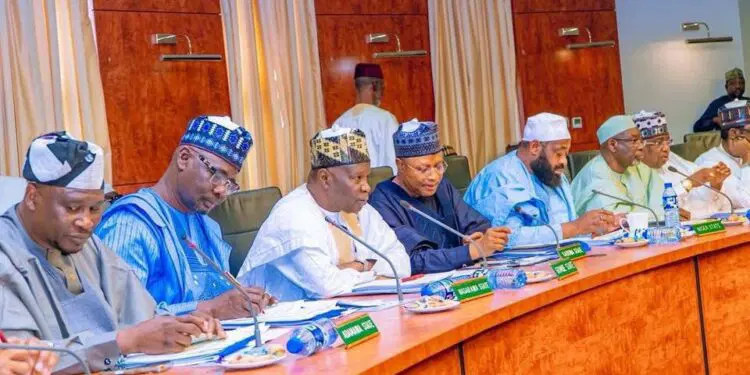
Northern governors have reiterated their commitment to prioritising the first 2,000 days of a child’s life, stressing that early investment is essential for peace, productivity, and long-term economic progress in the region. Their commitment followed a briefing by World Bank officials to the Northern Governors Forum, which reviewed strategies to improve the North’s “concerning childhood development indicators.” The World Bank’s Team Lead for Stunting and Early Years, Dr. Ritgak Tilley-Gyado, told the forum that Nigeria cannot build a competitive workforce or safeguard its economic future without confronting stunting, malnutrition, weak early learning foundations, and poor caregiving systems. She highlighted the urgent need for early stimulation, foundational education, and family empowerment to improve caregiving and expand women’s participation. “Investing in the first 2,000 days is not just about individual progress — it is an economic, social, and stability imperative,” she said. “This period is globally recognised as the cornerstone for brain development, nutrition, learning, and overall wellbeing.” Responding, Gombe State Governor and Chairman of the Forum, Inuwa Yahaya, described early childhood investment as “the most critical investment for ensuring peace, productivity, and a stronger northern economy.” He warned that the region “cannot afford to lose another generation” and emphasised the need for early years programmes tailored to local realities and frontline workers. Other governors shared similar views. Jigawa State Governor Umar Namadi pointed to the connection between poverty and poor childhood outcomes and praised the World Bank’s results-based financing approach. Niger State Governor Umaru Bago highlighted the importance of micronutrients and locally produced fortified foods. Plateau State Governor Caleb Mutfwang acknowledged the complexity of multisectoral reforms and pledged to strengthen evidence-based implementation. Zamfara State Governor Dauda Lawal added that although many challenges were inherited, the North now has “a genuine opportunity to change the narrative” through targeted early years investments. Earlier, the World Bank Country Director for Nigeria, Dr. Mathew Verghis, emphasised that state governments carry the biggest responsibility for delivery and must help shape a unified but locally driven early years agenda. He noted that improving outcomes requires collaboration across sectors such as health, nutrition, education, WASH, women’s empowerment, agriculture, food systems, and social protection. Verghis added that the process will be guided by evidence to ensure a nationally aligned and state-responsive platform rooted in local needs.


Tech & Tools Desk2 December 2025
Vaccines-mpox.jpeg

6min6390
Health experts have raised concerns that Mpox, a viral disease that affects both humans and animals, continues to circulate in Nigeria, presenting an ongoing public health challenge. Despite progress made in controlling the disease, Nigeria still faces limited access to vaccines for high-risk populations, poor public awareness, misconceptions, stigma, and gaps in healthcare accessibility. The warnings were issued during a webinar titled, “Mpox Resurgence in Nigeria: Efforts, Challenges and Recommendations,” hosted by the CEO of Preventive Health Nigeria Advocacy Operations Ltd, Pharm Adekola Wojuola. According to the World Health Organization, Mpox—formerly known as monkeypox—can cause fever, headache, muscle aches, back pain, low energy, swollen lymph nodes, and a painful rash. Prof. Isaac Adewole, former Minister of Health and Senior Health Diplomacy and Policy Consultant at Africa CDC, stated that as of week 47 in 2025, Nigeria had recorded 1,623 suspected cases, 414 confirmed cases, and six deaths across 33 states. Only four states remain unconfirmed for Mpox. He noted that while no new deaths had been recorded in recent weeks, the disease continues to spread through close face-to-face contact, respiratory droplets, contact with contaminated objects, and can even occur during pregnancy or childbirth. Prof. Adewole emphasized that individuals without visible rashes can still transmit the virus. Characteristic symptoms include fever, skin rashes, and swollen lymph nodes, which may be mild or severe, particularly in children, pregnant individuals, and people with weakened immune systems, including those living with HIV, diabetes, or liver conditions. Lagos, Rivers, and Bayelsa have been identified by the Nigeria Centre for Disease Control (NCDC) as states requiring heightened vigilance. On prevention, Prof. Adewole stressed that there is currently no specific treatment for Mpox. Measures should focus on prevention, including avoiding close contact with infected persons, steering clear of animals that may carry the virus, proper protection for healthcare workers, frequent handwashing, and targeted vaccination for high-risk groups. He also highlighted the revised National Mpox Guidelines developed by the NCDC with WHO support, which include home-based care protocols allowing mild cases to be managed at home to reduce the burden on hospitals. Challenges remain due to limited resources, insufficient vaccines, stigma, and misinformation. Prof. Adewole called on government at all levels, non-governmental organizations, and other stakeholders to collaborate in addressing the outbreak. “Mpox is not over. It is still actively circulating in Nigeria. We need to improve vaccine distribution, raise awareness, combat misconceptions, and address underreporting due to stigma and limited access. No state is immune, and we must all act together,” he said. Dr. Sebastian Oiwoh, Consultant Physician, Dermatologist, and Venereologist at Irrua Specialist Teaching Hospital, noted that managing Mpox goes beyond healing lesions. Pigmentation changes, scarring, and psychological impacts may persist long after recovery. He highlighted both human-to-human and animal-to-human transmission, pointing to rope squirrels and sooty mangabey monkeys as possible virus carriers. Home-based care for mild cases requires a separate space and close linkage with primary healthcare providers. Dr. Oiwoh also warned that Mpox can affect the eyes, posing a risk of blindness if not treated properly. Proper lesion care, strong community engagement, vaccination advocacy, and inclusion of survivors in awareness campaigns are crucial to controlling the disease. Prof. Richard Adegbola, Microbiologist and Founder of RAMBICON Nigeria, emphasized that Mpox remains a global emergency, with Africa accounting for a significant share of the ongoing outbreak. While fatalities are manageable, they are higher in underserved areas, and pediatric cases are rising, mainly through household contact. He recommended integrated disease surveillance, expanded genomic sequencing, improved case management, and a national vaccination strategy targeting high-risk groups, including young children. Public education, trusted community influencers, and increased clinical trials in Africa were also highlighted as necessary measures. Prof. Adegbola urged sustained “one-health” approaches integrating human, animal, and environmental health to achieve effective control and support progress toward sustainable development goals. The webinar concluded that early diagnosis, proper lesion care, mental health support, and survivor-led advocacy are essential to reducing Mpox transmission and stigma in Nigeria.

Tech & Tools Desk2 December 2025
Tinubu-1.webp

3min3490
President Bola Tinubu is expected to announce a new Minister of Defence this week following the sudden resignation of Badaru Abubakar, who stepped down due to health concerns. Abubakar’s resignation, effective immediately, was formally communicated to the President in a letter dated December 1. The development was confirmed in a statement issued on Monday by Tinubu’s Special Adviser on Information and Strategy, Bayo Onanuga. According to the statement, the President has accepted Abubakar’s decision and expressed gratitude for his contributions. It also noted that Tinubu is likely to forward the name of a replacement to the Senate within the week, signalling that the selection process is already in motion. Abubakar, 63, previously served two terms as Governor of Jigawa State before his appointment as Defence Minister in August 2023. His departure comes at a critical time as the government is confronting escalating security challenges that recently led the President to declare a nationwide security emergency. The administration has rolled out new security measures, including plans to recruit 20,000 additional police officers, deploy forest guards, and strengthen protection for schools, churches, and mosques in high-risk areas. There had also been growing criticism from analysts who questioned Abubakar’s suitability for the role. Shortly before news of his resignation became public, President Tinubu held a private meeting at the State House with former Chief of Defence Staff, Gen. Christopher Musa (retd.). Musa, who retired on October 24, 2025, was seen arriving at about 7:03 p.m. before being escorted into the President’s office wing. Although the agenda of the meeting was not disclosed, it heightened speculation about potential candidates to replace Abubakar at the Ministry of Defence.

Tech & Tools Desk1 December 2025
uni-child-risk.jpg

4min3890
Global progress in the fight against Human Immunodeficiency Virus (HIV) over the past three decades is now under threat, as new analysis warns that ongoing funding cuts could reverse years of achievements and endanger millions of children. A report by UNAIDS, UNICEF, and Avenir Health highlights that disruptions in financing could lead to a surge in new HIV infections and AIDS-related deaths among children worldwide. In Nigeria, HIV remains a significant public health challenge, with an estimated two million people currently living with the virus. According to the National Agency for the Control of AIDS (NACA), the country has an HIV prevalence of 1.3 per cent and the highest number of people living with HIV in West and Central Africa. In 2024, the Christian Council of Nigeria noted that approximately 160,000 children live with HIV in the country, yet only 45,000 are receiving treatment. The report emphasizes that, despite more than 30 years of collective action, recent funding reductions have slowed progress. Every day, new mothers acquire HIV during pregnancy or breastfeeding, putting their infants at increased risk of infection. Many children are still born without timely access to testing or treatment, a gap that has widened following major funding disruptions in 2025. In a best-case scenario, where adequate resources are mobilized, the report indicates that hundreds of thousands of paediatric infections could be prevented. “With sufficient resources to reach global targets, 410,000 HIV infections and 520,000 AIDS-related deaths in children could be averted by 2040,” the report states. However, if current trends continue, the consequences are projected to be severe. “At the current pace, the world could see 1.9 million new HIV infections and 990,000 AIDS-related deaths in children,” it warns. Under a worst-case scenario, defined by a 50 per cent reduction in programme coverage, an additional 1.1 million children could acquire HIV and 820,000 more could die from AIDS-related illnesses by 2040. The report underscores that without renewed global commitment, coverage of life-saving interventions will continue to decline, inevitably leading to preventable infections and deaths. “Adequate resources would sustain prevention of vertical transmission, maintain antiretroviral therapy for women and children, and keep other high-impact HIV services accessible. If funding cuts persist, service delivery will weaken, and more children will be born without protection or treatment,” the report states. Experts have also raised concerns about the impact of halted foreign aid, including reductions in US support through PEPFAR, which has historically provided testing and medicines to prevent and treat HIV/AIDS for over 20.6 million people globally. In Nigeria, continued funding disruptions could affect the availability of drugs and testing kits, threatening the country’s progress toward ending AIDS as a public health threat by 2030.

Tech & Tools Desk1 December 2025
Bola-Tinubu66.png

2min4710
The Presidency has called on Nigerians to support efforts to enforce President Bola Tinubu’s directive ordering the withdrawal of police escorts from VIPs across the country. The appeal was made by the Special Adviser to the President on Media and Public Communication, Daniel Bwala, during an interview on TVC on Sunday. He emphasized the government’s determination to implement the policy and encouraged citizens to document cases of non-compliance. “If you see a celebrity, a private individual or anyone being accompanied by police officers contrary to the President’s directive, take evidence where possible — a photo or video,” Bwala advised. He clarified that the order does not apply to every government official, noting that some key office-holders may still receive official security protection. “The directive is not blanket. Certain critical figures in government will continue to have security, but not necessarily from the police,” he explained. Bwala further stated that other security agencies such as the State Security Service (SSS) and the Civil Defence Corps will provide protection when required. According to him, the objective of the directive is to ensure that police personnel are channelled toward public safety and core policing duties rather than private VIP protection.

Tech & Tools Desk30 November 2025
aa-22.jpeg

2min3670
The Nigerian Air Force has achieved significant operational breakthroughs after a series of precision airstrikes destroyed terror hideouts in Katsina State and thwarted a coordinated ISWAP/Boko Haram assault in Chibok, Borno. The Director of Public Relations and Information for the NAF, Air Commodore Ehimen Ejodame, announced the developments in a statement on Sunday in Abuja. According to Ejodame, the strikes conducted under Operation FANSAN YAMMA and Operation HADIN KAI were guided by intelligence-led surveillance, enabling fighter jets to accurately hit targets and disrupt multiple hostile activities across both regions. He said the November 27 air interdictions in Katsina targeted the fortified camp of a notorious terrorist commander responsible for kidnappings, attacks and cattle rustling across Kankara, Faskari and Malumfashi. The first strike, carried out around 6:30 a.m., destroyed key structures and neutralised fighters attempting to escape after surveillance assets tracked their movement. A second strike later in the day hit another major hideout in Danfako, Faskari LGA, wiping out logistics hubs and operational facilities. “Several terrorists were killed, further weakening their network and restricting their freedom of action in the North-West,” he said. In Borno State, NAF air power provided critical support to troops of the 28 Task Force Brigade when ISWAP/Boko Haram militants launched a multi-pronged attack on Chibok. Four airstrikes were executed against regrouping and retreating fighters, inflicting heavy casualties and preventing the insurgents from reorganising. Ejodame said the coordinated air–ground operations overwhelmed the attackers, protected residents and averted what could have been a major security setback. He added that the NAF remains committed to precision strikes aimed at degrading terrorist capabilities and sustaining peace nationwide, with enhanced coordination with ground forces as a key priority.

Tech & Tools Desk29 November 2025
aa.png

3min5220
Access Bank has unveiled Detty Fusion, a pioneering consumer engagement and social impact platform designed to connect Nigerians to safe, seamless, and memorable festive experiences this December. The bank announced the launch in a statement. According to the statement, Detty Fusion rooted in Access Bank’s Corporate Social Responsibility agenda aims to spotlight SMEs, creative entrepreneurs, event organisers, and service providers across Lagos. The platform will boost their visibility while offering residents and visitors a curated calendar of lifestyle, entertainment, and cultural events throughout the festive season. Developed in partnership with the Lagos State Ministry of Tourism, Arts and Culture, the initiative supports a shared commitment to a safer, more coordinated, and vibrant yuletide period. At the unveiling, Access Bank’s Head of Mobility Business, Ishmael Nwokocha, reaffirmed the bank’s dedication to community development and strengthening the creative economy. “With Detty Fusion, we are creating an entertainment aggregator where users can explore event calendars, buy tickets, access discounts, and make secure, seamless payments during the festive season and beyond,” he said. Nwokocha added that the platform would further highlight Lagos’s status as Nigeria’s cultural and creative capital while boosting the visibility of its diverse cultural heritage. The Special Adviser to the Lagos State Governor on Tourism, Arts and Culture, Idris Aregbe, described the partnership as a major boost to the state’s THEMES agenda, noting that it will streamline activities, draw more visitors, and reinforce Lagos’s position as Africa’s entertainment capital. Similarly, the ministry’s Permanent Secretary, Mrs Adebopo Oyekan-Ismaila, applauded Access Bank for supporting tourism development, adding that the platform would help deliver a safe, world-class festive experience for both residents and tourists. Access Bank added that Detty Fusion will co-brand major December cultural events including Lagos Cultural Week, Culturalti, fashion shows, and other festivities—promising a more vibrant, secure, and organised holiday season. Users can sign up on the platform’s waitlist for all-access passes to parties, concerts, getaways, and exclusive “detty drops.”

Tech & Tools Desk28 November 2025
08.jpeg

3min2360
The National Agency for Food and Drug Administration and Control (NAFDAC) has warned operators and manufacturers in the Kano Free Trade Zone against producing substandard products or engaging in practices that could undermine Nigeria’s international standing. The agency’s Kano Coordinator, Kassim Ibrahim, made the remarks during a two-day investors and stakeholders meeting organized by the Kano Free Trade Zone, themed: “Strengthening Partnership for Efficient Service Delivery in the Free Trade Zone.” Ibrahim noted that NAFDAC is currently rated Maturity Level 3 (ML3) by the World Health Organization and stressed that the agency’s hard-earned reputation cannot withstand practices that compromise product quality. He explained that substandard products manufactured for domestic use or export do not only affect individual companies but also damage NAFDAC’s credibility and Nigeria’s reputation in global markets. “NAFDAC is now rated Maturity Level 3 by the WHO Global Benchmarking Tool, a status achieved through rigorous processes,” Ibrahim said. “Producing substandard products, even for export, directly impacts our rating because NAFDAC registration numbers appear on exported goods. Any deficiencies found abroad reflect on us and could undermine Nigeria’s standing.” He urged operators to ensure that all products—whether for local consumption or export—comply strictly with NAFDAC’s safety, quality, and efficacy standards. “Our call to manufacturers and investors in the Free Trade Zone is to adhere to rules and maintain standards to strengthen NAFDAC’s rating and, by extension, Nigeria’s global image,” he added. Ibrahim also revealed plans for unannounced inspections within the zone to enhance surveillance and curb malpractice. Speaking at the event, the Managing Director of the Nigeria Export Processing Zones Authority (NEPZA), Dr. Olufemi Ogunyemi, said the Kano Free Trade Zone generated N18.8 billion in revenue over 10 months. He noted that the zone itself contributed N1.8 billion, while Customs within the zone generated N17 billion, marking significant growth compared with the previous year. Represented by the Head of the Kano Free Trade Zone, Richard Bassey, Ogunyemi described the forum’s theme as timely, emphasizing its focus on removing operational and administrative barriers to ensure smooth and efficient zone operations.

Tech & Tools Desk28 November 2025
Hiv-Screening-1280x731.jpg

4min3630
The Lagos State Government has disclosed that an estimated 160,000 residents are currently living with the Human Immunodeficiency Virus (HIV). The figure was announced by the Lagos State AIDS Control Agency during its 2025 World AIDS Day press briefing held on Thursday. Presenting the state’s progress report in Alausa, Ikeja, the Chief Executive Officer of LSACA, Dr. Folakemi Animashaun, stated that the data reflects estimates recorded between January and September 2025. “As of January to September 2025, Lagos State currently has an estimated 160,000 residents living with HIV, of whom 147,466 individuals are enrolled in antiretroviral treatment,” she said. Animashaun praised Governor Babajide Sanwo-Olu for his support, saying it has strengthened health systems and community structures to improve HIV prevention, testing, and treatment. She explained that this year’s theme, “Overcoming Disruptions: Sustaining Nigeria’s HIV Response,” reflects challenges experienced in the state, particularly after the Stop Work Order issued by the United States Government, which disrupted HIV intervention programmes at community level. According to Animashaun, the directive significantly slowed down testing and counselling services. “These pauses in community-based activities reduced access to testing, counselling, and psychosocial support,” she noted, adding that vulnerable groups were the most affected. During the reporting period, the state conducted 222,415 HIV tests — only 28.9 per cent of last year’s total — illustrating the extent of the disruption. She stressed that the drop in testing underscores the need for continuous engagement, early testing, and strong community-driven support. Despite the challenges, she commended community organisations for their resilience and swift intervention. “Their dedication helped Lagos recover lost ground,” she said. She further revealed that the ongoing Statewide Community HIV Testing Campaign, which began on November 18, has screened 9,943 individuals, yielding a 2.0 per cent positivity rate, with all identified cases immediately linked to care. She also highlighted strong participation by women, particularly in Ikorodu, Badagry, Ojo, and Mushin, adding that cases were recorded across several local government areas, confirming that HIV remains a pressing public health concern. Animashaun outlined activities planned for the World AIDS Day observance, including a Jumat service, novelty football match, church outreach, awareness walk, and a stakeholder symposium, alongside intensified anti-stigma campaigns.

Tech & Tools Desk27 November 2025
Gunmen.jpg

5min2570
Former National Chairman of the All Progressives Congress and ex-Governor of Kano State, Dr. Abdullahi Ganduje, has condemned the recent bandit attacks in Shanono and Tsanyawa Local Government Areas, which left three people dead and several women and children abducted. In a statement on Wednesday issued by his former Chief of Staff and ex-Commissioner for Information, Muhammad Garba, Ganduje described the attacks as “tragic, painful, and deeply distressing,” warning that the raids represent “a direct assault on communal peace and social stability.” He extended condolences to the bereaved families and affected communities, emphasizing that the trauma caused by the incidents requires urgent support and coordinated intervention from all stakeholders. Ganduje called on the Kano State Government to implement proactive, intelligence-driven, and community-based security strategies, cautioning that the situation “is assuming a worrisome proportion that cannot be ignored.” He urged the government to draw on security models used during his administration (2015–2023), including strengthened vigilance groups, community policing, intelligence sharing, close coordination among security agencies, and development-focused crime prevention initiatives. He noted that such measures had previously helped curb rural banditry, deter urban crime, and maintain relative stability in the state during his tenure. Ganduje also praised the governments of Niger, Kwara, Kebbi, and other states for their “effective and decisive handling” of similar security challenges, commending their swift response and strong community engagement. He acknowledged President Bola Tinubu’s commitment to modernising the armed forces and strengthening the national security framework, describing current initiatives as demonstrating “strong political will and clear determination to secure the country.” He urged residents of the affected areas to remain calm but vigilant and to cooperate with security agencies by providing timely information. “Addressing insecurity requires collective responsibility and synergy among citizens, traditional institutions, government authorities, and security agencies,” the statement added. Ganduje reassured the people of Shanono and Tsanyawa that leaders remain committed to supporting security efforts in their communities. Meanwhile, the Commissioner of Police in Ekiti State, Joseph Eribo, announced on Wednesday that the command had intensified security across the state, particularly at border towns, schools, places of worship, key infrastructure, and known black spots. This followed a viral social media video in which a man—suspected to be a bandit—claimed an impending attack on Ekiti State University and Bamidele Olumilua University of Education, Science and Technology, Ikere Ekiti. However, the Police Public Relations Officer, SP Sunday Abutu, clarified that investigations revealed the video was Artificial Intelligence–generated and designed to create panic. Abutu urged residents to disregard the “fabricated rumour,” continue law-abiding behaviour, and promptly report any suspicious activity to the police through emergency contact numbers. On Tuesday, EKSU management had also assured students and staff that the campus remains secure and that security agencies and the university’s security unit are on high alert. Additionally, the Alawe of Ilawe Ekiti, Oba Adebanji Alabi, dismissed claims on social media of a bandit attack on a farmstead in his community, confirming that no such incident occurred. He noted that security agents and local vigilantes at entry and exit points remain fully operational and urged residents to carry on with daily activities without fear.