

 Tech & Tools Desk
Northern Governors to Increase Investment in Early Childhood Development
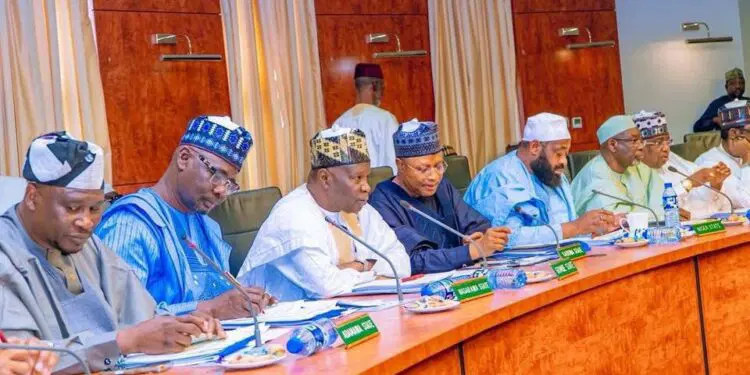
Northern governors have reiterated their commitment to prioritising the first 2,000 days of a child’s life, stressing that early investment is essential for peace, productivity, and long-term economic progress in the region.
Their commitment followed a briefing by World Bank officials to the Northern Governors Forum, which reviewed strategies to improve the North’s “concerning childhood development indicators.”
The World Bank’s Team Lead for Stunting and Early Years, Dr. Ritgak Tilley-Gyado, told the forum that Nigeria cannot build a competitive workforce or safeguard its economic future without confronting stunting, malnutrition, weak early learning foundations, and poor caregiving systems.
She highlighted the urgent need for early stimulation, foundational education, and family empowerment to improve caregiving and expand women’s participation. “Investing in the first 2,000 days is not just about individual progress — it is an economic, social, and stability imperative,” she said. “This period is globally recognised as the cornerstone for brain development, nutrition, learning, and overall wellbeing.”
Responding, Gombe State Governor and Chairman of the Forum, Inuwa Yahaya, described early childhood investment as “the most critical investment for ensuring peace, productivity, and a stronger northern economy.” He warned that the region “cannot afford to lose another generation” and emphasised the need for early years programmes tailored to local realities and frontline workers.
Other governors shared similar views. Jigawa State Governor Umar Namadi pointed to the connection between poverty and poor childhood outcomes and praised the World Bank’s results-based financing approach. Niger State Governor Umaru Bago highlighted the importance of micronutrients and locally produced fortified foods.
Plateau State Governor Caleb Mutfwang acknowledged the complexity of multisectoral reforms and pledged to strengthen evidence-based implementation. Zamfara State Governor Dauda Lawal added that although many challenges were inherited, the North now has “a genuine opportunity to change the narrative” through targeted early years investments.
Earlier, the World Bank Country Director for Nigeria, Dr. Mathew Verghis, emphasised that state governments carry the biggest responsibility for delivery and must help shape a unified but locally driven early years agenda. He noted that improving outcomes requires collaboration across sectors such as health, nutrition, education, WASH, women’s empowerment, agriculture, food systems, and social protection.
Verghis added that the process will be guided by evidence to ensure a nationally aligned and state-responsive platform rooted in local needs.

