

 James Obasi
US Lawmakers and Nigeria’s House of Representatives Convene New Meetings to Address Escalating Insecurity
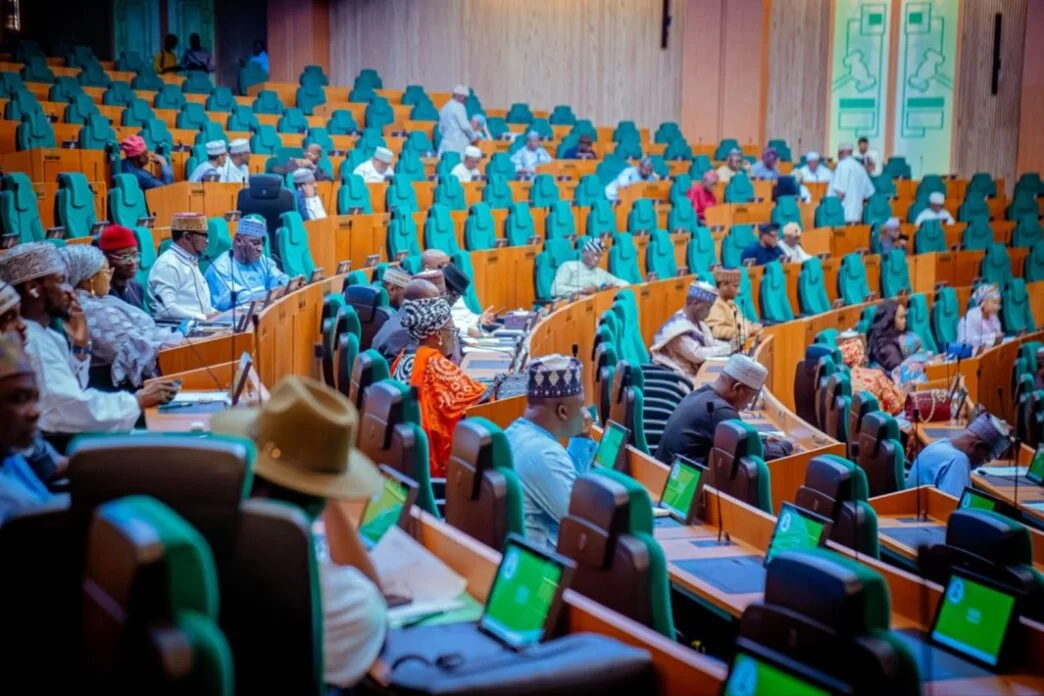
Committees of the United States Congress held a joint briefing on Tuesday in Washington, D.C., focusing on the continued kidnappings and reported persecution of Christians in Nigeria.
The session followed President Donald Trump’s October 31 directive instructing the House Appropriations Committee to investigate what he described as the widespread killing of Christians in Nigeria and submit a report to the White House.
In a related development, the Nigerian House of Representatives is scheduled to debate the nation’s security challenges on Wednesday (today).
The congressional meeting, led by House Appropriations Vice Chair and National Security Subcommittee Chairman Mario Díaz-Balart, brought together members of the Appropriations and Foreign Affairs Committees alongside religious freedom experts. Attendees included Representatives Robert Aderholt, Riley Moore, Brian Mast, Chris Smith, USCIRF Chair Vicky Hartzler, Alliance Defending Freedom International’s Sean Nelson, and Dr. Ebenezer Obadare of the Council on Foreign Relations.
Díaz-Balart opened the briefing by stressing that global religious freedom is “both a moral obligation and an essential American interest,” adding that no one should fear violence because of their faith. He reaffirmed his commitment to advancing policies that protect religious liberty and highlighted provisions already included in his FY26 funding bill.
Aderholt described the situation in Nigeria as “a crisis that can’t be ignored,” emphasising the need for firm support for persecuted Christian communities. Moore linked the meeting to the administration’s recent redesignation of Nigeria as a Country of Particular Concern, warning that the world can no longer overlook the persecution of Christians.
Mast framed the violence as a deliberate campaign of religious cleansing carried out by extremist groups seeking to drive Christians from their ancestral lands. He urged Nigerian authorities to disarm militias, resettle displaced families, and prosecute offenders. He also criticised what he described as authorities’ attempts to downplay the religious motivations behind the attacks, including the enforcement of blasphemy laws in some states.
Obadare identified Boko Haram as the primary force behind the violence, calling jihadist extremism the most serious threat to Nigeria. He noted recent Nigerian military actions driven by renewed US pressure but called on Washington to sustain its leverage. He argued that US policy should focus on helping Nigeria defeat Boko Haram and pressuring President Tinubu to make Sharia law unconstitutional in states where it operates.
Committee officials confirmed that a comprehensive report will be sent to President Trump with recommendations for addressing religious persecution in Nigeria and other regions.
The briefing came amid deepening US–Nigeria security cooperation. President Bola Tinubu recently approved Nigeria’s delegation to the newly established US–Nigeria Joint Working Group, created to bolster counterterrorism operations, intelligence sharing, border protection, and civilian security coordination.
At the session, House Foreign Affairs Africa Subcommittee Chairman Smith described Nigeria as “the ground zero of religious violence,” stating that Christians and moderate Muslims face constant danger. He criticised Nigerian authorities for what he called a culture of impunity.
Expert witnesses highlighted ongoing kidnappings, forced conversions, and deadly attacks affecting multiple religious communities. Hartzler referenced recent abductions of schoolchildren and said religious freedom in Nigeria has worsened in 2025, urging stronger accountability from Nigerian authorities and improved use of US security assistance.
Nelson recounted testimonies from Christian communities facing kidnappings and violence.
On November 20, the US House Subcommittee on Africa held a public hearing to review Trump’s redesignation of Nigeria as a Country of Particular Concern—an action that could eventually result in sanctions for officials implicated in religious persecution.
Meanwhile, Nigeria’s House of Representatives is expected to begin a debate on national security today. Deputy Speaker Benjamin Kalu announced this during Tuesday’s plenary.
Bauchi lawmaker Mansur Soro also confirmed that the report on the state police bill will be presented this month. He noted that state assemblies have been asked to contribute to ongoing constitutional amendment proposals, including state policing, women’s reserved seats, fiscal federalism, and power devolution.
Soro added that the state police bill has been adopted by the joint constitution review committees of both chambers. Once approved by two-thirds of state assemblies, it will be forwarded to the President for assent.
Esan West/Esan Central/Igueben legislator Marcus Onobun reiterated his support for state policing, describing it as a national necessity due to evolving localised insecurity. He argued that state police would empower governors to address security challenges more effectively, provided that proper safeguards and oversight are in place.
Public Accounts Committee Chairman Bamidele Salam also expressed support for state and local policing structures.
Separately, President Tinubu met with Service Chiefs and heads of security agencies on Tuesday at the Presidential Villa in Abuja. The meeting came hours after he nominated former Chief of Defence Staff Gen. Christopher Musa (retd.) as Minister of Defence following the resignation of Abubakar Badaru.
Senior military and security officials, including the heads of the Army, Air Force, Navy, Defence Intelligence, DSS, and Police, attended the briefing. Last week, Tinubu declared a nationwide security emergency after a surge in abductions, announcing measures such as recruiting 20,000 new police officers, deploying forest guards, and strengthening security in vulnerable religious institutions and schools.
Abia State Governor Alex Otti was also seen arriving at the Presidential Villa, though it was unclear whether his visit was connected to the security meeting.

