Author: Tech & Tools Desk

Tech & Tools Desk25 August 2025
NDLEA.jpg

1min4630
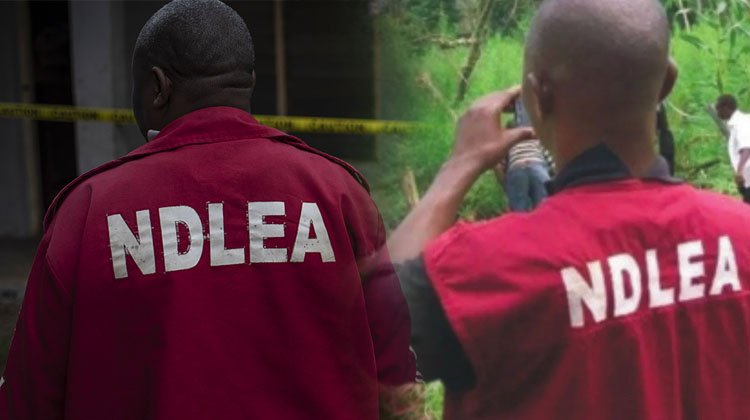
The National Drug Law Enforcement Agency NDLEA in Kano has arrested a 29 year old man found with 7,000 suspected tramadol capsules. The Command’s Public Relations Officer, Sadiq Muhammad Maigatari, said the suspect was intercepted on Saturday by operatives of the Kiru Area Command along the Zaria Kano Road near Kwanar Dangora while traveling from Lagos. According to the agency, the drugs weighing 4.1 kilograms were concealed inside a 20 litre oil jerrycan. The command described the bust as a major step in the fight against substance abuse in the state and praised the officers for their professionalism in detecting the consignment. State Commander Abubakar Idris Ahmad commended the team for their diligence and acknowledged the support of the agency’s Chairman and Chief Executive, retired Brig Gen Mohamed Buba Marwa. He reaffirmed the command’s resolve to disrupt illicit drug supply chains and urged continued public cooperation. NAN

Tech & Tools Desk25 August 2025
new-jamb-office-1280x985.jpg

1min7270
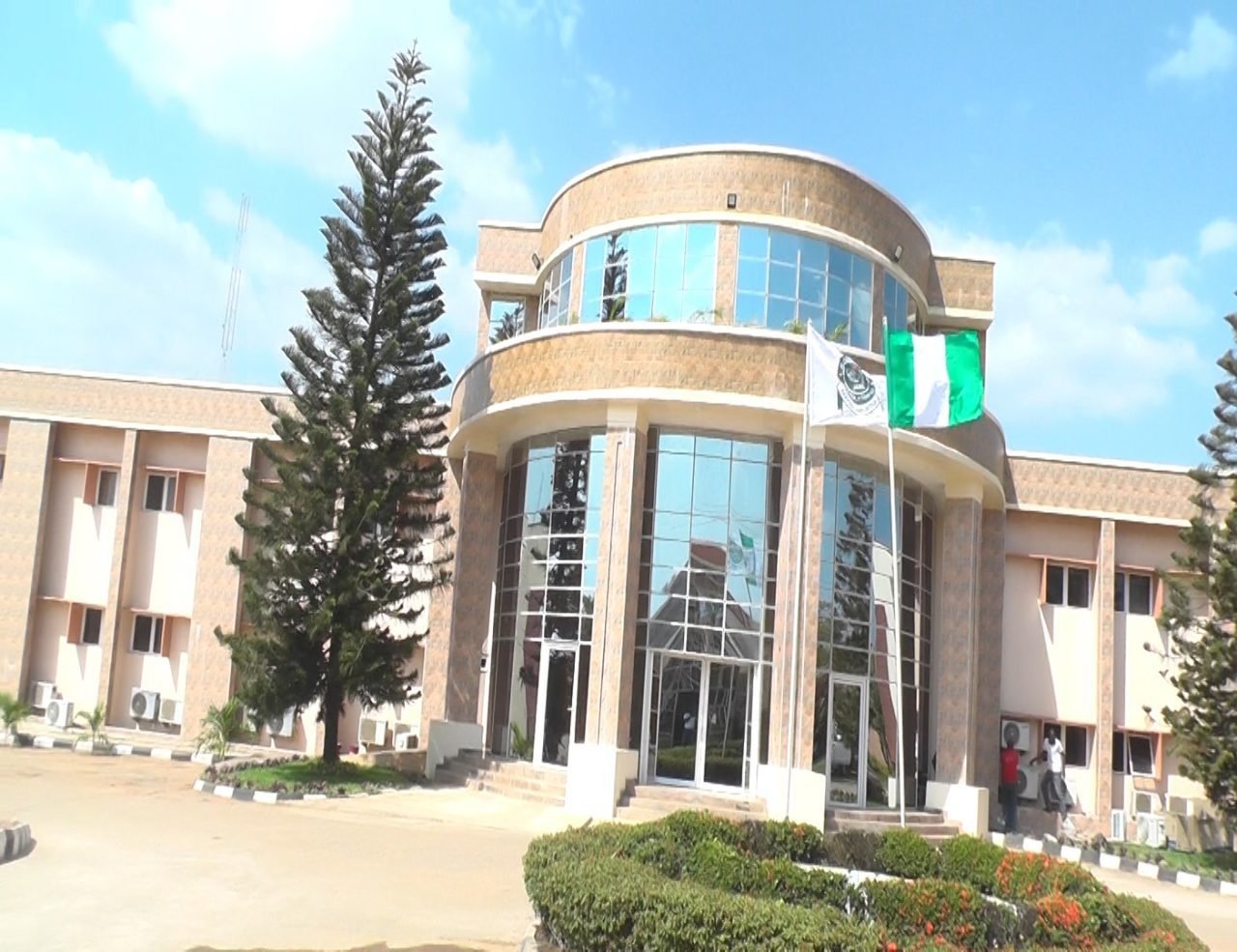
The Joint Admissions and Matriculation Board (JAMB) has asked all candidates who uploaded their O’level results before the release of the final 2025 WAEC SSCE to return to accredited centres and upload the official results again. In its Monday bulletin, the Board said it cleared all earlier uploads from its system to prevent discrepancies and ensure only the final WAEC results are used for admission processing. JAMB noted that some candidates who applied with “awaiting results” had previously submitted incomplete WAEC records. As a result, every UTME candidate must carry out a fresh upload, regardless of whether the new result differs from what was submitted earlier, to remain eligible for admission consideration.

Tech & Tools Desk24 August 2025
Sultan-of-Sokoto.jpg

2min7820
The Sultan of Sokoto and President General of the Nigeria Supreme Council for Islamic Affairs (NSCIA), Muhammad Sa’ad Abubakar, has declared Monday, August 25, 2025, as the first day of Rabi’ul Awwal 1447AH. The announcement was made in a statement issued on Saturday by the Wazirin Sokoto, Professor Sambo Junaidu, who is also the Chairman of the Sultanate Council Advisory Committee on Religious Affairs. No Crescent Sighting Reported Professor Junaidu explained that the declaration followed reports from the National Moon Sighting Committee, which confirmed that no credible sighting of the new crescent was received from any of its committees across the country on Saturday, August 23, 2025, corresponding to the 29th of Safar 1447AH. As a result, Sunday, August 24, 2025, will be counted as the 30th day of Safar, thereby making Monday, August 25 the beginning of Rabi’ul Awwal 1447AH. Sultan’s Confirmation “His Eminence, Alhaji Muhammad Sa’ad Abubakar, CFR, mni, the Sultan of Sokoto and President General of the Nigeria Supreme Council for Islamic Affairs, has accepted the report and accordingly declared Monday, 25th August 2025 as the first day of Rabi’ul Awwal 1447AH,” the statement read.

Tech & Tools Desk23 August 2025
Bola-Ahmed-Tinubu-e1653653706419.jpg

4min10080
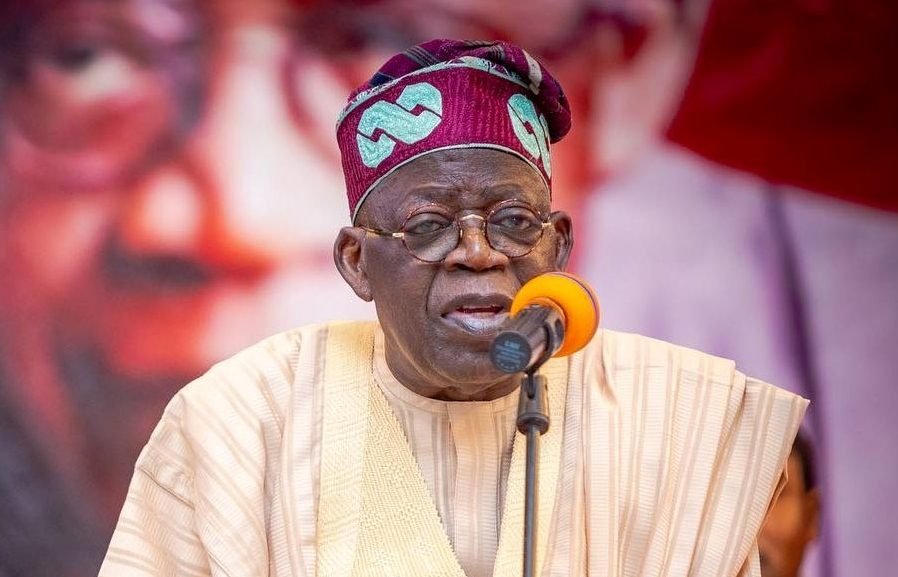
President Bola Ahmed Tinubu has urged Nigerians in the Diaspora to return home and contribute to national development, declaring that the country is “on the rise again” under his leadership. Tinubu made the appeal on Thursday at the Kahala Hotel and Resort in Yokohama, Japan, during an interactive session with Nigerians living in Japan on the sidelines of the Tokyo International Conference on African Development (TICAD9). Call for Diaspora Contribution “I am happy to listen to you. I’m happy to report that many of our people are returning home,” Tinubu said. “Yes, for economic reasons, some people might decide to stay away; it’s a fundamental right of the individual. But for the economic growth and opportunity available in Nigeria, don’t stay away. Your contribution is very much needed. If you stay away, who will build it?” The President emphasized that nation-building cannot be left to government alone but must be a shared responsibility between citizens at home and those abroad. “If we don’t join hands and work together, then we’ve lost the hope of being the leaders we are supposed to be,” he warned. Tinubu also called on Nigerians in the Diaspora to remain ambassadors of the country and project a positive image in their global engagements. Citizenship Beyond a Passport Tinubu reminded his audience that true citizenship is not just about holding a Nigerian passport but about character and commitment to national progress. He cautioned against negative portrayals of Nigeria, which, he said, discourage investment and partnerships needed for development. Reforms and Progress Highlighting his administration’s reforms, Tinubu pointed to improved passport issuance systems, efforts to stabilize the economy, investments in healthcare to reduce medical tourism, and initiatives to expand opportunities for businesses and attract investment. “Leadership is about thinking and doing — blending visionary ideas with practical actions to drive stability, unity, and growth,” he said. “Nigeria is on the rise again.” Diaspora Response Members of the Nigerian community in Japan, including professionals, entrepreneurs, and students, pledged their support for the administration’s reforms and expressed readiness to contribute to the country’s transformation. Mr. Emeka Ebogota, President of the Nigerian Union in Japan, thanked Tinubu for engaging directly with the community and reaffirmed their commitment to supporting government efforts. Also present at the meeting were top government officials, including Foreign Affairs Minister Ambassador Yusuf Tuggar, Solid Minerals Minister Dele Alake, Regional Development Minister Abubakar Momoh, Science and Technology Minister Uche Nnaji, Budget Minister Atiku Bagudu, and Minister of State for Finance Doris Uzoka-Anite, alongside private sector leaders.

Tech & Tools Desk23 August 2025
Teachers-1.png

4min28650
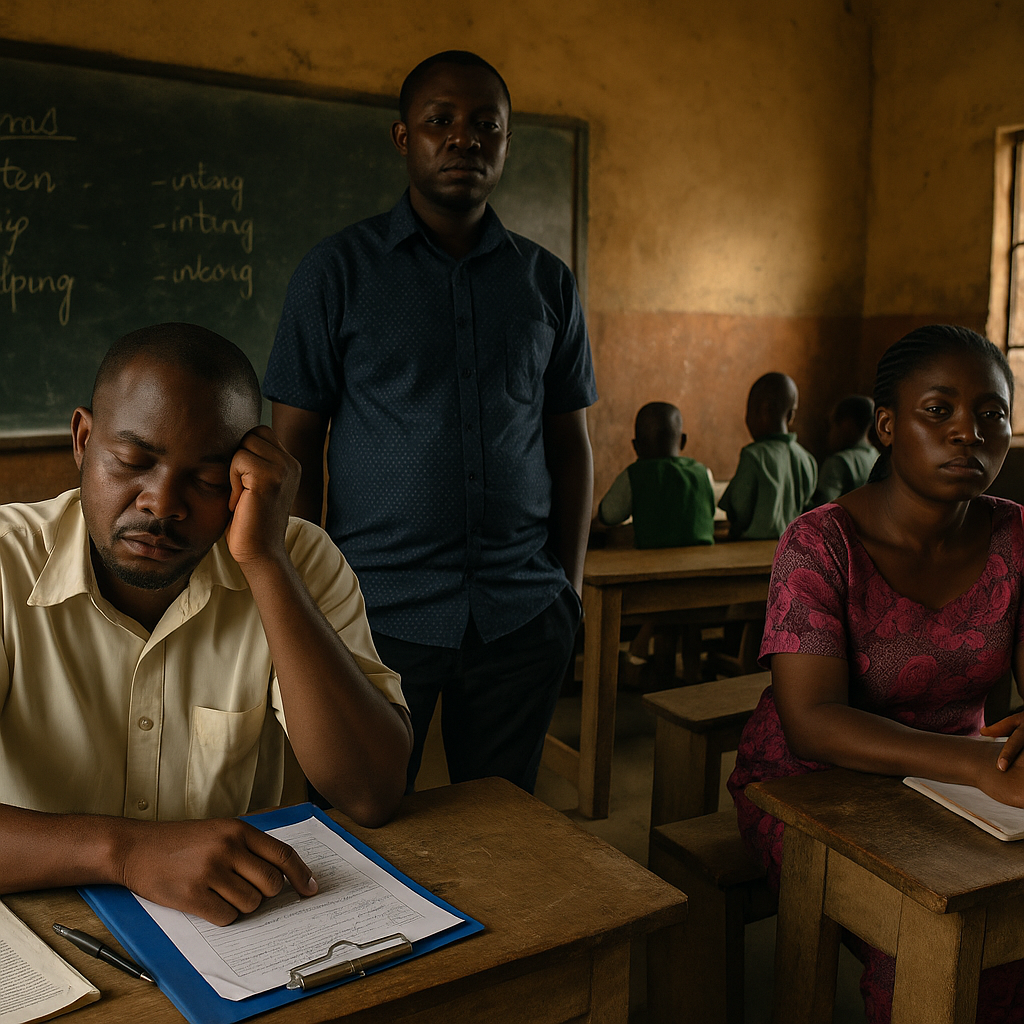
Every morning, Blessing Uchechi walks into his classroom in the Federal Capital Territory with a smile for his students. But once he remembers his monthly pay, the smile fades. At ₦30,000, his salary falls far short of the national minimum wage of ₦70,000 — a poor reward, he says, for the effort he invests in shaping young minds. Teaching was never his dream. He had once hoped to become a pilot in the Nigerian Air Force, but his parents’ modest earnings as teachers could not cover the costs of the Defence Academy or aeronautical school. “My ambition was never to be a teacher,” he admits with a sigh. In Lagos, another teacher, Bidmus Adam, echoes the same story. He too did not plan to teach, yet today he earns just ₦30,000 a month. Teachers Paid Below the Minimum Wage In 2024, President Bola Tinubu raised the minimum wage from ₦33,000 to ₦70,000 in a bid to provide workers with a “living wage.” Yet many teachers in private schools remain excluded from this adjustment. Entry-level private school teachers typically earn between ₦25,000 and ₦60,000, while even mid-level teachers often take home less than the mandated minimum. Some reportedly earn as little as ₦15,000 a month, regardless of years of experience. For Uchechi, passion keeps him in the classroom, but the reality is stark. “When you look at the amount of money you are getting, you won’t be motivated to put in your all. It will feel like you are working for the money, not the people,” he said. “I enjoy teaching, but passion doesn’t pay the bills.” Adam agrees. “If I look at the stress, time, and energy I put into teaching, I should be earning far more. Passion grew along the way, but it cannot sustain you,” he noted. Side Hustles to Survive With inflation and soaring fuel prices eroding already meagre salaries, many teachers juggle multiple jobs just to get by. After hours in crowded classrooms, they sell clothes, food, or hijabs, run online businesses, or take on private tutoring to pay rent and school fees. Uchechi works as a digital marketer and advertiser, while also learning skills in the travel industry. Adam takes online classes and engages in side hustles to supplement his pay. In Zaria, Ummulkhulthum Daiyab Bature, who has taught for 10 years, sells shoes and hijabs. “I am shy to mention my salary in public,” she said. “I know I deserve more.” Why Wages Remain Low According to Hassan Hamzat, a retired government teacher now serving as a private school principal, proprietors often prioritise profit over quality. “Most private schools were established for financial gain, not to pay teachers their worth. Sometimes they don’t even employ qualified teachers,” he explained. He also noted that many private school teachers are barred from joining unions like the National Union of Teachers (NUT), which limits their ability to demand better pay. The Bigger Picture Education experts warn that poor wages not only demotivate teachers but also affect students’ learning outcomes and well-being. Research suggests that teacher pay plays a key role in motivation, retention, and the overall quality of education delivered in classrooms. Despite the hardship, teachers like Adam and Uchechi stay because of their love for the profession, and their students. Yet they hold out hope that one day, private school proprietors — and Nigeria as a whole will value teachers enough to pay wages that reflect their true worth. “I hope private school owners can do better,” Adam said quietly.


Tech & Tools Desk22 August 2025
ARMY.png

3min4750
Nigeria’s Chief of Defence Staff, General Christopher Musa, has revealed that the process of identifying and prosecuting terrorism financiers in the country is underway, with announcements expected soon. Speaking on Politics Today, a Channels TV programme, on Thursday night, General Musa explained that delays in naming the financiers were due to legal complexities and international financial links. Tracking Terrorism Financing “We know them. Some of the funds come from outside Nigeria, and we cannot act unilaterally. Locally, financiers often employ individuals, give them motorcycles, and direct them to remit money daily into certain accounts. These transactions are being tracked,” he said. The Defence Chief stressed that the authorities are committed to monitoring money circulation and exposing the networks sustaining terrorism and banditry. Applauding NFIU’s Role General Musa praised the Nigerian Financial Intelligence Unit (NFIU) for its efforts in unearthing financial connections tied to terrorism. “The NFIU has been doing a lot, following both intelligence and financial trails. Arrests have been made, and I can assure you that the Attorney-General of the Federation, the National Security Adviser, and other key institutions are working to ensure these financiers are exposed and prosecuted,” he said. He added that the State Security Services (SSS), the National Intelligence Agency (NIA), and other security agencies are also investigating political actors allegedly funding insecurity for personal gain. “Criminal groups—bandits and terrorists—synergise because they share a common goal: to make money and destabilise communities,” he noted. Terrorism in Nigeria Nigeria continues to face terrorism across multiple regions. The North-east remains the epicenter of Boko Haram attacks, which have claimed thousands of lives and displaced entire communities. Meanwhile, the North-west, particularly Zamfara State, struggles with persistent banditry, kidnappings, and violent raids on rural settlements. General Musa assured Nigerians that “work is in progress” and pledged that financiers of terrorism—whether domestic or international—will soon be named and held accountable.

Tech & Tools Desk22 August 2025
IMO.png

4min19770
A vigilante leader and another member of his team were killed on Wednesday when suspected armed herders launched an attack on Amakohia-Ubi, a community in Owerri West Local Government Area of Imo State, South-east Nigeria. The attack, which occurred around 6:30 p.m., sent terrified residents fleeing to neighbouring communities for safety. How It Happened A community member, who identified himself as Mr. Paul, told Vanguard that the vigilante leader, Monday Nwaozuzu, was shot dead during the assault. “The dead, the wounded, and the missing are all members of our community vigilante. Monday was killed instantly, while others are still unaccounted for. At least three of our men were trapped in the clash,” he said. Another resident explained that the violence broke out when vigilante operatives tried to stop herders from leading their cattle into farmlands near a school. “It is normal for our vigilantes to guard the farms. On Wednesday, they asked the herders to turn back, but the herders refused. Unknown to them, the herders were armed. They opened fire, killing Monday and injuring another. Since then, we have been combing the bushes in search of those missing,” the resident said. Community members suspect some vigilantes were abducted. One resident said that when they tried calling one of the missing vigilantes on Thursday morning, a suspected herder answered the phone. “For now, we cannot say if our brothers are dead or kidnapped. Sadly, this is not the first attack on our community in recent months,” he lamented. Police Reaction Imo State Police Command confirmed the incident. Spokesperson Henry Okoye said the vigilante leader died instantly while another member died during treatment. He, however, did not confirm the number of those missing. Mr. Okoye added that investigations had commenced and assured that the attackers would be tracked down. The Wider Herder-Farmer Crisis The attack adds to the long list of deadly clashes between farmers and herders across Nigeria. Just last Sunday, over 400 armed herders reportedly invaded Aye-Twar community in Benue State, leaving homes and places of worship in ruins. In response to such crises, Senator Ned Nwoko (APC-Delta) is sponsoring a bill to establish ranches across Nigeria’s 774 local government areas and the FCT, aiming to curb open grazing and improve food security. Although previous proposals for nationwide ranches were rejected, the federal government has introduced the Pulaku Initiative, a resettlement programme designed to tackle the root causes of farmer-herder conflicts. Vice President Kashim Shettima explained that the initiative is not intended as compensation for any group but as a practical solution to restore peace and unity. Currently, the Pulaku programme is being implemented in seven heavily affected states: Sokoto, Kebbi, Benue, Katsina, Zamfara, Niger, and Kaduna. It will provide housing, schools, roads, and other facilities to revitalise affected communities.

Tech & Tools Desk21 August 2025
MAid.jpg

2min5930
The Niger State Police Command has arrested a 23-year-old woman, Sarah Ogbonna, for allegedly stealing mobile phones and cash valued at N29 million from a phone shop at the Obasanjo Commercial Complex, Minna, where she worked as a salesgirl. According to the police, Sarah, who resides on Okada Road in Minna, allegedly used part of the stolen funds to rent and furnish an apartment for her boyfriend, Samuel Bello (currently at large), in the Sauka-Kauta area of the city. She also reportedly transferred additional sums of money to him. The state police spokesperson, DSP Wasiu Abiodun, confirmed the arrest, disclosing that Sarah also confessed to investing some of the proceeds in an online thrift contribution (ajo), where she claimed to contribute N150,000 weekly. Her elder sister, Mercy Ogbonna (30), was also arrested for allegedly receiving multiple cash transfers from Sarah. Mercy reportedly used the funds to cover family expenses, including house rent, food, and other basic needs. Two others were implicated in the crime: Ruth Emmanuel (23), a fellow salesgirl accused of participating in the theft before leaving the job. Nurudeen Musa (32), a phone dealer at Obasanjo Complex, accused of buying the stolen phones at cheap prices and reselling them. The police said the arrests were made on August 8, 2025, after the shop owner lodged a complaint. “Immediately the report was received, police operatives arrested Sarah. During interrogation, she confessed, admitting she had been stealing since 2023. While she could not estimate the total value of what she had taken, a sum of N700,000 was immediately recovered from her,” DSP Abiodun said. Her confession led to the arrest of the three other accomplices the following day. Investigations are ongoing.

Tech & Tools Desk20 August 2025
US.png

4min19450
The United States government has raised serious concerns about Nigeria’s security and justice delivery systems, citing cases of enforced disappearances, arbitrary detentions, and prolonged pre-trial delays. In its 2024 Country Report on Human Rights Practices, released by the Department of State’s Bureau of Democracy, Human Rights and Labour, the US highlighted systemic issues in Nigeria’s justice sector. It noted that although the law requires suspects to be brought before a magistrate within 48 hours and initial pre-trial detention not to exceed 14 days, these provisions were frequently ignored. The report stated that police and security agencies often arrested individuals without warrants, sometimes holding them incommunicado or indefinitely. It added that bail conditions were arbitrary, and due process was not consistently observed, particularly in corruption-related cases. Amnesty International was quoted as saying that the fate of “dozens of young men detained at SARS Awkuzu,” a disbanded police unit in Anambra State, has remained unknown since 2020. On the judiciary, the report identified chronic shortages of judges, corruption, bureaucratic bottlenecks, and political interference as major obstacles to justice delivery. Some detainees, it noted, remained in custody longer than the maximum sentence for their alleged offences, with delays also caused by lack of vehicles to transport suspects to court or loss of case files. Minimum Wage Undermined by Naira Depreciation The US report further observed that the new N70,000 minimum wage has been eroded by the steep depreciation of the naira, pegging the wage at about $47.90 per month with the currency trading above N1,500 to the dollar. It noted that while the National Minimum Wage (Amendment) Act 2024 doubled the wage, most workers were excluded because the law applies only to firms with 25 or more employees. Enforcement gaps, weak penalties, and widespread informal employment—covering up to 80% of Nigeria’s workforce—further undermined labour rights. The report also flagged shortcomings in protections for overtime and premium pay, and cited states that declined to implement the new wage due to financial constraints. Child Rights Concerns On child rights, the US criticised the persistence of early marriage despite a federal minimum marriage age of 18 years. It noted that while 35 states, with the exception of Zamfara, have domesticated the law, enforcement remains weak—particularly in northern states where customary and religious laws permit marriage for girls as young as 11. The report acknowledged efforts by the Nigerian government and partners to engage religious leaders and traditional rulers on the health risks of child marriage. Presidency Responds Reacting to the report, the Presidency dismissed the concerns as overstated, insisting that both the judiciary and security agencies are addressing the identified challenges. In a statement, Presidential Adviser on Media and Public Communications, Sunday Dare, said judicial reforms are ongoing and pre-trial delays are gradually being reduced. He also noted that the administration has launched several initiatives to strengthen the justice system, including a national summit on justice opened by President Bola Tinubu in April 2024. On security, Dare emphasised that coordination among security agencies has improved significantly. He cited the recent arrest of two leaders of the Ansaru terrorist group—praised by the US Mission in Nigeria—as evidence of progress. “The security clean-up is ongoing, and several challenges have already abated,” he said. Defending government economic policies, he added: “The naira has stabilised and the recalibration of the economy is yielding results. We are seeing positive macroeconomic indicators, and the currency will strengthen further with time.”

Tech & Tools Desk19 August 2025
Trump-1280x853.png

4min7660
Washington/Paris — Aug. 19, 2025. President Donald Trump said he phoned Vladimir Putin from the White House to start arranging a face-to-face meeting between the Russian leader and Ukrainian President Volodymyr Zelensky, following talks with Zelensky and a group of European leaders on potential security guarantees for Ukraine. Trump added that a follow-on “trilat” including himself could come after the two leaders meet. The White House discussions centered on a blueprint in which Europe would take the lead in providing coordinated, long-term “NATO-style” protections for Ukraine—with U.S. backing—while steering clear of immediate NATO membership for Kyiv. Zelensky called Trump’s stance “a strong signal,” and European leaders stressed the need to lock in credible guarantees as a prerequisite for any sustainable peace. Momentum for direct talks accelerated over the weekend when Trump ally and envoy Steve Witkoff said Putin had agreed in principle to allow the U.S. and Europe to extend collective-defense-type protections to Ukraine as part of an eventual settlement. Moscow has not publicly confirmed that concession, and analysts warned the details—and Russia’s intent—remain opaque. French President Emmanuel Macron, who joined the Washington meetings, said any Zelensky-Putin summit should be held in a neutral European country—“maybe Switzerland”—with Geneva emerging as a leading option. He explicitly ruled out Paris, recalling the optics of 2019 talks in the French capital. Who was at the table—and what they want Alongside Trump and Zelensky were key European leaders who endorsed exploring a ceasefire path coupled with robust guarantees. Reporting from multiple outlets said the group is weighing European-funded arms packages and a peacekeeping architecture post-deal, while Trump publicly framed the U.S. role as coordinating and helping Europe shoulder the security burden. Despite Trump’s upbeat tone, skepticism persists. Russia’s foreign policy messaging has pushed back on any NATO troop presence in Ukraine, and critics argue Kyiv should not be pressed into talks absent verifiable de-escalation. For now, timelines remain fluid: some European officials suggested a potential Zelensky-Putin encounter within weeks, contingent on progress toward a ceasefire framework and agreement on the guarantees package. What’s next Venue: Switzerland is being discussed, with Geneva most often cited by French officials as suitably neutral. Format: A first Zelensky-Putin meeting could be followed by a three-way session with Trump, per the U.S. president. Guarantees: Europe would lead “Article-5-type” protections coordinated with Washington; specifics—scope, triggers, whether they include peacekeepers—are still being drafted. Bottom line: After months of stalemate, Washington’s push for a Zelensky-Putin meeting—paired with European-led security guarantees—has moved from hypotheticals to active planning. But without public confirmation from Moscow on the scope of those guarantees and absent a ceasefire, the road from phone calls to durable peace remains uncertain.